








How do Colombian coffee bean varieties and processing compare?
Colombia sits in northwest South America with a mild, humid climate and steady growing conditions that suit coffee trees well. Castillo and Caturra are the common varieties behind most lots, and the resulting cup tends to be soft and elegant rather than heavy or sharply acidic. Sweetness and a lingering finish reminiscent of dark chocolate are typical, which is why the country is often called the coffee gentleman.
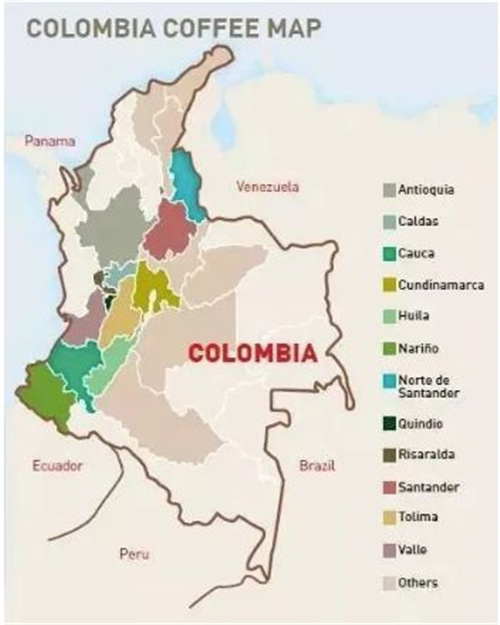
Cultivation clusters along the Andes, where high altitude and broken terrain make mechanical harvesting impractical, so picking is done by hand. Among coffee bean producing countries, Colombia relies mainly on washed processing, though anaerobic fermentation has spread in recent years. Everyday Huila lots show classic nut and chocolate notes, while special processing lots push fruit and floral character further.
Colombia is located in the northwest of South America, with a mild and humid climate that provides an ideal growing environment for coffee trees and has shaped the balanced and elegant style of local coffee. This article will focus on the flavor characteristics and processing methods of Colombian coffee beans, highlighting the flavor differences between Front Street Geisha and Front Street Big Belly Button, and reviewing the effects of washed, semi-washed, and anaerobic fermentation processing on coffee performance. At the same time, the article will also share the brewing parameters and techniques for Front Street Colombian coffee, helping coffee enthusiasts gain a more complete understanding of this producing country known as the "coffee gentleman."
Colombia is situated in the northwest of South America, with beautiful natural scenery and a mild climate year-round, almost like spring in all four seasons. These conditions are not only suitable for living, but also provide an excellent growing environment for coffee trees. Front Street Colombian coffee often has a soft and elegant aroma. It neither has the strong heaviness of Brazilian coffee nor is it known for acidity like African beans. Instead, it presents a sweetness and lingering finish similar to dark chocolate, so it is often called the "coffee gentleman."
As one of the world's most important high-quality coffee-producing countries, Colombia's coffee cultivation is mostly concentrated around the Andes Mountains, with high altitude and complex terrain that make mechanical harvesting difficult, so it basically relies on manual harvesting. Unlike Brazil, Front Street Colombian coffee beans are mainly washed processed. Among the seven everyday beans launched by Front Street, one comes from Huila, a well-known specialty region in Colombia, and it uses the locally common washed method. This Huila everyday bean presents the classic nut and chocolate flavors, rich and solid.
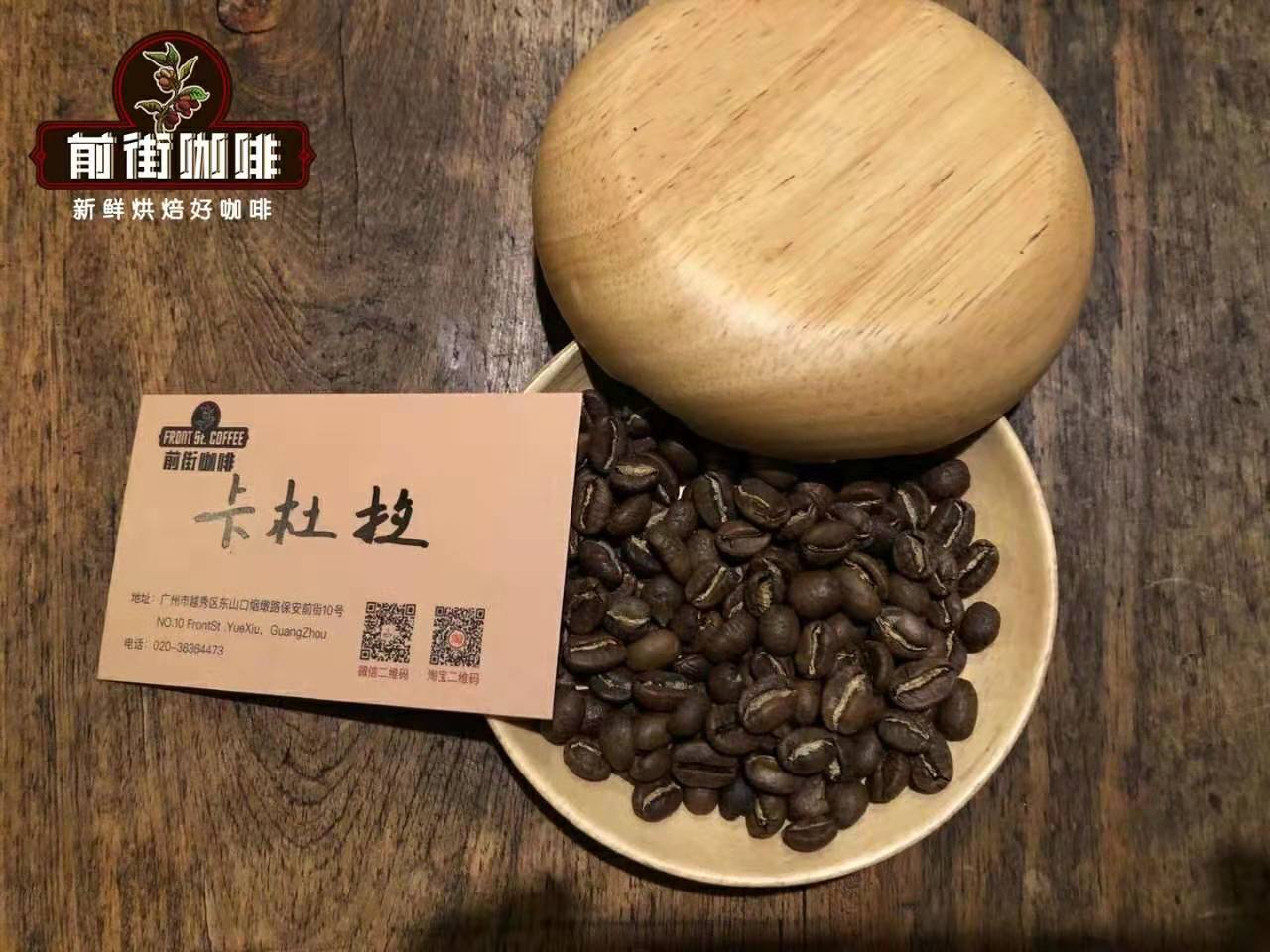
In recent years, producing countries have continued to experiment with innovations in traditional green bean processing methods, resulting in a variety of special processing methods, among which anaerobic fermentation is quite common in many countries, including Colombia. Front Street has selected two coffee beans from Colombia using special processing methods - Front Street Colombia Rose Valley and Front Street Colombia Huayueye. Both beans belong to the common Caturra variety in Colombia. Caturra is a Bourbon mutation with a shorter tree shape, making harvesting easier, while also having outstanding disease resistance and relatively high yield.
At the same time, the Castillo variety has been vigorously promoted in Colombia in recent years. This variety was jointly developed by the Colombian Coffee Growers Federation and the Colombian research center, with the goal of improving yield and disease resistance. Castillo is known for its rich aroma and citric acidity. A Front Street Isabella coffee bean purchased by FrontStreet Coffee is exactly the Castillo variety.
Front Street Isabella coffee beans use a semi-washed processing method. On the palate, it has acidity reminiscent of citrus, U.S., and cherry tomatoes. As the temperature drops, a honey-like sweetness emerges, with floral notes in the finish, and the mouthfeel is smooth and clean. The previously mentioned Front Street Huayueye and Front Street Rose Valley have certain similarities in flavor, both carrying strawberry notes and floral aromas. But on careful tasting, you will find that Rose Valley's floral aroma is very intense, while Huayueye's floral aroma is relatively light, yet the aroma of strawberry jam rushes forward. Although they are both Front Street Colombian coffee beans, their processing methods are not the same.
Front Street Huayueye coffee uses anaerobic sun-dried processing, making the fruit flavor more prominent, even carrying a fermented wine aroma. Taking a sip of this Front Street Colombian coffee, the rich strawberry jam aroma interweaves with peach-like mouthfeel, as if drinking a glass of strawberry juice. The difference is that strawberry juice is pink, while Front Street Huayueye coffee liquid, when illuminated by sunlight, is mellow and sweet like wine.
The three coffee beans mentioned above all use methods that belong to anaerobic fermentation processing. So-called anaerobic fermentation means allowing coffee beans to complete fermentation in an oxygen-free or low-oxygen environment. Natural fermentation methods like those mentioned above for Front Street are very difficult to control in terms of flavor and involve many uncertainties. For example, during washed processing, excessive fermentation may occur in the water tank fermentation process, causing the coffee beans to become too sour; or the sun-drying time may be too long, causing other undesirable flavors to develop during pectin fermentation. These are all very difficult to control, and to a large extent one can only depend on the weather.
For this reason, anaerobic fermentation processing came into being. Its method is usually to place coffee beans into pressure-resistant sealed stainless steel tanks and artificially control temperature, time, pH value, and the required fermentation process to achieve the coffee flavor desired by the merchant.
If you want to taste coffee with rich fruity aromas brought by anaerobic fermentation, Front Street Geisha and Front Street Big Belly Button are the first choices. Front Street Geisha naturally carries rich flavors of passion fruit, grape, apricot, and dried fruit; Front Street Big Belly Button is richer in berry aromas, with flavors mainly of blackcurrant juice, spices, and berries.
When brewing this Front Street Colombian coffee bean, Front Street chooses 15 grams, with a medium-fine grind size, a coffee-to-water ratio of 1:15, and a common Hario V60 dripper. The cone-shaped dripper increases the coffee's layering, and the water temperature is 91 degrees Celsius.
In the first stage, pour 30 grams of water for blooming, with a blooming time of 30 seconds. The purpose of blooming is to properly release carbon dioxide and avoid too much carbon dioxide affecting extraction. In the second stage, pour 100 grams of water, bringing the total including the blooming water to 130 grams, pouring evenly in circles to strengthen the extraction in the first and middle stages and enhance the extraction of small-molecule substances in the first and middle stages. After pouring, wait 10 seconds, then pour the remaining 95 grams of water, pouring evenly in circles, and finally pour the last 25 grams vertically into the center to avoid excessive agitation extracting too much bitterness from the later stage. The overall flavor of this Front Street Colombian coffee bean after brewing is: strawberry jam flavor, fermented aroma, and a sweet chocolate mouthfeel.
The above content is compiled by CoffeeHunters, a coffee news website.


