







Is Yunnan coffee a specialty arabica variety worth tasting?
Yunnan coffee has a history going back to 1904, when a French missionary planted the first trees. Scale expanded in the 1950s and 1960s, and standardized cultivation took hold in the 1980s. For decades the beans moved as commercial lots and instant coffee raw material bought by large international roasters, which kept prices low and quality uneven.
Nestlé's investment from 1988 onward pushed Catimor as the dominant arabica variety, and larger output followed. Higher quality types such as Typica have since returned, and Front Street Coffee grows in Lincang, offering washed and natural lots. Brewing Yunnan Small Bean and 2013 Natural Typica side by side is the practical way to judge how far the region has come.
Is Yunnan coffee considered specialty coffee? This question is best answered by tasting. This article sorts through the century-long history of Yunnan coffee from three dimensions: variety, terroir, and processing method—from the introduction of coffee by missionaries in 1904, to Nestlé promoting Catimor as the dominant variety, and then to the return of high-quality varieties like Typica. Front Street Coffee's cultivation practices in Lincang, Yunnan, along with the flavor performance under washed and natural processing, provide coffee enthusiasts with a complete cognitive path from commercial beans to specialty beans. The article also includes the specific brewing parameters and flavor descriptions for Front Street Yunnan Small Bean and 2013 Natural Typica, suitable for readers who want to gain a deeper understanding of the Yunnan production region or are looking for everyday staple beans.
At Front Street, when friends noticed the Yunnan coffee on the bean list, they raised this doubt: "Is Yunnan coffee also considered specialty coffee? Does it taste good?" At times like this, Front Street will tell you—wouldn't you know if you just tasted it yourself? Below, Front Street will first help you understand Yunnan coffee from several aspects: variety, terroir, and processing method.
First, a brief look at the history of Yunnan coffee
Since French missionary Tian Deneng planted the first batch of coffee trees in 1904, Yunnan has had more than a hundred years of coffee history. In the 1950s and 1960s, Yunnan coffee began to expand its planting scale. At that time, in order to meet the coffee demand of the Soviet Union and Eastern European countries, Lujiangba built China's first small-seed coffee production and export base. The truly standardized cultivation of Yunnan coffee began in the 1980s.
Limited by rough processing methods, roasting techniques, and coffee farmers' limited coffee knowledge, Yunnan beans were long used as commercial beans and raw material for instant coffee, purchased at low prices by international coffee giants such as Nestlé, Starbucks, and Maxwell House.
After Nestlé invested in Yunnan's coffee industry in 1988, there was larger-scale output. Starting in 1992, Nestlé established a coffee agriculture department to specifically guide and research the improvement and cultivation of Yunnan coffee, and purchased coffee according to U.S. spot market prices. It also introduced the high-yield and rust-resistant Catimor lines from Portugal's Coffee Rust Research Center, Costa Rica, and Thailand. In Lujiangba alone, Catimor covered nearly 180,000 mu. It is easy to manage, not prone to disease, and more favored by coffee farmers.
These measures further expanded Yunnan's coffee planting area and also increased coffee farmers' enthusiasm. At the same time, they established the position of Catimor as a replacement for the old tree variety Typica, making it the dominant variety of Yunnan coffee. In 1995, the Yunnan provincial government formally included coffee cultivation in the "Project 18" of biological resources. Coffee cultivation developed rapidly, and both area and output increased substantially.
What variety does Catimor belong to?
Catimor 7963 is a hybrid variety obtained through research by the Portuguese Tropical Research Institute (HCT) to address coffee rust, with stable characteristics. In appearance, this variety has the features of a compact tree shape, dwarf growth, many branches, and short fruit nodes. It grows vigorously and has extremely strong vitality. Its greatest characteristics are its astonishing rust resistance and high yield. Therefore, it is deeply loved by Yunnan coffee farmers. At present, more than 90% of coffee trees in Yunnan are Catimor.
However, Catimor is not a 100% Arabica variety. Catimor is a cross between Timor, which has strong rust resistance, and Caturra, and contains 1/4 Robusta lineage. Friends who understand coffee varieties should know that compared with small-seed Arabica, Robusta varieties have a low, heavy mouthfeel with obvious bitterness and astringency, mainly expressed as cereal and walnut flavors, and are prone to carrying an earthy taste if not processed well.
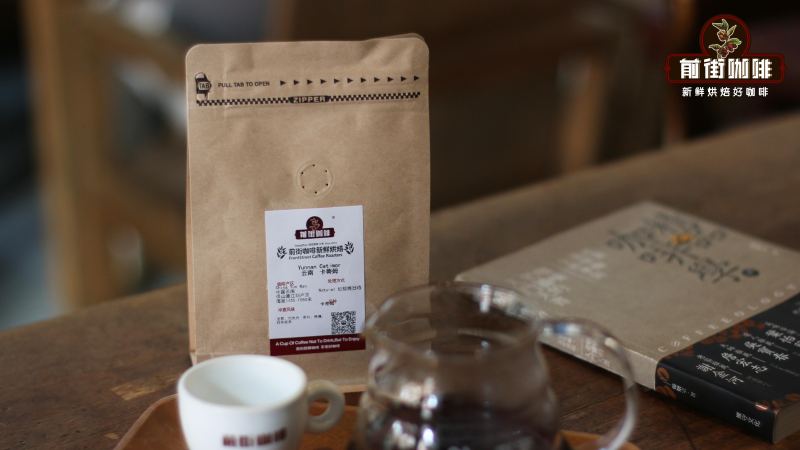
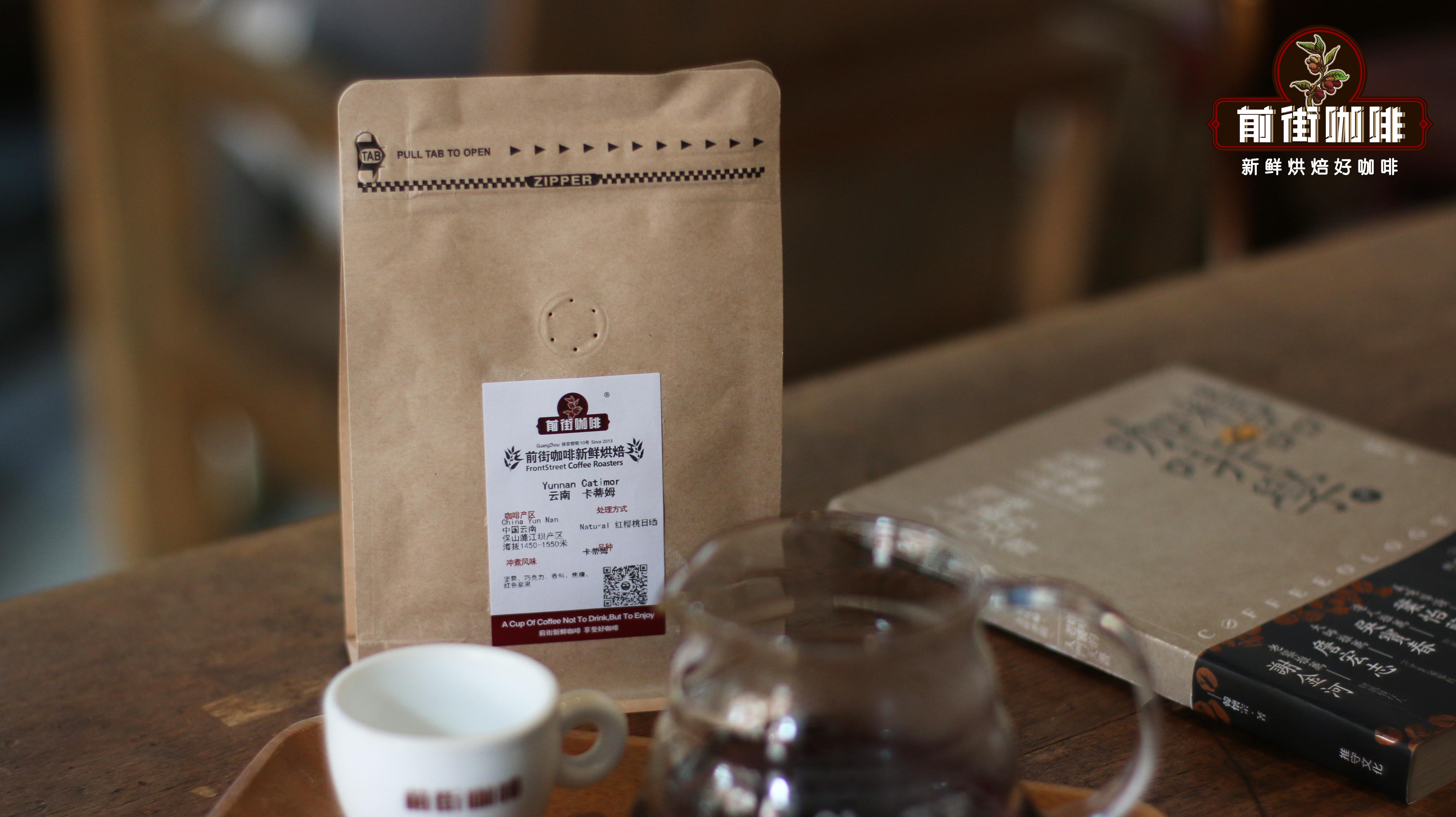
Catimor inherited the genes of Robusta. Local processing methods are relatively rough, and the taste is strongly bitter, with an earthy and fishy smell, often described as a "devil-like aftertaste." However, in recent years, people have paid more and more attention to the quality of Yunnan coffee. Catimor has also received more scientific cultivation and planting, and with the rise of post-processing methods, the coffee's flavor and quality have also improved. If you want a simple taste of the Yunnan production region, buy Front Street Yunnan Small Bean. Washed processing plus medium roasting allows us to drink the basic profile of nuts, chocolate, and brown sugar.
Front Street believes that if Yunnan wants to improve the overall quality of coffee, it needs to gradually change varieties. Catimor's rust resistance will gradually be lost after 20–30 years, so the issue of variety replacement is the current situation facing Yunnan. Therefore, in recent years we have seen many new varieties appearing one after another in Yunnan, such as the world-famous Geisha.
In order to explore the relationship between coffee cultivation and varieties, Front Street began a chapter of coffee planting in Lincang, Yunnan in 2013, selecting and breeding the ancient Typica variety as well as a small amount of Bourbon varieties. Typica needs to be planted at high altitude for its flavor to show richness and diversity, with fruity acidity and delicate mouthfeel. It is recognized as a high-quality variety, but the plant has low yield and poor resistance, and is extremely susceptible to leaf rust, coffee berry disease, and nematode disease, so it requires more human labor for management. After 7 years, Front Street finally harvested its first results in 2020 and named them "Front Street 2013 Coffee" after Front Street itself.
What does Yunnan coffee taste like?
Some merchants use novel flavor-enhancing processing methods to cover up the defective flavors of Yunnan beans themselves, and add a large amount of aroma to them to raise prices. Front Street feels that this not only fails to truly preserve the taste of Yunnan coffee, but also misleads consumers. Some friends, after tasting Yunnan coffee beans using special processing methods, feel that the aroma is particularly prominent and therefore think this is the mainstream processing method of Yunnan coffee. In fact, most Yunnan coffee farmers work under difficult conditions and do not have expensive processing equipment. Therefore, the vast majority of Yunnan coffee beans can only use natural processing methods, namely washed and natural.
Washed steps: use a machine to remove the peel and pulp from the harvested coffee cherries, place the depulped coffee beans into a fermentation tank for fermentation, use fermentation to break down the mucilage layer, repeatedly wash the fermented coffee beans with clean water to remove the broken-down mucilage, and finally dry the coffee beans for 1–2 weeks. Washed Yunnan coffee not only reduces the defect rate and produces more stable coffee quality, but also makes the coffee flavor cleaner.
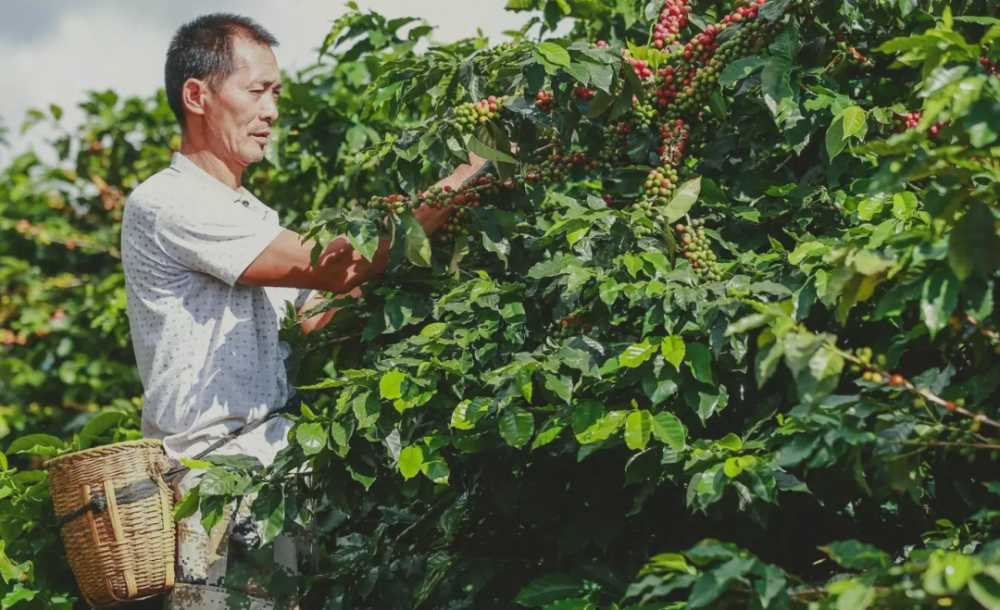
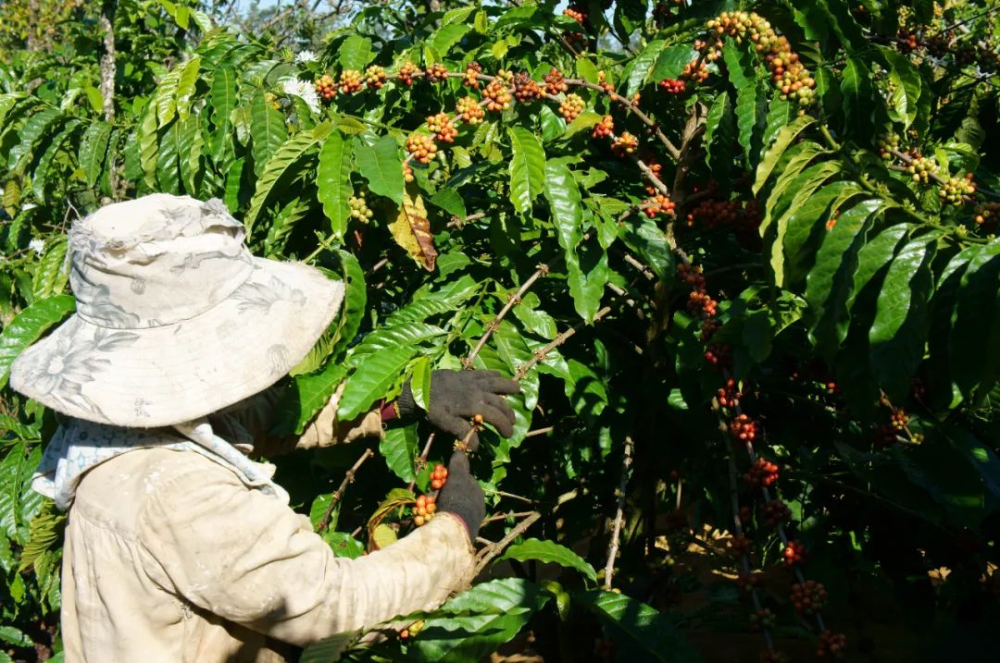
Front Street also has a coffee bean using natural sun-dried processing, "Front Street 2013," produced from Front Street's own estate in Lincang, Yunnan. It is selected from the elegant-flavored Typica variety and uses a natural sun-dried processing method, giving the coffee higher sweetness. When November arrives, the coffee fruits planted by Front Street also mature one after another. Front Street arranges workers to pick the red coffee cherries one by one, spreads the fresh coffee fruit under the sun to dry naturally, and turns them at irregular intervals to allow even dehydration, avoiding negative flavors from excessive fermentation.
When Front Street talks about the flavor characteristics of Yunnan coffee, some describe it as chocolate, some say it is like sweet potato, and some friends think it is like Sanhua plum. Front Street believes that the flavor of Yunnan small bean belongs to a neutral, balanced profile, that is, it has acidity, sweetness, and bitterness. Therefore, Front Street's Yunnan coffees all use medium roasting, highlighting the roasted aroma of chocolate and nuts while retaining part of the acidity.
From cupping, Front Street tastes that the Yunnan small bean staple coffee presents nutty, herbal, and brown sugar aromas, melon-and-fruit sweetness, and plum-like acidity, with a balanced mouthfeel. The natural Typica presents chocolate, baked bread, tropical fruit fermentation, and a black tea finish.
Brewing parameters for Front Street Yunnan Small Bean Coffee:
Dripper: hario v60
Dose: 15g
Water temperature: 90°C
Grind size: 75% passing through a No. 20 sieve
Water-to-coffee ratio: 1:15
Three-stage pouring: wet the coffee bed with twice the amount of water as the coffee grounds to form a dome and bloom for 30s, then pour in a small stream in circles from the inside out until 125g, pause, wait until the coffee bed drops to half the height of the dripper, continue pouring the third stage with the same fine stream until 225g, and after all the coffee liquid has filtered through, remove the dripper. Time is about 2 minutes.
Front Street Yunnan Small Bean staple coffee flavor: it smells very nutty, and on the palate there are herbs, chocolate, and caramel, with a faint fruity acidity in the finish. The overall mouthfeel is balanced, with good cleanliness.
Front Street 2013 Natural Typica coffee flavor: the dry grounds present aromas of caramel, nuts, and citrus. When hot, it is chocolate, fermented notes, and berries. As the temperature drops, it presents plum-like acidity and a sweet finish of black tea and sugarcane. Medium-high body, clear mouthfeel, and rich, varied layers.
The above content is compiled by CoffeeHunters, a coffee news website.


