







How Are Blue Mountain Coffee Beans Grown and Graded?
Authentic Blue Mountain coffee comes only from a defined elevation range in Jamaica's Blue Mountains and is certified by the Jamaica Coffee Industry Board, which grades beans by size into Grade 1, Grade 2, Grade 3, and Peaberry. Many supermarket and vending drinks labeled Blue Mountain contain no Jamaican beans, so the origin and the CIB certification matter more than the label.
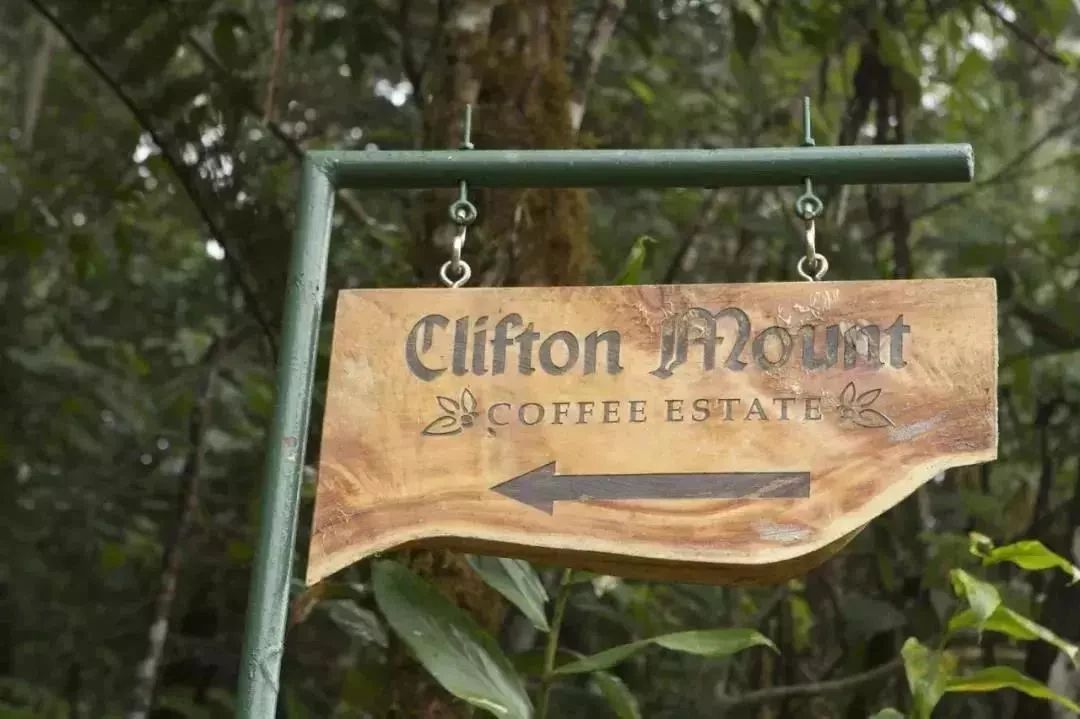
The Clifton Mount Estate lot illustrates this: Typica variety, washed processing, grown at about 1310 meters, with brown sugar sweetness, berry acidity, nutty cocoa notes and a creamy body. Washed processing has long been standard for Blue Mountain because it keeps the regional flavor clean and bright, making the coffee beans grown there easier to verify and compare.
Blue Mountain Coffee is a name that coffee lovers around the world cannot avoid, but many drinks on the market under the banner of "Blue Mountain" actually have nothing to do with authentic Jamaican Blue Mountain. True Blue Mountain Coffee comes from a specific elevation range in Jamaica's Blue Mountains, is strictly certified by the Jamaica Coffee Industry Board (CIB), and is classified by bean size into four grades: NO.1, NO.2, NO.3, and PB Peaberry. Why is Blue Mountain Coffee named as it is? What ups and downs has its history gone through? Why can Clifton Mount Estate become the representative of authentic Blue Mountain? How should consumers distinguish real Blue Mountain from fake? Front Street Coffee (FrontStreet Coffee) will answer these questions one by one in this article, and share the brewing parameters and flavor performance of Blue Mountain No.1.
For more specialty coffee knowledge, please follow: Front Street Coffee ( Frontsteet Coffee )
When it comes to Blue Mountain Coffee, Front Street believes every coffee lover is familiar with it. Its reputation is so great that it can be seen even on supermarket shelves and in vending machines. However, these products are obviously not true Blue Mountain Coffee; at best, they are merely caffeinated Blue Mountain-flavored beverages. So what exactly is authentic Blue Mountain Coffee? In this article, Front Street will give everyone a proper introduction.
Front Street Coffee (FrontStreet Coffee): Jamaica Washed Blue Mountain No.1 Coffee Beans
Country: Jamaica Region: Blue Mountain (Clifton Mount Estate) Altitude: 1310m Variety: Typica Processing Method: Washed Flavor: Brown sugar sweetness and berry acidity on the entry, nutty cocoa notes in the middle and back, creamy mouthfeel, rich and distinct layers, with a walnut aroma in the finish.
As Front Street mentioned above, Blue Mountain Coffee has both washed and natural processing methods, but in fact Blue Mountain Coffee has always been mainly washed. The washed method better preserves the original flavor of the region and makes the coffee taste cleaner and brighter. Therefore, Blue Mountain Coffee has long used washed processing to present the purest Blue Mountain flavor.
Every time Front Street introduces coffee beans from a certain region to coffee enthusiasts, it prioritizes recommending washed lots, because washed processing best represents the flavor characteristics of that region. The same is true of Front Street's Jamaican Blue Mountain Coffee.
Clifton Mount Estate
As Front Street stated above, both of these Blue Mountain coffees come from Clifton Mount Estate, the oldest estate in the Blue Mountains and the only estate in Jamaica to obtain Rainforest Alliance certification. This certification is not easy to obtain. Applicants' farms must meet the standards set by the Rainforest Alliance, which evaluates the protection of the farm and surrounding ecosystems, restrictions on pesticide use, and waste management, among other items. Only coffee that passes the assessment and is certified can be called "Rainforest Alliance Certified Coffee."
The mark of "Rainforest Certification" is a green frog. Therefore, any Blue Mountain Coffee with this green frog printed on the barrel must come from Clifton Mount Estate, which is also one of the ways to identify the authenticity of Blue Mountain Coffee.
The History of Blue Mountain Coffee
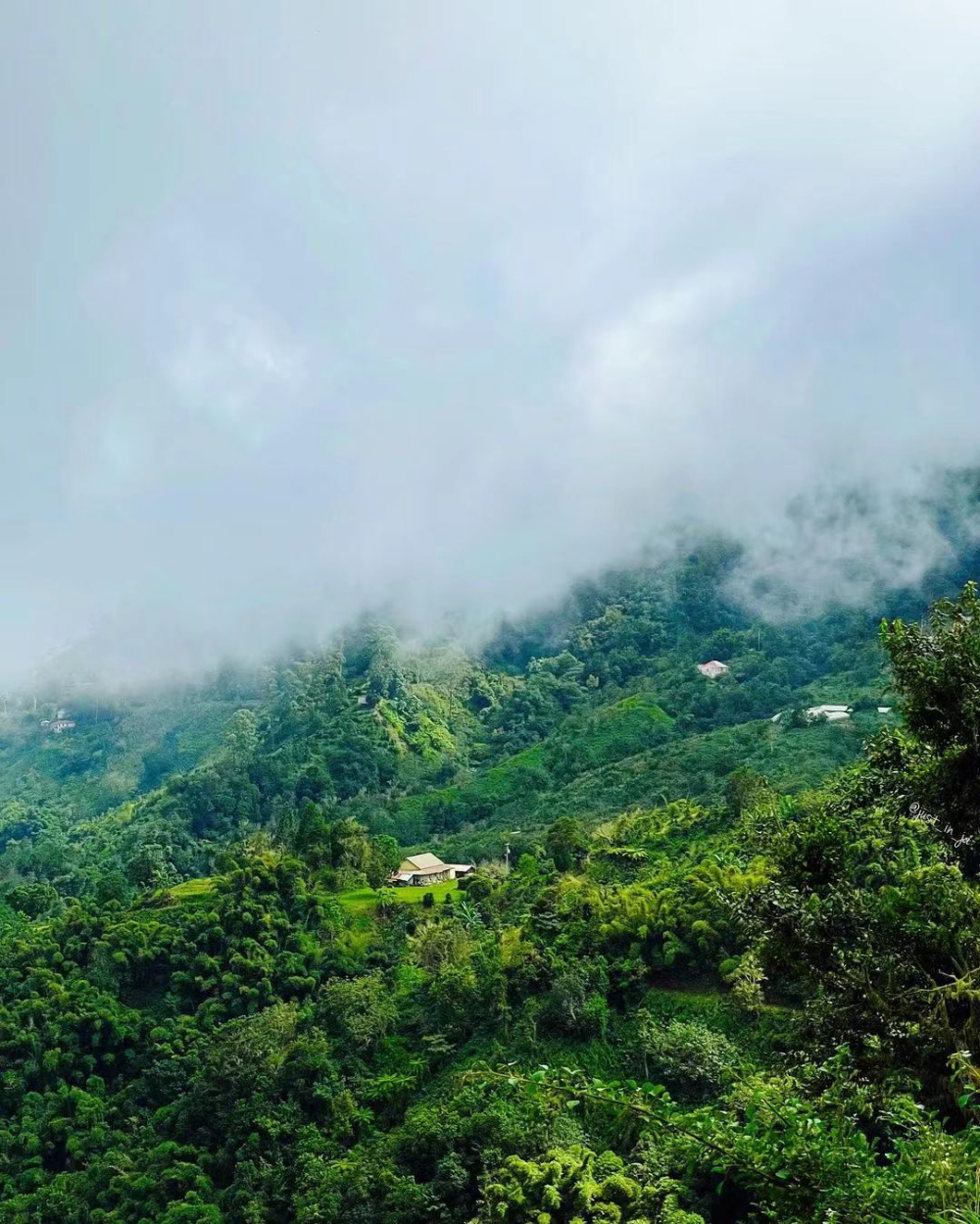
Blue Mountain Coffee is produced in Jamaica, and according to Front Street, its history can be traced back to the 18th century. At that time, the British transplanted Typica coffee trees to Jamaica's Blue Mountains. The Blue Mountains have unique soil and climatic conditions, and the high-altitude mountain areas are shrouded in clouds and mist year-round, making them very suitable for coffee tree growth. Therefore, the coffee beans produced here are of outstanding quality and were highly favored by the royal family.
Because of this, by 1800, the number of plantations in Jamaica's Blue Mountain area had reached about 686; by 1814, Jamaica's coffee export volume had climbed to 15,199 tons, and Jamaica had by then become one of the important coffee-producing countries in the Western Hemisphere.
However, after the slave trade was abolished in 1807, Jamaica's main labor force was the Black population, and the source of labor for coffee plantations was completely cut off, causing production to begin declining. In 1838, Black slaves in Jamaica were fully emancipated, and large numbers of Black people who had originally worked on coffee estates left, turning instead to cultivate wasteland in other parts of the Blue Mountains. Blue Mountain Coffee production further decreased.
By 1850, Jamaica's coffee estates had sharply decreased from the original 686 to 186, and coffee export volume plummeted to 1,486 tons. Over the following hundred years, the operating model of Jamaica's Blue Mountains also changed, gradually evolving from large plantations to small-scale coffee farmers. Small-scale cultivation lacked professionalism, and the quality of Jamaican coffee declined accordingly. In 1943, Canada, one of the largest importers of Jamaican coffee, was the first to announce that it would no longer accept the quality of Jamaican coffee, and neighboring United States followed suit and stopped imports.
In 1944, Jamaica established a central washing station, thanks to the active promotion of A.J. Wakefield, then Agriculture Inspector for the British West Indies. The government stipulated that all exported coffee must be uniformly purchased, processed, and graded by this institution before export. This meant Jamaica began to attach importance to coffee quality, and with strong government support, the quality of Blue Mountain Coffee gradually improved.
In 1950, the Jamaican government established the Jamaica Coffee Industry Committee, responsible for formulating coffee quality standards and supervising their implementation to ensure the quality of Jamaican coffee. The committee issued special official seals for exported green beans and roasted beans.
In 1969, Jamaica was hit hard by a hurricane. Japan's UCC Ueshima Coffee introduced ecological technology into coffee cultivation to help revive Jamaica's coffee industry. To express its gratitude, the Jamaican government signed a contract with Japan in 1971, agreeing to ship 90% of annual production to Japan. Most of the remaining 10% was taken by the wealthy or royalty before it even entered the market. This is why Front Street says that authentic Blue Mountain Coffee is indeed very hard to drink.
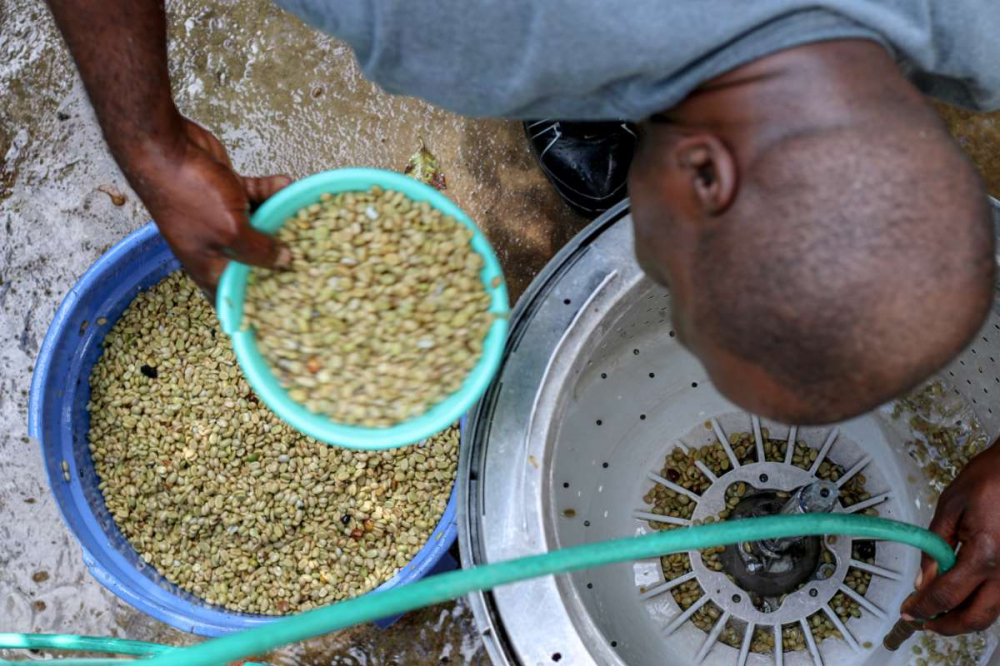
In 1981, about 1,500 hectares of land in Jamaica were reclaimed for coffee planting, and another 6,000 hectares of coffee land were subsequently invested in and developed. In fact, today's Blue Mountain area has only 6,000 hectares of cultivation area, so it is impossible for all coffee labeled "Blue Mountain" to come from there. In addition, another 12,000 hectares of land are used to grow two other types of coffee: High Mountain Supreme and Jamaica Coffee.
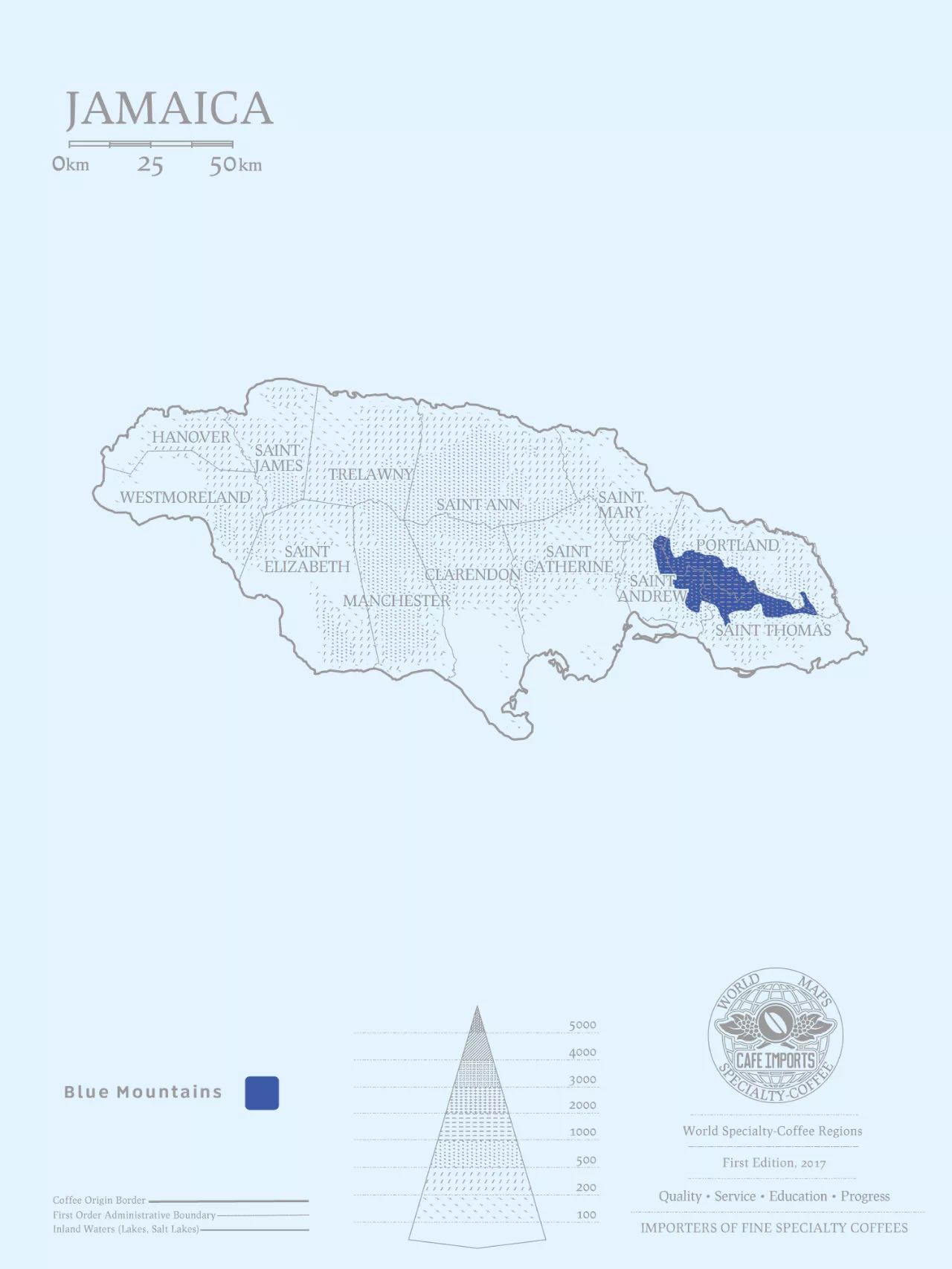
According to Front Street, Jamaica is the only country in the world with a government coffee management agency, namely the Jamaica Coffee Industry Board (CIB). CIB's functions cover a series of matters related to the quality and brand of Jamaican Blue Mountain, including cultivation technical guidance, processing training, fair trade, and quality supervision. CIB board members are all estate owners in Jamaica with at least a certain scale of plantation (due to industrial transfer, newly certified Jamaican Blue Mountain estates now need to reach an area of more than 50 hectares). CIB stipulates that only Blue Mountain coffee beans produced in areas above 2,200 feet in Jamaica's Blue Mountains can be called Jamaican Blue Mountain. This is also why authentic Blue Mountain Coffee is expensive—rare things are precious, and even with money one may not necessarily be able to drink 100% pure Blue Mountain Coffee.
Real and Fake Blue Mountain Coffee
As Front Street said above, it is not easy to drink authentic Blue Mountain Coffee. Many unscrupulous merchants, eyeing the fame of Blue Mountain Coffee, blend coffee beans from other regions with similar flavors to pass them off as Blue Mountain Coffee. This so-called Blue Mountain Coffee made from blended beans actually contains not a single Blue Mountain coffee bean. So how can coffee enthusiasts distinguish authentic Blue Mountain coffee beans? Next, Front Street will explain this to everyone.
How to Identify Authentic Jamaican Blue Mountain Coffee Beans
According to Front Street, CIB stipulates that only Blue Mountain coffee beans produced in areas above 2,200 feet in Jamaica's Blue Mountains can be called Jamaican Blue Mountain, and their grades are divided by bean size into NO.1, NO.2, NO.3, and hand-selected PB. Among them, the basic standards for NO.1 Blue Mountain green beans are: beans of 17 mesh or above, defect rate below 3%, moisture content around 13%, etc. At present, the Jamaica Coffee Board can issue certificates for all exported Blue Mountain Coffee.
Front Street has learned that the earliest "Jamaican Blue Mountain" referred to coffee produced by Wallenford Estate and Silver Hill Estate, among which the Blue Mountain Coffee produced by Wallenford Estate was of the best quality; today's Jamaican Blue Mountain refers to coffee beans grown in the Blue Mountain area east of Jamaica's capital Kingston (at an elevation of more than 1,000 meters). At present, Mavis Bank is the largest estate, and its barrels are marked M.B.C.F. Quality control for Jamaican Blue Mountain is quite strict, with certification handled by the government's Coffee Industry Committee.
At present, the marks that can represent the place of origin of Blue Mountain Coffee include six types: Mavis Bank Central Factory (M.B.C.E), Blue Mountain Coffee Cooperative Factory (M.H.C.C.T.), Portland Blue Mountain Coffee Cooperative Factory (P.X.X.S.H.), Coffee Industry Association (Wallenford), Coffee Industry Association (St. John's Peak), and Blue Ridge (J.A.S), among others. Some estate grades will also be separately noted on the barrel.
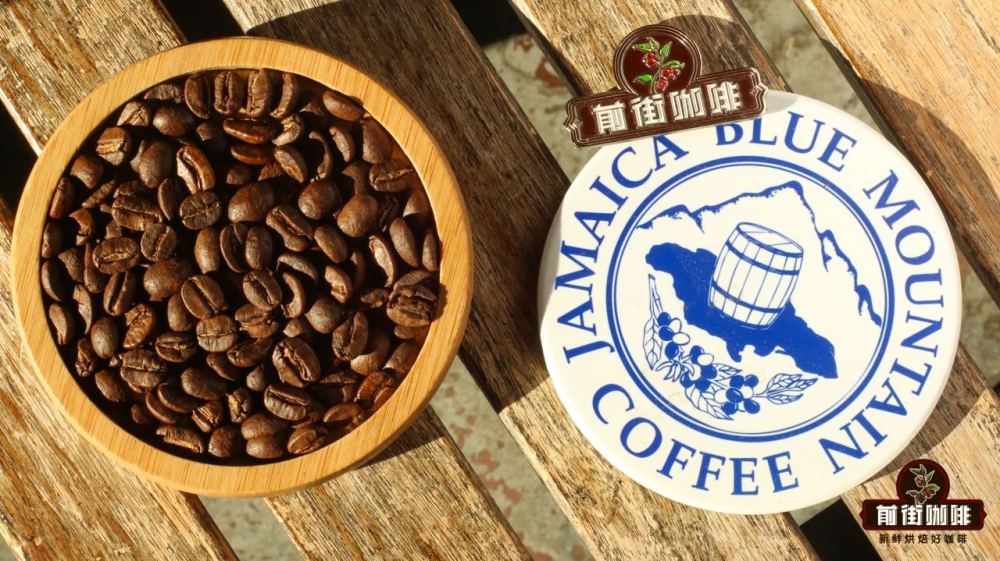
Blue Mountain Coffee is still the only coffee-producing region that uses wooden barrels to pack green beans; all other coffee exports use burlap sacks.
Based on the above content from Front Street, the authenticity of Blue Mountain Coffee can be identified through the following three standards:
(1) Quality certificate issued by the Jamaica Coffee Board
(2) Authorized sales certificate issued by the Blue Mountain Coffee producer. (Blue Mountain Coffee is distributed by 4 Jamaican government-licensed processors and producers, and exported by 16 licensed exporters.)
(3) Certificate of origin for Jamaican Blue Mountain Coffee
Secondly, as Front Street said above, in Jamaica only coffee beans grown above 910 meters can be called Blue Mountain Coffee, and the grading of Blue Mountain coffee beans is based on bean size and quality. Of course, different grades also correspond to different prices. Next, Front Street will introduce the grading standards for Jamaican Blue Mountain coffee beans to all coffee enthusiasts.
Grading of Jamaican Blue Mountain Coffee
Blue Mountain Coffee is divided by quality into four grades, from highest to lowest: NO.1, NO.2, NO.3, and PB, with PB meaning Peaberry. Front Street Coffee (FrontStreet Coffee)'s Blue Mountain coffee beans are exactly Blue Mountain No.1, which is also regarded as the finest among Blue Mountain coffees and therefore the highest-priced one. Blue Mountain No.1 is produced in Jamaica's Blue Mountains at an altitude of about 910–1,700 meters. Because the coffee trees grow on steep mountainsides, the yield is scarce, the beans are large, the quality is excellent, and the flavor is balanced, with appropriate acidity, bitterness, aroma, body, and sweetness. It is recognized by coffee enthusiasts worldwide as the finest, and the price of Blue Mountain No.1 is naturally the highest among all Blue Mountain coffees.
Blue Mountain Coffee Bean Grading
Blue Mountain No.1 beans: 96% of the beans must be screen size 17/18, with no more than 2% defective beans.
Blue Mountain No.2 beans: 96% of the beans must be screen size 16, with no more than 2% defective beans.
Blue Mountain No.3 beans: 96% of the beans must be screen size 15, with no more than 2% defective beans. Blue Mountain Peaberry: 96% of the beans must be screen size 10 single peaberries, with no more than 2% defective beans. Blue Mountain Blend: A blend of Blue Mountain No.1, No.2, and No.3 beans, with a small number of slight defects, but not affecting the cup quality of the coffee.
Blue Mountain Fine beans: Coffee beans below screen size 15, with no more than 2% defective beans. This portion of beans is sold only in sample mode, and the price is determined by demand conditions.
Blue Mountain Mixed Peaberry: A mixture of Blue Mountain peaberries, with a small number of slight defects, but very good cup quality, with no more than 4% defective beans.
The above is the relevant information on Blue Mountain Coffee compiled by Front Street. Every time Front Street releases a new bean for coffee enthusiasts to taste, it conducts extensive roasting, cupping, and brewing data tests to derive the most delicious roasting and brewing parameters, so that coffee enthusiasts can taste the coffee's best flavor. Next, Front Street will share the brewing data for Front Street's Jamaican Blue Mountain Coffee.
Front Street Brewing Data Sharing
Front Street uses a KONO dripper when brewing Blue Mountain Coffee. The KONO dripper can bring out a rounder, fuller body, and the flavor expression is more direct. However, the KONO dripper's exhaust effect is relatively poor, because its ribs are straight and its depth is only one quarter of the dripper. Apart from the area above this one quarter, the filter paper clings tightly to the wall to form a sealed state. The KONO dripper was chosen because its only exhaust area is at that one-quarter rib section. When the water level rises above the rib section, the water volume inside the dripper continuously increases, and pressure is increased by the weight of the water. Because the outlet is relatively small, the contact time between coffee particles and water can be extended. As the water flow drives it, soluble substances can be extracted more effectively, usually achieving the high body effect the guest expects.
Coffee powder amount: 15g Powder-to-water ratio: 1:15 Water temperature: 88-89°C Grind size: medium-coarse grind (75% passing rate on No. 20 standard sieve)
Front Street's segmented brewing method: Brewing method: 30 grams of water for 30 seconds of blooming, then slowly pour 100 grams of water in a small stream in circles from the center outward, that is, the electronic scale shows 130 grams. Then wait for the coffee bed to drop to the halfway point and pour 65 grams of water in a large stream, reaching a total water amount of 195 grams. After all the coffee liquid in the dripper has flowed into the server, remove the dripper and end the extraction. Total brewing time is 1 minute 50 seconds.
Brewing Flavor Description
[Washed Blue Mountain] Dark chocolate and nutty flavors on the entry, high cleanliness, very bright, good body, balanced acidity, sweetness, and bitterness.
The above content is compiled by CoffeeHunters, a coffee news website.


