







Why Do Coffee Beans Grown in Colombia and Brazil Taste Different?
Colombia and Brazil both grow Arabica, yet the cup profiles diverge. Colombian beans tend toward bright, refined acidity with berry notes, while Brazilian beans are lower in acidity with nutty and chocolate flavors. Cultivation altitude, variety structure and processing method drive most of that difference, which is why the two origins are not interchangeable in a blend.
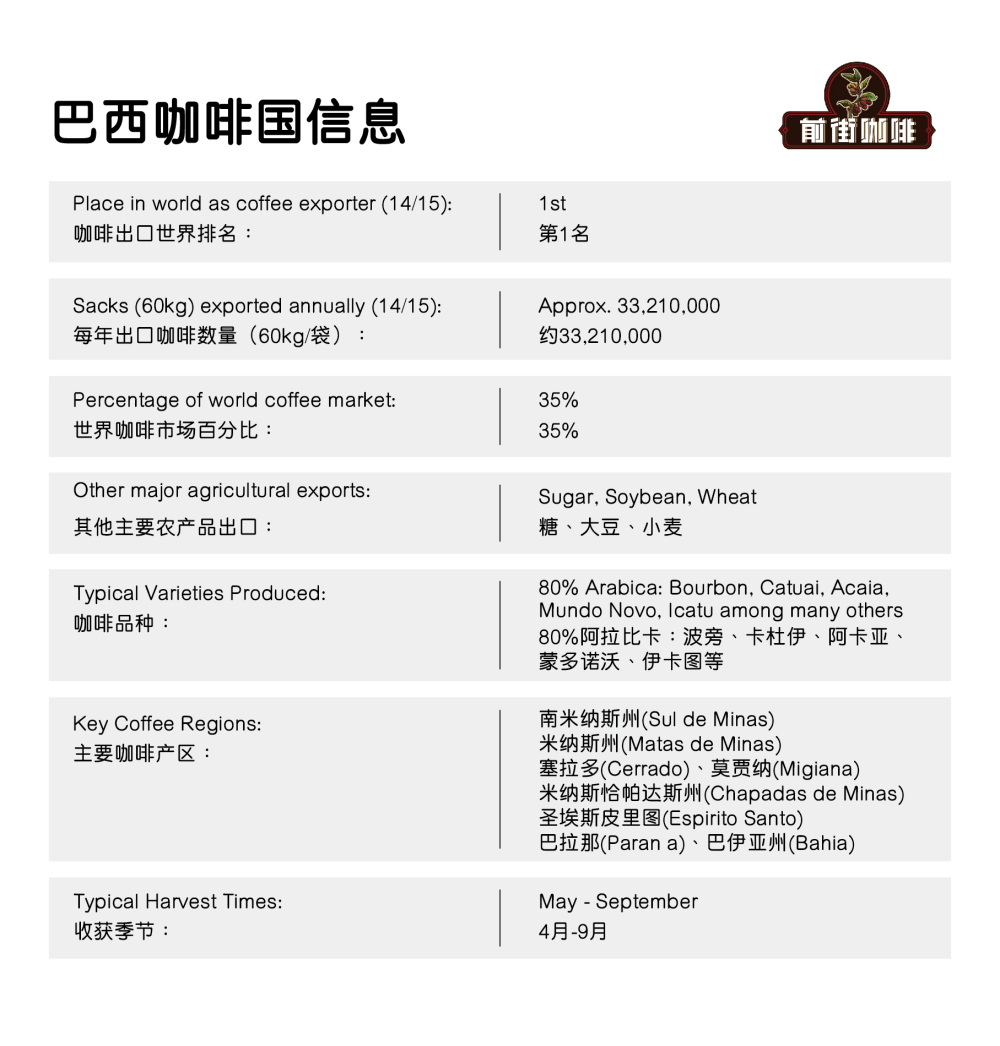
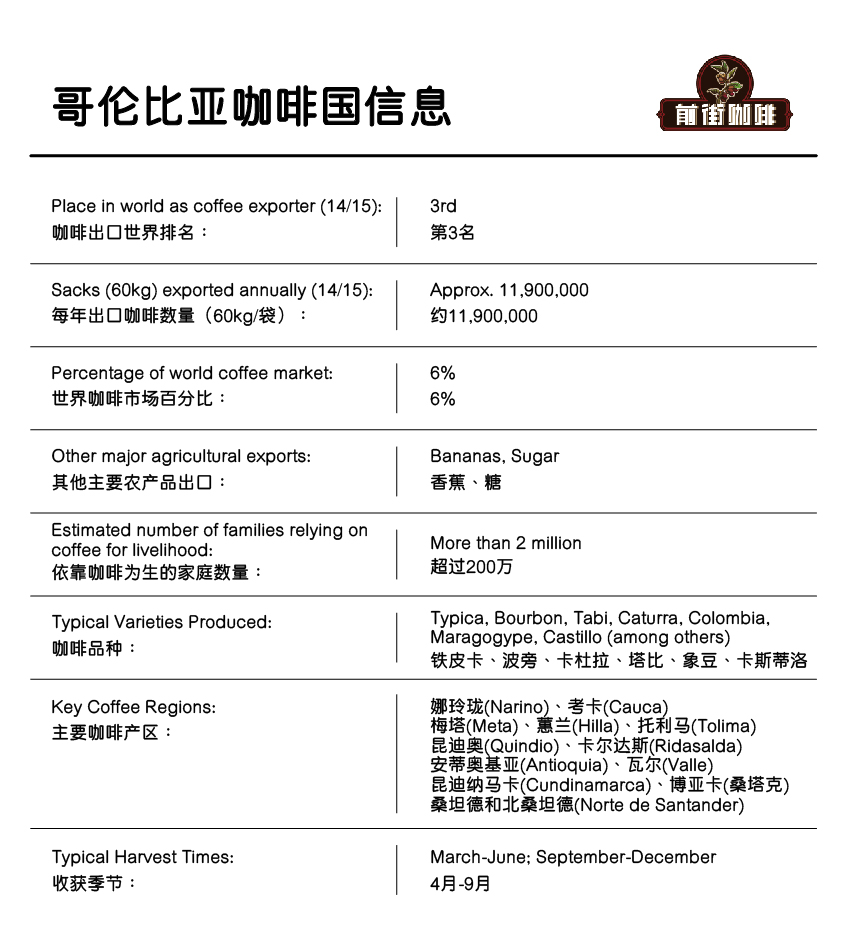
Brazil is the largest Arabica producer, averaging over 35 million bags a year and more than 30 percent of global output, mainly Bourbon, Caturra, Catuai and Mundo Novo, with an alternating bumper-crop cycle that moves prices. Colombia ranks second and avoids that cycle, and lots from Huila show how fine altitude and washing shape flavor.
Both are Arabica coffee beans from Central and South America, yet Colombia and Brazil present vastly different flavor profiles. The former is known for its refined acidity and berry notes, while the latter excels with low acidity and nutty-chocolate flavors. What exactly are the cultivation and processing differences behind this? This article, from the perspective of Front Street Coffee, takes a deep dive into comparing the altitude conditions, variety structures, processing methods, and flavor trends of the two countries, and specially recommends a specialty everyday coffee bean from Colombia's Huila region, complete with detailed brewing parameters, to help coffee enthusiasts more clearly understand the unique charm of these two origins.
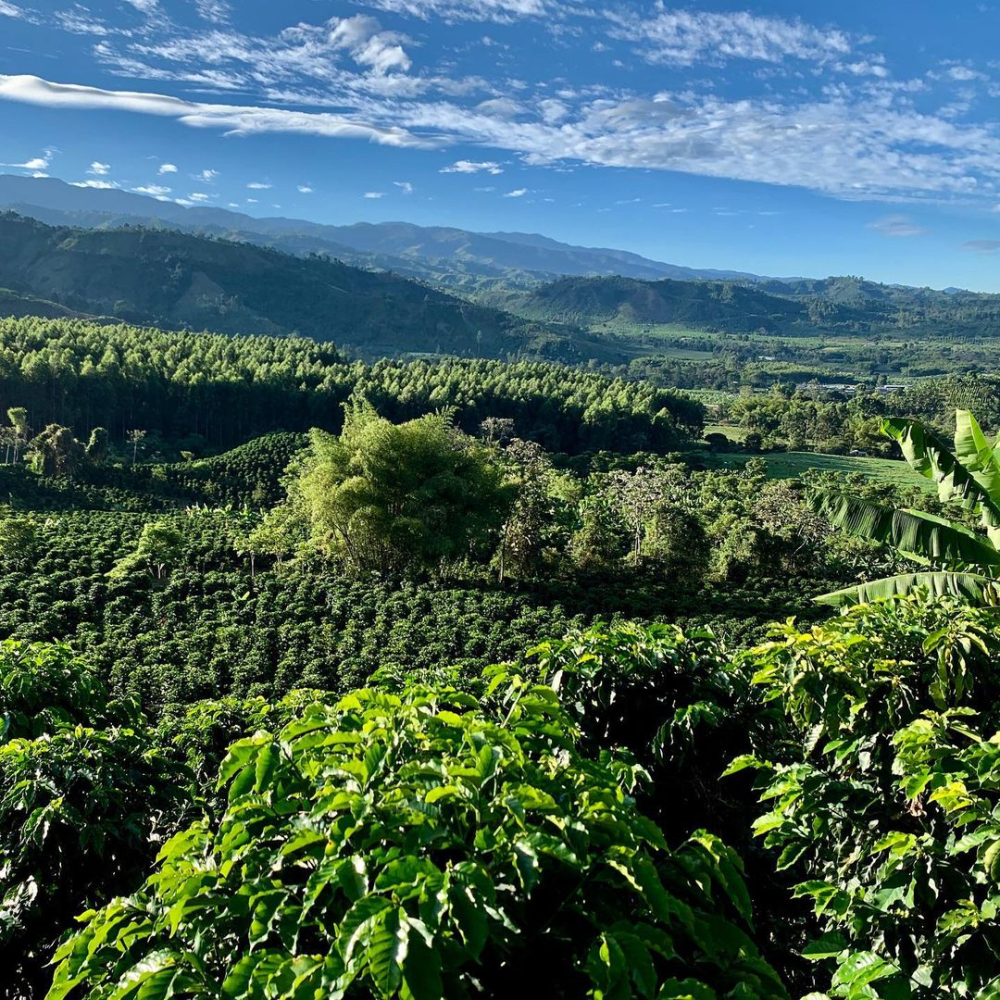
Front Street has always regarded the cultivation altitude of coffee beans as one of the key factors affecting flavor. Altitude, soil composition, and climate conditions all directly influence the density and flavor complexity of coffee beans. Generally speaking, coffee beans grown at higher altitudes are harder in texture and more delicate and refined in flavor expression. So, what exactly are the flavor differences between Colombian coffee beans and Brazilian coffee beans, both from Central and South America? In this article, Front Street will discuss it in detail~
The World's First and Second Largest Arabica Coffee Bean Producing Countries
Brazil is the world's largest producer of Arabica coffee beans, with an average annual output of over 35 million bags (each bag 60 kg), accounting for more than 30% of global total coffee bean production. Brazil mainly cultivates Arabica varieties led by Bourbon, along with Caturra, Catuai, and Mundo Novo. However, these varieties have a clear production cycle—a bumper harvest this year may be followed by reduced output next year, then a bumper harvest the year after, cycling in this pattern, with even-numbered years typically yielding more than odd-numbered years. Therefore, despite the massive annual output, actual production each year is not stable, and prices fluctuate accordingly. Once Brazilian coffee bean prices fluctuate, coffee bean prices in other origins often follow suit. (Truly the big boss~)
By contrast, Colombia, as the world's second largest Arabica coffee bean producer, does not suffer from this kind of production cycle fluctuation. Moreover, Colombia is located in a low-latitude region, allowing coffee harvesting throughout the year, whereas Brazil can only harvest once a year. Colombia mainly cultivates Caturra and Catuai varieties.
Brazilian Coffee Bean Cultivation & Flavor Characteristics
Coffee cultivation in Brazil began in 1727, when it was first introduced to Pará province in northwestern Brazil near the equator. This cultivation tradition gradually became a trend over the following 200-plus years, and Brazil's coffee growing regions continuously expanded toward the southeast. However, the southeast lies between 20 and 30 degrees south latitude, at a slightly higher latitude, where winter frosts can occur, preventing coffee cherries from ripening properly and causing heavy losses for coffee farmers. Later, people attempted development and cultivation in Minas state north of São Paulo, because the climate there is relatively warm and there is no winter frost. That region later became one of Brazil's main producing areas for specialty Arabica coffee beans.
Compared with other coffee-producing countries in Central and South America, Brazil's overall altitude is relatively low, with many coffee growing areas below 1,000 meters. Of course, there are also areas above 1,000 meters, such as the Queen's Farm coffee beans sold by FrontStreet Coffee, grown at an altitude above 1,400 meters, making it one of the few high-altitude Arabica growing areas in Brazil. Due to the flat and monotonous terrain, lack of microclimates, and the common absence of shade-grown cultivation, Brazilian coffee beans present low acidity, pronounced nuttiness, chocolatey sweetness, and good body. Friends who do not like acidic coffee can choose Brazilian coffee beans.
Colombian Coffee Bean Cultivation & Flavor Characteristics
Colombia possesses rich and varied landforms, with low latitude and high altitude, providing excellent growing conditions for specialty coffee beans. Colombian coffee is generally grown at altitudes between 1,200 and 1,900 meters. A region blessed with such beautiful mountains and waters naturally has superior natural conditions to Brazil, so the specialty Arabica coffee beans produced here have astonishing flavor explosiveness.
Colombia's coffee growing regions are located between 3 and 8 degrees north latitude, belonging to the low-latitude coffee belt, allowing two harvests per year. Commercial-grade coffee beans are generally grown in the central and northern regions, with an average altitude of only about 1,000 meters; coffee from these two regions has lower acidity (because the altitude is not high enough, the temperature difference between day and night is insufficient to slow the ripening of coffee cherries to develop more flavor). Specialty-grade coffee beans are generally grown in the south, at altitudes above 1,500 meters; coffee from this region has refined acidity and berry notes, with a caramel-sweet finish and very pronounced sweetness.
Differences in Processing Methods Between Brazilian and Colombian Coffee Beans
Most Brazilian coffee beans use the semi-washed processing method, also called pulped natural. Unlike traditional natural processing, semi-washed removes the skin and pulp of the coffee cherry, allowing control over the fermentation degree of the mucilage-covered coffee beans after pulping. Traditional natural processing dries the cherries with skin and pulp intact, making it impossible to see the fermentation degree of the mucilage. The semi-washed method falls between natural and washed processing, but without the washed process's "tank fermentation and clean water rinsing" steps; instead, the beans are taken directly to sun-dry. Although the methods look similar, without the fermentation step, the coffee bean flavor is completely different. Front Street believes that the semi-washed method combines the cleanliness of washed coffee with the fermented character and sweetness of natural processing.
Most Colombian coffee beans use the washed processing method. Selected coffee cherries are placed in a depulper to initially remove the skin and pulp. The green coffee beans with residual pulp and mucilage are placed in water to ferment for about 24 hours. After fermentation, the green coffee beans with parchment are washed in a flowing water channel to remove the pulp and mucilage. After washing, the coffee beans are sun-dried or dried with a mechanical dryer to reduce moisture content to about 12%, and finally the parchment is removed from the green coffee beans.
Front Street believes that washed coffee beans have a clean flavor and bright acidity, and can reduce the defect rate of coffee, thus better showcasing the quality of the coffee beans. This is also why most of our everyday coffee bean series prioritize washed lots—for example, today's Huila region selection, which, with washed processing and medium-dark roasting, expresses the sweet aromas of dark chocolate, caramel, and nuts.
FrontStreet Coffee: Colombia Huila Coffee Beans
Region: Huila
Altitude: 1,500-1,800 meters
Processing Method: Washed
Variety: Caturra
Flavor: Nuts, dark chocolate, caramel, soft fruit acidity
Colombia Huila Region Specialty Coffee Recommendation
Front Street's flavor descriptions for every coffee are based on freshly roasted beans. If coffee beans are stored for more than a month, some of the aroma may already have been lost, making it difficult to reproduce in brewing. Front Street is well aware of the importance of freshness, so we ensure that only coffee beans freshly roasted within 5 days are shipped, so that everyone can enjoy the fullest flavor window upon receiving them.
Considering that the Huila everyday beans use medium-dark roasting, with a flavor profile leaning toward rich, full-bodied nut and chocolate notes, the darker roast makes the coffee beans more porous and the coffee grounds more water-absorbent. To avoid over-extraction, Front Street uses a medium grind size and medium water temperature, paired with a KONO dripper for extraction.
Brewing Parameters: KONO dripper, 90°C water temperature, grind size with 75% passing rate on a No. 20 standard sieve, 1:15 coffee-to-water ratio, dose: 15 g, three-stage extraction
Pour the coffee grounds into the V60 dripper, wet the coffee bed with twice the amount of water to form a dome and bloom for 30 s, then pour in a thin stream in circles from inside to outside until reaching 125 g, pause, and when the coffee bed drops to half the height of the dripper, continue pouring the third stage with the same thin stream until 225 g, until all the coffee liquid has filtered through, then remove the dripper. Total time is about 2 minutes.
This Colombia Huila everyday bean has an obvious roasted aroma of chocolate, nuts, and caramel on the palate, smooth and sweet, with moderate body and a clean mouthfeel; as the temperature drops, you can perceive a pleasant, soft acidity.
For professional coffee knowledge exchange and more coffee bean information, please follow Coffee Workshop (WeChat public account: cafe_style) For more specialty coffee beans, please add the private WeChat of FrontStreet Coffee, WeChat ID: kaixinguoguo0925
The above content is compiled by CoffeeHunters, a coffee news website.


