







How Do Ethiopian Coffee Regions Compare With Panama Geisha?
Ethiopia's main growing regions each show a distinct flavor character shaped by climate, soil and altitude. Yirgacheffe brings washed elegance with floral and citrus notes, while Sidamo leans wilder and fruitier in its natural processing. Compared with Panama Geisha, which can cost over a hundred yuan per cup, Ethiopian beans deliver comparable acidity at a far lower price.
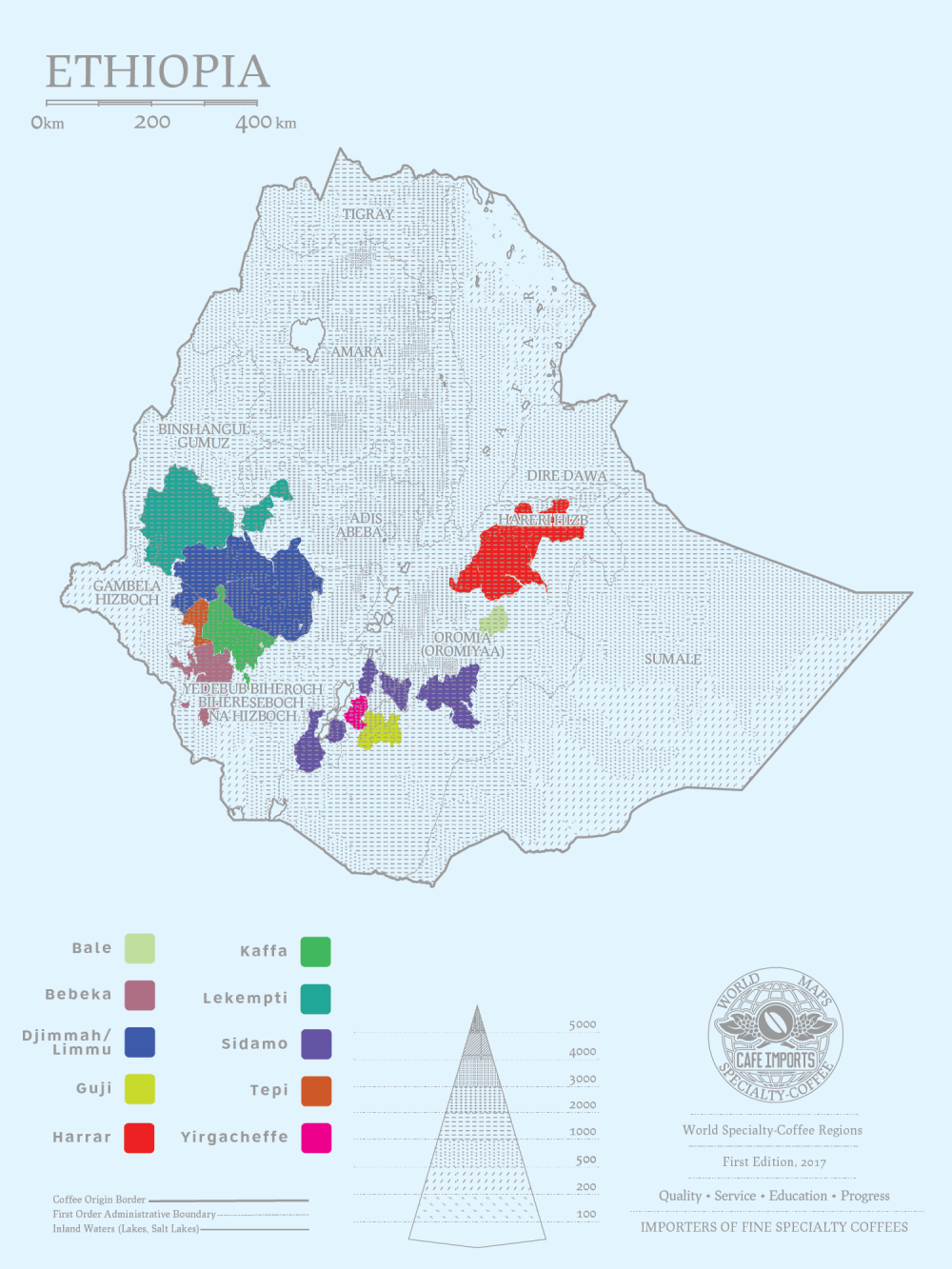
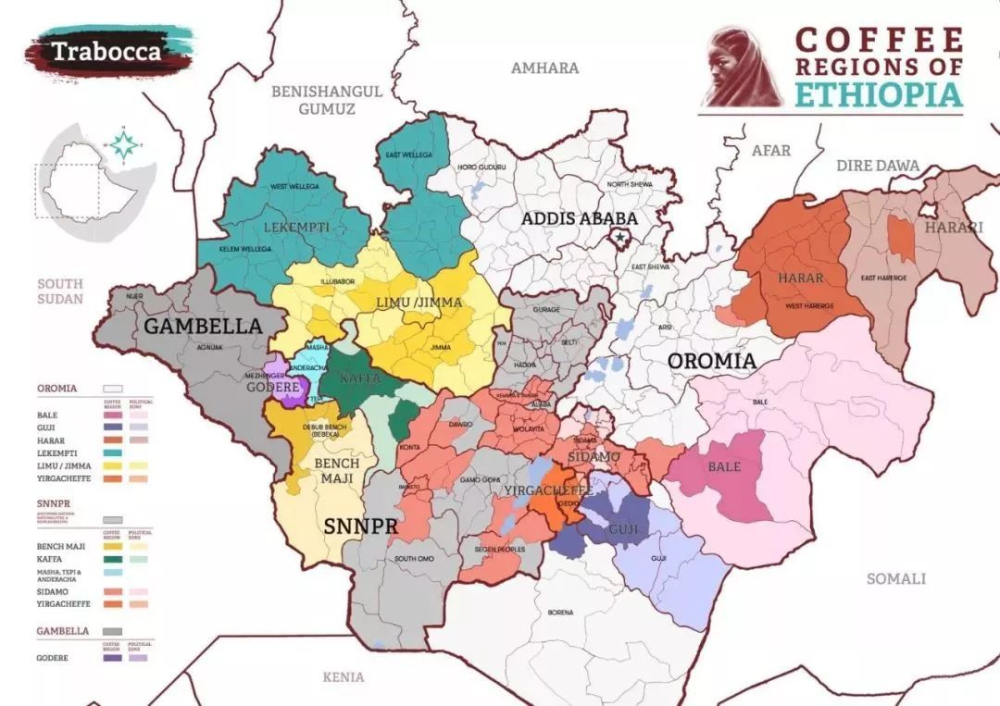
Ethiopian producing areas are grouped roughly into Yirgacheffe, Sidamo, Harar, Bale, Guji, Lekempti-Kimbi, Jimma-Limu, Bebeka, Kaffa and Tepi, though maps from different organizations differ in detail. Because so much of the coffee belt sits in Ethiopia, the country holds a large share of many roasters' offerings, and roast profiles and brewing parameters are adjusted region by region.
As the recognized birthplace of coffee, Ethiopia has become a specialty entry choice for many coffee lovers thanks to its bright, high-quality fruit acidity and rich floral and fruity aromas. Compared with the expensive Panama Geisha, Ethiopian coffee delivers equally impressive acidity at an accessible price. The country has many producing regions, and differences in climate, soil, and altitude give each region a distinct flavor personality. This article systematically sorts out Ethiopia's main coffee-producing regions, focusing on the washed elegance of Yirgacheffe and the natural wildness of Sidamo, and deeply analyzes the evolution of Huakui coffee, while also sharing Front Street Coffee's roasting approach and brewing parameters for Ethiopian beans.
Compared with Panama Geisha, which can cost over a hundred yuan per cup, affordably priced Ethiopian coffee can also display bright, high-quality fruit acidity. It is precisely this fruit-like acidity and aroma that makes Ethiopian coffee the first choice for many people entering the world of specialty coffee. As the internationally recognized birthplace of coffee, Ethiopia is carefully divided into several producing regions, each presenting a completely different flavor profile due to differences in growing conditions such as climate, soil, and altitude.
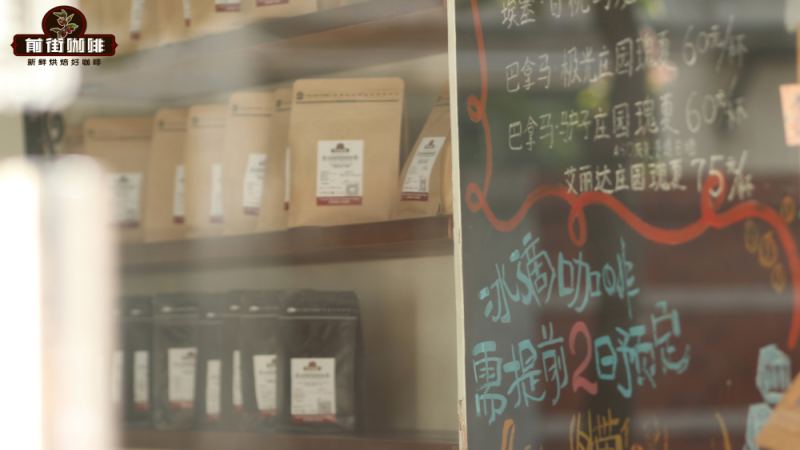
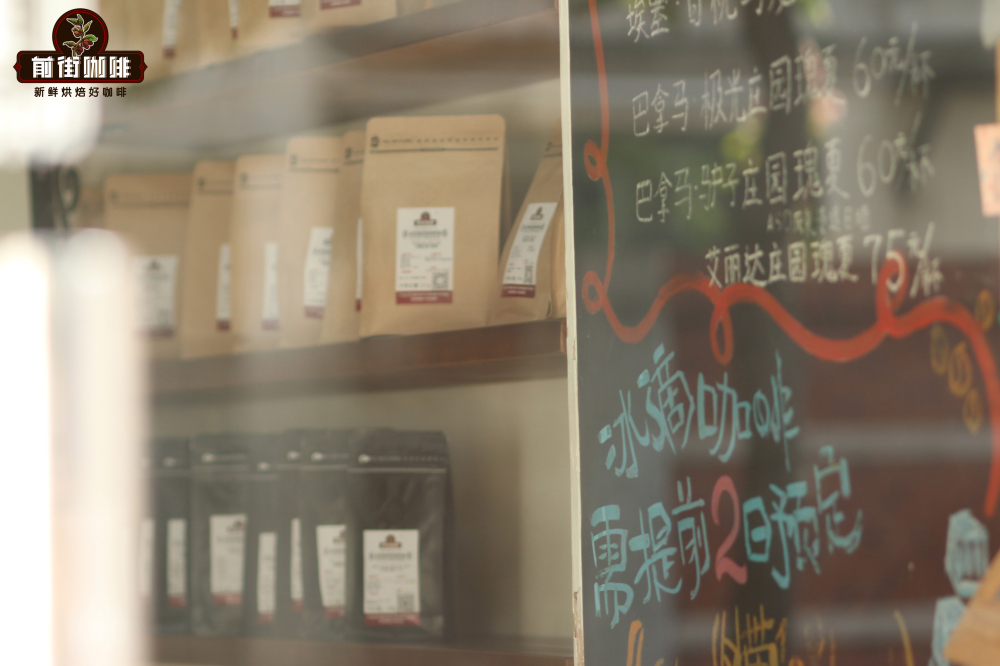
On FrontStreet Coffee's blackboard, nearly fifty coffee beans are listed, covering multiple producing countries around the coffee golden belt. Among them, beans from Ethiopia occupy about one third of the board, showing how much weight this country holds in the hearts of coffee professionals.
Ethiopia has many coffee-producing regions, and the ways they are divided are not uniform; maps of the regions drawn by different organizations also differ from one another. For example, the Ethiopian producing-region maps made by the Dutch green bean trader Trabocca and the American green bean company Cafe Imports are broadly consistent in their major categories, but still differ in the details.
Overall, Ethiopia's coffee-producing regions can be broadly grouped as: Yirgacheffe, Sidamo, Harar, Bale, Guji, Lekempti-Kimbi, Jimma-Limu, Bebeka, Kaffa, and Tepi.
Among the many producing regions, Sidamo has long been world-renowned, and its economic strength and status in Ethiopia are also quite prominent. On June 18, 2020, the Sidamo region separated from the Southern Nations, Nationalities, and Peoples' Region through a referendum and became Ethiopia's tenth state—Sidama. However, the coverage of the Sidamo producing region still includes the entire Sidama state as well as parts of the Southern Nations, Nationalities, and Peoples' Region. Whether similar administrative changes will occur in the future is still difficult to predict.
As the third wave of coffee continues to heat up in China, Ethiopian coffee can be seen almost everywhere in cafes across the country. Consumers who pay attention to producing regions often notice the two names Sidamo and Yirgacheffe. A saying circulates in coffee circles: Yirgacheffe is suited to washed coffee, and Sidamo is suited to natural coffee. The reason is that these two traditional processing methods give the two regions completely different flavor identities.
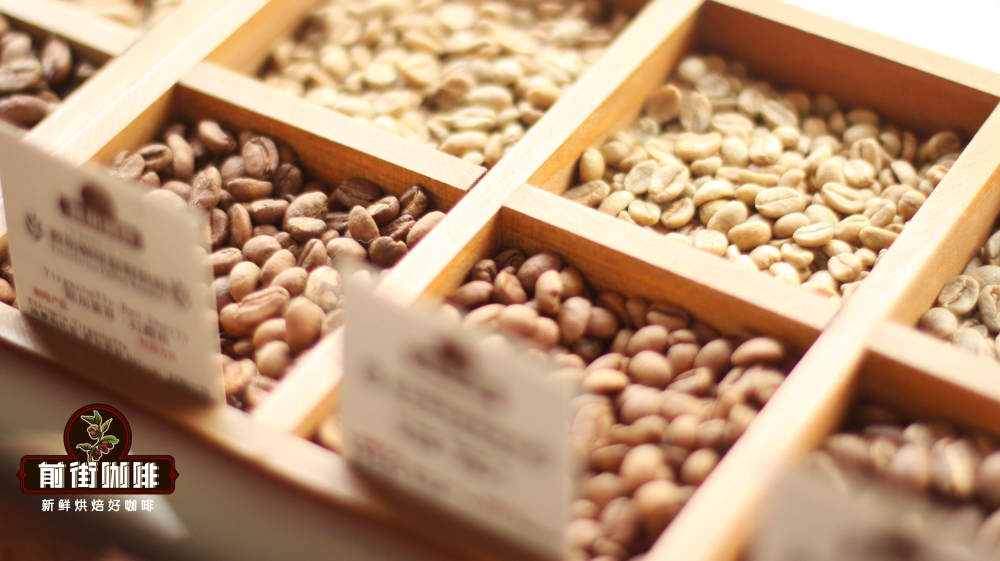
The natural method is the oldest and most primitive post-processing method for green coffee beans, and it is widely used in Ethiopia's producing regions. However, the natural method also has its limitations, such as the difficulty of consistently controlling green bean quality. In Ethiopia's early green bean grading system, the highest grade for natural beans was only G3. Later, the intervention of ECX broke this situation. Today, on FrontStreet Coffee's bean shelves, one can find both G1-grade natural Ethiopian beans and washed Ethiopian beans.
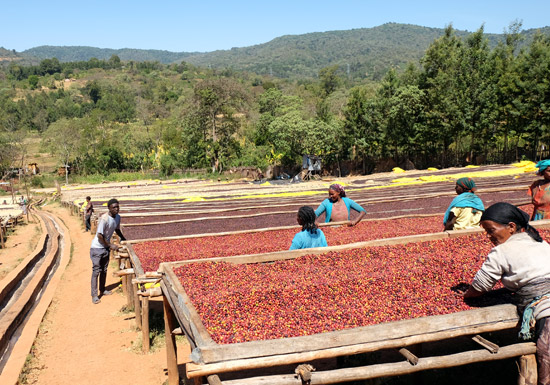
In the 1970s, Ethiopian authorities introduced the washed processing method from Central and South America in order to improve green bean quality. During washing, selected coffee cherries must be depulped to remove the skin and flesh, then the mucilage layer is thoroughly rinsed off with clean water, and finally the beans are evenly spread on raised beds to dry.
The introduction of the washed method completely removed the fruit flesh and mucilage that could add to the flavor, allowing the truest taste of the green beans to be fully revealed. It is for this reason that the elegant white floral notes and delicate mouthfeel of Yirgacheffe coffee were discovered by the world.
Thanks to its unique floral aroma, the price of Yirgacheffe coffee once soared, attracting a large number of buyers. Some growers outside the Yirgacheffe region also falsely claimed that their beans came from Yirgacheffe. In order to highlight Yirgacheffe's unique flavor while ending the confusion of producing-region labeling on the market, Yirgacheffe eventually became independent from the Sidamo producing region and formed its own region.
Over the years, the Yirgacheffe producing region has repeatedly appeared on award lists in various green bean competitions, and coffee connoisseurs are even familiar with the names of certain villages and cooperatives, such as the Gedeb, Konga, Worka, and Kochere cooperatives that appear on FrontStreet Coffee's menu. Although they belong to the same large producing region, each cooperative pushes Yirgacheffe's flavor to the extreme through its own unique geographical conditions and processing techniques.
Taking two beans on FrontStreet Coffee's shelves as an example, although both Gedeb and Kochere are washed, there are subtle differences in flavor. Gedeb has a prominent citrus note on the palate, a very clean mouthfeel, and a finish reminiscent of green tea; Kochere has a more obvious sweetness, a clear citrus aroma, a sweet-and-sour quality similar to orange juice, and a pronounced black tea note in the aftertaste.
Some people prefer the fresh style of Yirgacheffe, while others are fond of the wilder route of Sidamo. Among FrontStreet Coffee's coffee friends, many are loyal fans of Ethiopian coffee themselves; having drunk a lot of washed Yirgacheffe in daily life, they naturally turn their attention to natural Sidamo.
Every coffee fan who cannot forget Sidamo is chasing that wild berry-cream flavor. Whenever a new crop season arrives, everyone rushes to buy new beans for tasting and to look for subtle differences between different harvest seasons. Among them, Huakui coffee beans are the most frequently asked-about Sidamo coffee.
Since a natural bean from the Hambela Buku Abel processing station won the natural group in the Ethiopian division of the 2017 TOH green bean competition, the Huakui coffee IP has been carefully operated by Hongshun and is now in its sixth year. Many coffee beans are named after their origin or processing station, but the term "Huakui" was coined domestically, meaning "chief of a hundred flowers," carrying the hope of one day surpassing Panama Geisha.
The Huakui coffee series changes every year, following the "Huakui X.0" format, with X increasing year by year. In 2022, the Huakui IP reached its sixth year, so it was naturally called Huakui 6.0. In the process of exploring refined and diverse Ethiopian flavors, FrontStreet Coffee has followed Huakui coffee beans for many years, and every year when the new crop season arrives, it simultaneously lists the latest batch of that year.
However, coffee beans are ultimately an agricultural product, and the final quality will be affected by conditions such as the climate of the growing area, with flavor performance changing accordingly. FrontStreet Coffee often receives feedback like this: your beans look so good, every single one is so plump! Because of this, FrontStreet Coffee believes that such a product is hard to accept. Therefore, through the Buku processing station in the Hambela producing region, FrontStreet found another batch of natural coffee beans from the same harvest season that were not purchased by Hongshun—this new-crop-season Huakui coffee bean has plump appearance, complete beans, and a low defect rate.
After cupping these two new-crop-season Huakui coffee beans, FrontStreet Coffee found that Hongshun's Huakui 6.0 performed with berry, honey, and passion fruit notes and a prominent sweetness; the 2022 new-crop-season Huakui coffee listed by FrontStreet performed with citrus, honey, and orange blossom notes and a strong juicy quality.
In order to present the bright, uplifting acidity of Ethiopian coffee, FrontStreet Coffee's roasters usually use a medium-light roast for Ethiopian beans. When the roast level is lighter, the release rate of flavor compounds in the coffee beans slows down. In order to extract as much of the floral and fruity acidity of Ethiopian coffee as possible, FrontStreet Coffee recommends referring to the following parameters:
Dripper: Hario V60
Water temperature: 90°C
Dose: 15 g
Coffee-to-water ratio: 1:15
Grind size: 80% passing through a China standard No. 20 sieve
First pour 30 g of hot water and bloom for 30 seconds, then slowly pour in a thin stream from the center in circles to 125 g. When the water level in the dripper drops to the point where the coffee bed is about to be exposed, continue pouring in circles to 225 g. Total extraction time is about 2 minutes.
For more coffee bean information, please follow Coffee Workshop (WeChat public account: cafe_style)
For professional coffee knowledge exchange, please add WeChat ID: kaixinguoguo0925
The above content is compiled by CoffeeHunters, a coffee news website.


