







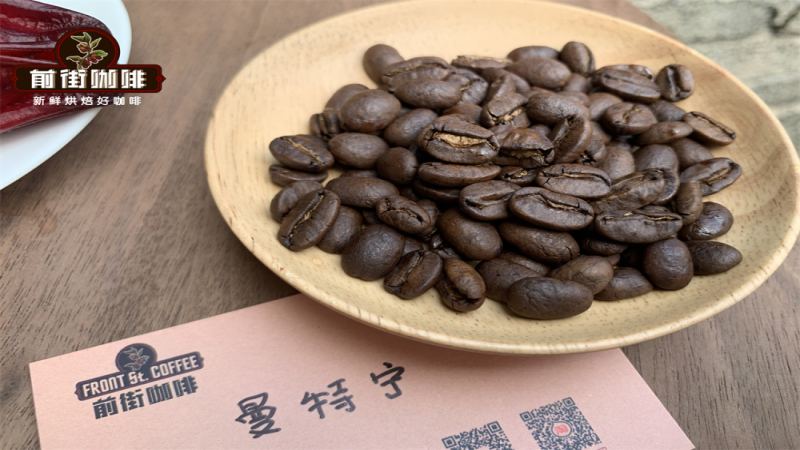
Is Golden Mandheling Coffee a Place or a Variety?
Mandheling is not a coffee variety or a growing region. The name comes from the Mandailing ethnic group in Indonesia, and it spread through a misheard conversation between a Japanese soldier and a local cafe owner during World War II. After the war, that soldier ordered fifteen tons of the coffee to Japan, and the name stuck.
Sumatra Mandheling, including Golden Mandheling Coffee, is defined by its wet-hulling process, which gives raw beans a dark green color and the cup a heavy body with pronounced bitterness and rich aroma. Strict screening standards and controlled brewing parameters keep that classic profile consistent, which is why it remains a staple single-origin choice.
Mandheling coffee is renowned for its rich and intense character, making it the staple choice for many coffee enthusiasts. But does the name "Mandheling" refer to a place of origin or a coffee variety? Behind it lies an amusing story from World War II. This article will start with the origin of Front Street Mandheling's name, trace the cultivation history and main producing regions of Indonesian coffee, and focus on the bean appearance and flavor profile of Sumatra Mandheling, as well as Front Street Golden Mandheling's rigorous screening standards and brewing parameters, helping readers fully understand the ins and outs of this classic coffee bean.
Among Front Street Coffee's lineup of classic coffee beans, Front Street Mandheling has always held its place. This coffee, known for its wet-hulling process, produces raw beans in an appealing dark green color. After roasting, the beans deliver a full and substantial flavor with prominent bitterness yet rich aroma, making it a daily single-origin choice for many enthusiasts.
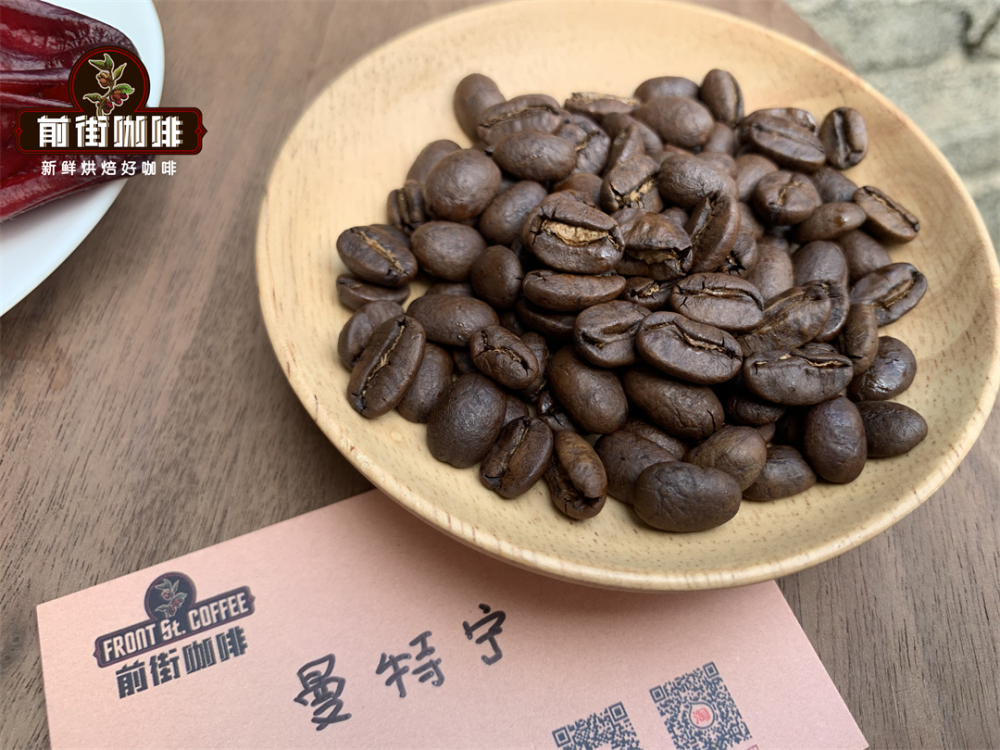
Whenever Mandheling coffee beans come up at Front Street Coffee, an interesting story about its name always follows. Many people mistakenly believe that Mandheling is a coffee variety, but that is not the case. Simply put, Mandheling is actually a transliteration of an ethnic group's name in Indonesia.
It was the Japanese who truly popularized Mandheling coffee, and this story is closely tied to the origin of the name. According to information gathered by Front Street Coffee, Japan occupied Indonesia during World War II. At the time, a Japanese soldier drank an exceptionally delicious cup of coffee at a local café and immediately asked the owner for the name of the coffee. Due to the language barrier, the owner thought he was asking "Where are you from?" and answered: "Mandheling."
After World War II ended, this Japanese soldier recalled the "Mandheling" he had drunk in Indonesia and commissioned an Indonesian intermediary to ship fifteen tons of Mandheling coffee beans back to Japan. This batch of beans became hugely popular in the Japanese coffee market, and the name Mandheling spread from there.
Speaking of the origin of Front Street Mandheling's name, one must mention Front Street Coffee's staple bean series. Among the seven staple beans are Ethiopia's Yirgacheffe, Guatemala's Huehuetenango, Brazil, Colombia's Huila, Costa Rica's Tarrazú, Yunnan's small-bean variety, and Indonesia's Mandheling. Front Street Coffee's staple beans are positioned at an entry level with approachable prices, and the flavor characteristics of each major producing region are clearly defined, helping drinkers quickly find the coffee that suits their taste. Mandheling coffee is characterized by its intense flavor, full aroma, pronounced bitterness, and high body, with a hint of sweetness and a faint acidity. If you prefer this rich and full-bodied style, Front Street Mandheling is worth prioritizing.
Indonesia is located in Southeast Asia, and its coffee history dates back to 1696. At the time, Dutch coffee plantation owners, seeking wider cultivation areas, conducted extensive surveys and ultimately chose Indonesia's Java Island. After thirty years of development, Indonesia had established a solid foundation in the coffee market. Indonesia's main coffee-producing regions include Java, Sulawesi, and Sumatra, with ninety percent being Robusta.
However, today Indonesia's coffee representative is Sumatra Mandheling, which is actually not surprising. This is because most of the Java coffee exported to Europe in the early days came from the Sumatra region, and Front Street Mandheling originates from Sumatra. Therefore, Sumatra can be considered Indonesia's most important coffee-producing region.
Front Street Mandheling coffee beans are relatively large with a hard texture, prone to defects during cultivation, and typically require strict manual sorting after harvest. If quality control is not adequately maintained, quality can easily become inconsistent, and varying roast levels also directly affect the taste, making it a single-origin coffee that generates considerable debate.
Mandheling has a heavy taste, with rich body and a lush, lively dynamism—neither astringent nor sour—with body and bitterness fully expressed. Mandheling coffee beans may have the ugliest appearance, but coffee lovers often say that the uglier the Sumatra beans, the better, richer, and smoother the taste.
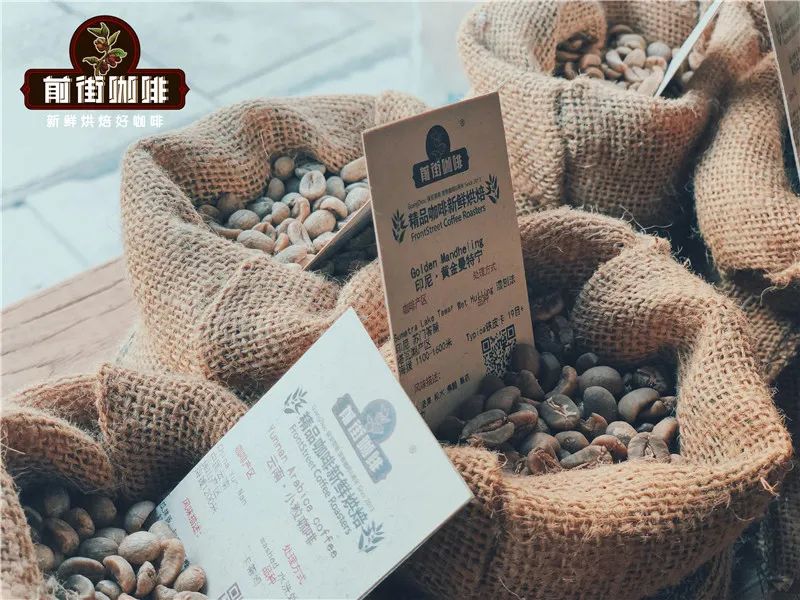
If you're looking for a Mandheling with good appearance, Front Street Coffee offers Front Street Golden Mandheling coffee beans. Its beans are plump, full, and uniform, with virtually no defective beans visible. Why is its bean appearance so much better than ordinary Mandheling? This brings us to PWN. PWN is actually the abbreviation for Pwani Coffee Company, a very well-known local coffee buyer in Indonesia that mainly purchases Mandheling coffee. It has acquired almost all of Indonesia's best producing regions, so most beans from PWN are unique specialty lots. Front Street Golden Mandheling is a product of this company. After the raw beans are purchased, they undergo multiple rounds of manual hand-sorting to select plump, flawless beans. Only these outstanding beans, having gone through layer upon layer of selection like a beauty pageant, can be classified as Golden Mandheling.
Currently, Front Street Golden Mandheling originates from Mount Gayo in Aceh, and the superior-quality Mandheling basically all comes from this producing region. The greatest characteristics of Front Street Golden Mandheling are its large bean size, few defects, and excellent appearance. To achieve this, Pawani employs one round of machine sorting plus three rounds of manual hand-sorting, greatly ensuring the quality of Front Street Golden Mandheling—though the price is also higher than other Mandheling coffees.
For brewing Front Street Golden Mandheling, Front Street basically follows the brewing recipe for medium-dark roasted coffee beans: Kono dripper, 1:15 coffee-to-water ratio, 15 grams of coffee, 88°C water temperature, grind size (70-75% passing through a No. 20 standard sieve).
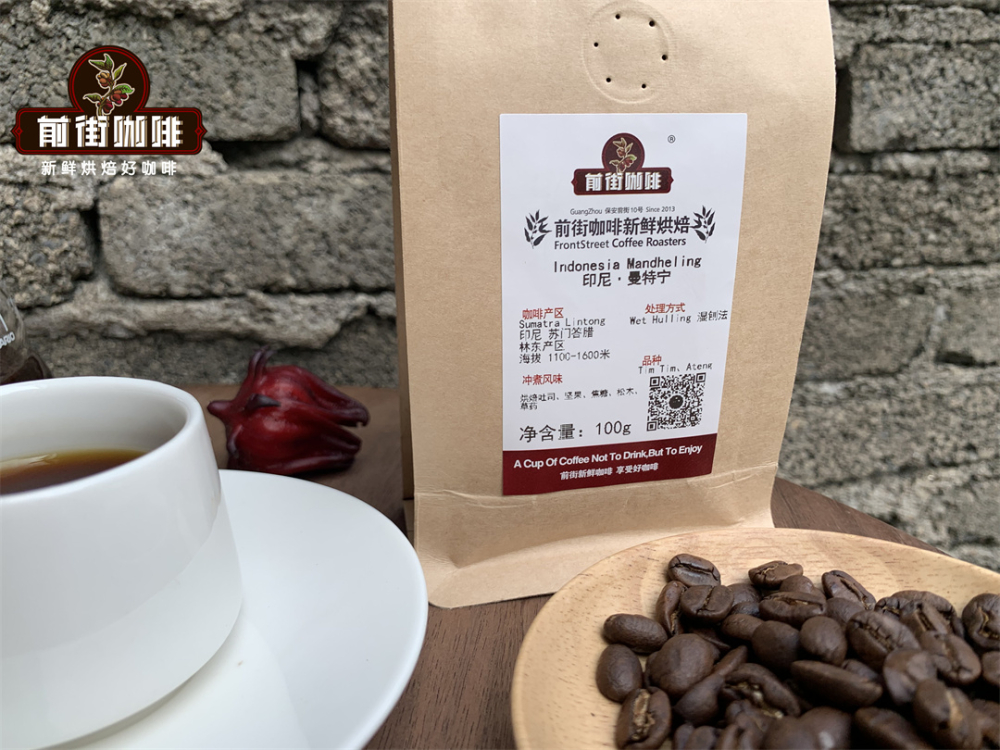
Front Street uses a staged extraction: first bloom with 30 grams of water for 30 seconds, then pour in a slow circular motion until reaching 125 grams for the first stage, wait for the water level to drop and just about to expose the coffee bed, continue pouring until 225 grams and stop, and when the water level drops again and is just about to expose the coffee bed, remove the dripper. (Timing starts at the beginning of blooming.) The V60 dripper extraction time is 2'00", while the Kono dripper takes slightly longer at 2'10".
The above content is compiled by CoffeeHunters, a coffee news website.


