







What Sets Golden Mandheling Coffee Apart in the Cup?
Mandheling covers several coffees, not one. The bean list includes five Mandheling types, and only PWN Golden Mandheling uses the Ateng variety, a local name for Catimor; the other four are Typica. That difference shows in the cup, where Golden Mandheling tastes cleaner and carries more prominent sweetness in the aftertaste than the earthy standard Mandheling profile.
Catimor was bred by crossing Timor, a natural Arabica-Robusta hybrid, with Caturra, giving high yield plus resistance to leaf rust and coffee berry disease. The Aceh region and wet-hulling process shape the rest. A standard pour-over uses a Kono dripper, 88C water, and a 1:15 coffee-to-water ratio to bring out the flavor logic of this sumatra coffee.
There are many types of Mandheling coffee, and different names differ in bean variety, production region, and processing method. On Front Street Coffee's bean list, there are currently five Mandheling coffees, among which PWN Golden Mandheling uses the Ateng variety, while the other four are Typica. This article sorts out the core knowledge of Mandheling coffee one by one, from the origin of the varieties, the PWN certification system, and the characteristics of the Aceh production region to the wet-hulling process, and also includes Front Street Mandheling's standard pour-over recipe, including key parameters such as the Kono dripper, 88°C water temperature, and a 1:15 coffee-to-water ratio, to help coffee enthusiasts fully understand the flavor logic and brewing points of this classic Indonesian coffee.
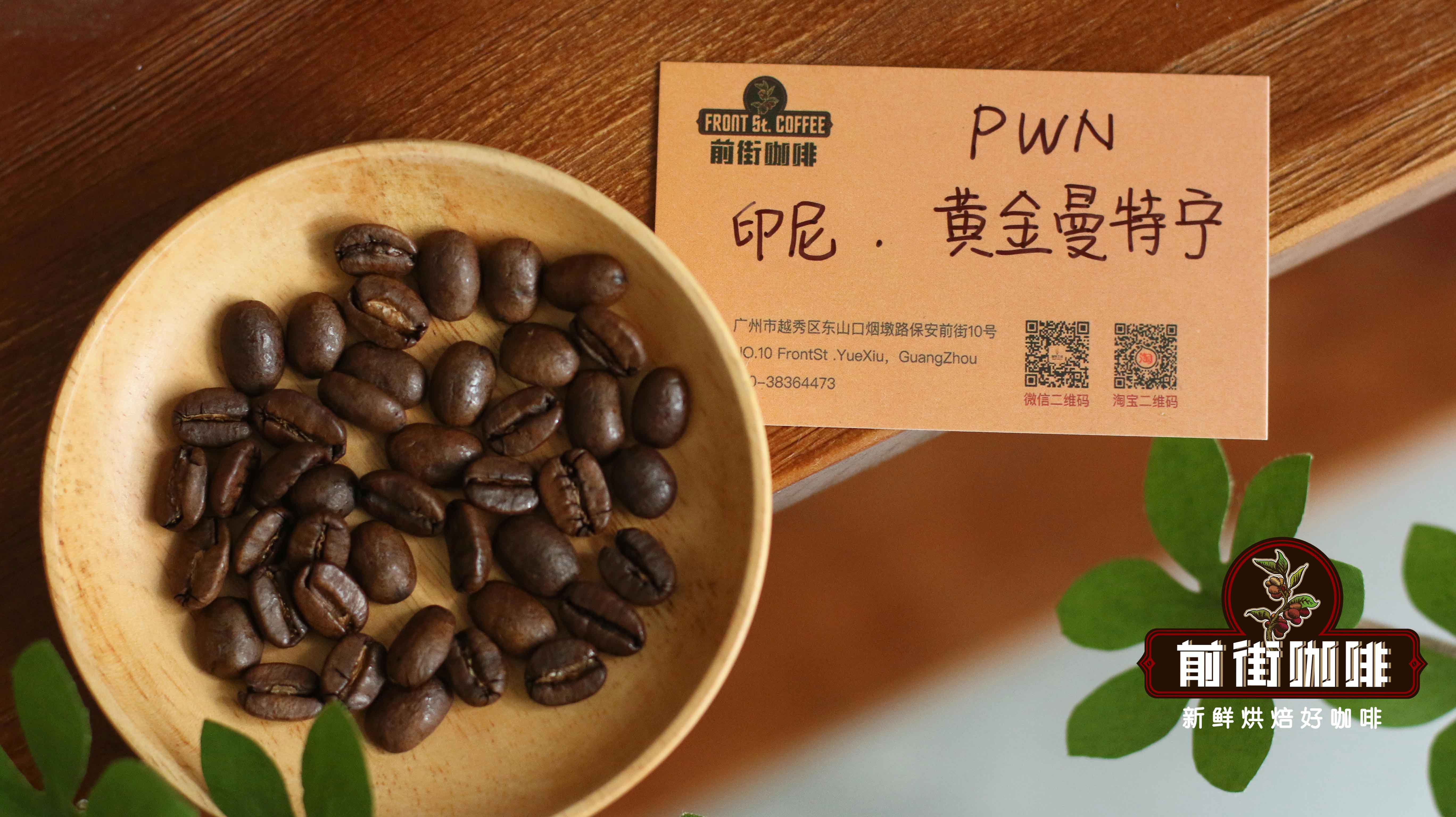
Friends familiar with Front Street Coffee probably know that nearly fifty coffees are displayed on Front Street's bean list alone. These beans have all been selected one by one by the Front Street team and are specialty coffees capable of showcasing the distinctive flavors of different origins. Among the many options, Front Street Mandheling has consistently ranked among the most frequently asked about by customers. Many customers who come to the shop often exclaim: "There are actually so many kinds of Mandheling?"
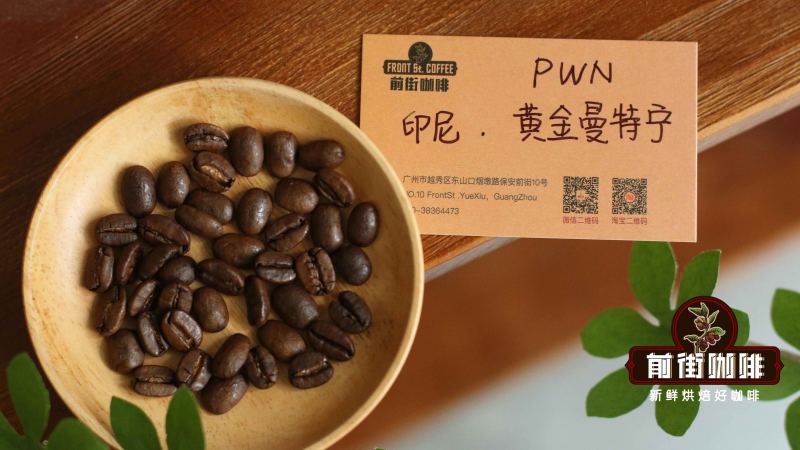
That's right, Front Street Mandheling currently has five types: Front Street Golden Mandheling, Front Street Tiger Mandheling, Front Street Aged Mandheling, Front Street Wahana Estate Sun-Dried Mandheling, and Front Street Lintong Mandheling. Although they all fall under the category of Mandheling coffee, there are still subtle differences among the different names. For example, the variety used in the 2020 new-crop Front Street PWN Golden Mandheling is Ateng (the local customary name for Catimor), while the other four Mandheling coffees all belong to the Typica variety. Compared with the other four, Front Street PWN Golden Mandheling has a cleaner flavor profile, without the earthy aroma common to ordinary Mandheling, and its sweetness in the aftertaste is also more prominent.
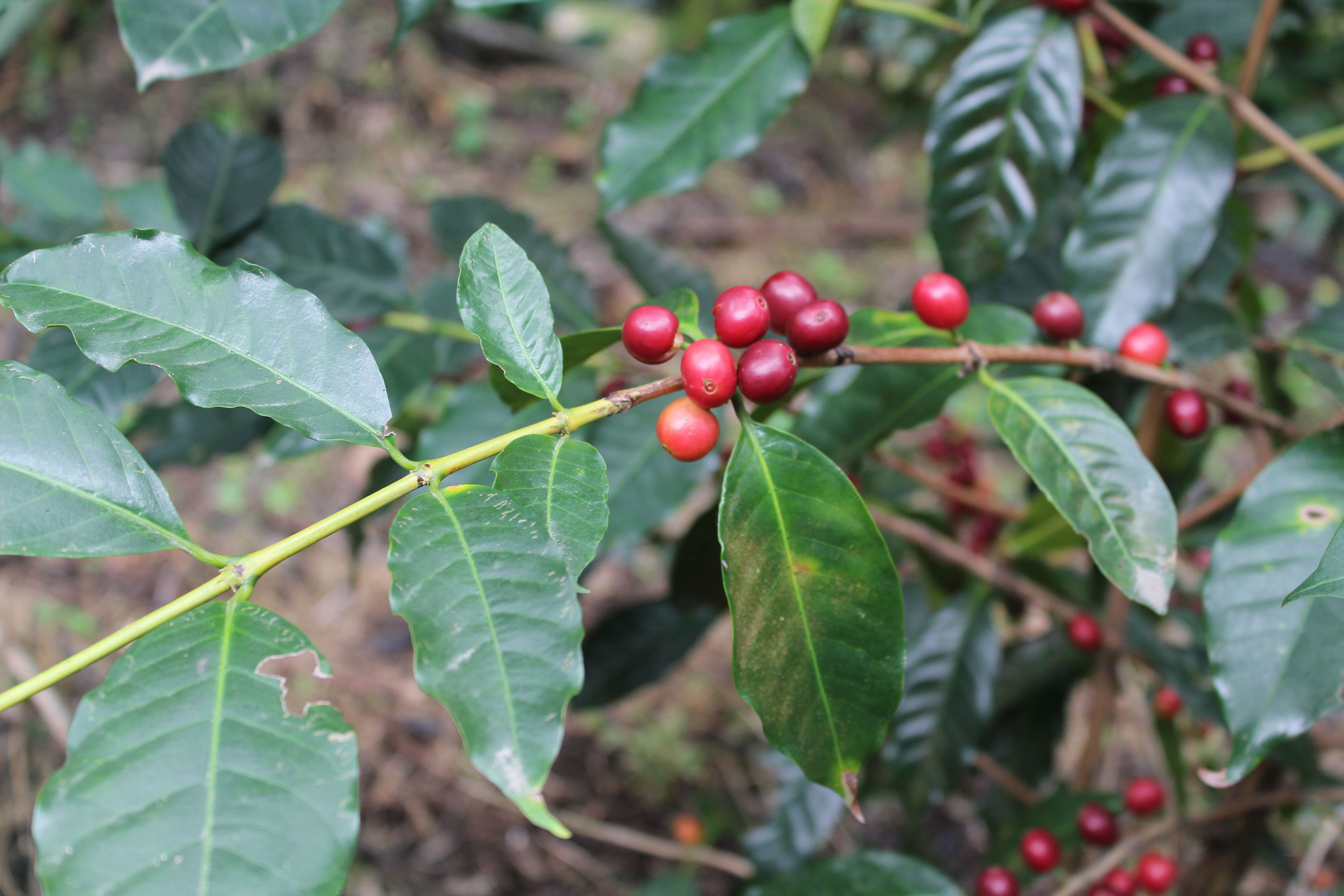
Catimor is a group of pure-line selected varieties, bred by crossing Timor (a natural hybrid of Arabica and Robusta) with Caturra. This variety has high yield and shows resistance to coffee leaf rust and coffee berry disease (CBD). One of the earliest widely promoted Catimor varieties was CR (Costa Rica) 95, released around 1995. Other lines include Catimor 129 and Catimor F6. Because of its high yield, relatively broad altitude adaptability, and good resistance to pests and leaf rust, Catimor is widely planted in Central and South America and Asia. Also precisely because Catimor carries a Robusta genetic background, it remains controversial to this day, with some people believing its flavor quality is inferior to most Arabica. However, Front Street Coffee's view is that although bean variety certainly affects coffee flavor, human factors such as picking, sorting, and processing methods are equally impossible to ignore.
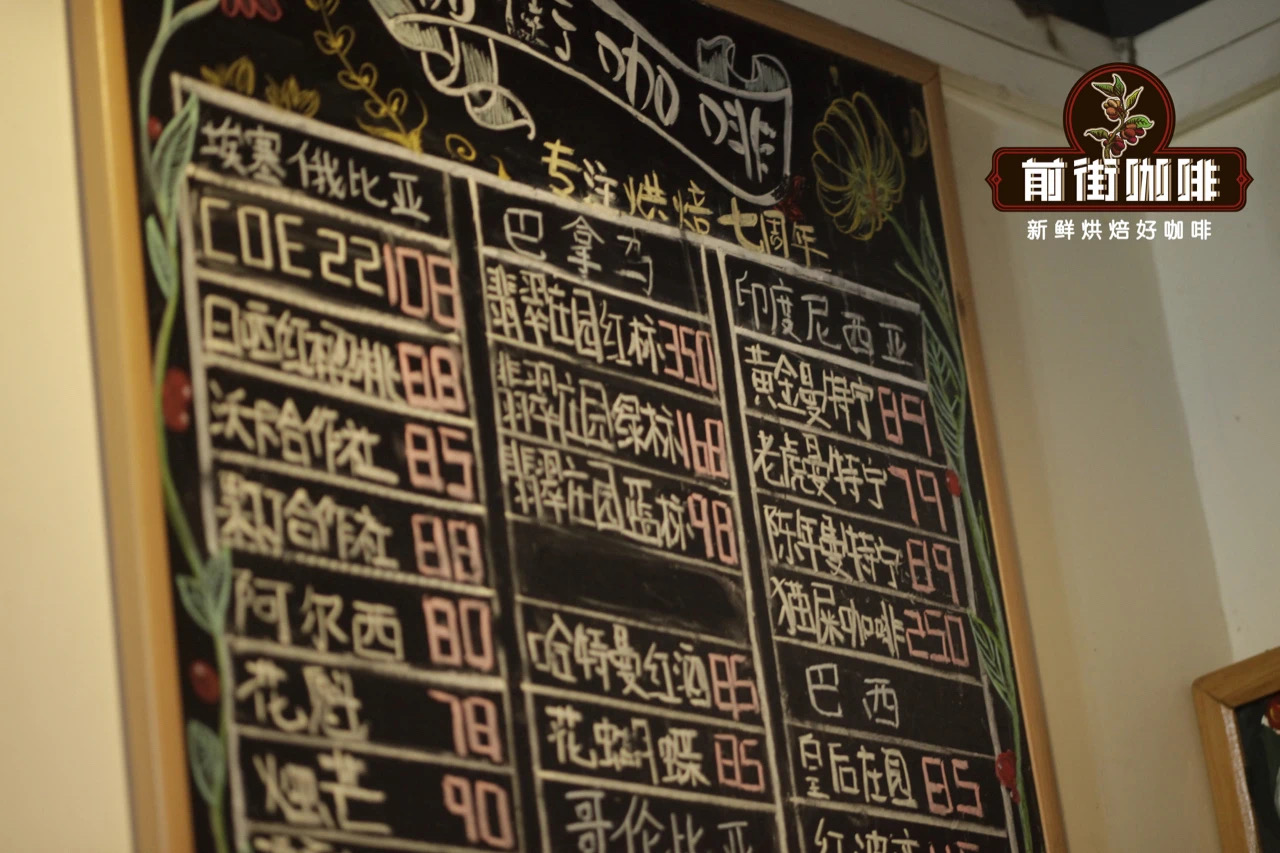
Taking Front Street PWN Golden Mandheling as an example, all Front Street Golden Mandheling originates from the PWN (pawani) green bean company. Since Golden Mandheling has been registered as a trademark by PWN, strictly speaking, only Golden Mandheling from PWN can be considered authentic Front Street Golden Mandheling. Every batch of Front Street Golden Mandheling sold by Front Street comes with PWN's factory certificate and uses green bean jute bags printed with the PWN logo, so everyone can buy with confidence. PWN's annual production of Golden Mandheling is limited, so some ordinary Mandheling has appeared on the market masquerading as Golden Mandheling. If you find it difficult to judge authenticity, you can ask the merchant to show PWN's factory certificate and photos of green bean jute bags printed with the PWN logo for verification.
Typica is one of the most representative coffee varieties in the world. Its roots can be traced back to Ethiopia, the birthplace of Arabica, and it is an indispensable part of understanding today's coffee. Typica coffee has quite an excellent cup quality, with an elegant and delicate style and rich floral and fruity notes. Typica's history also began in southwestern Ethiopia, like other Arabica. Arabica was introduced to Yemen between the 15th and 16th centuries, and was brought to India around 1700. The seeds sent to India's Malabar Coast and Java in Indonesia are exactly what we now call the Typica variety.
Afterward, Indonesia suffered a global outbreak of leaf rust, and almost all the originally planted Typica became infected. To save Indonesia's coffee industry, the government decided to introduce multiple coffee varieties to replace the susceptible Typica. The variety currently widely planted is called Ateng, whose prototype is Catimor. Because it was first planted in central Aceh, coffee spread from that area all came to be called Ateng (short for central Aceh).
At present, Front Street PWN Golden Mandheling uses Ateng coffee beans from the Gayo Mountain production region in Aceh. Aceh is located at the northernmost tip of Sumatra. After Aceh's peaceful liberation, the region gradually resumed foreign trade, and coffee merchants found that the coffee produced here was better in quality than that of the Lake Toba region, so many high-quality Mandheling coffees today originate from Aceh.
Although most coffees are named after their growing region or country, Mandheling coffee is named after the Mandailing people, who traditionally cultivated and processed the coffee beans. During World War II, a Japanese soldier stationed in Sumatra asked the locals where their coffee came from. The Sumatran man mistakenly thought the other person was asking about his ethnicity, so he answered: Mandailing. Later, when this famous coffee spread to Japan, due to the pronunciation of Japanese, Mandailing was rendered as Mandheling, and so the name "Mandheling" spread.
Mandheling coffee specifically refers to Arabica coffee beans grown in northern Sumatra. It has a smooth mouthfeel, is rich and full-bodied, with low acidity, an exotic character, and obvious sweetness in the aftertaste, while traditional Sumatran Mandheling often also carries a hint of herbal notes. This is inseparable from Mandheling coffee's unique processing method, namely giling basah (wet-hulling), also known as "wet hulling."
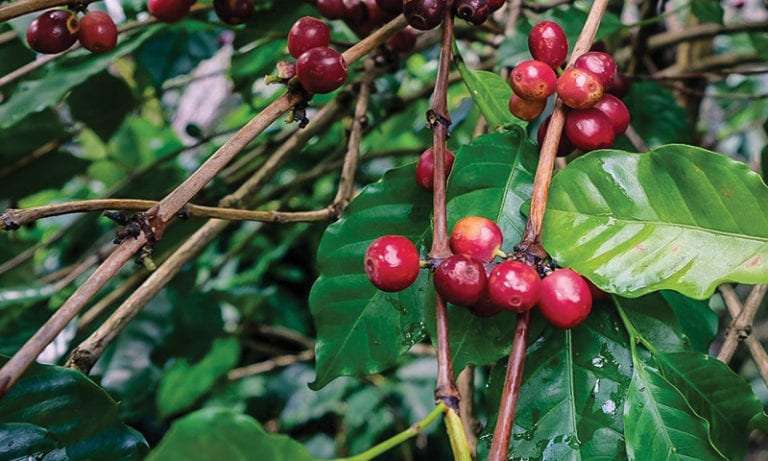
Most smallholders in Sumatra, Sulawesi, Flores, and Papua use the Giling Basah process. Ripe coffee fruits, that is, coffee cherries, are harvested. Farmers mechanically remove the outer skin with locally made pulpers. The mucilage-covered coffee beans can be stored for up to one day, during which natural fermentation breaks down the sticky residue. Then, after the mucilage is washed off, the coffee beans protected by the parchment shell (endocarp) enter the drying stage. Unlike other traditional drying methods, parchment coffee is dried to a moisture content of about 12%, whereas the Giling Basah process hulls the coffee beans when their moisture content is still 30% to 35%, at which point the beans are still semi-wet. Afterward, the green coffee beans continue to dry until they reach the 12% moisture content suitable for export. This operation gives the coffee beans a unique blue-green appearance and is believed to reduce acidity and enhance body, thereby shaping the classic Indonesian flavor.
In order to fully present Mandheling's rich and smooth mouthfeel, Front Street has also formulated a standard pour-over coffee service plan for Front Street Mandheling:
Kono dripper 88°C water temperature 15 grams of coffee grounds 1:15 coffee-to-water ratio Medium-coarse grind size (70% passing through China standard No. 20 sieve)
Some old friends of Front Street Coffee should know that the current mainstream recommended coffee brewing temperature is between 86 and 93 degrees, with light roasts suitable for higher temperatures and dark roasts suitable for lower temperatures. Front Street Coffee's Front Street Mandheling coffee is mostly dark-roasted. After a relatively long Maillard reaction and caramelization reaction, too many of its delicious small-molecule substances have been worn away. If water above 90°C is used again, it will inevitably make it easier to extract bitter large-molecule substances. Therefore, Front Street recommends using a water temperature below 90 degrees to brew Front Street Mandheling coffee, with the aim of avoiding over-extraction. The reason for choosing the kono dripper is that its unique conical design ensures water flows evenly throughout the entire dripper and enters the server at a very steady rate. As can be seen from the photos, the ribs on the lower part of the kono dripper are shorter. During brewing, the part above the ribs and the filter paper at the grooves fit the dripper better, ultimately bringing a richer cup of coffee.
Pouring method: In the first stage, pour 30 ml of water and bloom for 30 seconds; in the second stage, pour 120 ml of water in a circular motion; in the third stage, pour 75 ml of water in a circular motion, with an extraction time of 2 minutes.
The above content is compiled by CoffeeHunters, a coffee news website.


