








Where Did Geisha Coffee Originate and How Did It Spread?
Geisha coffee was discovered in Ethiopia's Geisha forest in 1931, sent to Kenya's coffee research station, then carried to Uganda and Tanzania in 1936, Costa Rica in 1953, and Panama in 1970. It stayed obscure for decades until Hacienda La Esmeralda separated it from mixed plantings in 2003 and won the Panama BOP competition the next year.
Today two camps define the market. Panama geisha coffee grows mainly around the Chiriqui volcano in Boquete, where volcanic soil and cloud cover build intense flavors, while Ethiopian Gesha Village lots show a different terroir. Tasting across Red Label and Gold Label lots from both origins reveals how genetics and place shape the cup.
Geisha is hailed as the Rolls-Royce of the coffee world, but its legend was not built overnight. From its accidental discovery in the Geisha forest of Ethiopia in 1931 to its breakout victory at the Panama BOP competition in 2004, Geisha took over seventy years to transform from obscurity to global renown. Today, American Geisha centered on Panama and African Geisha represented by Gesha Village in Ethiopia each display distinctly different terroir charms. This article will trace the complete migration path of Geisha, analyze the flavor codes of Hacienda La Esmeralda, Finca Deborah, and Gesha Village Coffee Estate, and present Front Street Coffee's cupping experience with different lots of Geisha such as Red Label and Gold Label, providing coffee enthusiasts with a systematic Geisha tasting guide.
The status of Geisha coffee in coffee circles is comparable to that of Rolls-Royce in the automotive industry. This variety set out from Africa, crossed the ocean to take root in Central America, and finally stunned the world at an opportune moment. On Front Street's coffee bean list, the Geisha family also occupies an important position, with the most closely watched being American Geisha represented by Panama and African Geisha centered on Ethiopia.
The Rise of Geisha Coffee
In 1931, the Geisha variety was first discovered in the Geisha forest of Ethiopia. It was subsequently sent to the Kenya Coffee Research Institute, introduced to Uganda and Tanzania in 1936, arrived in Costa Rica in 1953, and settled in Panama in 1970. However, for a long time, Geisha did not attract much attention. The turning point came in 2003, when Panama's Hacienda La Esmeralda separated it from mixed varieties, and the following year it won the BOP competition championship. Only then did Geisha coffee truly enter the public eye.
Front Street Panama Geisha Coffee Beans
Panama Geisha rose to fame as a result. The country's Geisha cultivation is almost entirely concentrated around the Chiriquí volcano, with the Boquete production area performing most prominently. It possesses volcanic fertile soil, abundant rainfall, regular precipitation, dense vegetation, and cloud cover, providing ideal growing conditions for coffee trees and nurturing high-quality beans with intense flavors. Diverse microclimates further enrich the flavor layers of the coffee. When discussing Geisha, Hacienda La Esmeralda is always an unavoidable topic.
The Legendary Journey of Hacienda La Esmeralda
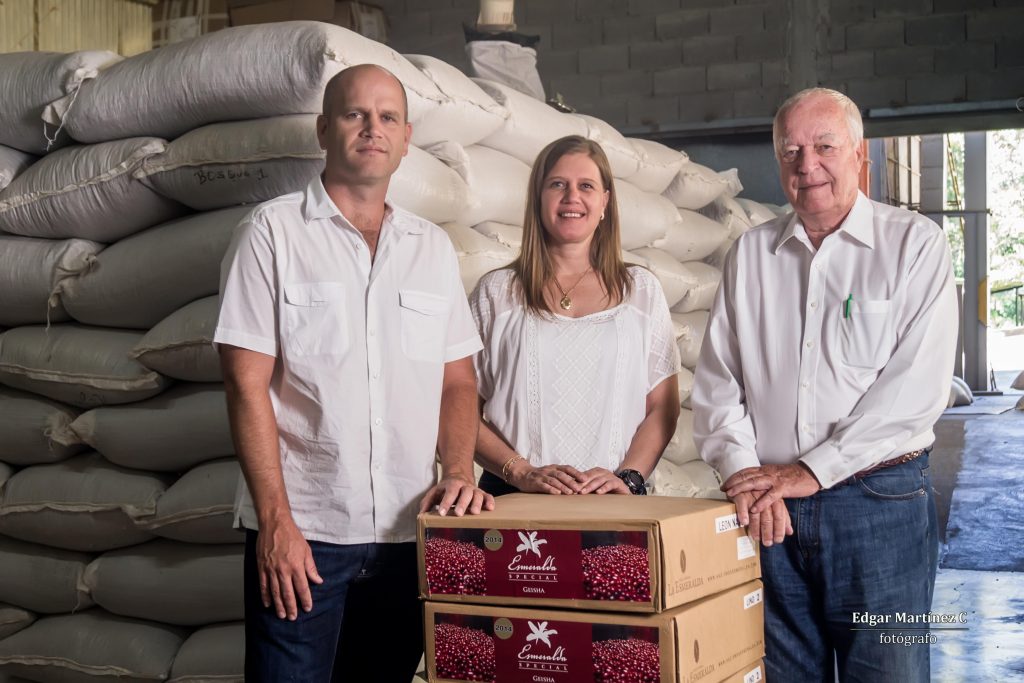
In 1964, American banker Rudolph Peterson retired and moved to Panama, purchasing Hacienda La Esmeralda in Boquete, initially focusing on dairy operations. Later, his son Price gave up his medical career to help his father manage the farm, introducing Caturra and Catuai varieties in 1987, and building a wet processing plant in 1994, thereby gaining independent processing capability.
Afterward, Peterson discovered a group of weak-growing coffee trees at the estate's boundary, whose beans nonetheless emitted a fresh, sweet aroma. So he decided to select these trees separately and focus on cultivating them. By 2004, Peterson entered this bean in the BOP green bean competition and won first place—it was the Geisha variety.
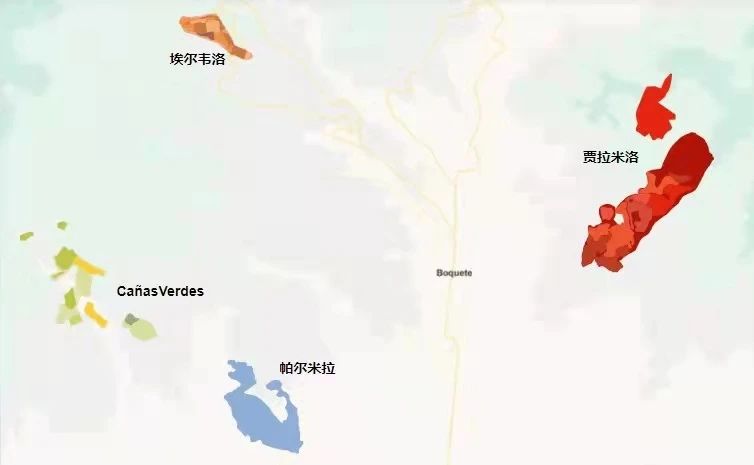
Currently, Hacienda La Esmeralda primarily has three farms cultivating Geisha: El Velo, Cañas Verdes, and Jaramillo. In 1996, the estate purchased Jaramillo, which had superior geographical conditions and excellent flavors from its original varieties. El Velo was acquired by Hacienda La Esmeralda in 2012. Front Street Coffee believes that Hacienda La Esmeralda's continuous acquisition of estates with excellent output and higher altitudes was an extremely visionary decision at the time, and it is precisely this strategy that has kept Hacienda La Esmeralda Geisha firmly positioned in the industry.
Jaramillo Estate is one of the farms where Geisha is planted. Due to its scarce yield, the previous owner used it only as a windbreak tree, and only after acquisition was its extraordinary flavor discovered. Front Street Coffee believes this is precisely the charm of Geisha—the harsher the growing environment, the more outstanding the flavor expression.
Although Hacienda La Esmeralda discovered coffee beans with flavor potential early on, in order to achieve precise management, they cupped different areas of the estate one by one and divided planting plots according to altitude. The Geisha grades of Red Label, Green Label, and Blue Label originated from this.
The Red Label purchased by Front Street this year comes from Hacienda La Esmeralda's Mario plot, which belongs to the renowned sub-estate Jaramillo within Hacienda La Esmeralda. This area can be described as laden with honors—in 2004, Hacienda La Esmeralda rose to fame precisely with the Geisha from this plot.
Front Street again chose the slow sun-dried processed Emerald Red Label lot. Hacienda La Esmeralda's refined processing techniques and strict quality control standards enable the slow sun-dried lot of Front Street Red Label Geisha to display richer fruit notes, with both sweetness and acidity being outstanding, and of course, the signature sweet fruit aroma and jasmine fragrance of Geisha are not absent.
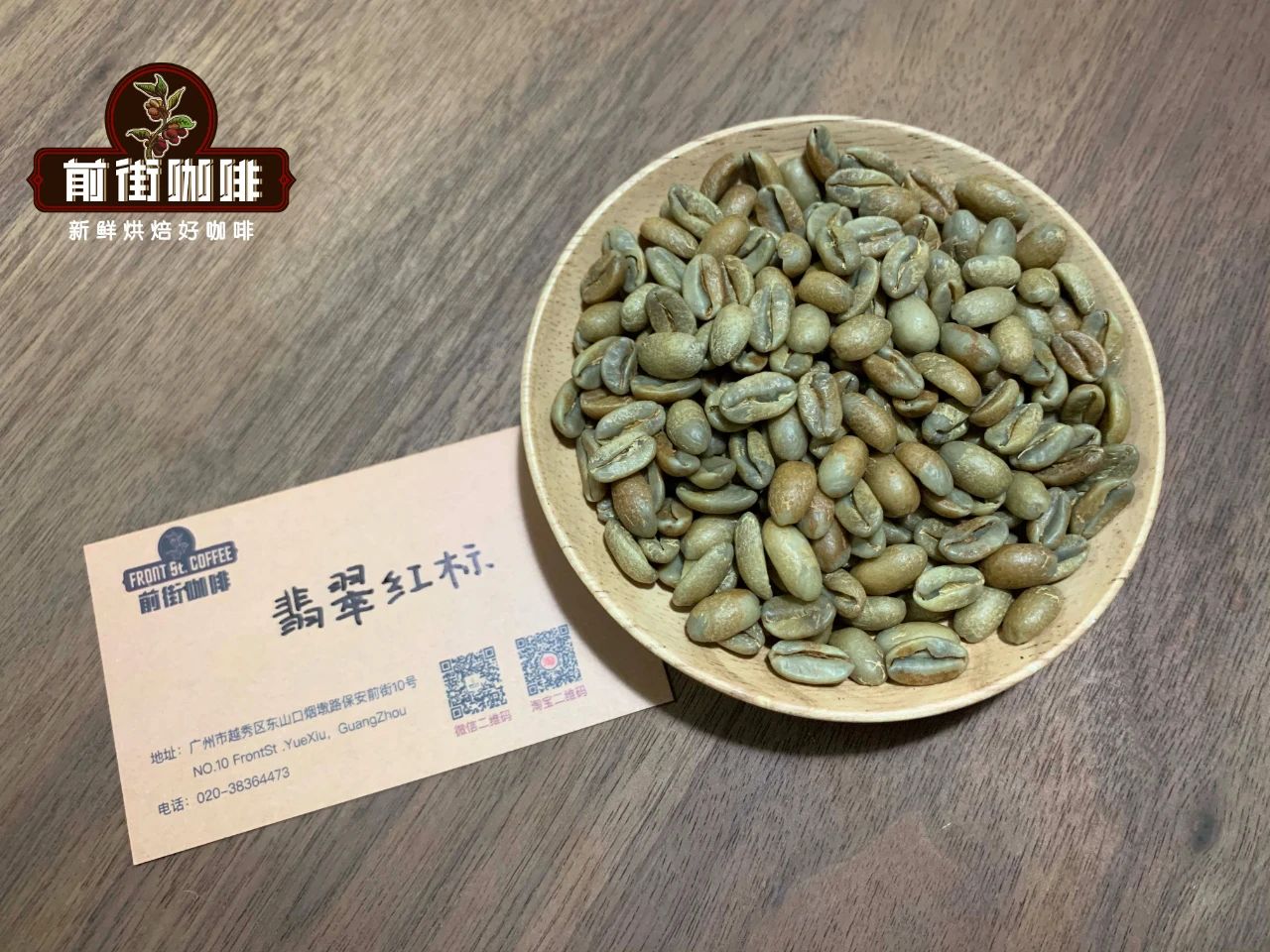
Hacienda La Esmeralda's quality control needs no elaboration—the green coffee beans are plump and full, with the elongated, pointed-at-both-ends appearance that makes Geisha easy to identify, and virtually no obvious defective beans can be found.
In cupping, flavors of citrus, berries, honey, and grape can be perceived. After the temperature drops, the honey-like sweetness becomes particularly prominent, accompanied by the aroma of ginger flower.
In Panama, besides Hacienda La Esmeralda, there are many other estates producing Geisha of equally excellent quality, such as the Geisha coffee beans from Finca Deborah.
Front Street Finca Deborah Savage Geisha
Finca Deborah is situated on the high mountains of the Chiriquí volcano and is one of the highest-altitude and most remote coffee farms in Panama. In addition to managing this estate, its owner Mr. Jamison Savage also operates two projects: his new estate Morgan Estate, and the Savage Coffee project named after himself. From the naming, it is easy to see how much Mr. Savage values this project. The Front Street Finca Deborah Geisha coffee purchased this time comes precisely from Savage Coffee.
Savage positions himself as one of the most accomplished coffee producers in the world, so he not only processes beans grown on his own estate, but the Savage Coffee project also purchases high-quality coffee beans from around Finca Deborah and combines them with Finca Deborah's processing techniques. For this Front Street Finca Deborah Savage Series Geisha coffee, Front Street used a medium-light roast, developing for 1 minute 20 seconds after first crack before dropping, to fully showcase the bean's sweetness, acidity, and floral-fruity aroma.
High-quality green beans combined with Front Street's careful roasting give this Front Street Finca Deborah Geisha coffee rich floral, lactic, pineapple, and berry flavors.
Front Street African Geisha—Gesha Village Coffee Estate
In 2007, documentary director Adam Overton and his photographer wife Rachel Samuel, while filming a coffee documentary for the Ethiopian government, came into contact with the Gera coffee forest in the Bench Maji region, which inspired the idea of establishing their own coffee estate and brand. In 2009, they luckily met Willem Boot, owner of Mule Estate and BOP judge. Willem Boot's vision provided the Overtons with an opportunity: return to Ethiopia and search for the birthplace of Geisha. Eventually they came to Bench Maji—a region in southwestern Ethiopia near South Sudan, where many places are called Gesha Village and which is the most likely place to find original Geisha.
Adam followed Willem Boot on an "expedition" in the forests around the estate, discovering multiple wild tree species in a jungle magically enveloped by dense forest, and most excitingly, they found wild Geisha. They later learned that this was the Gori Gesha forest—the place where the Geisha variety was first discovered. So they collected seeds from the original Geisha trees, and after selection, planted them at Gesha Village. They decided to establish an estate here and named it Gesha Village Coffee Estate, located about 12 miles from the Gori Gesha forest, covering 475 hectares.
Ethiopia originally had no estate system or estate grading system. After Willem Boot and Adam discovered the Geisha forest, they decided to introduce the operating model of Panamanian coffee estates here, and Gesha Village Coffee Estate thus became the only coffee estate in Ethiopia.
At Gesha Village, every step of cultivation and processing strives for uncompromising quality. They have a coffee laboratory in Addis Ababa and, referring to official SCA standards, select each lot through strict cupping procedures and conduct rigorous grading to ensure the best quality coffee beans are provided to buyers. Ultimately, from extremely high-end delicious treasures to refined blended Chaka, they are divided into four grades, supplying the global coffee market. Their approach is that each lot corresponds to a label, all traceable to detailed information about the beans. Gesha Village implements a strict internal grading system, including Competition, Gold Label, Red Label, Green Label, and Chaka lots.
The Gold Label lot is high-quality Geisha second only to the Competition lot, accounting for only 5% of Gesha Village's annual production. The Gold Label lot selected by Front Street comes from the Oma plot, with the variety being Gesha 1931, which shares characteristics similar to Panama Geisha.
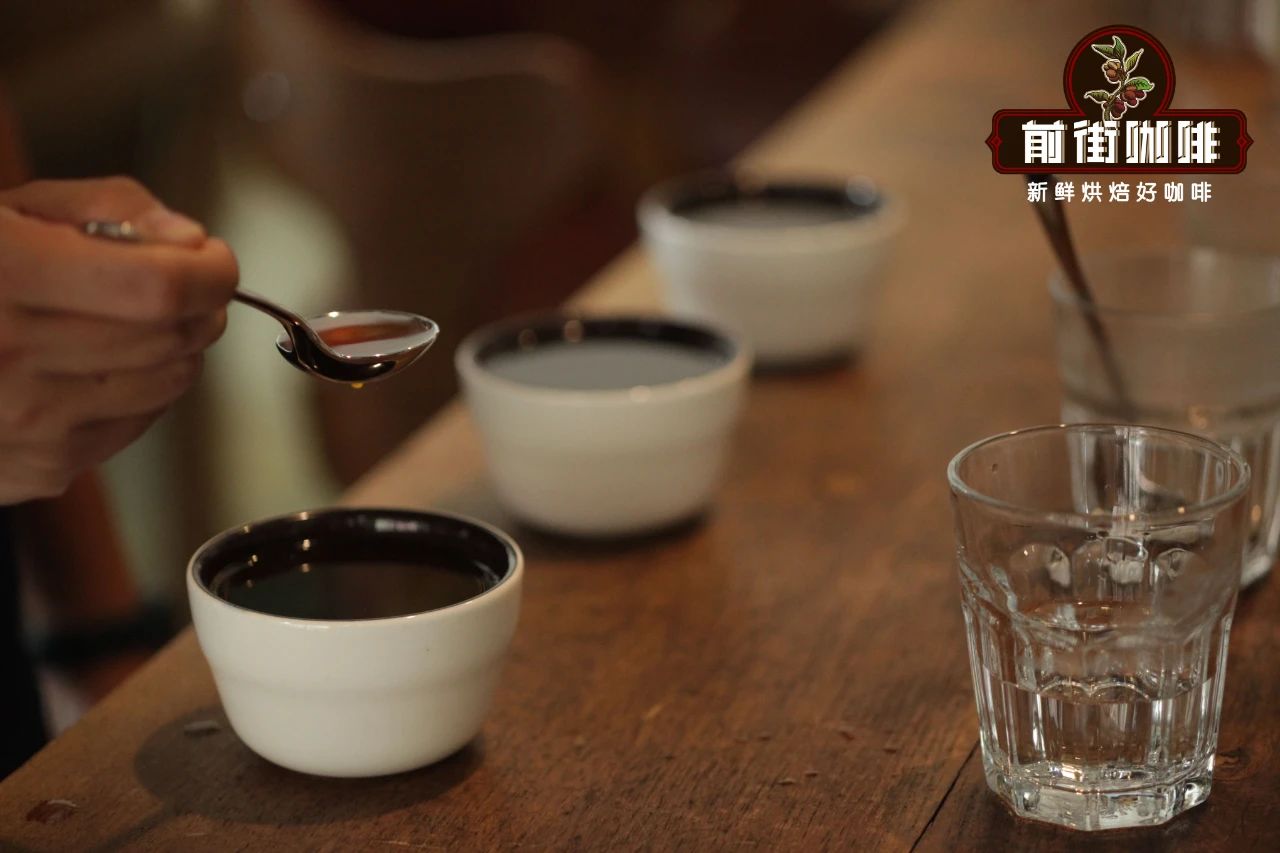
Through cupping, Front Street found that the Front Street Gesha Village Gold Label sun-dried Geisha coffee presents a palate of distinct yellow stone fruit flavors, white floral notes, and a slight tea sensation mixed with a bright creamy finish.
Its advantage lies in the ultra-high sweetness brought by refined sun-drying that runs throughout—in the front section, the high sweetness keeps the acidity from showing as fruity tartness, presenting a soft acidity, while the creamy sensation in the finish is particularly prominent. The shortcoming is a lack of body, and after the temperature drops, the overall flavor tends toward flatness.
The above content is compiled by CoffeeHunters, a coffee news website.


