








What Spanish Coffee Beans Go Into Cafe Bombon?
Cafe Bombon is a Valencia specialty made from just two ingredients: condensed milk and espresso. The condensed milk goes in first, the shot is poured over it, and the layers stay visible until stirred. The drink is sweet and smooth, and it is the likely ancestor of the Spanish latte sold by chain cafes, which has no real link to Spain.
To make it at home, use a roughly equal ratio of condensed milk to espresso, pulling a short, intense shot so it sits on top of the milk. Spanish coffee names cover several regional drinks, but this one stays simple. A medium or dark roast espresso with chocolate and nut notes pairs well and keeps the sweetness from taking over.
Many people can't get used to the bitterness of coffee, so milk, sugar, and condensed milk are often used to balance the taste—Vietnamese drip coffee is the quintessential example of condensed milk coffee. But this article is about a region-specific coffee from Valencia, Spain: Café Bombón. It uses only two ingredients, condensed milk and espresso, and is simple to make, beautifully layered, and sweet and smooth in flavor. The Spanish latte offered by chain brands is very likely derived from this very coffee. Front Street Coffee will break down the meaning of Café Bombón, how it differs from a Spanish latte, and provide specific ingredients, ratios, extraction parameters, and preparation steps, along with recommended Front Street Coffee espresso beans to pair with it, so you can recreate this sweet, rich Spanish-style coffee at home.

Not everyone can accept the bitterness of coffee—even adults still frown when they encounter a flavor they don't like. To make the bitterness less sharp and the first sip gentler, people habitually add various ingredients that can balance the bitterness into their coffee.
Besides milk and sugar, condensed milk is also a common choice for neutralizing bitterness. Vietnamese drip coffee is the classic example of relying on a generous amount of condensed milk to soften the bitterness. However, what Front Street Coffee wants to discuss today isn't Vietnamese coffee, but a regional specialty coffee from Spain—"Café Bombón."
What is Café Bombón?
When it comes to Spain and condensed milk coffee, many people first think of the Spanish latte launched by a certain chain brand—a flavored latte made by adding condensed milk to a latte base. Compared with a regular latte, the Spanish latte is fuller in both sweetness and richness thanks to the addition of condensed milk.
But it must be made clear that although the Spanish latte has "Spanish" in its name, it has no actual connection to Spain. You won't find this drink on the menus of local cafés. The reason is simple: Spain doesn't have a Spanish latte. So the question arises: since Spain doesn't have a Spanish latte, why is this coffee made with condensed milk called a Spanish latte?
Spain indeed doesn't have a Spanish latte, but in the cafés of Valencia, Spain's third-largest city, a region-specific coffee is sold—Café Bombón. This coffee is made from only condensed milk and espresso. If the inference is correct, the idea for the Spanish latte came from this unique regional coffee. In other words, the Spanish latte is a secondary creation based on Café Bombón.
"Bombón" in Spanish means both chocolate and candy. So Café Bombón can be understood as candy coffee or chocolate coffee. However, Café Bombón consists only of condensed milk and espresso, with no chocolate element in the cup at all, so Front Street Coffee prefers to translate it as candy coffee—after all, it really does taste very sweet.
As mentioned earlier, this coffee is not popular throughout all of Spain, but is a local specialty—a Valencia exclusive. That is to say, once you leave the city of Valencia, it's very hard to order a Café Bombón anywhere in Spain. But no matter—if you can't order it, just make it yourself, since both ingredients are easy to obtain and it's extremely simple to prepare.
To make the espresso, it's best to choose from the Front Street Coffee espresso bean series. If you like nutty notes, buy Front Street Coffee Specialty Blend; if you want rich crema, go first for Front Street Coffee Commercial Blend and Front Street Coffee Classic Blend; if you're after a daily bean that tastes good without costing much, try Front Street Coffee Dark Cocoa Basic Blend—these are all bestsellers strongly recommended by baristas.
Besides the espresso, you only need to prepare one portion of condensed milk. The ratio of condensed milk to espresso is 1:1. If the extracted espresso yield is 40ml, then the condensed milk should also be 40ml. But anyone who has tasted condensed milk on its own knows that sweetened condensed milk is too sweet!!! Therefore, Front Street Coffee suggests slightly reducing the proportion of condensed milk so this "candy" won't be cloyingly sweet. Oh right! Besides these two, it's best to also prepare a transparent glass, around 100ml in capacity.
(It must be a bit taller than the total volume, because espresso has crema—below, Front Street Coffee's use of a show glass suffered exactly this disadvantage, causing the espresso to be unable to blend in all at once.)
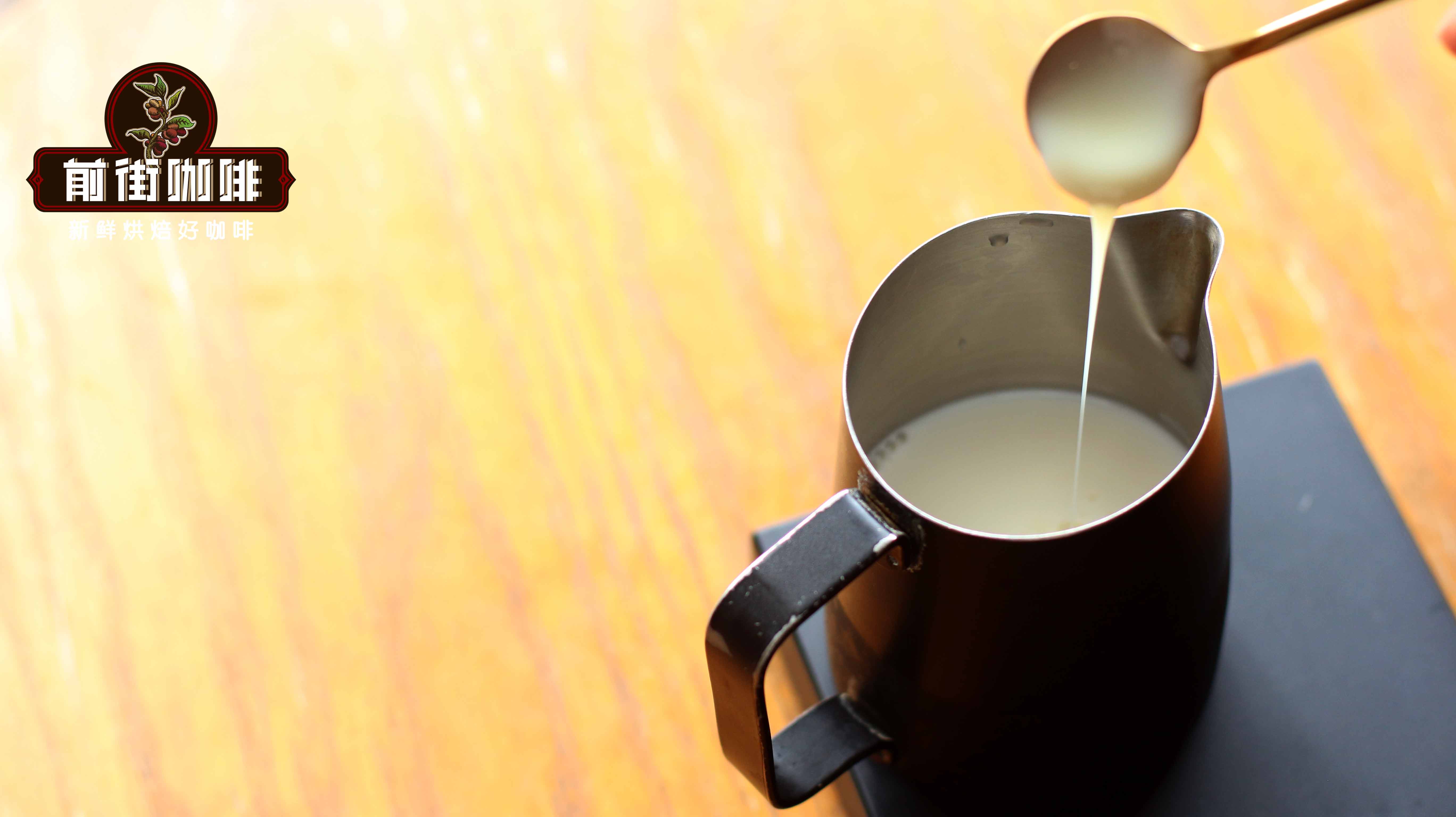
Because condensed milk is denser, when it's laid at the bottom, the espresso poured in cannot merge with it without external force, forming a very distinct layer that looks beautiful! A transparent glass is perfect for showing off this effect, which is why Front Street Coffee recommends using a glass. So once the tools and ingredients are ready, you can start making it!
First, pour 30ml of condensed milk into the glass.
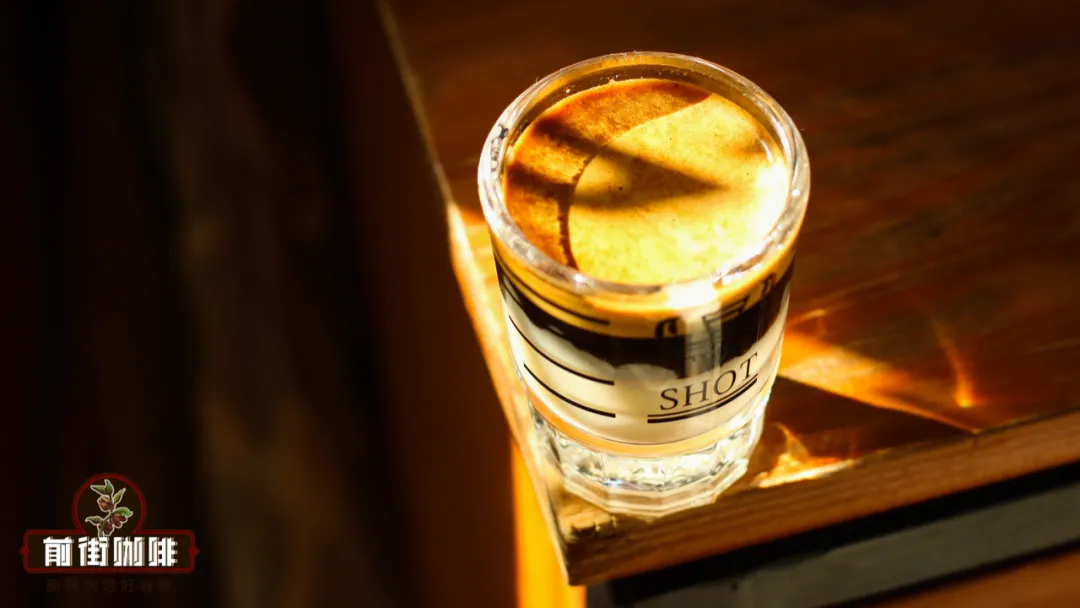
Then, begin extracting the espresso. This time Front Street Coffee used a dose of 19.8g, an extraction time of 31 seconds, and a yield of 39ml. After tamping the grounds and locking the portafilter in, remember to place the glass with the condensed milk underneath to catch the espresso—this reduces crema loss and gives the coffee a fuller presentation in the glass.
Once extraction is complete, you can move the coffee out and prepare a small spoon for tasting.
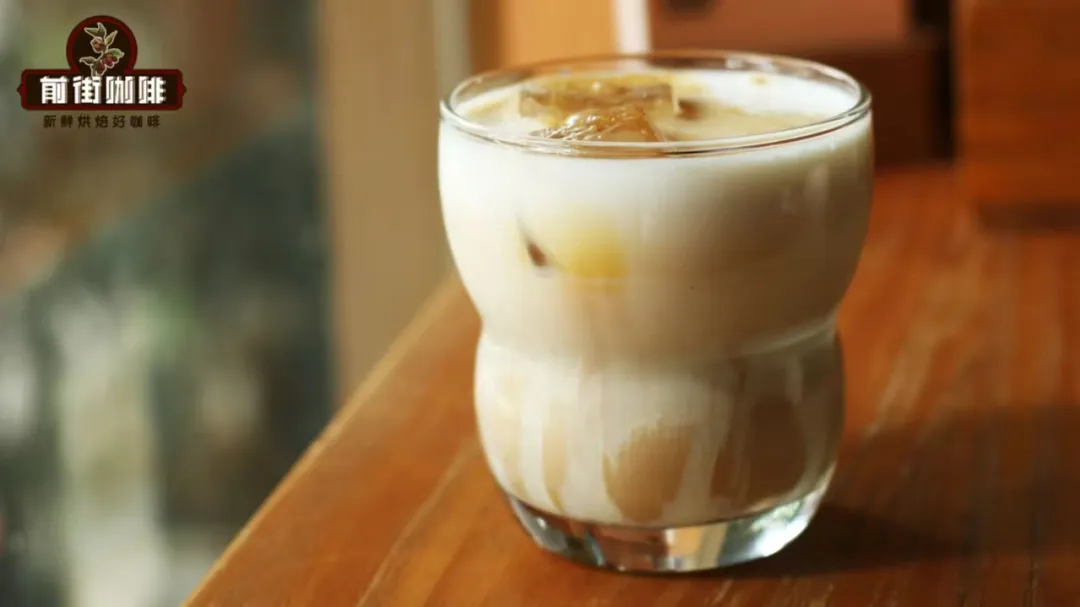
If you don't have a spoon, other tools will work just as well, since the main purpose is simply to stir! Otherwise, even if left sitting for a long time, the coffee won't blend because the condensed milk is too dense.
After stirring it evenly, Front Street Coffee took a sip—and unexpectedly, it was pretty good!! The coffee wasn't as cloyingly sweet as imagined; the Warm Sun Blend's whiskey aroma and butter cookie notes stood out prominently, along with a rich condensed milk creaminess, followed closely by the sweetness of the condensed milk! The overall mouthfeel was smooth and rich—really quite good.
That said, for those who don't like sweetness, this flavor will still lean a bit sweet. So if you're not that into sweet drinks but still want to give it a try, you can reduce the condensed milk a little further on this basis—a coffee-to-condensed-milk ratio of about 1:0.5 should be just about right .
The above content is compiled by CoffeeHunters, a coffee news website.


