







Why Panama Geisha Tops the Most Expensive Coffee Beans List
Panama Geisha commands higher prices than Blue Mountain, and the reason is not simply flavor superiority. The two varieties follow different paths: Geisha is a tall, low-yield plant from Ethiopia that was originally used as a windbreak hedge. Its potential was only recognized after Hacienda La Esmeralda in Panama began entering it in competitions, where it defeated Bourbon, Caturra, Catuai, and Typica.
Panama Geisha arrived in the country during the 1960s, after first spreading from Ethiopia to Kenya, Tanzania, and Costa Rica. The Boquete region's terroir supports the variety's distinctive profile, and Hacienda La Esmeralda sorts its lots into Red, Green, and Blue labels. These grades help explain why Geisha lots rank among the most expensive coffee beans sold at auction.
When people mention expensive coffee, many first think of Blue Mountain, but Geisha actually commands an even higher price. Why does Geisha sell for so much? Where does its flavor differ from Blue Mountain? From the perspective of Front Street Coffee, this article traces the complete story of Geisha's journey from Ethiopia to fame in Panama, introduces the terroir conditions of the Boquete region, and breaks down the grading standards of Hacienda La Esmeralda's Red, Green, and Blue labels one by one. If you want to experience Geisha's classic flavors without bearing too high a cost, Front Street also recommends a Panama Butterfly with excellent value for money, along with specific brewing parameters and suggestions.
For more specialty coffee knowledge, please follow our WeChat public account: FrontStreet Coffee
When it comes to expensive coffee, Blue Mountain is often cited as an example—but did you know that Geisha's price is actually considerably higher than Blue Mountain's? Blue Mountain is known as the world's most mellow coffee and ranks among the most expensive coffees, so does Geisha sell for so much simply because it tastes better than Blue Mountain? Let Front Street explain:
It's not that Geisha's flavor must necessarily surpass Blue Mountain's; rather, the two belong to entirely different variety paths and flavor directions, each with extremely high tasting value. Of course, when facing walk-in customers, Front Street usually doesn't proactively push Geisha. The reason is that Geisha is better suited to those who have already built a certain tasting foundation—if you start with the very top-tier category right away, other coffees afterward tend to feel lackluster. FrontStreet Coffee prefers to suggest that customers try coffees progressively, gradually building their own flavor coordinate system and slowly appreciating the layers and breadth of the coffee world. Moreover, Geisha itself is not cheap, unless a customer specifically asks for it.
Geisha's place of origin is Ethiopia. Because the plant is tall and yields are low, it was originally used locally merely as a windbreak hedge, and only when the owner of Panama's Hacienda La Esmeralda discovered its potential did Geisha truly enter the public eye. In 1931, it was quietly introduced from the Geisha Mountain in southwestern Ethiopia, and successively spread to Kenya, Tanzania, and Costa Rica, only settling in Panama in the 1960s. Nearly half a century later, it suddenly shone brilliantly, defeating perennial champions such as Bourbon, Caturra, Catuai, and Typica in succession, taking gold at the 2005, 2006, and 2007 Panama Best of Panama cupping competitions. In 2007, at the international prestigious bean cupping competition hosted by the Specialty Coffee Association of America (SCAA), Geisha won again, with bidding reaching $130 per pound, setting a record for the highest price ever paid for competition beans.
According to Front Street's understanding, the Panama Best of Panama competition afterward deliberately split into a Geisha group and a non-Geisha group, to prevent Geisha from once again overshadowing other varieties.
Panama's Hacienda La Esmeralda thereby became widely renowned; whenever Geisha is discussed, people almost always think first of Hacienda La Esmeralda, which also makes other estates that grow Geisha easy to overlook. Today Front Street will first introduce you to Geisha coffee from the Boquete region.
Panama Boquete Region
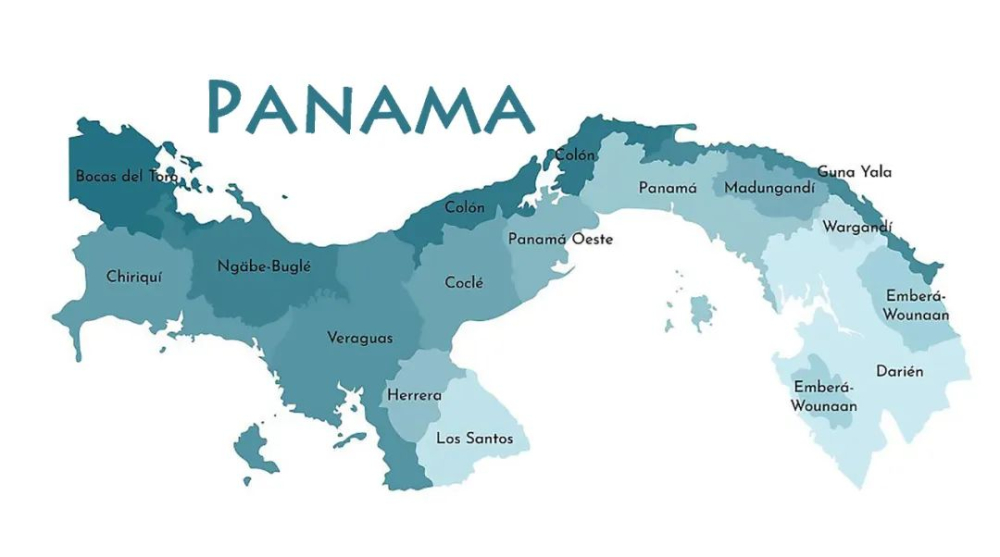
What determines coffee's flavor, besides variety, is the local climate and growing environment. Front Street has noticed something quite special about Geisha: the more extreme the environment it grows in, the more outstanding its flavor expression becomes. Coffee in the Boquete region is grown at altitudes between 1,400 and 1,900 meters. This is a town in Chiriqui Province, located near the border between Panama and Costa Rica, adjacent to the famous Baru Volcano, with beautiful scenery and fertile soil—the climate and soil quality are both very suitable for producing high-quality coffee. The Boquete region is also dotted with many excellent estates; besides Hacienda La Esmeralda, there are also Elida Estate, Kotowa Duncan Estate, and others, all producing high-quality specialty coffee.
This is due not only to the mild climate of Panama's Boquete area and the fertile volcanic ash soil of Baru Volcano, but also to another key factor—the variable microclimates found in the Boquete highlands. Panama's east-to-west topography causes cold air currents to converge along the central mountain range at altitudes between 1,200 and 2,000 meters. The misty rain and shifting winds of the mountainous area create diverse microclimates in the Boquete region, with temperatures and rainfall both very suitable for plant growth, so the coffee trees here grow quite ideally.
Hacienda La Esmeralda Geisha Red Label, Green Label, Blue Label
Hacienda La Esmeralda's Geisha coffee beans have a strict grading system, from which the Blue Label, Green Label, and Red Label Geisha that everyone often hears about derive. After winning the 2004 Best of Panama (BOP) green bean competition, this bean performed astonishingly all along, and it was only later, upon expert identification, that it was confirmed to belong to the Ethiopian Geisha variety. Afterward, the Peterson family devoted most of their energy to infrastructure development to support excellent lot separation and meticulous processing. To achieve precision, the owner of Hacienda La Esmeralda cupped coffee beans from different areas of the estate separately and demarcated planting plots by altitude.
Esmeralda Special (Esmeralda Red Label) The Geisha produced under Esmeralda Special is what everyone commonly calls Red Label. It uses Geisha beans grown at altitudes of 1,600 to 1,800 meters, with cupping scores above 90, originating from the Jaramillo and Caas Verdess production areas.
Only Geisha lots drawn from demarcated plots for bidding in Hacienda La Esmeralda's own independent auction can truly be called auction Red Label. This grade of Geisha coffee beans is processed either by natural or washed methods, with flavor expressed as distinctive and bright floral and citrus aromas.
Private Collection Private Collection is commonly known as Green Label. It is not an independent competition lot, but rather Geisha varieties that do not participate in auctions yet are still of excellent quality. It uses beans grown at altitudes of 1,600 to 1,800 meters, a blend of micro-lots from different plots such as Jaramillo and Caas Verdess. Because the plots are not labeled in detail, Green Label sometimes comes quite close to Red Label in flavor, but the next release may differ again. Although Green Label's grade is below Red Label, it still retains Geisha's classic flavors: floral aroma, fruit aroma, citrus-like acidity, and a thick, juicy body. Green Label is available in both washed and natural.
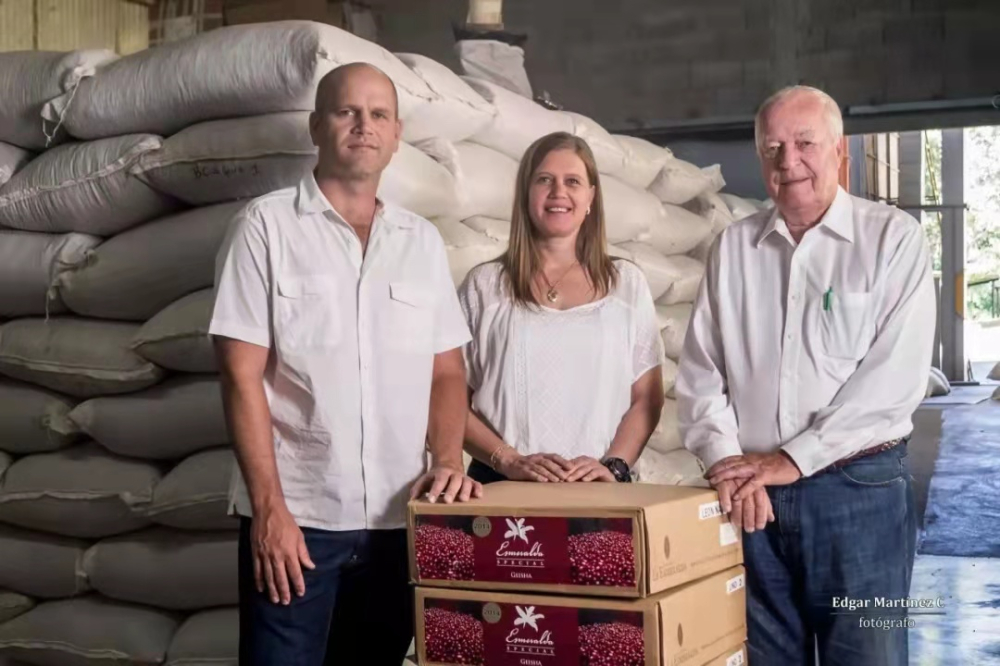
Geisha 1500 Blue Label Geisha uses beans grown at altitudes of 1,400 to 1,500 meters, a blend from three different plots: Jaramillo, Caas Verdess, and El Velo. The flavor is light floral aroma, fruity acidity, and sweetness, with a body that isn't particularly thick. Blue Label was originally only washed, and in the 2020 new crop season a natural process was added.
Currently the most expensive coffee beans FrontStreet Coffee sells are Esmeralda Red Label Geisha. Of course, if you want to experience Geisha's flavor without spending that much, Front Street does have a suitable recommendation—Butterfly coffee, also from Panama's Boquete region. Butterfly is composed of three varieties: Geisha, Caturra, and Catuai, planted in Boquete's Baru Volcano area at an altitude of 1,600 meters in the volcanic zone, grown and harvested in traditional ways by smallholder cooperative farmers, and processed with meticulous washing at the processing plant.
Panama's special local microclimate gives this region abundant rainfall and large day-night temperature differences, and combined with the volcanic rock soil unique to the volcanic area and careful harvesting and meticulous processing, this coffee is quite outstanding in body, acidity, and floral aroma, presenting an elegant and refined taste that's hard to forget once you've tried it. What's even more surprising is that despite its excellent quality, its price is very affordable, offering extremely high value for money. What makes this bean special is that it contains the Geisha variety, and therefore carries distinct Geisha flavors.
Panama Butterfly has a faint floral aroma, with citrus and berry notes plus a strong sweet aftertaste, conquering many regulars. When told that this coffee is a blend of 70% Geisha with 30% Caturra and Catuai, customers with some coffee knowledge often show an "ah, that explains it" expression. In 2004, Hacienda La Esmeralda won the Best of Panama championship with Geisha, and Geisha has since risen to fame, even regarded as the world's most valuable coffee, bar none.
FrontStreet Coffee Brewing Parameters:
So how should such an elegant Geisha be brewed to taste good? Because Geisha beans are relatively hard and tend to sink and clog the drainage holes, the grind size uses a coarseness of 80% passing through a Chinese standard No. 20 sieve (about the size of fine granulated sugar). Front Street still chooses 15g of powder, paired with a small Hario V60 dripper, and suggests adjusting the brewing ratio to 1:15. On one hand, use an extra portion of water to maintain the extraction rate; on the other hand, lower the coffee concentration to 1.15%, at which concentration the coffee's flavors are best appreciated. For water temperature, maintain 91 degrees Celsius.
FrontStreet Coffee Panama Hacienda La Esmeralda Red Label Geisha Coffee Flavor: bright rose and citrus aromas, along with genmaicha, berries, apricot, complex fruits, honey, a thick juicy body, rich flavor layers, and pronounced sweetness.
FrontStreet Coffee Panama Hacienda La Esmeralda Green Label Geisha Coffee Flavor: rich jasmine floral aroma, high sweetness, citrus, berries, juiciness, cream, green tea, orange peel, cantaloupe, overall rich flavor layers, with a lasting floral and citrus finish.
Front Street Panama Washed Butterfly Coffee Flavor: on the palate there are jasmine floral notes, citrus, and green tea flavors, with a sugarcane sweet aftertaste, a clear and clean mouthfeel, and a relatively refreshing sensation.
FrontStreet Coffee Brewing Suggestions:
For coffee brewing, Front Street suggests using freshly roasted coffee beans, as this is the best way to appreciate coffee's rich flavors. The coffee beans shipped by FrontStreet Coffee are all within 5 days of roasting, because Front Street well knows that bean freshness greatly affects flavor. Front Street's roasting philosophy is "freshly roasted good coffee," so that every customer who places an order receives coffee in its freshest state. Coffee's resting period is about 4 to 7 days, so when customers receive it, it's precisely at its best flavor.
Of course, some customers need Front Street to help grind the beans, which is no problem, but Front Street must remind you: once coffee beans are ground in advance, they no longer need resting, because during transport the pressure from carbon dioxide inside the packaging also rounds out the coffee's flavor, so you can brew a cup right away upon receiving the ground coffee. But ground coffee needs to be brewed promptly, because it oxidizes quickly upon contact with air—meaning the flavors dissipate faster and the coffee won't taste as good. So Front Street suggests buying whole beans and grinding fresh for each brew, which lets you better taste the coffee's flavors.
For professional coffee knowledge exchange and more coffee bean information, please follow Coffee Workshop (WeChat public account: cafe_style)
For more specialty coffee beans, please add the private WeChat of Front Street Coffee (FrontStreet Coffee), WeChat ID: qjcoffeex
The above content is compiled by CoffeeHunters, a coffee news website.


