







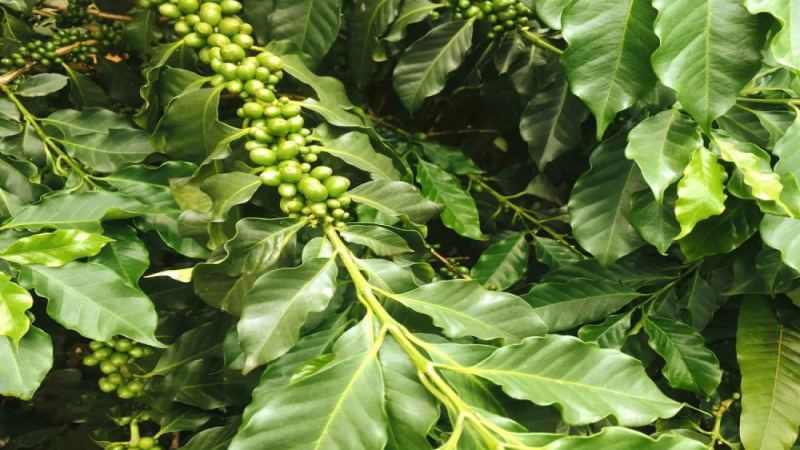
How Did Arabica Coffee Cultivation Take Root in Dehong?
Dehong Prefecture was among the first places in China to plant coffee: seeds arrived from Myanmar in 1914 and were planted in Ruili. Growers there cultivate Yunnan Arabica coffee at high altitude, and the region now runs a full chain of cultivation, processing and sales. By the end of 2016, Dehong accounted for about 20 percent of China's coffee planting area.
Earlier attempts in the 1960s failed, and the industry only expanded after reform and opening up, supported by Yunnan's bio-engineering program and a 1998 provincial opinion on accelerating coffee development. Hogood Company leads local cultivation, and the Ruili coffee germplasm nursery plus coffee engineering research institutions back the work. The article also covers pour-over flavor characteristics of the Yunnan Arabica lots.
As one of the earliest regions in China to introduce coffee cultivation, Dehong Prefecture, with its unique natural conditions, has cultivated Yunnan Arabica coffee of exceptional quality. From the first introduction of coffee cultivation in Ruili in 1914 to today's comprehensive industry chain covering cultivation, processing, and sales, Dehong coffee has become an important pillar of China's coffee industry. This article will take you through an in-depth understanding of the Dehong production region's development history, cultivation scale, processing status, and sales network, and analyze the pour-over flavor characteristics of Yunnan Arabica coffee. It also includes relevant recommendations from the Front Street brand, providing coffee enthusiasts with comprehensive production region knowledge and brewing references.
Current Development Status of the Coffee Industry in Dehong Prefecture
Dehong Prefecture boasts an extremely favorable natural environment. The Yunnan Arabica coffee cultivated under these natural endowments is of outstanding quality, with a full and mellow aroma and a distinctive taste. It has been evaluated by international coffee giants such as Nestlé and Starbucks as one of the finest coffees in the world.
Cultivation Situation
Dehong is one of the earliest regions in China to introduce coffee cultivation. In 1914, coffee was introduced from Myanmar and began to be planted in Ruili; by the 1960s, local farms had also attempted introduction but without success. After the reform and opening up, with the promotion of Yunnan Province's "18" Bio-Engineering Program and policy support—especially the 1998 issuance by the provincial government of the "Opinions of the People's Government of Yunnan Province on Accelerating the Development of the Coffee Industry" (Yun Zheng Fa [1998] No. 116), which explicitly called for increased efforts to cultivate the coffee industry—the coffee industry in Dehong Prefecture truly ushered in a spring of development.
Coffee cultivation in Dehong is primarily led and driven by the leading enterprise Hogood Company. By the end of 2016, Dehong's coffee cultivation area accounted for 20% of the national total. It is not only home to the country's only "Ministry of Agriculture Ruili Coffee Germplasm Resource Nursery" but also hosts strong scientific research institutions such as the Coffee Engineering Technology Research Center. By 2016, Dehong Prefecture's coffee cultivation area reached 220,000 mu, helping more than 60,000 households and nearly 300,000 farmers increase their income, with agricultural output value reaching 1 billion yuan and industrial output value reaching 1.5 billion yuan. A complete industry chain system covering cultivation, processing, and marketing has been established.
Processing Status
The processing segment of Dehong coffee is dominated by Hogood Company. In 2004, the company launched research and development of a series of coffee products, formally entering the coffee industry sector; in 2007, it began investing in the construction of an instant coffee powder plant. To date, the company has built 5 primary processing plants with a primary processing capacity of 80,000 tons of coffee beans per year; in September 2008, Hogood's first 3,000-ton pure instant coffee powder production line was fully put into operation.
In November 2009, construction began on a 10,000-ton instant coffee production line, which was completed on May 27, 2011, and gradually put into production in September 2011 after commissioning. The production line is located in the Padi area of Mangshi Industrial Park, covering 240 mu, with a total investment of 463 million yuan, including 300 million yuan in fixed assets and an output value of 800 million yuan. The project mainly built 3 instant coffee production lines, forming an annual production scale of 10,000 tons of instant coffee, specifically including 2,000 tons of spray-dried instant coffee, 4,000 tons of freeze-dried instant coffee, and 4,000 tons of agglomerated granulated instant coffee; in addition, there is a canned coffee beverage production line with a capacity of 300 cans per minute. The company's deep processing technology is mature, with main products including coffee beans, instant coffee powder, and the Hogood series "3-in-1" coffee.
The company's products have successively passed multiple certifications including ISO9001:2008 International Quality Management System, GAP certification (Good Agricultural Practice), 4C (Common Code for the Coffee Community), UTZ (International Premium Coffee), HACCP (Food Safety Management System), Green Food, and Organic Food Conversion.
Current Product Sales Status
Since 2010, Dehong coffee has made significant breakthroughs in both exports and domestic sales. Domestically, it is mainly sold to cities such as Shanghai, Beijing, Shenzhen, and Hangzhou; internationally, it is mainly sold to 23 countries and regions including Germany, the United Kingdom, Spain, South Korea, Singapore, Japan, and the United States.
Related recommendations: How to brew Yunnan Arabica coffee beans | Yunnan Arabica coffee brand recommendations
The above content is compiled by CoffeeHunters, a coffee news website.


