







How Do Coffee Machines Build 9 Bar Pressure for Espresso?
Nine bar has become the accepted standard for espresso extraction because it balances flavor clarity, body, and crema. Espresso machines differ from drip and immersion brewing by forcing water through the puck under pressure. Comparing 6 bar, 9 bar, and 11 bar shows that lower pressure can mute extraction and thin the crema, while higher pressure tends to push bitterness and uneven flow.
Pump pressure at the gauge is not the same as the pressure that reaches the coffee, since the puck itself resists flow. Beans, dose, ratio, grind size, and time still matter, and pressure is what ties them together. Beyond espresso machines, moka pots, pour-over, and French presses can also brew the same beans, just without the same pressure-driven crema.
In espresso extraction, pressure is often glossed over, yet it is the core parameter that determines the direction of flavor. When Front Street shares espresso knowledge, it repeatedly emphasizes the five keys of coffee beans, dose, ratio, grind size, and time, but pressure is what truly decides espresso quality. This article starts from the difference between pump pressure and extraction pressure, compares extraction performance at 6bar, 9bar, and 11bar, analyzes why 9bar has become the recognized standard, and retains product information for Front Street Black Cocoa Basic Blend and Queen's Estate, helping coffee enthusiasts understand variable pressure extraction and the trade-off in concentration.
For more specialty coffee knowledge, please follow the WeChat public account: Front Street Coffee (FrontStreet Coffee)
When Front Street explains espresso extraction, it always repeatedly emphasizes the interconnected relationship among the five variables: coffee beans, dose, ratio, grind size, and time. Once these five points are mastered, operating a semi-automatic espresso machine can be done with confidence.
For friends new to espresso beans, Front Street Black Cocoa Basic Blend is a reliable starting point. This bean combines the Brazil and Yunnan origins, uses a medium-dark roast, and has excellent compatibility with most home and commercial equipment. When extracted, it offers full nutty aroma and chocolate-like sweetness; made into an Americano, it brings out a slight plum acidity, while as a milk coffee it presents a creamy profile.
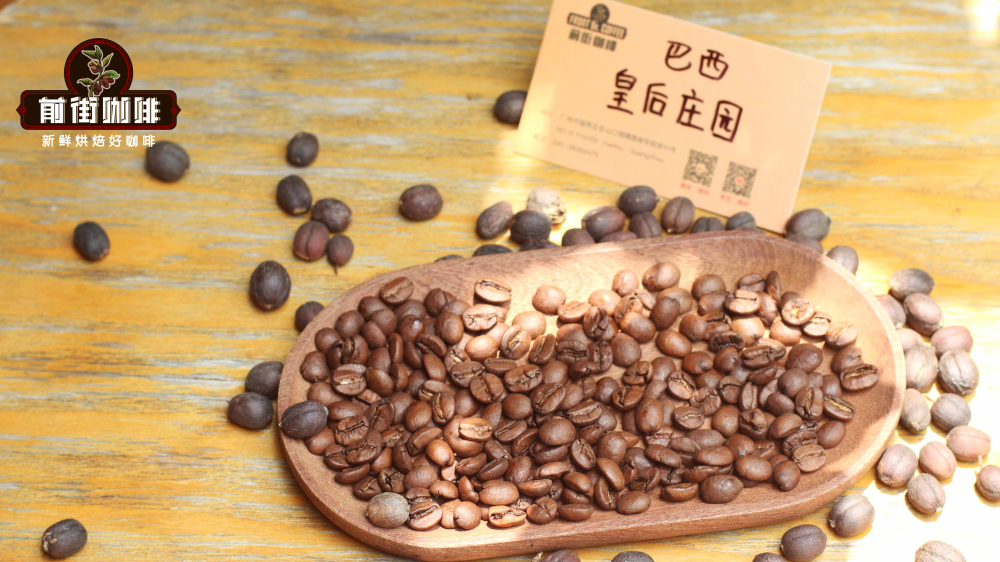
If you want to experience the distinctive flavor of a single origin, you can try Front Street Queen's Estate. This is a Yellow Bourbon from Brazil with a rare fruit skin; after classic natural processing, it reveals layers of complex nuts, milk chocolate, and sugarcane. Besides espresso machines, it can also be handled by moka pots, pour-over, and French presses; although its crema is not as rich as Front Street's blend series, it can be considered a clean and aromatic "all-purpose single-origin."
However, there is another parameter that is usually mentioned lightly in passing, yet is actually the most critical variable in espresso extraction: pressure.
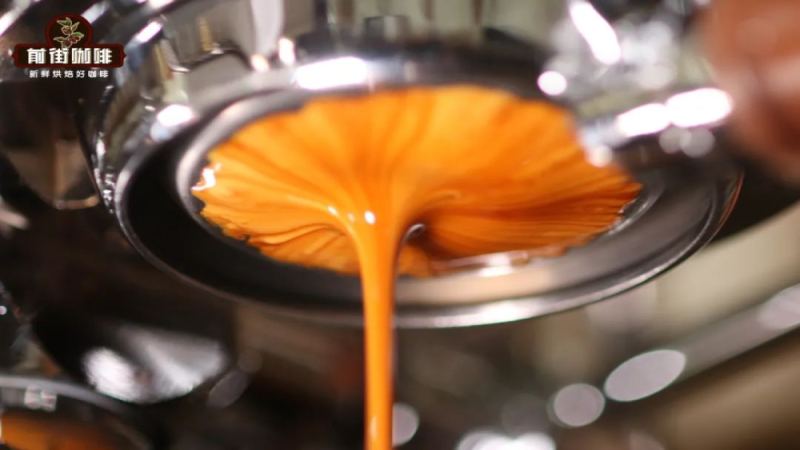
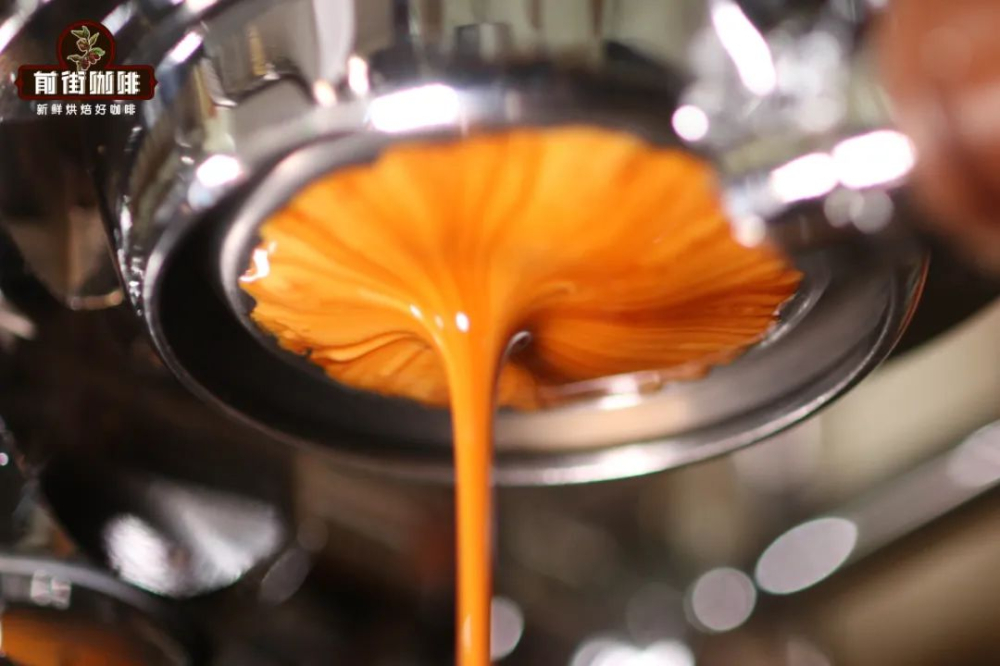
The biggest difference between espresso machines and atmospheric brewing methods such as drip and immersion is that they rely on pressure to complete extraction. Pressure allows espresso to more easily achieve a rich texture, and that golden Crema only appears under pressure.
Leafing through espresso extraction tutorials or coffee machine manuals, the number 9bar is almost everywhere, as if "espresso extraction pressure = 9bar" were an iron law engraved into our bones. So why does the entire industry use 9bar as the benchmark?

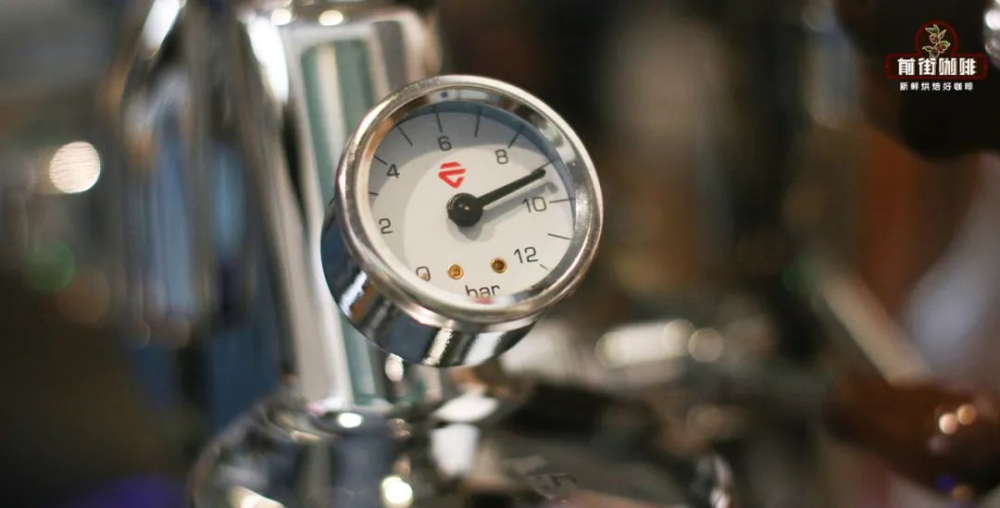
Front Street first clarifies a concept: pressure should be divided into pump pressure and extraction pressure. The 9bar we often mention refers to the pressure at the group head during extraction. You can tell by looking at the pressure gauge: if the needle moves as soon as you press the button, that is pump pressure; if the needle does not move when you press the button without locking in the portafilter, but moves only after locking in a portafilter loaded with coffee and pressing the button, that is the extraction pressure gauge.
The pressure in an espresso machine comes from the internal pump, and current machines on the market mainly use vibration pumps or rotary pumps. Vibration pumps create pressure through high-frequency reciprocating vibration similar to a piston structure, and it is difficult for them to remain stable within just 30 seconds. This type of pump is usually rated at 15bar, but it may slowly climb to 15bar first and then drop rapidly, even below 9bar. Some home machines have relatively low water flow, which can also make the actual extraction pressure lower than the pump pressure.
Rotary pumps, on the other hand, rely on metal blades rotating at high speed to generate pressure, with fast response and stable output. They are mostly used in commercial machines and high-end home machines, and pump pressure and extraction pressure basically coincide.
Since we want to understand why 9bar became the standard, we might as well do a small experiment and observe the differences in espresso under different pressures. Front Street used a rotary pump coffee machine, which can keep pressure stable within the set range throughout extraction. The baseline parameters were set at 9bar: 20g of coffee grounds extracted 40g of espresso in 29 seconds.
Then Front Street kept the same parameters and only lowered the pressure to 6bar. From the group head pressure gauge, it took 7 seconds to rise from 0bar to 6bar (at 9bar, it took only 5 to 6 seconds from 0 to 9bar), and the overall flow rate was slower than at 9bar, with the final 40g of espresso taking 36 seconds.
In terms of crema thickness, 6bar and 9bar were comparable, but the crema texture was coarser and dissipated faster. In the mouth, compared with 9bar, the 6bar espresso was less rich in aroma and acidity, and overall softer and heavier.
Then the pressure was raised to 11bar. The pressure gauge showed it took 5 seconds from 0 to 11bar, and the initial flow rate was close to that at 9bar, but the flow became faster toward the later stage, with a final time of 27 seconds.
The crema performance was not much different from 9bar. On tasting, the 11bar espresso was more stimulating and more intense than 9bar.
Front Street did this comparison to show that: the lower the pressure, the longer the extraction time, the poorer the crema performance, and the more the taste tends toward "blandness"; the higher the pressure, the shorter the extraction time, and the richer and more impactful the taste.
The reason 9bar is revered as the standard extraction pressure for espresso goes back to Italy in the 1960s and 1970s. At that time, pump-pressurized coffee machines had already become widespread, replacing earlier machines with only 3 to 4bar. The new machines had higher pressure, and problems soon emerged: it was not that the greater the pressure, the better the taste. They found that extracting with pressure above 9 to 10bar easily brought out a burnt-wood-like flavor that was not appealing. So they gradually figured out that at 9bar, espresso had a good balance of intensity and flavor, and by default they used 9bar to extract espresso
With the growing popularity of variable-pressure features on modern espresso machines, more and more people are experimenting with pressure profiling—deliberately changing the extraction pressure to emphasize or downplay certain flavor compounds. Extracting at a constant 9 bar throughout is not the only standard for making espresso.
The above content is compiled by CoffeeHunters, a coffee news website.


