







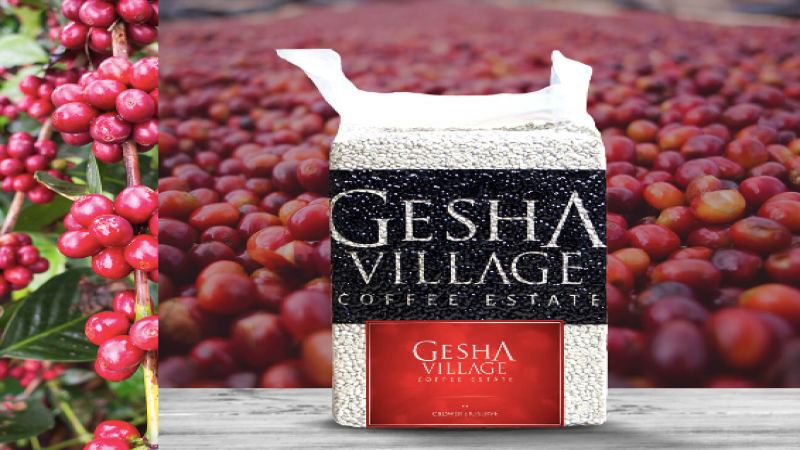
How Does Panama Gesha Fit Into the Gesha Village Grading System?
Gesha Village Estate in Ethiopia grades every lot, and the Red Label tier accounts for roughly 15% of annual production, with each lot scoring 88 points or more on the SCA cupping scale. Red Label natural Gesha combines full traceability with a balanced cup, showing coconut, licorice, cream, chocolate, toffee, citrus, almond, and strawberry notes.
The estate sits inside the Gori Gesha Forest, where Adam and consultant Willem Boot collected wild seeds in 2011. Genetic testing confirmed the site as the original collection point of the Panama Gesha variety, which is why the Gesha coffee bean here carries that lineage. Red Label lots show the signature profile with less intensity than Gold Label.
Gesha Village Estate operates under a strict internal grading system, from auction lots to Chaka batches, with each tier corresponding to different production proportions and quality levels. The Red Label lot stands out as a choice that combines traceability with value, scoring over 88 points in cupping and displaying the quintessential Gesha Village flavor profile. This article will start from the specific details of Front Street Gesha Village Red Label Natural Gesha coffee beans, outline Gesha Village's grading system, introduce the discovery history of the Gori Gesha Forest and the estate's plot management approach, and analyze the differences between batches, helping coffee enthusiasts understand the positioning and tasting direction of Red Label Gesha.
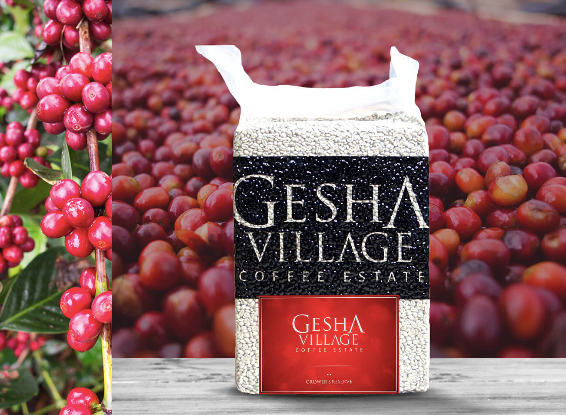
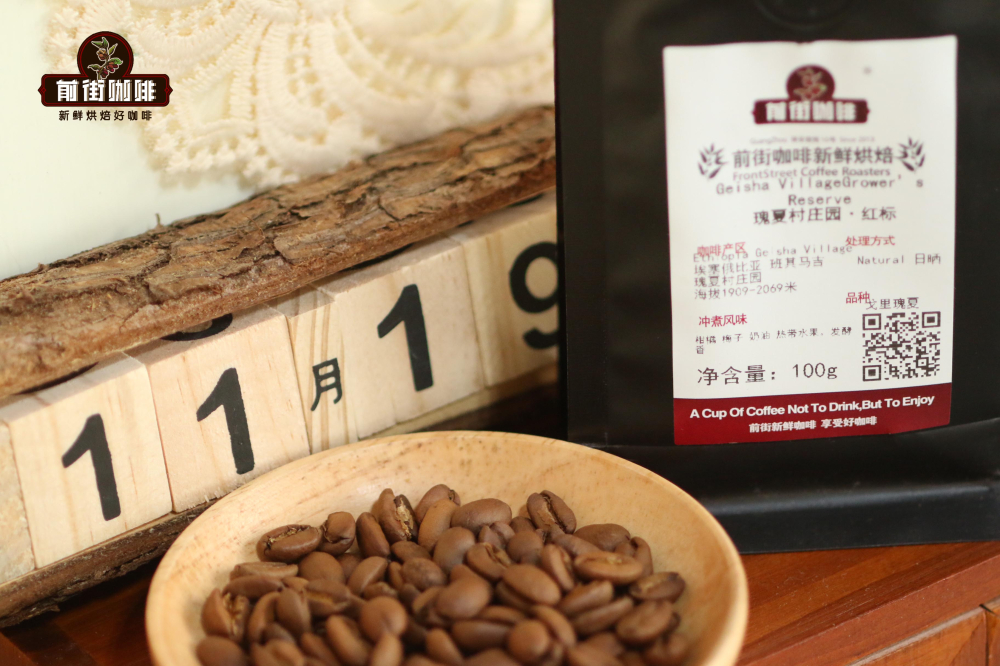
Front Street Gesha Village Red Label Natural Gesha Coffee Beans Country: Ethiopia Region: Gesha Village Estate Processing Method: Natural Variety: Ethiopian Gesha Altitude: 2040 meters Roast Level: Medium-Light Roast
The Red Label tier accounts for approximately 15% of Gesha Village Estate's total annual production, with each lot carrying complete traceability information and achieving an SCA cupping score of 88 points or above.
This Front Street Gesha Village Red Label natural bean presents the signature flavor profile of Gesha Village, though in terms of flavor intensity and complexity, it falls slightly short of the Gold Label lot, making it a single-lot product with excellent value. Specific flavors include coconut, licorice, cream, chocolate, toffee, citrus, almond, and strawberry, with a fermented note in the dry aroma. The overall flavor leans balanced, with a relatively full body and prominent nutty tones.
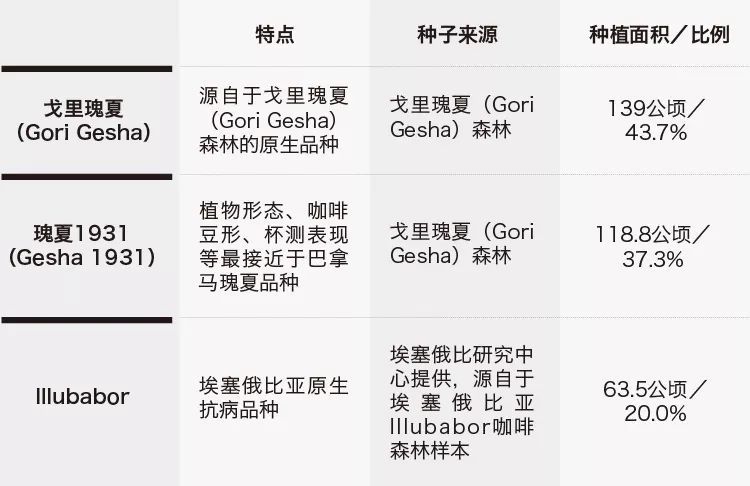
Gesha Village, formally known as Gesha Village, is located within the Gori Gesha Forest, which is precisely where the Gesha coffee variety was first discovered. In 2011, Adam and consultant Willem Boot explored the woodlands near the estate together. In a jungle magically enveloped by dense forest, they found multiple wild tree varieties, and what delighted them most was the wild Gesha. They later learned that this forest was the Gori Gesha Forest—the original site where the Gesha coffee variety was first discovered. They collected seeds from the native Gesha trees, carefully selected them, and sent them to professional institutions for genetic testing, confirming that this was the original collection site of the Panama Gesha variety. Afterwards, by observing the plant morphology of the coffee trees, the appearance and size of the coffee beans, and cupping performance, they selected the Gesha variety closest to today's Panama Gesha and began seedling cultivation. Adam has his own views on coffee processing, choosing high-quality natural and washed methods to highlight the terroir, along with a small amount of honey processing and some experimental lots.
Gesha Village's internal tiers are divided into Auction, Gold Label, Red Label, Green Label, and Chaka batches. The estate cultivates three varieties: Gori Gesha, Gesha 1931, and Illubabor (a native Ethiopian disease-resistant variety).
How to distinguish Front Street Gesha Village Gold Label, Front Street Gesha Village Red Label, and Front Street Chaka Gesha?
Even top estates produce coffees of varying quality. To make Gesha Village's "flavor reputation" live up to its name, the estate implements a strict internal grading standard.
>Auction Lot Accounting for only 3.7% of Gesha Village's annual production, this is the estate's top-tier lot after rigorous selection, obtainable only through the 2018 Gesha Village Coffee Estate global auction. The 2018 auction lots scored between 88.15 and 92.67 points in cupping, further subdivided into Champion's Reserve and Farm Reserve. For example, Gesha Village 2018 Auction Lot RSV.6 belongs to the auction tier.
>Gold Label Lot Accounting for only 5% of Gesha Village's annual production, this is the lot commonly chosen by competitors worldwide, and roasters who demand quality also purchase it. This lot offers complete traceability, with each batch featuring outstanding flavor and high complexity, making it the estate's finest tier second only to auction.
>Red Label Lot A fully traceable lot with the quintessential Gesha Village flavor. Its flavor intensity and complexity are slightly weaker than the Gold Label lot, making it a single-lot product with excellent value.
>Green Label Lot Lots from a single plot and of a single variety, also featuring the quintessential Gesha Village flavor, with flavor intensity and complexity somewhat weaker than the Red Label lot.
>Chaka Batch
A Gesha coffee blend launched by Gesha Village, comprising three varieties: Gori Gesha, Gesha 1931, and Illubabor (a native Ethiopian disease-resistant variety).
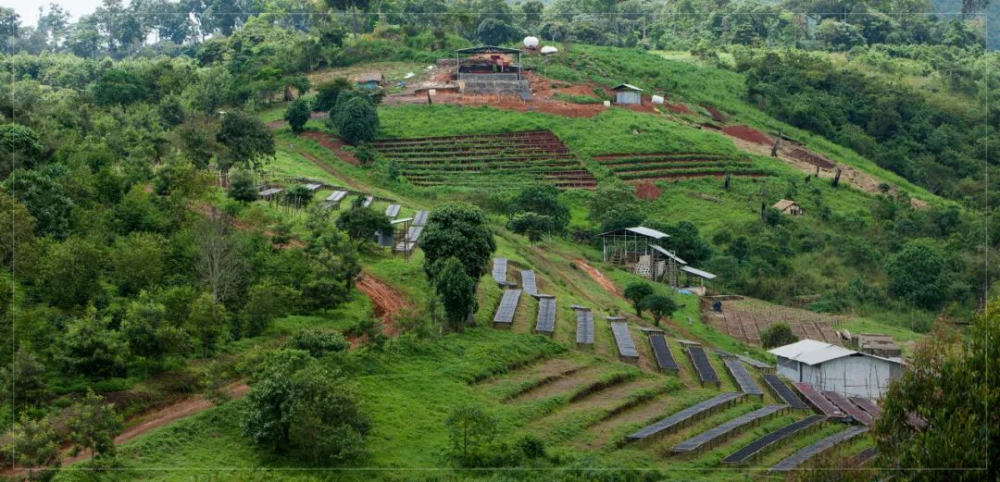
Gesha Village covers a total area of 471 hectares. Since 2011, the planted area has gradually expanded, reaching approximately 320 hectares by 2017, making it one of the largest Gesha estates in the world. For ease of management and flavor refinement, the estate owner divided Gesha Village into 8 major blocks, with further numbering within each lot. The western side of the estate is relatively higher in elevation, so the OMA, SURMA, and SHEWA-JIBABU plots sit at slightly higher altitudes; the southern side has greater shade coverage, while the northern side has longer sunlight hours. Among the eight plots, estate managers selected the most suitable variety for each plot based on microclimate differences such as altitude, soil conditions, and shade (as shown in the image above), ensuring each major plot develops a distinct character.
Gesha has always been a hot topic of discussion. In the hearts of coffee enthusiasts, Gesha is undoubtedly a true goddess, and countless people are captivated by her bright and complex floral and fruity aromas, multi-layered high-sweetness fruit notes, and delicate, gentle acidity.
The above content is compiled by CoffeeHunters, a coffee news website.


