







How Do Typica and Bourbon Classic Coffee Varieties Differ?
Typica and Bourbon are the two oldest Arabica varieties, and most modern Arabica plants trace back to them. Typica, from Ethiopia, has an elegant cup but a weak plant, poor disease resistance, and low yield, so Caturra and Catuai have largely replaced it across Central and South America. Bourbon carries a sweeter, fuller profile.
Within Arabica, flavor also follows region: Jamaican Blue Mountain and Brazilian Cerrado each show a recognizable character shaped by altitude and soil. Brewing parameters follow those differences, with water temperature and ratio adjusted to acidity and body. Coffea also includes Canephora, or Robusta, used mostly in instant coffee and blends, and Liberica, a large-seeded species.
Walking into a café and ordering a pour-over, the barista often mentions the bean's variety and origin. How exactly does coffee variety affect flavor? This article, from the perspective of Front Street Coffee, sorts out the origins and characteristics of two ancient Arabica varieties—Typica and Bourbon—and extends to the regional character, flavor performance, and brewing suggestions of representative coffees such as Jamaican Blue Mountain and Brazilian Cerrado. Whether you are a beginner enthusiast or a seasoned player, you can gain clear variety knowledge and practical brewing references from it.
When you go to a café and order a pour-over, the enthusiastic barista will often tell you what variety this bean belongs to, where it comes from, and what flavors it has. So what coffee varieties do we usually come across? Does variety really have such a big impact on a cup of coffee? Today Front Street Coffee (FrontStreet Coffee) will guide everyone through the story behind coffee varieties.
At present, plants in the Coffea genus are mainly divided into three major categories: Arabica, which is a small-seeded species; Canephora, which is a medium-seeded species (namely Robusta); and Liberica, which is a large-seeded species. The ones most commonly circulating in the commercial market are Arabica and Robusta. Robusta is commonly found in instant products and blended beans, while Arabica, which has better flavor performance, is mostly used for specialty coffee. In other words, the beans used for pour-over in cafés basically all belong to Arabica.
Under Arabica there are still a large number of subdivided varieties, among which the oldest are Typica and Bourbon. Typica originated in Ethiopia and is one of the oldest native varieties. Almost all Arabica varieties today can be traced back to Typica. Typica has an elegant flavor, but the plant itself is relatively weak, has poor disease resistance, and is susceptible to leaf rust. In addition, its yield is low, so its economic returns are limited. In recent years in Central and South America, Typica has gradually been replaced by Caturra and Catuai, and its planted area has continued to shrink. Although Typica has outstanding flavor, its popularity is still less than that of Bourbon.
Front Street Coffee (FrontStreet Coffee) points out that the most distinctive mark of the Typica coffee tree is its bronze-colored top leaves, so some people also call it "red-top coffee." As the environment changes, Typica has undergone genetic mutations in various places, giving rise to many new varieties that are better adapted to local conditions and forming their own characteristics. Well-known examples such as Mandheling, Blue Mountain, Kona, and Yunnan small-batch coffee all belong to mutated descendants of Typica.
Jamaican Blue Mountain Coffee
The island of Jamaica happens to lie within the coffee-growing belt, and the Blue Mountains are located in the eastern part of the island. There, fertile volcanic soil provides nutrients, and the temperature and humidity are suitable with abundant rainfall. These unique geographical conditions create a superior growing environment for coffee cultivation in the Blue Mountains and have also produced the world's second most expensive coffee.
In the 1720s and 1730s, the British introduced Typica to Jamaica, and the history of Blue Mountain coffee began there. Authentic Jamaican Blue Mountain coffee has a rich aroma, a mellow and unique mouthfeel, elegant flavor, and extremely high overall balance.
The charm of Blue Mountain coffee lies in its balance—no single flavor is overly prominent. Its mellow mouthfeel, pleasant aroma, and long-lasting finish and sweetness have captivated many coffee lovers. Front Street Coffee's (FrontStreet Coffee) Blue Mountain comes from an export company designated by the Jamaica Coffee Industry Board, uses barrel-packed green beans, and holds Rainforest Alliance certification.
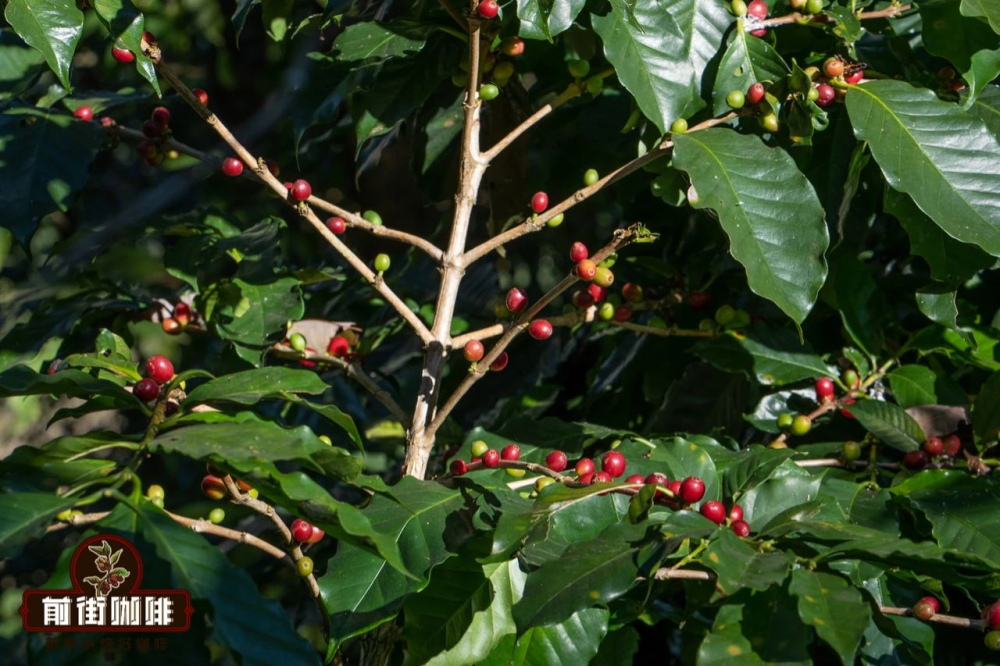
Front Street Coffee (FrontStreet Coffee) Jamaica Blue Mountain No. 1
Region: Jamaica Blue Mountain
Estate: Clifton Farm
Altitude: 1,310 meters
Variety: Typica
Processing method: Washed
Front Street Coffee (FrontStreet Coffee) brewing suggestion
The brewing parameters used by Front Street are: Kono dripper, 88°C water temperature, 1:15 coffee-to-water ratio, 15 g dose, grind size (70-75% passing through a No. 20 standard sieve).
Front Street took into consideration that both Blue Mountain beans use a relatively dark roast level. The darker the roast, the faster coffee substances dissolve. To avoid over-extraction, Front Street used a lower water temperature for extraction and also used the slower-flow Kono dripper, in order to ensure that as much coffee material as possible is extracted under low-temperature conditions.
Front Street uses staged extraction, namely a three-stage pouring method, using 30 g of water for blooming, with a bloom time of 30 s. In the first stage, pour in a small stream in circles until 125 g, then stop. When the liquid level drops to the point where the coffee bed is about to be exposed, continue with the second stage of pouring until 225 g, then end extraction. The total extraction time (including blooming) is 2'00.
The origin of Bourbon coffee can be traced back to a mutation after Typica was transplanted to Yemen, with the bean shape changing from slender and pointed to round and plump. In 1715, the French brought the round-bodied beans of Yemen Mocha to Bourbon Island off the east coast of Africa (renamed Réunion Island after the French Revolution), and the name Bourbon came from this. In 1727, round-bodied Bourbon beans found their way to Brazil and Central and South America; in 1732, the British also introduced Yemen Mocha to Saint Helena (the later place of Napoleon's imprisonment), which likewise belonged to the round-bodied Bourbon bean. In American specialty coffee cupping, Bourbon repeatedly stands out.
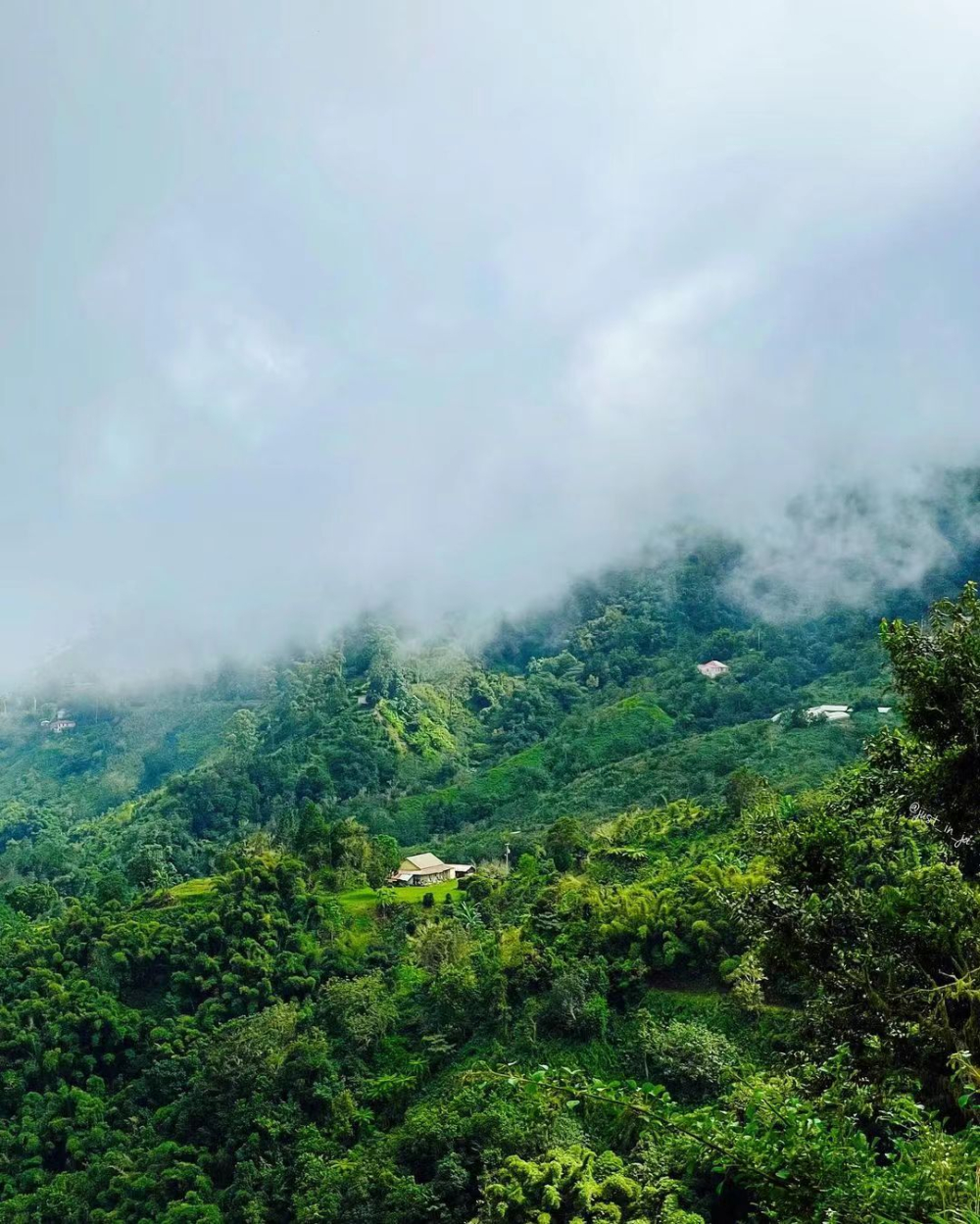
Bourbon grown at high altitude usually has a better aroma, bright acidity, and a red-wine-like character on the palate. Bourbon has a very rich range of natural mutations. Yellow Bourbon, Pink Bourbon, Caturra, Pacas, and Villa Sarchi all belong to the natural mutations of the Bourbon family.
Front Street Coffee (FrontStreet Coffee) Brazil Cerrado Coffee Beans
Region: Brazil Cerrado
Altitude: 1,100 meters
Variety: Red Bourbon
Processing method: Pulped natural
Flavor: Nuts, cream, dark chocolate
Front Street Coffee (FrontStreet Coffee) brewing suggestion
The brewing parameters used by Front Street are: V60 dripper, 90°C water temperature, 1:15 coffee-to-water ratio, 15 g dose, grind size (78% passing through a No. 20 standard sieve).
In order to highlight the aroma and richness of this Red Bourbon, Front Street used a medium-dark roast, and selected a medium grind size, which can better extract the coffee's aroma.
Front Street uses three-stage brewing. In the first stage, pour 30 g of water and bloom for 30 seconds. After blooming ends, pour the second stage of water, about 95 g, with the scale reading at 125 g. After pouring, wait for the water level to drop by half.
When the coffee bed is about to be exposed, pour the third stage of water, about 100 g, with the scale reading at 225 g. After pouring, wait for the coffee to finish draining. The brewing time is 1 minute 47 seconds.
The above content is compiled by CoffeeHunters, a coffee news website.


