







Which variables matter most when you pull coffee by pour-over?
Six variables decide the outcome of a pour-over, whether you pull coffee for one cup or a full carafe: coffee bean freshness, grind size, coffee-to-water ratio, brewing water temperature, pouring technique, and extraction time. Change any one and the flavor shifts. Freshness shows up mainly in carbon dioxide release during resting, since aromatic compounds also escape as beans sit.
Use a 1:14 to 1:18 coffee-to-water ratio. Light roasts reference 90 to 91 C water, medium-dark roasts 88 to 89 C, with grind judged by sieve-passing rate. A three-stage pour keeps the bed even. Pour-over takes more steps than boiling coffee, but the process stays repeatable once the numbers are fixed.
Pour-over coffee may seem complicated in its steps, but in reality every pour is full of a healing sense. However, emotional fluctuations, pouring rhythm, grind size, water temperature… any deviation in any one of these links will make the final flavor vastly different. The six major factors affecting pour-over extraction—coffee bean freshness, grind size, coffee-to-water ratio, brewing water temperature, pouring technique, and extraction time—are interlinked, and pulling one strand moves the whole body. In this article, Front Street will break down one by one the specific mechanisms by which these six variables act on flavor, and provide grinding sieve-passing rate recommendations for light-roast and medium-dark-roast beans, a coffee-to-water ratio range of 1:14 to 1:18, water temperature references of 90-91°C and 88-89°C, and a complete demonstration of three-stage pouring, to help beginners build a stable and reproducible brewing framework.
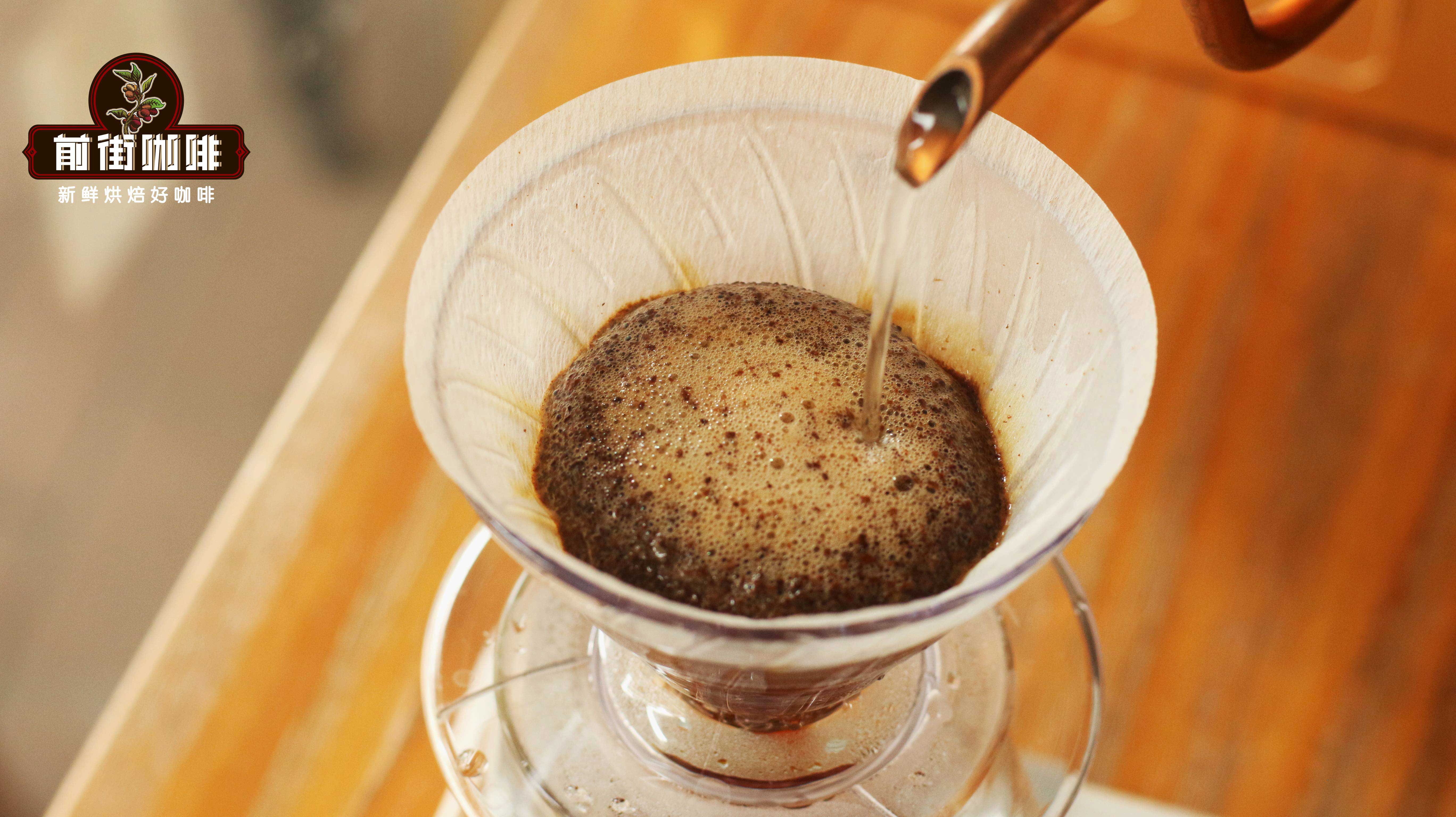
Whenever someone asks Front Street how to brew pour-over coffee, Front Street always likes to first quip: brew it with patience. Indeed, compared with coffee made by direct boiling, pour-over requires more effort in the operational steps, but the brewing process itself is quite healing. Coffee brewed when you are in a good mood and coffee brewed when you are feeling down really do taste very different—this is no joke. When a person is restless and agitated, their movements become hurried: the pouring speed is too fast, they forget to adjust the grind, and the water temperature is not set right either. As long as one step goes wrong, the flavor of the whole cup of coffee will head in a completely different direction.
What factors affect pour-over coffee? Coffee bean freshness, grind size, coffee-to-water ratio, brewing water temperature, brewing technique, and extraction time—a change in any one of these six will influence the final extracted flavor of the coffee. So how exactly do these six act on pour-over extraction? Front Street will sort through them one by one below.
Coffee Bean Freshness
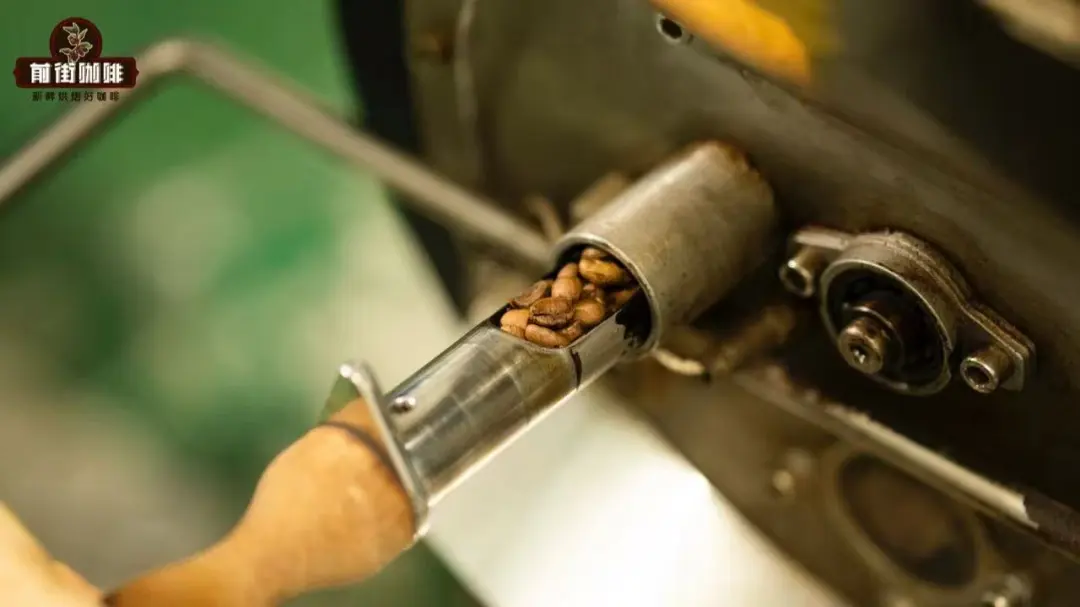
The most intuitive manifestation of freshness lies in the release of carbon dioxide from the coffee beans. The resting process is essentially the process of carbon dioxide being discharged. At the same time, the aromatic substances in the coffee beans that determine flavor and aroma are also constantly volatilizing, and these small-molecule aromatic substances dissipate much faster than the large-molecule substances that bring bitterness. Therefore, the less fresh the coffee beans are, the less carbon dioxide and aromatic substances remain, and the fewer substances there are available for extraction.
Of course, coffee beans are not necessarily better the fresher they are. Beans that are too fresh have an excessively high carbon dioxide content. If it is not fully released within the 30 seconds of blooming, carbon dioxide will continue to be released during subsequent pouring, disrupting the path of the water flow through the coffee bed and causing unstable extraction. Front Street's suggestion is: after buying freshly roasted coffee beans, do not open the package at first. Leave it with the original packaging for 4 to 6 days, allowing the beans to release carbon dioxide through the one-way valve on the packaging while blocking outside air and moisture from entering.
Coffee Bean Grind Size
Grind degree refers to the size of the coffee powder particles. Particle size actually determines the time required for water flow to reach the center of a coffee particle—the larger the particle, the longer it takes for water to penetrate the outer layer and enter the center to extract the internal substances; the smaller the particle, the shorter the time for water to reach the center to extract the internal substances.
But the more substances extracted, the better it is not. Grinding too fine will bring out more large-molecule substances that cause bitterness. A suitable grind degree can both avoid the incomplete flavor and weak taste caused by under-extraction, and reduce the risk of heavy bitterness and an unpleasant mouthfeel caused by over-extraction. Front Street suggests everyone prepare a No. 20 standard sieve to sift the grounds, taking 10 grams of coffee beans, grinding them roughly, and then conducting a sieving test.
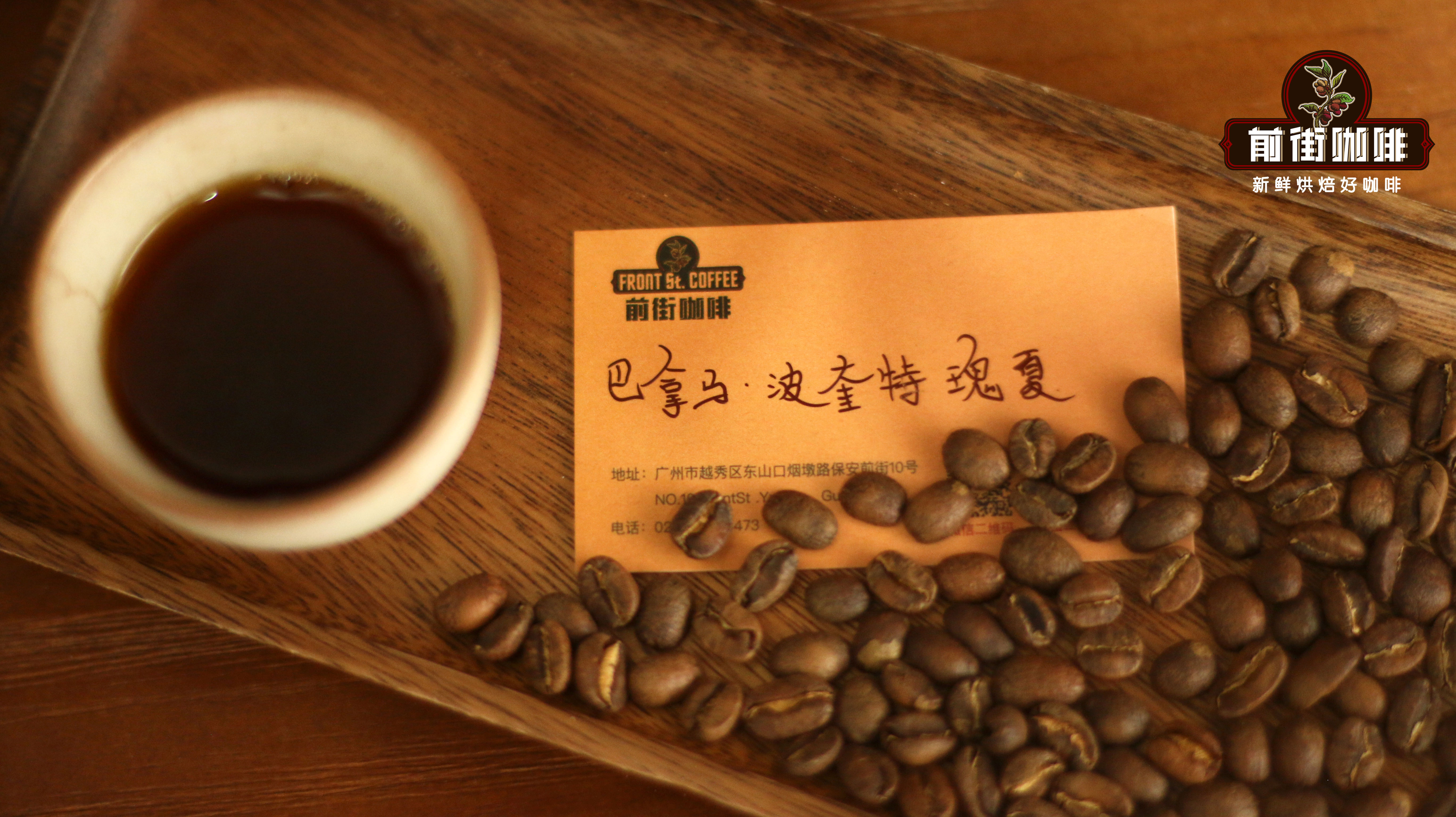
Front Street's brewing grind size for light-roast coffee beans corresponds to a sieve-passing rate of 75%-80% (that is, 7.5 g-8 g of powder). Recommended are Front Street Fruit Ding Ding · Yirgacheffe, Front Street Geisha · Panama, and Front Street Sidra · Colombia; Front Street's brewing grind size for medium-dark-roast coffee beans corresponds to a sieve-passing rate of 65%-70% (that is, 6.5 g-7 g of powder). First choices are Front Street Queen's Manor, Front Street Indonesia Mandheling, and Front Street Colombia Huila.
Pour-Over Coffee Coffee-to-Water Ratio
The larger the coffee-to-water ratio, the weaker the coffee taste; the smaller the coffee-to-water ratio, the stronger the coffee taste. By increasing the amount of water poured to widen the coffee-to-water ratio, more flavor substances participate in extraction, but the overall taste is weaker; by reducing the amount of water poured to narrow the coffee-to-water ratio, fewer flavor substances participate in extraction, but the taste is stronger. By increasing the amount of coffee powder to narrow the coffee-to-water ratio, you can reduce the extraction of large-molecule substances in the tail stage while making the taste stronger; by reducing the amount of coffee powder to widen the coffee-to-water ratio, before reaching the limit, the extraction of flavor substances will be more complete while the intensity decreases.
In daily brewing, Front Street recommends a coffee-to-water ratio between 1:14 and 1:18. The smaller the ratio, the stronger the taste; the larger the ratio, the weaker the taste. Most of Front Street Coffee's coffee beans are brewed at a 1:15 ratio, usually taking 15 grams of coffee beans and pouring 225 grams of water. At this ratio, the coffee flavor is relatively easier to reach a balanced state.
Pour-Over Coffee Brewing Water Temperature
Taking the roast degree of coffee beans as an example, light-roasted coffee retains a large amount of delicious small-molecule substances such as amino acids, malic acid, citric acid, and furan, so a higher water temperature is needed during extraction. Therefore, Front Street suggests controlling the water temperature for brewing light-roast coffee between 90-91°C. Medium-roast coffee has undergone a longer Maillard reaction and caramelization reaction, and the delicious small-molecule substances have already been consumed to a greater extent. If a high temperature above 90°C is used again, it will inevitably be easier to extract bitter large-molecule substances. At this time, the water temperature should be lowered to suppress extraction efficiency. Front Street suggests a water temperature of 88-89°C for brewing medium-roast coffee.
Pour-Over Coffee Brewing Technique
Front Street suggests beginners use three-stage pouring when brewing pour-over. The advantage of three-stage pouring is that during the extraction process it can more fully extract the flavor substances of the coffee, enhance the layering of the coffee, and can better display the flavor of most coffees from different origins and with different roast degrees.
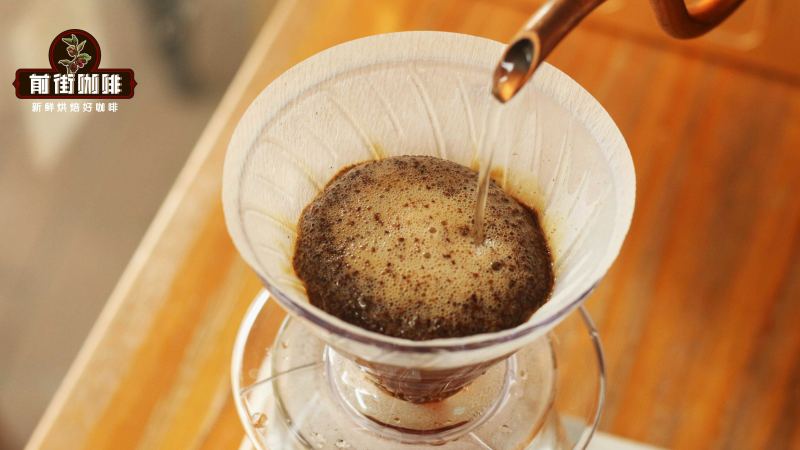
Front Street Coffee brewing demonstration: Pour water until it reaches 30 grams, then stop and wait 30 seconds for blooming. When the electronic scale shows the 31st second, begin the second pour, circling from the center outward, keeping the water flow steady and vertical. When the water column hits the coffee bed, foam will be produced. This stage of brewing lets the coffee foam be released, spreading across the entire surface of the coffee bed, with the liquid level rising to the base of the short ribs. The amount of water poured in this stage is 100 grams. When the liquid level drops to the halfway point, begin the final pour, likewise from the center outward in an "aroma-seeking" manner, pouring 95 grams. The originally dark brown foam gradually turns into pale yellow coffee foam, and the liquid level likewise rises back to the water level height of the second pour. After all the coffee liquid has flowed into the server, remove the dripper and end extraction.
Pour-Over Coffee Extraction Time
After a large number of brewing tests, Front Street Coffee has reached the conclusion: taking 15 grams of coffee powder as an example, coffee with a total extraction time stably between 1 minute 50 seconds and 2 minutes 10 seconds has the highest fault tolerance. The above five steps will all affect extraction time to varying degrees. If the extraction time is too long, consider whether the grind size is too fine, or whether the pouring stream is too small and the flow rate too slow; if the extraction time is too fast, consider whether the grind size is too coarse, or whether the pouring stream is too large and the flow rate too fast.
The above content is compiled by CoffeeHunters, a coffee news website.


