







How does the Gesha coffee bean grading system work?
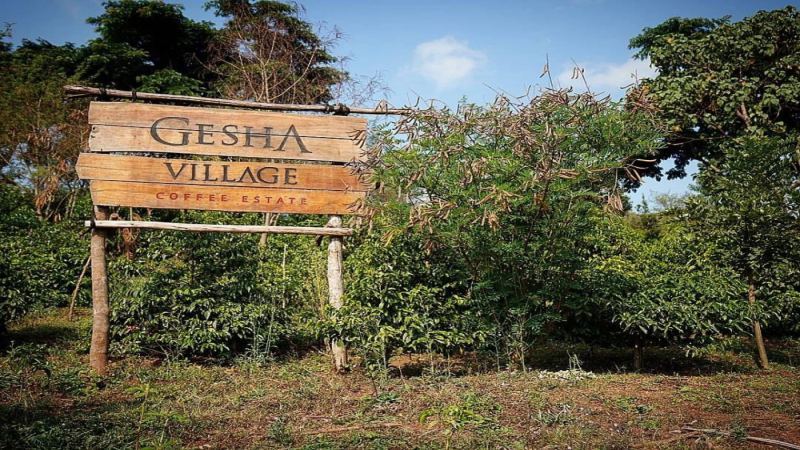
Ethiopia's Gesha Village Coffee Estate sorts its coffee into five grades: Auction, Gold, Red, Green, and Chaka. The estate sits in the Gesha forest of Bench Maji across 475 hectares, divided into eight blocks. Three varieties are grown: Gori Gesha at 139 hectares, Gesha 1931 at 118.8 hectares, and IIIubabor.
Each block's altitude and variety give the gesha coffee bean a distinct flavor profile. The Gold Label from the Oma block is Gesha 1931 processed with a 30-day natural method, cupping with berries, melon, citrus, chamomile, and a tea-like sweet finish. Pour-over parameters for grind size, water temperature, ratio, and pouring technique let home brewers reproduce those layers.
Ethiopia's Gesha Village Coffee Estate is renowned for its strict grading system, classifying coffee beans into five grades: Auction, Gold, Red, Green, and Chaka. This article systematically introduces the estate's geographical location, its three major coffee varieties (Gori Gesha, Gesha 1931, and IIIubabor), and their planting proportions, while providing a detailed explanation of the definitions and yield percentages of each grade. It also focuses on the Gold Label Geisha sold by Front Street Coffee, which comes from the Oma block and is of the Gesha 1931 variety, processed using a 30-day natural method, with cupping notes of berries, melon, citrus, chamomile, and a tea-like sweet finish. The article also provides complete pour-over parameters, including grind size, water temperature, coffee-to-water ratio, and pouring technique, helping coffee enthusiasts reproduce the rich layers of this bean at home.
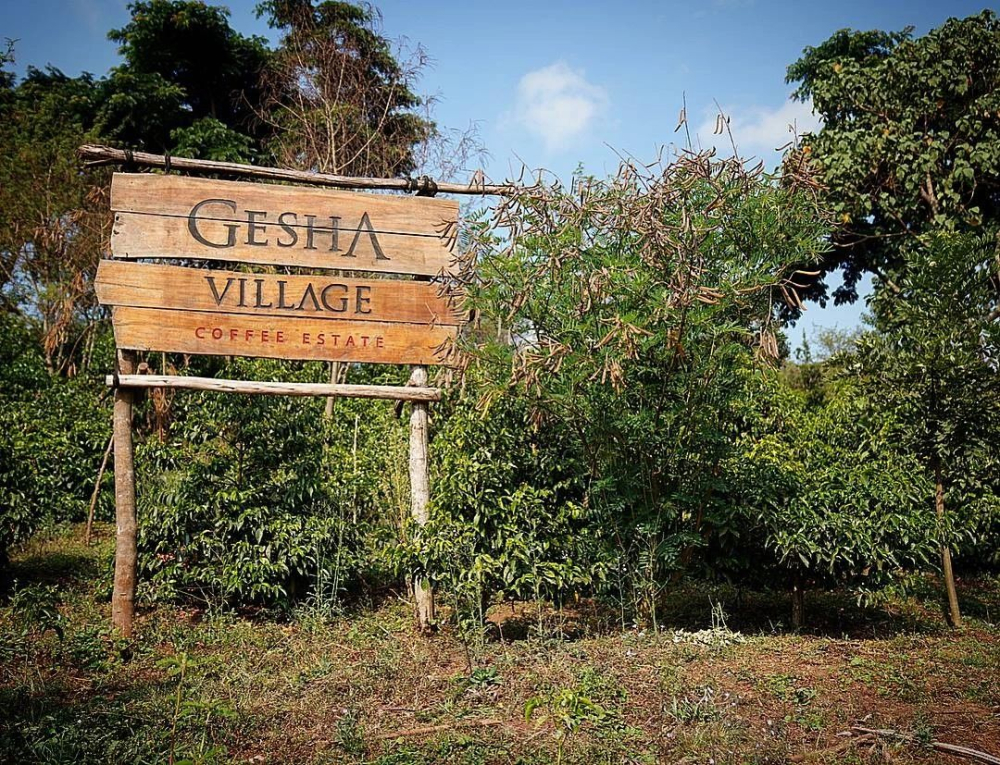
The "Front Street Gesha Village Gold Label" and "Red Label" appearing on Front Street Coffee's bean list are actually part of a grading system established by Ethiopia Gesha Village Coffee Estate for its Gesha coffee beans from different blocks, altitudes, and varieties within the estate. The estate owner's original intention in creating this system was to ensure that the coffee beans delivered to buyers consistently maintain the highest quality through strict cupping standards and careful selection season after season.
Gesha Village Coffee Estate is located within the Gesha forest of Bench Maji, Ethiopia, covering a total area of 475 hectares. For refined management, the estate is divided into 8 blocks, primarily cultivating 3 Ethiopian Gesha varieties. Although these blocks are in the same region, differences in variety and altitude give each block's coffee its own distinctive flavor profile.
Introduction to Gesha Village Coffee Varieties
Gori Gesha, originating from the native varieties of the Gori Gesha forest, covers a planting area of 139 hectares, accounting for 43.7% of the estate's total area.
Gesha 1931, whose plant morphology, bean shape, and cupping performance are closest to the Panama Geisha variety, covers a planting area of 118.8 hectares, accounting for 37.3% of the estate's total area.
IIIubabor, a native disease-resistant variety from Ethiopia provided by the Ethiopian Research Center, with samples originating from the IIIubabor coffee forest in Ethiopia, covers a planting area of 63.5 hectares, accounting for 20% of the estate's total area.
Gesha Village Coffee Grades
Gesha Village Coffee Estate classifies its coffee into 5 grades: AUCTION, RARITIES Gold Label, GROWERS RESERVE Red Label, SINGLE-TERROIR Green Label, and CHAKA batch.
>AUCTION
The Auction batch accounts for only 3.7% of Gesha Village's annual production and represents the estate's most top-tier lots after rigorous selection, obtainable only through the Gesha Village Coffee Estate's global auction.
Among them, the 2018 auction batches scored between 88.15 and 92.67 points in cupping, and are further subdivided internally into Champion's Reserve and Farm Reserve.
>RARITIES Gold Label
The Gold Label batch accounts for only 5% of Gesha Village's annual production. It is a batch frequently chosen by competition participants around the world, and roasters with high quality demands also purchase it. This batch has complete traceability, with each lot featuring outstanding flavor and high complexity, making it the finest grade in the estate second only to Auction.
The Front Street Gesha Village Gold Label coffee beans currently sold by FrontStreet Coffee come from the Oma block. This block is located in the southern part of Gesha Village Coffee Estate, at an altitude of 1931 to 2040 meters, and is responsible for cultivating the Gesha 1931 variety, with a total area of 67.6 hectares.
>GROWERS RESERVE Red Label
The Red Label batch is originally named GROWERS RESERVE, which translates to "growers' reserve." It accounts for 15% of the estate's total production and scores above 88 points in SCA cupping.
>SINGLE-TERROIR Green Label
The Green Label batch is originally named SINGLE-TERROIR, which translates to "single terroir." This series provides detailed traceability information, allowing traceability to the specific single block, coffee variety, processing information, and timing, making it a true single-origin coffee.
>CHAKA
The Gesha Village Chaka batch emphasizes a low threshold for purchase. It blends all blocks and coffee varieties of the entire estate together without emphasizing subdivision, and can be said to represent the lower limit of Gesha Village Coffee Estate.
Processing Method of Front Street Gesha Village Gold Label Coffee Beans
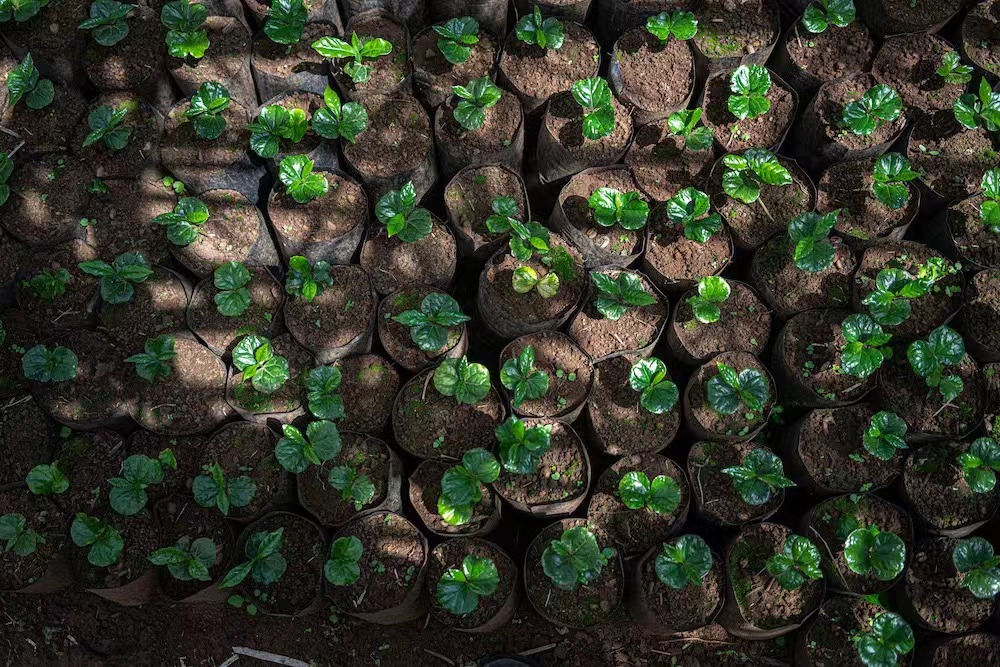
Front Street Coffee's new-season Front Street Gold Label Geisha coffee beans this year come from the Oma block, processed using a natural method with a drying time of 30 days.
After the estate workers complete the harvest of coffee cherries, they first remove floating debris and impurities, then dry them in thin layers covered with plastic sheeting on African-style raised beds. During drying on the drying beds, they conduct a second sorting, picking out insect-damaged beans and greenish beans, with a total drying time of 30 days. Front Street believes that naturally processed coffee has pronounced sweetness, soft acidity, and a flavor profile with complex fruity tones.
Taste and Flavor Characteristics of Front Street Gesha Village Gold Label Coffee Beans
Observant readers may notice that even though the variety to which the Gold Label coffee beans belong is called Geisha, it is essentially a native variety from the Ethiopian region. Even though its plant morphology, bean shape, and cupping performance are closest to the Panama Geisha variety, because it has not undergone human "domestication" (whereas Panama's Geisha only developed its current rich and captivating floral and fruity acidity after years of being "domesticated" by humans and nature), Ethiopia's Gesha 1931 and the Geisha of Central and South America are two different varieties.
However, the performance of Front Street Gesha Village Gold Label coffee beans is also very impressive. Through cupping comparisons by FrontStreet Coffee, it was found that the new-season Front Street Gesha Village Oma block naturally processed Gold Label coffee beans exhibit intense berry aromas, the fullness of melon, fresh citrus-like acidity, chamomile-like floral notes, and a tea-like sweet finish.
How to Brew Front Street Gesha Village Gold Label Coffee Beans?
To fully appreciate the charm of Front Street Gesha Village Gold Label coffee beans, the most important thing is to use freshly roasted coffee beans. All coffee beans sold in FrontStreet Coffee's online stores are shipped within five days after roasting is completed, ensuring that the coffee beans sold are 100% freshly roasted.
FrontStreet Coffee barista brewing parameters: Coffee grind size: medium-fine grind (78% passing rate on a No. 20 standard sieve), brewing water temperature: 91°C, brewing dose 15g, brewing coffee-to-water ratio 1:15.
Pouring technique: Use twice the amount of water relative to the coffee dose for blooming, i.e., 30 grams of water for a 30-second bloom. The reason a blooming process is needed is to allow the coffee grounds to release internal carbon dioxide gas, thereby making the later stages of extraction more stable. Pour in a small stream in circles until reaching 125 grams, then pause, continue pouring until 225 grams and stop. After the water in the dripper has finished dripping, remove the dripper. Start timing from the beginning of pouring, with an extraction time of 2'10". Next, pick up the entire cup of coffee and swirl it to mix evenly, then pour it into a cup for tasting.
[Front Street Gesha Village Gold Label Coffee Beans] Brewed flavor: sweet berry aroma, full and mellow body, with slight chamomile and red berry flavors, and a finish with melon notes and a tea-like sensation.
The above content is compiled by CoffeeHunters, a coffee news website.


