







How do growing conditions for coffee differ by origin?
Blue Mountain coffee from Jamaica and Golden Mandheling from Sumatra differ mainly in terroir and processing. Blue Mountain grows in the Blue Mountain range on new volcanic soil at up to 2,400 meters, is wet-processed, and is mostly Typica, giving a balanced, delicate cup. Mandheling comes from Sumatra, is wet-hulled, and is full-bodied and layered.
Growing conditions for coffee shape these styles. Jamaica's cool, misty highlands with marked day-night temperature swings and nitrogen- and phosphorus-rich soil slow cherry ripening. Sumatra's equatorial climate and wet-hulling method produce the heavy body and low acidity associated with where is java coffee from. Note that only about six thousand hectares in Jamaica can legally carry the Blue Mountain name.
Mandheling and Blue Mountain are often regarded as the two great representatives of full-bodied coffee, but they differ significantly in origin terroir, varietal selection, green bean standards, and processing methods. Blue Mountain coffee comes from Jamaica's Blue Mountain region, is wet-processed, and is mainly of the Typica variety, with a balanced and delicate flavor; Golden Mandheling, on the other hand, originates from Sumatra, Indonesia, is processed using the wet-hulling method, and is full-bodied, intense, and richly layered. This article, based on the cupping and pour-over practices of FrontStreet Coffee, systematically sorts out the geographical backgrounds, processing methods, green bean characteristics, and brewing performance of these two coffees, helping coffee enthusiasts clearly distinguish the stylistic divide between them.
When it comes to coffee with a hefty mouthfeel, Mandheling and Blue Mountain are always the first to be mentioned. However, it is worth noting that products labeled "Blue Mountain" on the market are not necessarily all from the true Blue Mountain region—that area has only about six thousand hectares of cultivable land, and its output is simply not enough to cover all those who claim the name. The Jamaican Blue Mountain coffee selected by FrontStreet Coffee comes from Clifton Mount Estate, the oldest coffee estate in Jamaica and the only farm in the country to hold the "Rainforest Alliance (RFA)" certification.
【Differences in Geography】
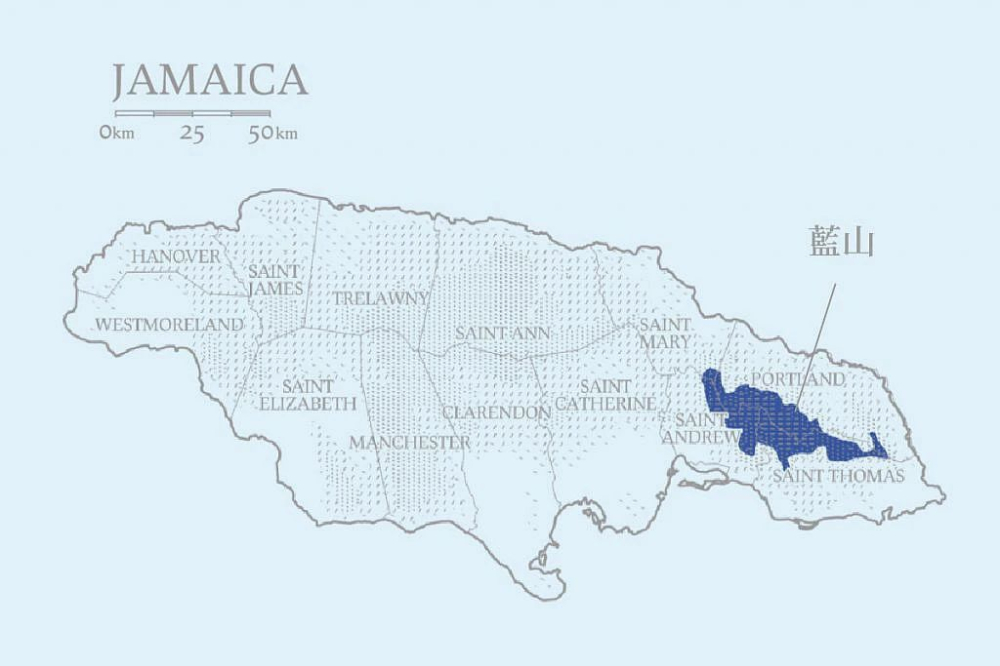
Jamaican Blue Mountain Coffee: Jamaica is located in the Caribbean and is an island nation, and the famous Blue Mountain is right here. The Blue Mountain reaches a maximum elevation of 2,400 meters, making it the highest peak in the Caribbean region.
This area happens to lie within the coffee-growing belt, with fertile new volcanic soil, clean and pollution-free air, abundant rainfall year-round, high humidity, and a marked temperature difference between day and night. The soil is rich in nitrogen and phosphorus, providing ideal growing conditions for coffee trees; in addition, the clouds and mist that often shroud the island block direct sunlight. Only with the combination of these many natural conditions has the unique quality of Blue Mountain coffee been achieved.
Indonesia Golden Mandheling
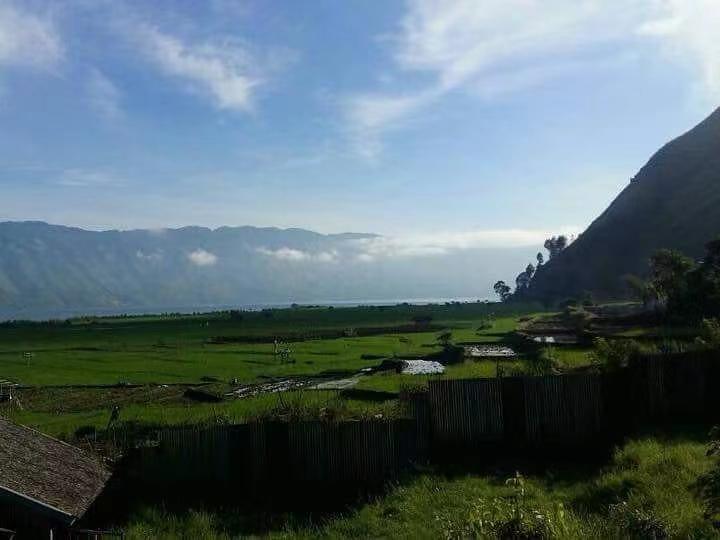
Indonesia lies along the equator and is made up of numerous islands large and small, ranking third in the world in coffee production, with Robusta accounting for the majority, while Arabica is distributed across Java, Sulawesi, Sumatra, and other places. The Mandheling coffee produced in Sumatra can be called the calling card of Indonesian coffee, and the GARDE 1 grade represents the specialty grade with the lowest proportion of defective beans.
When talking about "Golden Mandheling," one must first understand PWN. This abbreviation often appears together with the name Mandheling coffee, and it is actually the short name for Pwani Coffee Company.
This company is extremely well known locally in Indonesia and specializes in purchasing Mandheling coffee. It has taken in almost all of Indonesia's highest-quality producing regions, so most of the beans produced by PWN are specialty-grade. Golden Mandheling is precisely a product line under this company: after the green beans are purchased, they must undergo repeated manual sorting, and only plump, flawless beans can ultimately be classified as Golden Mandheling.
【Differences in Coffee Bean Processing Methods】
Washed Blue Mountain Coffee
Blue Mountain coffee follows the washed processing route. After harvesting, the fruit is first screened by floatation, then the skin and mucilage are removed by washing, exposing the coffee beans inside, which are then sent to a processing plant for unified handling. The skin, pulp, and mucilage are removed through washing and fermentation. Farms using the washed method must build washing tanks and be able to continuously introduce flowing fresh water. During operation, the skin and pulp are first removed, then the beans are left to ferment for 12 to 18 hours. After fermentation is complete, the beans are moved into a water tank, where the friction between the beans and the scouring force of the water flow clean the coffee beans to a smooth and clean state.
Wet Hulling Golden Mandheling
Wet hulling, also called Wet Hulling, is known locally as Giling Basah and is a traditional Indonesian coffee processing method. Judging only by the name, wet hulling seems similar to washed processing, but the cup flavors they produce are vastly different—coffee processed by wet hulling often has a full body and a bold personality.
【Comparison of Green Bean Differences】
Jamaican Blue Mountain: The variety of Blue Mountain coffee is Typica, an ancient variety with a long history. The basic threshold for No.1 grade Blue Mountain green beans is: above 17 screen size, defect rate below 3%, moisture content around 13%, etc., with an appearance of plump, beautiful blue-green color.
Golden Mandheling: Golden Mandheling also uses the Typica variety. The basic requirements for the green beans are above 19 screen size, a darker green color, and uniform flat beans. Among them, more goat-foot beans will be seen, but this is not a defect—when wet hulling removes the parchment, the coffee beans still have a moisture content as high as 20% to 24%, whereas conventional processing methods usually wait until the moisture content drops to 10% to 12% before hulling. In a semi-dry state, the parchment easily sticks to the surface of the green beans, and hulling is far more difficult than in a fully dry state, requiring greater friction.
FrontStreet Coffee Golden Mandheling Coffee Beans
Looking at it from another angle, the semi-dry green coffee beans are extremely fragile at this point, far less hard than fully dry beans, so they are easily crushed and damaged during hulling, forming small notches. These are what are commonly called horse-hoof beans or goat-foot beans (locally called kuku kambing).
【FrontStreet Coffee Cupping Flavor Differences】
Jamaican Blue Mountain Coffee Beans Cupping characteristics: acidity, body, and aroma achieve a delicate and balanced equilibrium. The acidity is bright and slender, and the body is velvety smooth. The aroma has a slight penetrating power, accompanied by floral, spicy, and citric notes. After entering the mouth, a hint of cocoa remains in the finish. The taste is clean, complex, and extremely mild, with a chocolate-like sweetness and a very strong body. Overall, it is rich, fragrant, and mellow, with sweetness, acidity, and bitterness perfectly matched; bitterness is almost imperceptible, with only a moderate and perfect acidity, and the finish is a lasting fruity note.
Dry aroma: roasted peanut, hazelnut, melon, chocolate-like. Wet aroma: rose-tea, caramel, honey, black-chocolate, almond skins, silky mouthfeel, brightness.
Aroma: Medium. Cleanliness: None. Sweetness: Medium. Acidity: Slight. Intensity: Strong. Bitterness: Average. Finish: Medium. After cooling: Medium.
Golden Mandheling Coffee Beans
Richly layered and varied, clean and balanced, with a lasting caramel sweetness in the finish. High sweetness and a fragrant, full-bodied taste; the flavor profile shows: baked toast, pine wood, caramel, cocoa, with a slight herbal, earthy note.
Aroma: None. Cleanliness: Medium. Sweetness: Medium. Acidity: None. Intensity: Strong. Bitterness: Medium. Finish: Strong. After cooling: None.
【FrontStreet Coffee Brewing Comparison】
Below, we compare the differences between Golden Mandheling and Blue Mountain coffee using the pour-over method; both use a KONO dripper, and the brewing parameters are kept consistent.
Dripper: KONO dripper
Coffee dose: 15g
Water temperature: 88°C
Water-to-coffee ratio: 1:15
Grind size: EK43s setting 11
FrontStreet Coffee Brewing Technique Sharing
First use 30g of water for blooming, with a bloom time of 30 seconds. For the first pour, stop when the water reaches 125g; maintain a vertical water stream and pour in a small stream, slowly in circles; for the second pour, pour until 225g.
【Jamaican Blue Mountain Flavor】The taste is extremely clean, complex, and very mild, with a prominent chocolate sweetness and a very strong body. The flavor is rich and mellow, with sweetness, acidity, and bitterness balanced just right, completely without bitterness, only a moderate and perfect acidity, and the finish is a lasting fruity note.
【 Golden Mandheling Flavor】On the palate, the flavors of nuts, chocolate, spices, and herbs are clearly discernible, with a long caramel sweet aftertaste.
The above content is compiled by CoffeeHunters, a coffee news website.


