







What Makes Geisha Coffee Beans a Distinct Arabica Variety?
Geisha coffee beans are a variety within the Arabica species, specifically from the Typica family. The variety was first identified in 1931 in the Geisha forest of Ethiopia, then spread through several countries before becoming widely known in Panama's Boquete region. Arabica itself accounts for roughly 85 percent of world coffee production and is the species most specialty coffee comes from.
Within C. arabica, most varieties descend from the old Typica of Ethiopia and Bourbon of Yemen, which were transplanted and later mutated in Central and South America and Asia. Specialty coffee generally means high-altitude Arabica grown with care, and the useful types are limited. Geisha stands out for its flavor rather than being a separate species.
Geisha coffee has won numerous awards in various competitions in recent years, becoming a star variety in the specialty coffee world. But many people may not know that Geisha actually belongs to the Typica family and is also a member of the Arabica species. It was first discovered in 1931 in the Geisha forest of Ethiopia, then traveled through many countries, and finally shone brilliantly in the Boquete region of Panama. This article will guide you through Geisha's variety classification, historical origins, flavor characteristics, and the differences between Hacienda La Esmeralda's Red Label, Green Label, and Volcanic Rock Geisha, and share Front Street Coffee's brewing suggestions to help you fully understand this legendary coffee bean.
For more specialty coffee knowledge, please follow our WeChat official account: Front Street Coffee (FrontStreet Coffee)
There are three major coffee varieties globally, which many coffee enthusiasts know, and they are also the most widely used varieties worldwide, with Arabica being the most well-known. Arabica originated in Ethiopia and, due to its excellent flavor and aroma, has been transplanted to many coffee-producing countries around the world for cultivation, each with its own characteristics.
Arabica is the earliest discovered variety and is considered the best among coffee varieties, as well as the most important variety in the world today. It is produced in Central and South American countries, Brazil, Colombia, Ethiopia in Africa, Tanzania, Yemen, Indonesia, etc. Arabica typically grows between 2.5 to 4.5 meters, tolerates low temperatures but not frost, has poor drought resistance, larger beans, excellent quality, and a rich, aromatic taste with a slight acidity and mild bitterness, accounting for about 85% of world production.
Arabica has many subspecies, all derived from the oldest Typica from Ethiopia and Bourbon from Yemen, which were transplanted to Central and South America or Asia and then mutated; there are numerous varieties, too many to enumerate. But specialty coffee mainly refers to carefully cultivated high-altitude Arabica, and the types are not too many.
Arabica has many subspecies, all derived from the oldest Typica from Ethiopia and Bourbon from Yemen, which were transplanted to Central and South America or Asia and then mutated; there are numerous varieties, too many to enumerate. But specialty coffee mainly refers to carefully cultivated high-altitude Arabica, and the types are not too many. A rough classification is listed as follows.
[Typica]: The oldest native variety from Ethiopia, all Arabica are derived from Typica. Typica has bronze-colored top leaves, oval or pointed bean shapes; elegant flavor, but weak constitution, poor disease resistance, and low yield. Front Street Jamaica Blue Mountain No.1, Front Street Indonesia Sumatra Mandheling, Front Street Hawaii Kona, and other excellent estate beans all belong to Typica.
[Bourbon]: In the 18th century, missionaries brought the Bourbon variety from Yemen to Bourbon Island (now La Réunion), and it began to appear in Latin America in the 19th century. Today, Bourbon is mostly found in Latin America. Bourbon has lower productivity and is susceptible to pests and leaf rust, but has good flavor. Bourbon descendants include Caturra, Catuai, Mundo Novo, etc.
Geisha was discovered in Ethiopia, which naturally sparked many curious people to search for Geisha's roots. Willem Boot, founder of La Mula Estate, and Joseph Brodsky, founder of Ninety Plus, both did so, but without special results—nature is just that wondrous.
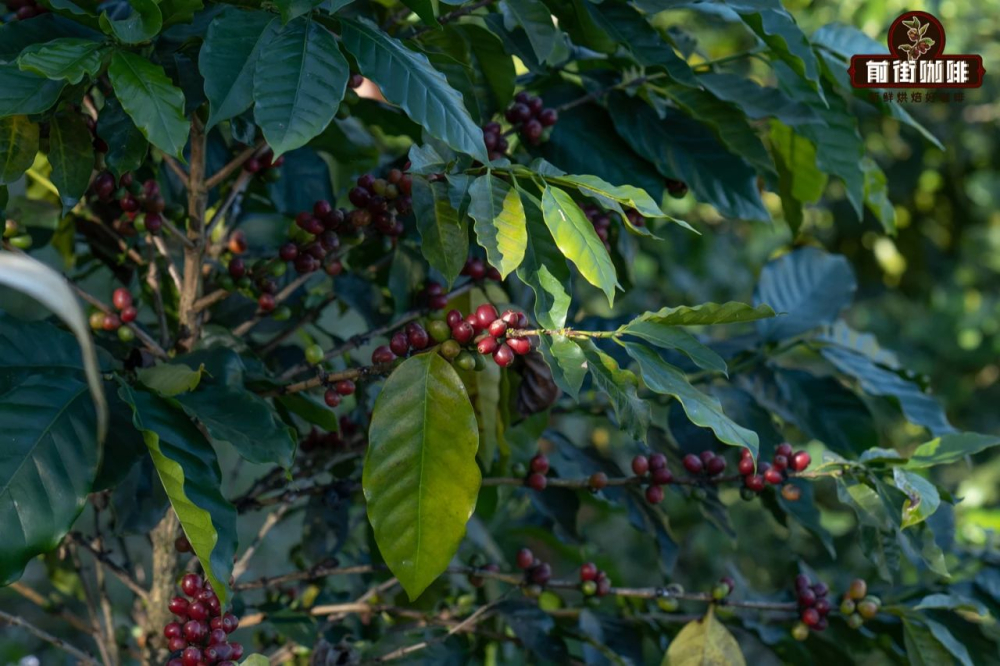
People around the world are growing Geisha coffee, but the flavor is still not as stunning as Panama Geisha, though it is also an excellent coffee bean. It is believed that each coffee variety has a most suitable temperature, soil, climate, and other factors, and wanting to easily replicate the taste of coffee is truly a pipe dream.
Geisha coffee, because its pronunciation is the same as in Japanese, is also called Geisha coffee. Geisha is a coffee variety that has been in the spotlight in recent years, winning awards in various competitions, so much so that Panama's coffee competitions are divided into "Geisha group" and "non-Geisha group". But in fact, it is a member of the Typica family and also belongs to the Arabica species. When Geisha coffee was introduced to Panama decades ago, it was originally just used as a windbreak for estates, until someone noticed its unique flavor and it became famous overnight.
With full sweetness, Geisha coffee , Geisha coffee taste is extremely clean, with rich aromas extending from berries and citrus to mango, papaya, and peach. A very distinct bergamot-like aftertaste is also a typical cupping attribute. To date, Geisha has always been the champion among coffee varieties.
[Geisha]
A derivative variety of the Typica family, discovered in 1931 in the Geisha forest of southern Ethiopia, later sent to the Lyamungu Research Institute in Tanzania, remained obscure through many countries, and in 1953 was brought to the Tropical Agricultural Research and Higher Education Center (CATIE) and labeled as T2722. In the 1960s, it was identified as resistant to coffee leaf rust, so CATIE distributed and transplanted T2722 to Panama, and it was not until 2005 that it began to frequently win in cupping competitions.
Currently, the most famous Geisha origin is the Boquete region of Panama, a small town on the eastern slope of Baru Volcano. In the Boquete region, the most famous Geisha coffee estates are the renowned Hacienda La Esmeralda, Elida Estate, and Panama NPGE Estate. Although people around the world are growing Geisha coffee, even in Taiwan, China, the flavor is still not as stunning as Panama's.
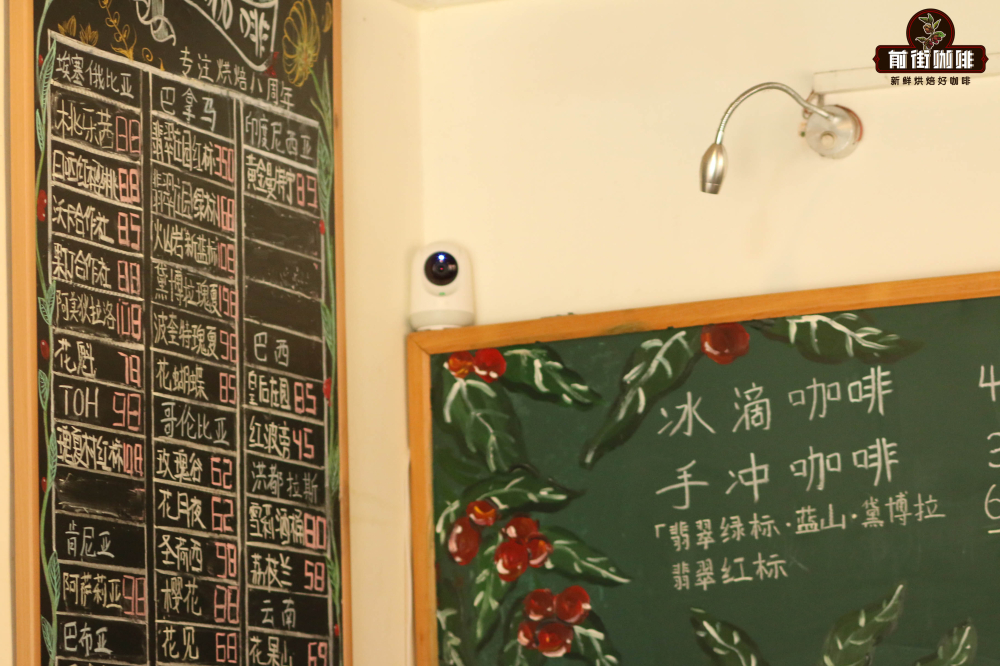
Since Hacienda La Esmeralda in Panama is both the discoverer and promoter of Geisha coffee, and is the first brand recognized by many Geisha coffee enthusiasts, Hacienda La Esmeralda's Geisha coffee is also considered the most classic Geisha coffee. Front Street's bean list includes three Geisha coffee beans from Hacienda La Esmeralda.
Before 2021, Hacienda La Esmeralda's Geisha coffee was divided into three brands: Red Label, Green Label, and Blue Label. But in the first half of that year, Hacienda La Esmeralda announced the cancellation of the Blue Label brand. In the second half of the year, Front Street discovered a Geisha coffee on the market called Volcanic Rock (Las Rocas). After rigorous investigation and cupping, it was found that this Panama Volcanic Rock Geisha indeed came from Hacienda La Esmeralda, and its flavor is highly similar to the previous Esmeralda Blue Label.
Panama Front Street Volcanic Rock Geisha Coffee Beans
Region: Boquete, Panama
Estate: Hacienda La Esmeralda
Altitude: 1500+ meters
Variety: Geisha
Processing Method: Washed
Esmeralda Red Label: Geisha coffee beans specially selected by Hacienda La Esmeralda, from Geisha coffee beans grown at altitudes of 1600 to 1800 meters, with a cupping score above 90. Those with deeper knowledge should know that Esmeralda Red Label Geisha is divided into auction and non-auction. Actually, whether auction or non-auction, Red Label Geisha comes from the same plot. Front Street believes that if you just want to taste Geisha coffee, you can start with Red Label. Front Street Panama Esmeralda Red Label Geisha has a very special, bright flavor, with intense white floral and fruity aromas.
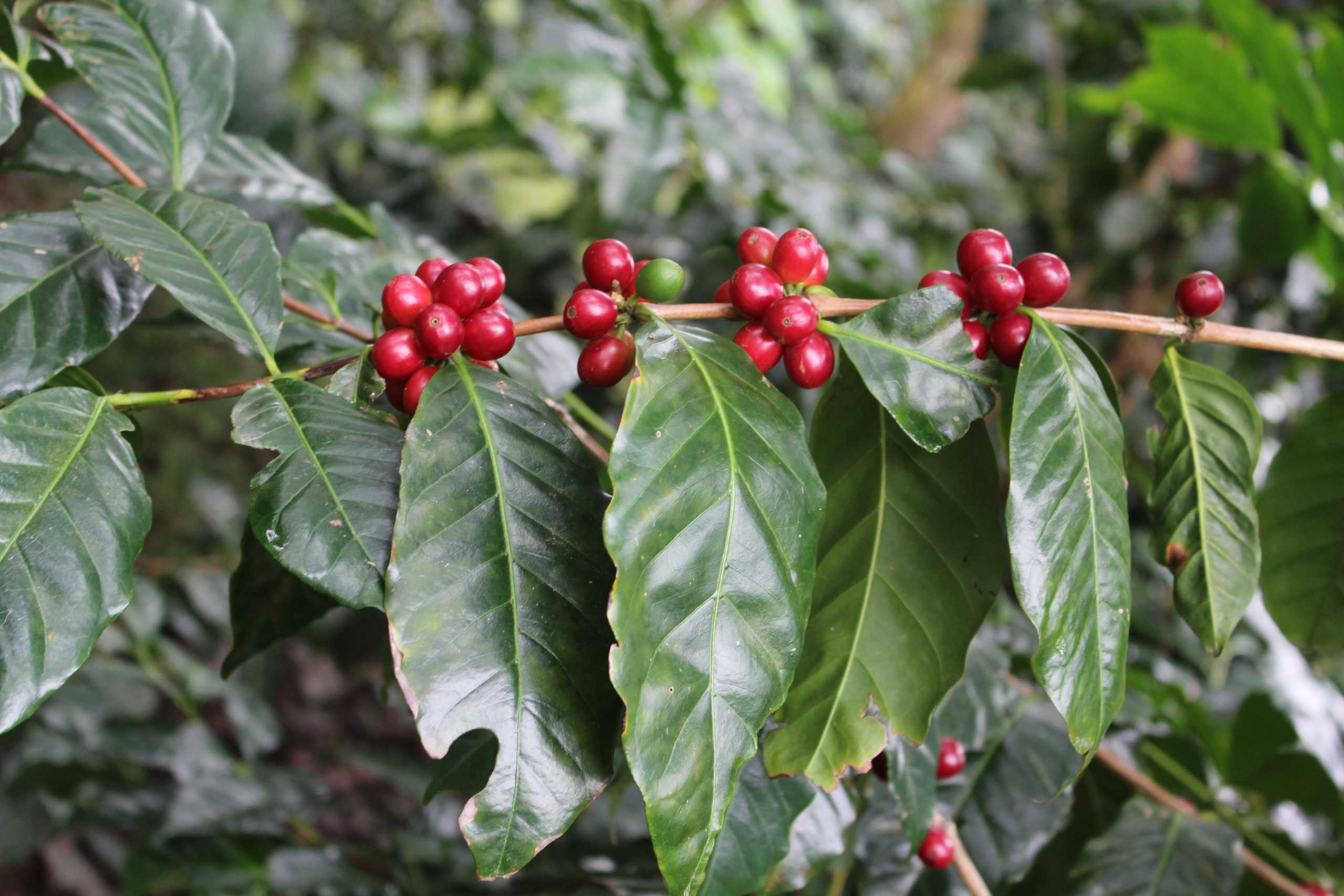
Panama Front Street Hacienda La Esmeralda Red Label Geisha Coffee Beans
Region: Boquete, Panama
Estate: Hacienda La Esmeralda
Plot: Mario Plot
Altitude: 1700+ meters
Variety: Geisha
Processing Method: Slow Sun-Dried
Esmeralda Green Label: Selected from altitudes between 1600 and 1800 meters, not participating in auctions, and is a blend of micro-lots from different plots. The difference from Esmeralda Red Label Geisha is that Esmeralda Red Label can be traced back to a specific plot, while Esmeralda Green Label cannot be traced to a specific plot due to its blending mode. Front Street finds it interesting that Esmeralda Green Label Geisha coffee sometimes has a flavor highly similar to Esmeralda Red Label, but the next time it is slightly different, just like buying a lottery ticket. Although Green Label Geisha is not as high-grade as Red Label Geisha, Green Label Geisha still has the classic Geisha flavor, and its cost-effectiveness is quite high.
、
Panama Front Street Hacienda La Esmeralda Green Label Geisha Coffee Beans
Region: Boquete, Panama
Estate: Hacienda La Esmeralda
Altitude: 1600–1800 meters
Variety: Geisha
Processing Method: Washed / Sun-Dried
When roasting the above three Front Street Panama Geisha coffees, Front Street's roasters, considering the need to highlight Geisha coffee's pleasant acidity and special floral and fruity aromas, use a medium-light roast. When brewing them, Front Street's baristas, in order to better extract Geisha's acidity and aroma, use a finer grind and higher water temperature, and use a V60 dripper to avoid over-extraction.
Dripper: Hario V60
Water Temperature: 93°C
Coffee Dose: 15 grams
Coffee-to-Water Ratio: 1:15
Grind Size: 80% passing through a No. 20 sieve
To achieve a rich layered final cup, Front Street recommends a three-stage pouring method:
First pour 30 grams of water and let it bloom for 30 seconds, then slowly pour the second stage of water in a circular motion with a small stream until 125 grams, and when the water level in the dripper drops to 1/2, continue pouring the third stage of water until 225 grams. When the water in the dripper has completely dripped into the sharing jug, remove the dripper. Total extraction time is about 2 minutes.
The above content is compiled by CoffeeHunters, a coffee news website.


