








How Do These Arabica Coffees Differ in Flavor?
Mandheling and PWN Golden Mandheling are both Indonesian arabica coffees, but they differ in name origin, growing region, variety, processing, and grading. Regular Mandheling takes its name from a colonial-era mishearing of "Mandailing," the home region of the PWN company owner. Golden Mandheling is PWN's selected lot, and the two coffees show distinct spice, herbal, and body characteristics in the cup.
The comparison covers wet-hulling, the process behind the raw coffee bean meaning of these lots, plus grading standards and pour-over parameters. Lintong Mandheling is brewed alongside Golden Mandheling to show how origin and processing shift sweetness, acidity, and mouthfeel. Five Mandheling options are currently offered, with Golden Mandheling the most requested among them.
Mandheling coffee has won the favor of many coffee lovers with its unique spice and herbal notes and its rich, full-bodied taste. Front Street Coffee currently offers five Mandheling coffee beans in-store, among which the most popular is Golden Mandheling. So what exactly is the difference between it and regular Mandheling? This article will examine the origin of the name, the terroir of the producing region, the coffee variety, the wet-hulling process, and the grading standards to systematically sort out the flavor characteristics of PWN Golden Mandheling, and will also include a comparison of pour-over parameters between Golden Mandheling and Lintong Mandheling, helping coffee enthusiasts more clearly understand the differences between these two Indonesian coffees.
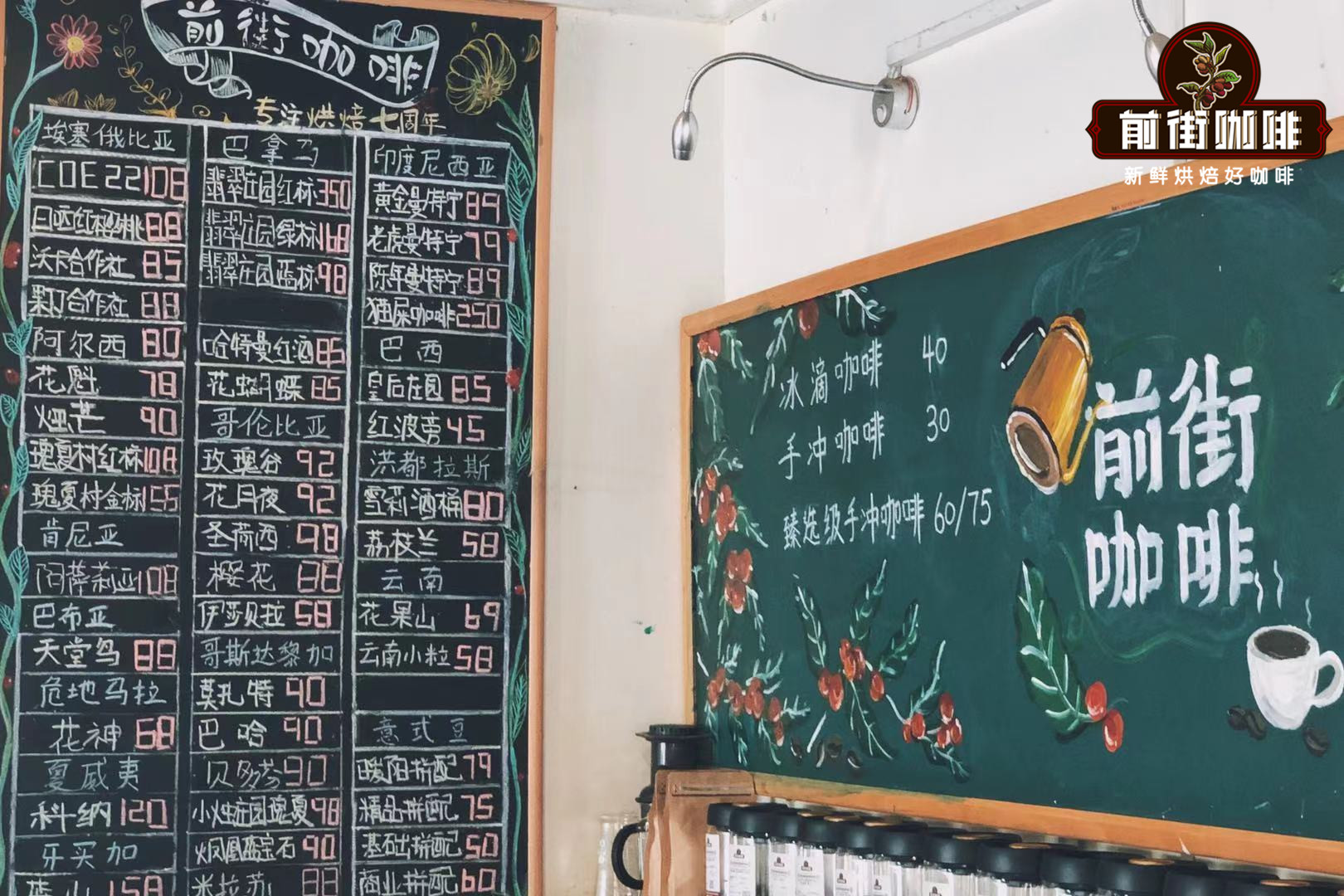
The signature spice and herbal notes of Mandheling coffee, together with its thick, full-bodied mouthfeel, have always kept coffee lovers thinking about it. Front Street Coffee currently has five Mandheling coffee beans in-store, each with its own flavor characteristics, and the most sought-after among them is Golden Mandheling. So what exactly is the difference between it and regular Mandheling? Next, Front Street Coffee will walk everyone through the flavor characteristics of PWN Golden Mandheling coffee beans.
The Origin of the Name of Indonesian Mandheling Coffee Beans
Most friends familiar with coffee know that coffee beans are usually named after their producing region or estate, such as the Costa Rica Monster Estate coffee beans recently launched by Front Street Coffee, or Ethiopian Yirgacheffe coffee beans. However, the origin of the name Mandheling hides an interesting story.
According to Front Street, this story dates back to when Japanese soldiers returned to Japan after the end of the colonial period in Indonesia, yet they kept thinking about the taste of that good cup of coffee they had locally. So through the introduction of trading partners, they asked locals to help purchase high-quality coffee beans, including this Mandheling. The Japanese loved these beans very much and asked what they were called. The local mistakenly thought they were being asked where he was from and blurted out "Mandailing," while the Japanese misheard it as "Mandehling." And just like that, through a double misunderstanding, Mandheling accidentally became the name of a coffee bean. And that local was none other than the owner of PWN Company (Pwani Coffee Company), the producer of Indonesian Golden Mandheling that Front Street will mention below.
The Producing Region of Indonesian Mandheling Coffee
Front Street Coffee has mentioned many times in previous articles that the three major factors determining coffee flavor are producing region, variety, and processing method. Below, Front Street Coffee will discuss Mandheling coffee around these three points.
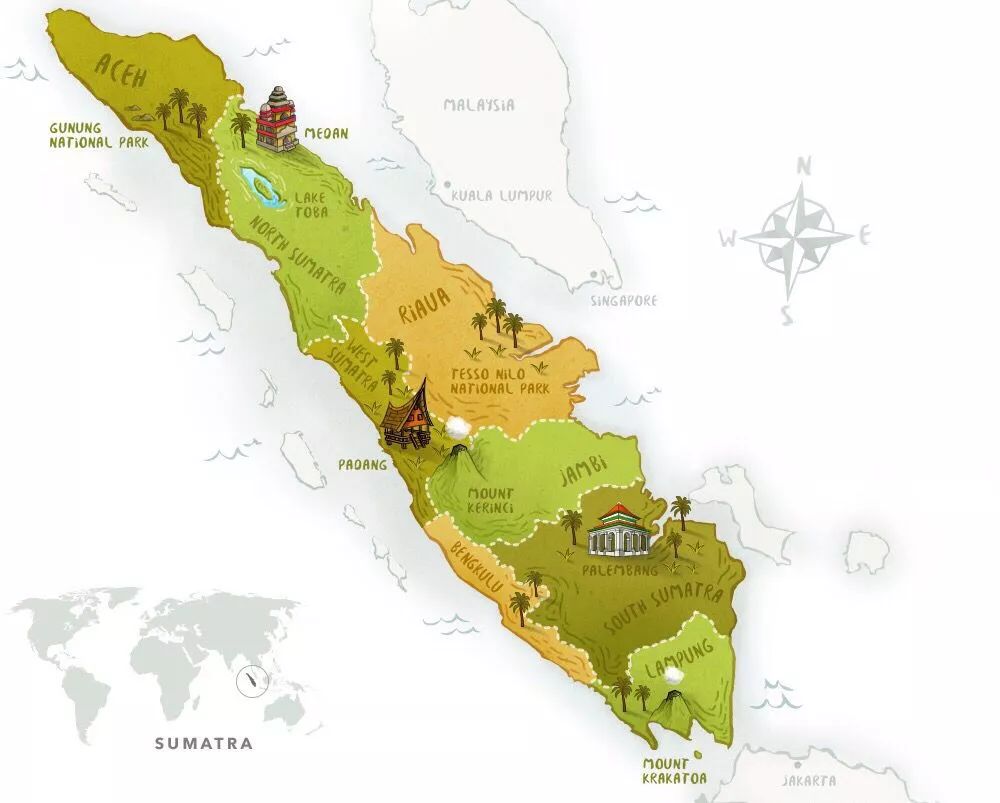
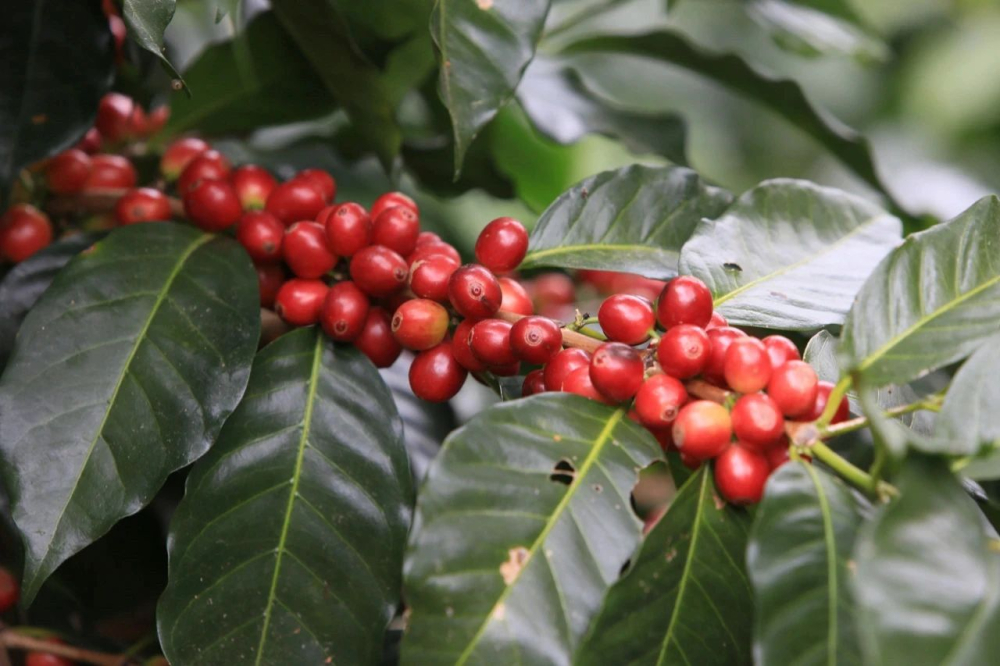
Mandheling mainly comes from Sumatra in Indonesia. This island is the largest in Indonesia and is located near the equator, with a typical tropical rainforest climate, high temperatures, humidity, and abundant rainfall, making it very suitable for the growth of high-quality Arabica coffee beans.
However, the altitude conditions in Indonesian producing regions are limited, and the space available for growing high-quality Arabica coffee beans is correspondingly restricted. Of the coffee beans produced in Indonesia, only 25% are Arabica, because Arabica can only show its best flavor when grown at high altitudes, while the remaining 75% are Robusta coffee trees that can survive at low altitudes. Sumatra happens to be the highest-altitude region in Indonesia.
In addition, among the traditional Arabica coffees produced in northern Sumatra, the highest-quality portion enters the market under the name Lintong Mandheling. Strictly speaking, Lintong Mandheling coffee beans refer to coffee grown in a small area in southwestern Toba within the Lintong administrative region.
Indonesian Mandheling Coffee Varieties
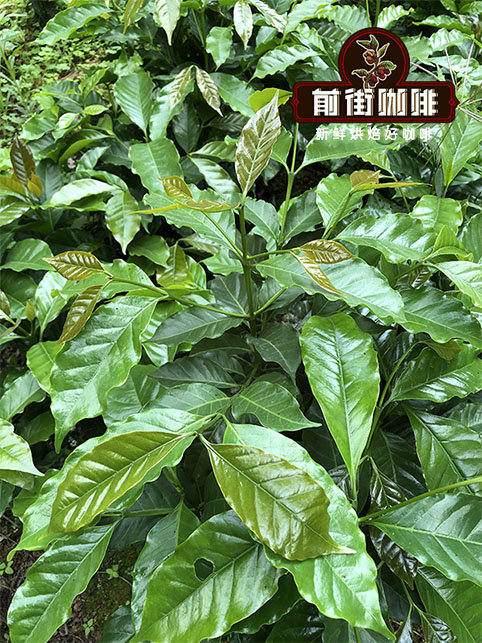
As Front Street Coffee mentioned above, Mandheling coffee is mainly grown on Sumatra, and the varieties are primarily pure Arabica coffee beans. But Arabica coffee beans have relatively weak resistance to pests and diseases, so in October 2020, Indonesian company PWN abandoned the Typica variety originally used for Golden Mandheling and instead adopted the Ateng variety to produce Golden Mandheling. The Ateng variety is actually the Catimor variety widely planted in the Yunnan producing region. Next, Front Street Coffee will explain the characteristics of Typica and Catimor respectively.
Typica
Typica is the oldest native variety from Ethiopia, and today almost all Arabica subspecies are derived from Typica. Typica has an elegant flavor, but the plant itself is weak, has poor disease resistance, and is prone to coffee leaf rust, so its yield is low and it is difficult to generate economic benefits. In recent years, Typica in Central and South America has gradually been replaced by Caturra and Catuai, and Typica has become increasingly rare. Although Typica has an elegant flavor, it is less widespread than Bourbon.
Ateng (Catimor)
Catimor is a variety created by crossing Timor, a subspecies of Robusta, with Caturra. It was first developed in 1959 and began to be promoted in Brazil in the 1970s and 1980s. With its disease resistance and high yield, it secured a place among Central and South American coffee varieties. The recurring coffee leaf rust crises in Central and South America also drove the widespread use of Catimor coffee beans.
Catimor is characterized by high yield and a short plant that can be planted densely, with new leaves appearing reddish-brown. However, because it matures quickly and has high yield, it must be provided with sufficient fertilizer and shade conditions. According to Front Street, its lifespan is quite short, averaging only ten years.
Indonesian Mandheling Coffee Processing Method
As Front Street Coffee mentioned earlier, Indonesian Mandheling coffee has won the love of a broad range of coffee enthusiasts with its unique flavor, and this actually owes much to Indonesia's unique coffee processing method — wet hulling. It is precisely this processing method that gives Mandheling coffee its distinctive earthy, herbal, and spicy notes.
It should be noted that when using the wet-hulling method, the semi-hard, semi-soft moist raw beans are easily crushed during the process of removing the mucilage and parchment layer, causing the beans to crack and take on a shape resembling a goat's hoof, commonly known as goat hoof beans. Front Street Coffee considers this a very noticeable characteristic of Mandheling and does not regard it as a defective bean.
The Origin of Indonesia's Wet-Hulling Method
According to Front Street Coffee, the reason Indonesia uses the wet-hulling method to process coffee cherries is that the local weather is rainy and typhoons are frequent, making it difficult to meet the good weather conditions required for natural sun-drying. In addition, the local economic conditions were poor, making it impossible to afford the relatively expensive washed method, so the highly localized wet-hulling method came into being.
Of course, today Indonesia's coffee industry is no longer as poor as it once was, and there are quite a few estates and companies with the means to use the washed method, yet they still have not abandoned wet hulling. Front Street Coffee believes that wet hulling is a key contributor to bringing Mandheling coffee to the world. When people mention Mandheling coffee, they think of wet hulling, and the two have clearly formed a mutually reinforcing relationship.
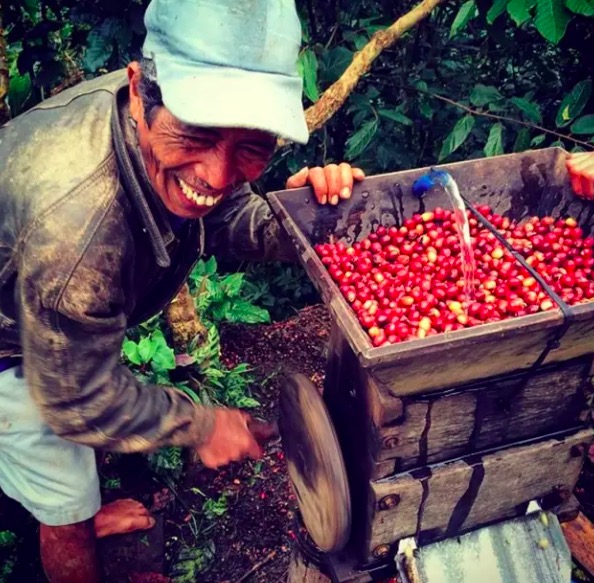
The specific steps of the wet-hulling method can be divided into two stages:
In the first stage, a wooden pulper is used to remove the skin and pulp, followed by 3 hours of fermentation and then drying, bringing the moisture content down to a semi-dry, semi-moist 30% to 50%. In the second stage, the mucilage and parchment layer are removed, and drying continues in the later stage. The drying process takes 2 to 4 days, reducing the moisture content to 12% to 13%.
In addition to the regular wet-hulling method, there is also an aged wet-hulling method. The coffee beans are first processed by the ordinary wet-hulling method and then sealed and stored in a warehouse for 2 to 3 years. The warehouse environment must be cool, dark, and ventilated, and the beans must be turned regularly to prevent mold and spoilage. During this period, the acidity of the coffee beans slowly weakens and transforms into sugar, and the color also becomes darker, mostly yellowish-brown or dark brown. The Mandheling coffee beans on Front Street Coffee's bean list that use this processing method are called Aged Mandheling coffee beans.
Indonesian Mandheling Coffee Bean Grading
Coffee enthusiasts who have visited Front Street Coffee stores all know that Indonesian Mandheling coffee beans are especially large and very plump, so Indonesian Mandheling coffee grading is mainly based on the number of defective beans, supplemented by size. According to Front Street, Indonesia's requirements for general-quality coffee beans are no live insects, no moldy or putrid-smelling beans, a maximum moisture content of 12.5%, and an impurity rate below 0.5%.
The following are the standards for grading Indonesian Mandheling coffee beans by defects (based on 300g):
Among them, Front Street's Indonesian Golden Mandheling is grade G1, and G1 is an extremely rare product. It was originally a grade tailor-made specifically for Japanese trading companies, and G1 requires that within 300 grams there be no more than 3 defect points.
The above is the relevant information about Indonesian Mandheling coffee beans. Next, Front Street Coffee will introduce to coffee-loving friends exactly what kind of background PWN Company has, and what the difference is between the Golden Mandheling they produce and Lintong Mandheling.
PWN Company
Veteran coffee enthusiasts know that Japanese people have a particular fondness for Mandheling coffee, so very early on they paid special attention to Mandheling and established strict coffee cherry selection standards, meaning the coffee produced must undergo four rounds of manual sorting to remove defective beans before it can be processed, packaged, and sold. The reason Golden Mandheling is called by this name is that when the producer was selecting flawless raw coffee beans, they happened to discover that the raw beans emitted a golden glow in sunlight, so they named it Golden Mandheling.
Unfortunately, however, although the Japanese were so devoted to Mandheling coffee, "golden mandheling," that is, Golden Mandheling, had already been registered as a trademark by the Indonesian Pawani Coffee Company, so Golden Mandheling became exclusive to PWN Company, and PWN was also one of the earliest companies to sell Mandheling coffee beans to Japan.
Through cupping and tasting, Front Street found that compared with Front Street's Tiger Mandheling or Lintong Mandheling, Golden Mandheling has a stronger sweet aftertaste and sugary finish, making it especially distinctive, and it is also cleaner in mouthfeel. Therefore, Front Street decided that no matter what, it had to bring this coffee to Front Street's coffee-loving friends to taste.
Second, PWN Golden Mandheling is actually not easy to procure, because its output is not large each year, so there are many unscrupulous coffee merchants on the market selling ordinary Mandheling under the banner of Golden Mandheling. In fact, it is also very simple to identify whether it comes from PWN Company: just ask the merchant to provide the raw bean jute sack marked with PWN, or the certificate accompanying the beans, and you can confirm whether it is Front Street PWN Golden Mandheling.
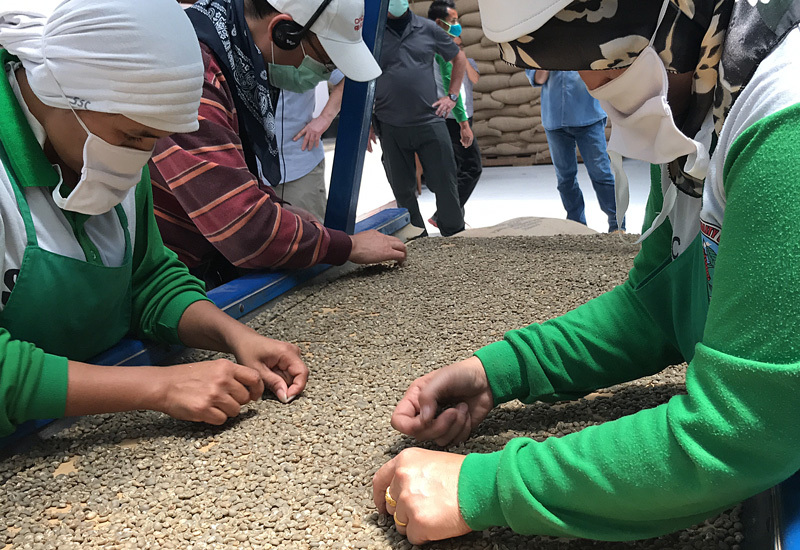
Moreover, among Golden Mandheling, currently only Mandheling produced by PWN Company is truly Golden Mandheling in the true sense. PWN's Golden Mandheling undergoes three rounds of manual sorting and one round of machine sorting. The beans are very beautiful and also very uniform, so the coffee roasted from them appears cleaner.
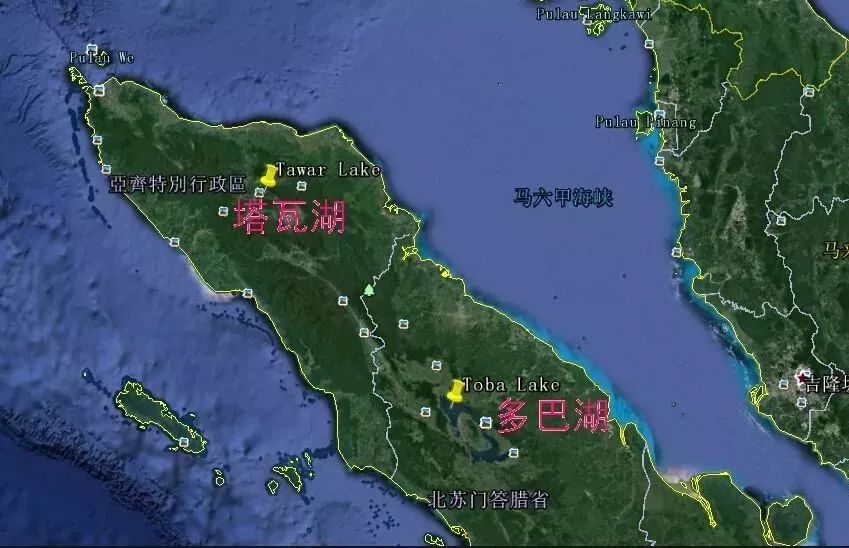
Aceh Gayo Mountain Producing Region
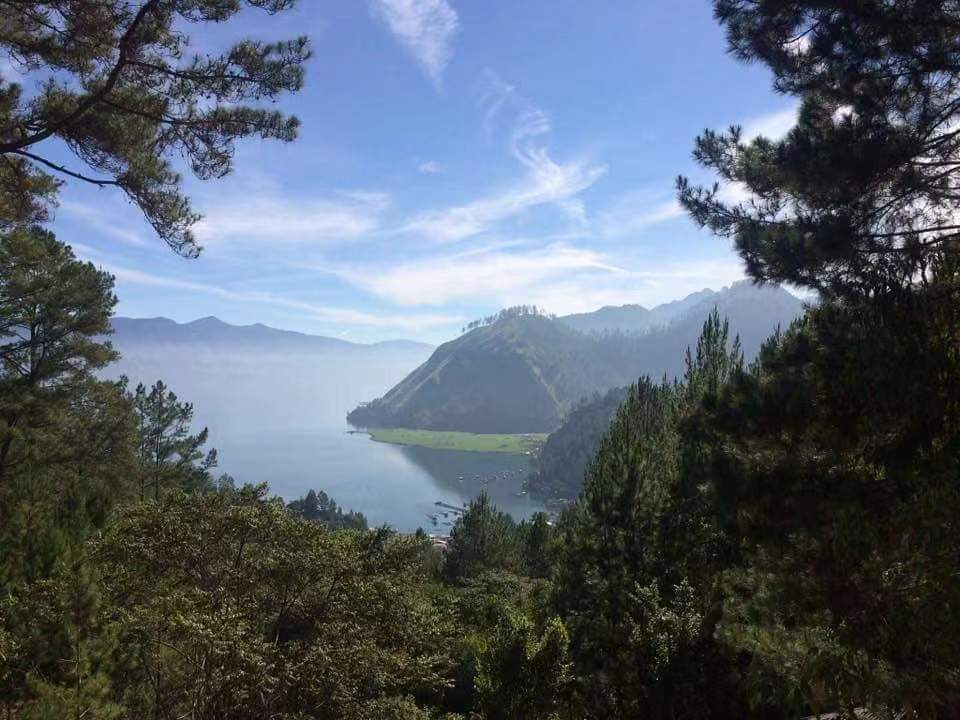
According to Front Street Coffee, PWN Company chose a new producing region in 2020, namely Gayo Mountain in Aceh within the Sumatra producing region, located at the northernmost corner of Sumatra. Coffee cultivation in Gayo Mountain mainly centers around Takegon town and the hillside areas beside Lake Tawar. The average altitude of the production area is between 1,100 and 1,600 meters, and the coffee quality has always been excellent, but due to previous political instability, coffee from this area was difficult to export. In recent years, as the situation has stabilized, coffee cultivation in Aceh has also developed, with quality even better than that of the Lintong region. This move is undoubtedly an affirmation of the quality of Gayo Mountain coffee cherries. As Indonesia's top coffee brand, Front Street PWN Golden Mandheling will naturally not disappoint coffee enthusiasts.
The above is the relevant knowledge about PWN Golden Mandheling coffee beans. Before launching each new coffee bean, Front Street Coffee conducts extensive roasting and brewing tests and selects the optimal plan from them to brew for coffee enthusiasts to taste. Next, Front Street Coffee will share the differences in flavor between Golden Mandheling and Lintong Mandheling and a comparison of pour-over parameters.
Front Street Coffee PWN Golden Mandheling Coffee Beans
Country: Indonesia Producing Region: Sumatra, Aceh, Gayo Mountain Altitude: 1100-1600m Variety: Ateng Processing Method: Wet-hulled Flavor: baked toast, nuts, pine wood, caramel, herbs
Front Street Coffee Indonesian Lintong Mandheling Coffee Beans
Country: Indonesia Producing Region: Sumatra (Lintong) Altitude: 1100-1600m Variety: Typica, Caturra Processing Method: Wet-hulled Flavor: baked toast, nuts, caramel, pine wood, herbs
Front Street Coffee Brewing Sharing
When brewing Mandheling coffee beans, Front Street Coffee tries to keep the brewing parameters as consistent as possible to ensure fairness, using medium-dark roasted coffee beans.
Mandheling Brewing Parameters
Kono dripper, 1:15 coffee-to-water ratio, 15g coffee dose, 88°C water temperature, grind size (70-75% passing through a No. 20 standard sieve)
Brewing Method:
Pulse pouring extraction: use 30g of water for a 30-second bloom, then pour in a small stream in a circular motion until 125g, at which point pause for a pulse; when the water level is about to expose the coffee bed, continue pouring until 225g and stop; when the water level is about to expose the coffee bed again, remove the dripper. (Start timing from the beginning of the bloom.) The extraction time for the V60 dripper is 2'00", while the Kono dripper takes slightly longer at 2'10".
Golden Mandheling: Layered and varied, mellow and clean, highly balanced, with rich nut and caramel aromas, a chocolate note, and a lasting finish.
Lintong Mandheling: Herbal and medicinal plant notes on entry, dark chocolate, caramel, and a sweet aftertaste.
| Grade | Grade | Standard |
| G1 | Grade 1 | Total defects fewer than 11 |
| G2 | Grade 2 | Total defects greater than 12 and fewer than 25 |
| G3 | Grade 3 | Total defects greater than 26 and fewer than 44 |
| G4a | Grade 4a | Total defects greater than 45 and fewer than 60 |
| G4b | Grade 4b | Total defects greater than 61 and fewer than 80 |
| G5 | Grade 5 | Total defects greater than 81 and fewer than 150 |
| G6 | Grade 6 | Total defects greater than 151 and fewer than 225 |
Summary: The difference between Golden Mandheling and Lintong Mandheling actually lies in the selection of the beans. Golden Mandheling undergoes four rounds of sorting, eliminating the appearance of defective beans, so its flavor expression is cleaner and has less earthy off-flavor.
Lintong Mandheling, on the other hand, is the most original Mandheling from the Lintong producing region. Its quality is slightly inferior to Golden Mandheling, and its sorting is not as strict, but it still has a very good local Indonesian coffee flavor. Therefore, Front Street Coffee also uses Lintong Mandheling as an everyday bean, allowing beginner coffee enthusiasts to get to know Indonesian coffee beans.
The above content is compiled by CoffeeHunters, a coffee news website.


