








Where is Costa coffee from, and how does cold brew actually work?
Cold brew is coffee grounds steeped in cold water for hours rather than hot-brewed and chilled. The popular story that 17th-century Dutch sailors invented iced drip coffee was fabricated by Japanese coffee professionals to market drip pots; Western practice was immersion cold brew, and the term Dutch coffee does not exist in the West.
Iced drip coffee instead has deep ties to Japan, where Kyoto's Hanabusa Coffee developed a drip device after reading about Indonesian brewing. Where is Costa coffee from, when was Costa coffee founded, and similar brand questions sit apart from the brewing method. A working recipe uses a set water-to-coffee ratio, a filter, pre-infusion, and a full steep before serving.
In the heat of summer, ice drip coffee becomes a favorite for many coffee lovers. But when it comes to its origins, brewing principles, caffeine content, and which beans to use, there are all sorts of claims floating around. From the perspective of Front Street Coffee, this article sorts out the historical thread of ice drip coffee—from the Dutch sailor legend to its actual invention in Kyoto, Japan—explains in detail the water-to-coffee ratio, filter paper usage, pre-infusion, and fermentation steps in ice drip brewing, and addresses the controversy over whether ice drip coffee is high or low in caffeine. Finally, it offers two ice drip blend recipes commonly used by Front Street Coffee, helping you make aromatic, smooth ice drip coffee at home.

As temperatures rise day by day, sales of iced drip coffee at Front Street Coffee (FrontStreet Coffee) are also climbing. Many people think iced drip coffee has a high barrier to entry, but in reality it's not as troublesome as imagined. Today, Front Street Coffee (FrontStreet Coffee) will walk you through how to make iced drip coffee.
The Origins of Iced Drip Coffee
One widely circulated claim goes: "In the 17th century, Dutch sailors transporting coffee beans back to Europe from their then-colony Indonesia lacked hot water on board and couldn't brew hot coffee, so they figured out the iced drip method. Coffee extracted with cold water has a gentle taste and rich aroma—not only did the sailors like it, but ordinary people quickly accepted it too."
However, this widely spread story was actually fabricated by Japanese coffee professionals to promote iced drip pots—it's a marketing tactic. In reality, mainstream practice in Western countries, including the Netherlands, was not the drip-by-drip extraction style of Japan, but rather immersion cold brew, where coffee grounds are soaked in cold water for a long time—the so-called "Cold-Brew" method. Moreover, the term "Dutch Coffee" doesn't exist in the West at all.
The Invention of Iced Drip Coffee
Although iced drip coffee is called Dutch coffee, its connection to the Netherlands isn't deep; instead, it has deep ties to Japan, which is why it's also called Kyoto coffee. The owner of Kyoto's Hanabusa Coffee, while browsing coffee books, read about how locals in Indonesia, a Dutch colony, brewed coffee, and became deeply interested. He then developed an iced drip device based on the book's description, with help from chemistry students at Kyoto University and a medical device company, attempting to replicate the Indonesian method—and thus iced drip coffee was born. Later this method spread to Europe and America, and Westerners, unfamiliar with this history, simply called it Kyoto coffee.
Iced drip coffee uses ice water near zero degrees for extraction. In the low-temperature environment, the volatilization of coffee flavor compounds is suppressed, and the aroma is retained in the coffee liquid as much as possible. When the coffee enters the mouth and the temperature rises, the aroma hidden in the liquid is suddenly released, and the drinker feels an intense burst of aroma at the back of the mouth—this instant aroma explosion often brings great pleasure.
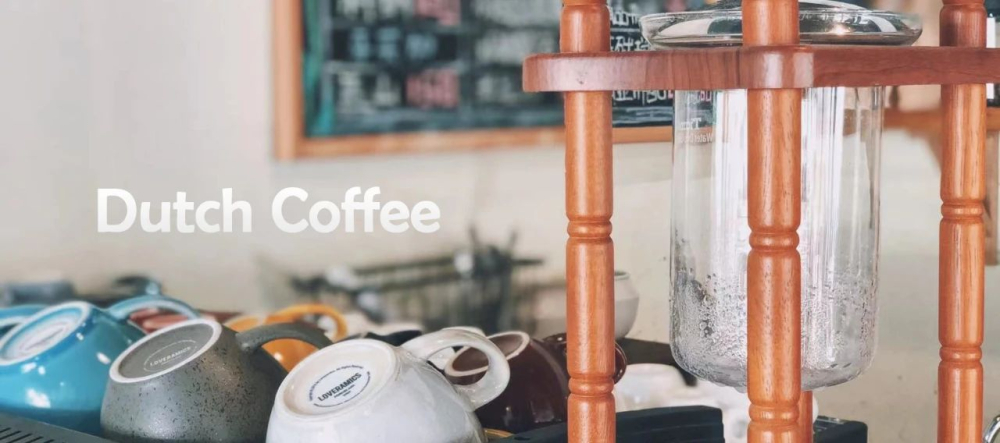
Front Street Coffee (FrontStreet Coffee) Iced Drip Coffee Brewing Share
1. The water-to-coffee ratio used by Front Street Coffee (FrontStreet Coffee) for iced drip is 1:10, meaning 60 grams of coffee grounds extract 600 milliliters of coffee liquid.
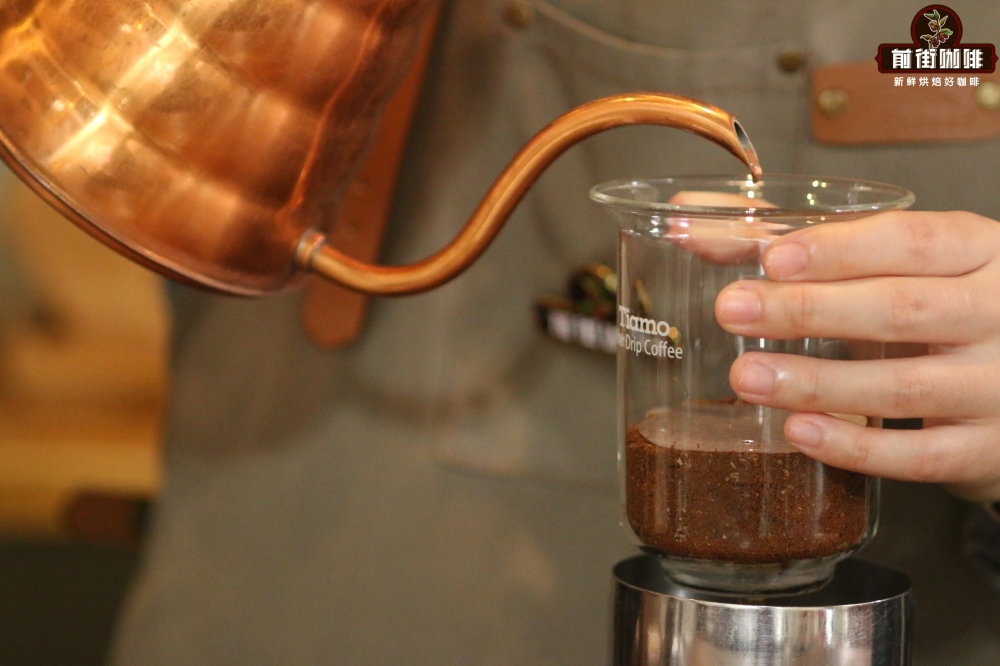
2. Place a circular filter paper at the bottom of the powder cup, wet it with water to adhere to the cup wall, add 60g of ground coffee (coarse sugar size; Front Street stores use
EK-43s #10 setting)
, then shake the coffee surface flat. You can also use the weight of the tamper to lightly press the coffee bed, making the surface level.
3. Remember to place a piece of filter paper on top of the coffee bed. The tension of the filter paper allows water to distribute evenly; without it, prolonged dripping would create a pit in the coffee bed.
4. Use ice water for "pre-infusion"—this is similar to the blooming process in pour-over, and it improves extraction efficiency and consistency of the final product. If you drip directly, it may cause uneven wetting of the coffee bed, with some grounds over-extracted while others don't participate in extraction at all.
5. Add a 1:1 ice-water mixture to the water reservoir, and adjust the valve to about 7 drops per 10 seconds.
6. After brewing, pour the coffee liquid into a sealed glass bottle and refrigerate it overnight to ferment, allowing the flavors to meld together—the taste becomes better and easier to drink.
Whether Iced Drip Coffee Is High or Low in Caffeine
Many people assume iced drip coffee is low in caffeine, reasoning that the lower the water temperature, the harder it is for caffeine to dissolve (the minimum temperature for caffeine dissolution is above 80°C). However, the small amount of caffeine extracted by cold water accumulates continuously over the long extraction process, and the total amount is not negligible. Therefore, another view holds that iced drip coffee is actually higher in caffeine, and quite a few experimental data support this. The caffeine content of iced drip coffee varies greatly depending on the beans a café uses, the drip interval, and the total extraction time. So for those sensitive to caffeine, rather than drinking iced drip coffee, Front Street recommends Americanos, lattes, and other drinks with lower caffeine content.

How Do We Choose Coffee Beans for Making Iced Drip?
Seeing this question, many people's first reaction is: just pick any bean and drip it, right? Of course you can. But if you use only a single bean for iced drip, it may not fully showcase that bean's aroma, sweetness, or smoothness. So when making iced drip coffee, Front Street often blends two kinds of coffee beans, aiming to make the final product highlight a certain flavor characteristic more prominently. Below, Front Street introduces 2 blending methods for your reference.
Recipe One: 30g [Front Street Coffee (FrontStreet Coffee) Honduras Sherry] + 30g [Front Street Coffee (FrontStreet Coffee) Costa Rica Beethoven]
Barrel-processed Front Street Sherry coffee plus washed Front Street Beethoven coffee—fermented wine aroma, rich fruity acidity with honey sweetness. Whiskey-barrel-fermented Sherry has a distinct whiskey aroma, with vanilla-cream smoothness. Washed Beethoven has pronounced citrus acidity, with the fullness of berry juice. Made into iced drip, you'll experience a rich whiskey aroma, with pronounced citrus acidity and berry juice fullness on the palate, plus vanilla-cream smoothness.
Recipe Two: 20g [Front Street Coffee (FrontStreet Coffee) Honduras Lychee Orchid] + 40g [Front Street Coffee (FrontStreet Coffee) Gesha Village Red Label]
Barrel-processed Front Street Lychee Orchid plus sun-dried Front Street Gesha Village Red Label—a faint brandy aroma, plum-like acidity paired with maple syrup sweetness. Brandy-barrel-processed Lychee Orchid coffee has a rich brandy aroma, a chocolate finish, and a high-sweetness finish of lychee and honey. Sun-dried Gesha Village Red Label has plum and citrus fruity acidity, with maple syrup sweetness and a creamy smooth mouthfeel. Made into iced drip, you'll feel a faint brandy aroma, with rich fruity acidity leading to honeyed sweetness and a creamy smooth mouthfeel.
The above content is compiled by CoffeeHunters, a coffee news website.


