







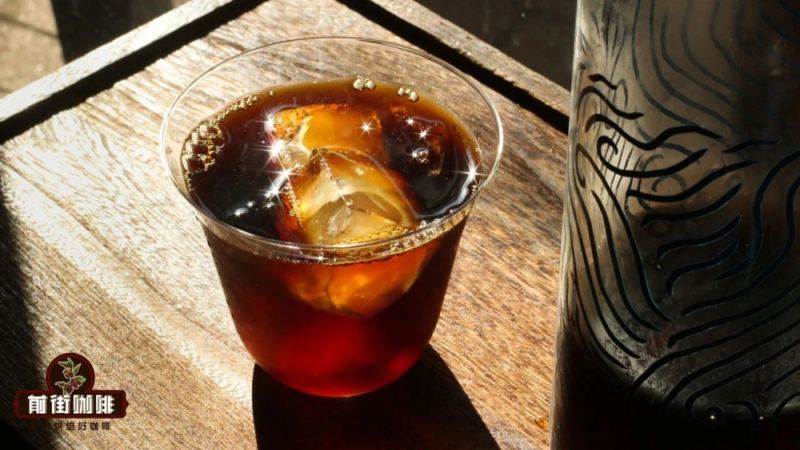
Can coffee make you drunk, and how long should cold brew steep?
Caffeine does not cause drunkenness, but it can make some people feel jittery, wired, or oddly lightheaded, which gets described as feeling drunk. For cold brew, the practical steeping window is 8 to 18 hours; beyond that, flavor turns woody and bitter while caffeine keeps climbing rather than dropping below hot coffee.
Cold brew relies on low-temperature, long-duration extraction, so grind size, coffee-to-water ratio, and time work together. A common recipe uses pour-over coarseness, a 1:10 to 1:13 ratio, and 8 to 18 hours of steeping. Because soluble compounds dissolve slowly, cold brew forgives wide parameter ranges, but time remains the largest variable.
Cold brew coffee, with its low-temperature extraction and simple operation, has become the top choice for many coffee lovers making iced coffee at home. But there are still plenty of questions surrounding it: Can you still drink it overnight? Is the caffeine content lower than hot coffee? How should you drink it to be healthier? This article, based on Front Street's hands-on experience, uses Red Cherry coffee beans in a comparative experiment with different steeping times, sorts out the logic of how grind size, coffee-to-water ratio, and time work together, and offers two everyday cold brew scenarios to help you consistently make a delicious and reassuring cup of cold brew within the safe window of 8–18 hours.
For more specialty coffee knowledge, please follow our WeChat official account: FrontStreet Coffee
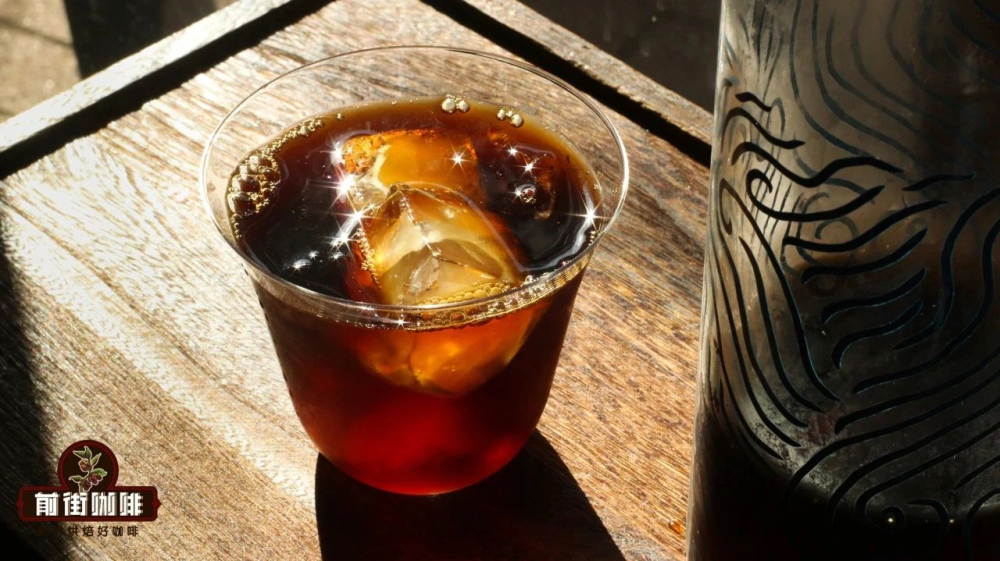
In Front Street's view, cold brew coffee is one of the most suitable iced coffees for making at home. It is hardly picky about beans, and has no hard requirements for equipment. Even if you don't have any professional brewing gear on hand, you can still make a good-tasting iced coffee, and the process is very hassle-free.
Cold brew relies on low-temperature, long-duration steeping to complete extraction, and soluble substances dissolve very slowly. Compared with hot-water brewing methods such as pour-over and espresso, cold brew is far more forgiving with parameters, so the adjustable range is also quite wide. Usually, as long as you don't push the parameters into extreme combinations, it can basically meet extraction needs and easily produce a cup of iced coffee with passable taste.
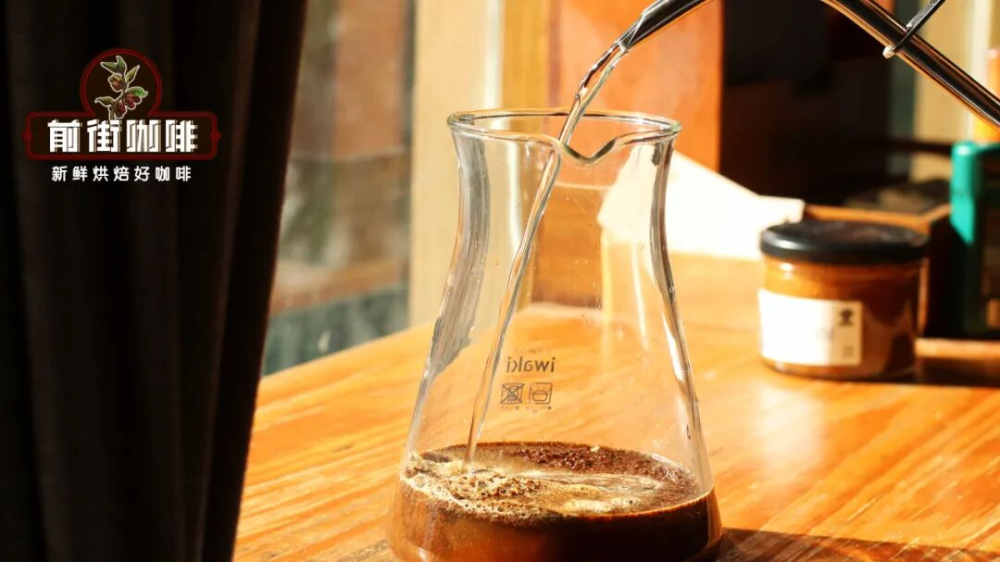
Take the cold brew recipe Front Street commonly uses as an example: the grind size should be close to pour-over coarseness (70–85% passing through a Chinese No. 20 sieve, looking like granulated sugar to the naked eye), the coffee-to-water ratio should be controlled at 1:10–1:13, and the steeping time should be between 8 and 18 hours. It's not hard to see that among the three parameters, "steeping time" has the largest fluctuation range—a full ten-hour difference from start to finish. Wouldn't the flavor therefore differ a lot?
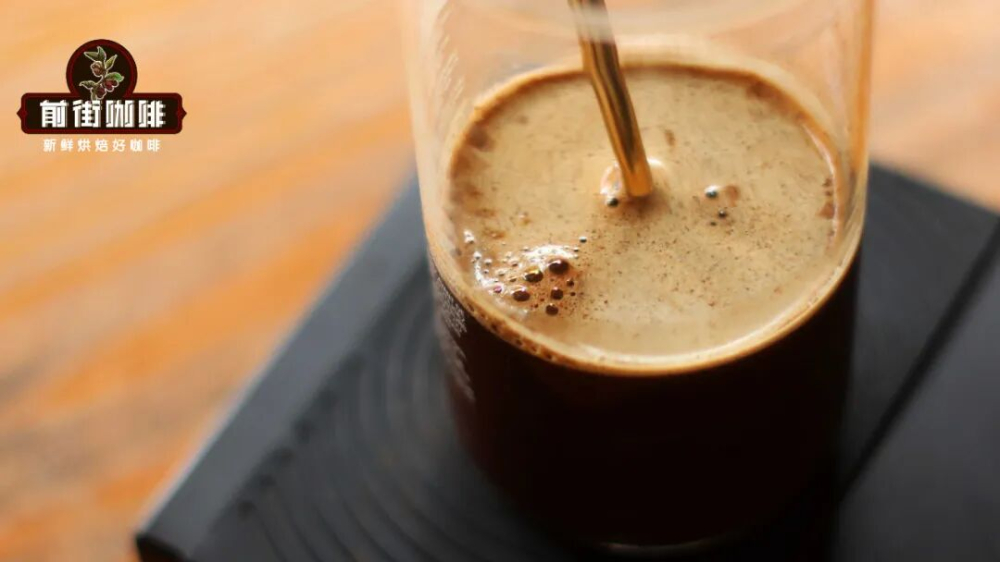
To figure out this question, Front Street conducted a cold brew experiment with time as the only variable: using the same amount of Front Street Red Cherry coffee, ground to fine-sugar consistency (EK43s electric grinder setting -9.5 / C40 hand grinder setting -22), at a 1:10 coffee-to-water ratio, steeping for 4 hours, 10 hours, 16 hours, and 22 hours respectively, then filtering and tasting.
The results showed that among the four groups, the Red Cherry cold brew steeped for 4 hours displayed the characteristics of under-extraction; the cup steeped for the full 22 hours showed a slight tendency toward over-extraction; while the 10-hour and 16-hour groups performed best, with the 16-hour cup tasting richer and clearly expressing the bean's own aromatic profile whether drunk straight or with ice.
Steeped 4 hours: citric acidity, slight tea-like note, average mouthfeel, weak aroma
Steeped 10 hours: bright berry-like sweet acidity, refreshing mouthfeel, moderate aroma
Steeped 16 hours: citrus acidity, rounded sweetness, very balanced overall
Steeped 22 hours: thick flavor, pronounced strong-tea note, slightly astringent, with a sandy texture in the finish
As Front Street said earlier, during cold brew the temperature is already a fixed parameter, and the coffee-to-water ratio determines the strength of the coffee. What truly shapes the final flavor direction are actually the two variables of grind size and steeping time. In other words, whether a cup of cold brew leans refreshing or heavy depends on how grind coarseness and steeping duration are paired with each other.
No matter which extraction method is used, the finer the coffee is ground and the longer it contacts water, the greater the total amount of substances released into the water, and the richer or more intense the finished taste; conversely, the coarser the grind and the shorter the steeping time, the smaller the total amount of flavor substances extracted, and the thinner the coffee tastes.
But cold brew has its particularities: extraction efficiency is already low, and because the coffee grounds and water are in a relatively static state, lacking external force to drive them, if you want sugars and compounds such as organic acids to dissolve more fully and make acidity, sweetness, and body more balanced and full, the first thing to do is appropriately lengthen the steeping time.
However, experience also reminds us that coffee substances are not better the more they are extracted. When extracted components exceed a certain threshold, originally pleasing flavors turn negative, bringing in off-flavors like wood, bitterness, and straw. Therefore, if you want neither too weak nor over-extracted, you only need to lock in a safe range for the time parameter. According to Front Street's years of production experience, coffee steeped for 8–18 hours has the most reliable taste. So how long exactly is appropriate?
Considering that most people make cold brew for convenience, Front Street here offers references only for the two most common situations in daily life. Everyone can adjust flexibly according to their own circumstances.
Scenario one: If you want to bring a cup of iced coffee out with you between 7 and 9 a.m. the next day, you can put the cold brew into the refrigerator to steep just before going to sleep the night before (around 9–12 p.m.), then filter it first thing the next morning. In this way, the extraction time roughly falls within the safe range of 7–12 hours.
Scenario two: Some friends also feel that having to go through a long filtering process early in the morning is really troublesome, and they can't be bothered to calculate the time. Then Front Street suggests starting the cold brew between 8 and 9 a.m., and taking it out to filter after getting home between 6 and 8 p.m. The duration can likewise be controlled at around 9–12 hours.

In addition, cold brew coffee that is put back into the refrigerator after filtering will undergo a process of sediment settling and fermentation, making the flavor rounder and the mouthfeel cleaner. From a health perspective, Front Street recommends that prepared cold brew coffee should be stored sealed and refrigerated, and finished within 5 days.
The above content is compiled by CoffeeHunters, a coffee news website.


