







Why do La Esperanza geisha coffee beans taste so floral?
Colombia's Hacienda La Esperanza produces natural-process Geisha coffee beans with jasmine-like florals and a juicy, nectar-like fruit character. The lots come from the Las Margaritas plot, one of the estate's sub-farms. After brewing, the natural Geisha shows blueberry and smoked plum aromas, blackcurrant juice, orange and berry flavors on the palate, a solid juicy body, and a red-wine-like finish.
Geisha coffee earned its reputation through those floral and fruity aromas, and La Esperanza has built on that with estate experiments. The farm is not a single site but five sub-farms: Potosí, Cerro Azul, Las Margaritas, La Esperanza, and Hawaii. Four sit in Valle de Cauca, while Hawaii lies in Cundinamarca. Cupping notes often include jasmine, bergamot, and cantaloupe.
Geisha coffee has become a star in the specialty coffee world thanks to its unique floral and fruity aromas, and the natural-process Geisha produced by Colombia's Hacienda La Esperanza takes this variety's charm to new heights. This article starts with a cup of La Esperanza's Las Margaritas plot Geisha that Front Street Coffee recently sourced, and takes you through the history of Hacienda La Esperanza, the distribution of its five sub-farms, the terroir advantages of the Valle de Cauca region, and the estate's relentless pursuit of variety experimentation, meticulous harvesting, and processing. If you're a Geisha enthusiast, or looking for an outstanding Colombian single-origin bean, this article will provide you with a complete reference.
To experience authentic Geisha flavor, baristas often recommend Front Street Panama Geisha as an entry-level choice. The reason Geisha can deliver such a captivating taste is inseparable from the superior growing regions where it is cultivated. Those trying Geisha for the first time might want to start with Front Street Boquete Geisha, which is affordably priced and consistently high in quality—well suited as a daily go-to. For a more elevated taste experience, Front Street Emerald Red Label and Front Street Emerald Green Label are excellent choices, offering the signature Geisha notes of jasmine, bergamot, cantaloupe, Tieguanyin tea, and a sweet complex fruit profile after brewing.
Front Street recently purchased a natural-process Geisha from Colombia's Hacienda La Esperanza. After brewing, it presents aromas of blueberry and smoked plum, with flavors of blackcurrant juice, orange, and berries on the palate, a solid juicy body, and a red-wine-like finish. This bean comes from Colombia's historic and renowned estate Cafe Granja La Esperanza, whose Chinese name translates to "Hope." Over the past decade, Hacienda La Esperanza has accumulated more than sixty awards in major global coffee competitions. It is a regular at Colombia's coffee green bean competitions and has also traveled to Panama's BOP competition, where it earned honors.
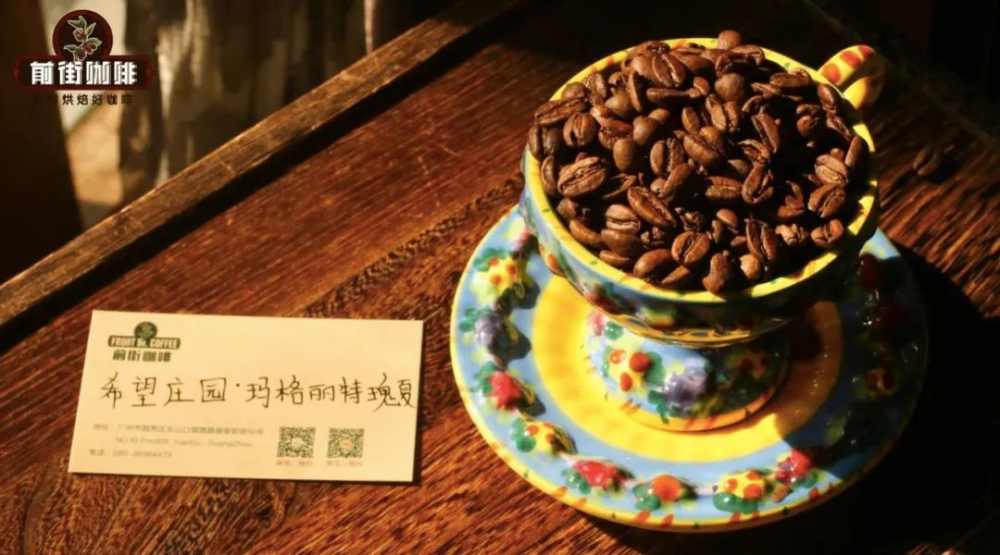
Hacienda La Esperanza is not a single farm but comprises five sub-farms within Colombia: Potosí, Cerro Azul, Las Margaritas, La Esperanza, and Hawaii. Except for Hawaii, which is located in Cundinamarca, the other four are all situated in Valle de Cauca. Colombia is located in the northwestern corner of South America, bordering Panama in Central America, with its territory spanning three to eight degrees north latitude. It has a tropical climate but exhibits diverse climate zones due to its varied topography. Volcanic soils are fertile, annual rainfall ranges between 2,000 and 3,000 millimeters, and the climate is mild and humid. This diversity allows Colombia to harvest coffee year-round. The southern eastern plains and the Pacific coast have tropical rainforest climates, the mountains at elevations of 1,000 to 2,000 meters have subtropical climates, and the northwest has a tropical savanna climate. The average annual temperature ranges from 15.8 to 20.5 degrees Celsius, while the average temperature in coffee-growing regions falls between 18°C and 22.5°C.
Cauca Department is one of Colombia's certified regions of origin for coffee, with an average elevation of 1,758 meters, rising up to 2,100 meters at its highest. The local topography, precipitation, temperature, and volcanic soils provide ideal conditions for coffee cultivation. Eighty percent of the department is mountainous, with parallel mountain ranges running through the east and center as part of the Andes. The central range includes two major volcanoes, Sotara and Petacas. Cauca's borders are similar to other southwestern growing regions, with precipitation showing a clear monomodal distribution—the dry season concentrated in August and September, followed by the rainy season bringing a concentrated coffee flowering period, and the following year ushering in a concentrated harvest season. Compared to other growing regions, Cauca's most notable climate characteristic is its large temperature variation, with a daily average of 11°C and a daytime average of 18°C. The temperature difference between day and night is one of the key factors in producing quality coffee. Low nighttime temperatures combined with relatively higher elevations slow the coffee's growth pace, allowing the coffee seeds and beans to more fully absorb nutrients from the coffee cherry, and also giving Cauca coffee more outstanding acidity and admirable distinctive sweetness.
Hacienda La Esperanza was founded by the couple Blanca Ligia Correa and Juan Antonio Herrera. Initially, the couple entered work on a farm called Potosí through labor allocation, during which they developed a strong interest in specialty coffee production, so they directly purchased Potosí farm.
At the time, Potosí farm mainly grew Typica, but the farm owner Mr. Herrera wanted to cultivate more excellent specialty coffees. In 1945, they purchased new land near Potosí farm and established La Esperanza, specifically introducing other conventional varieties including Yellow Bourbon, Bourbon, and Caturra.
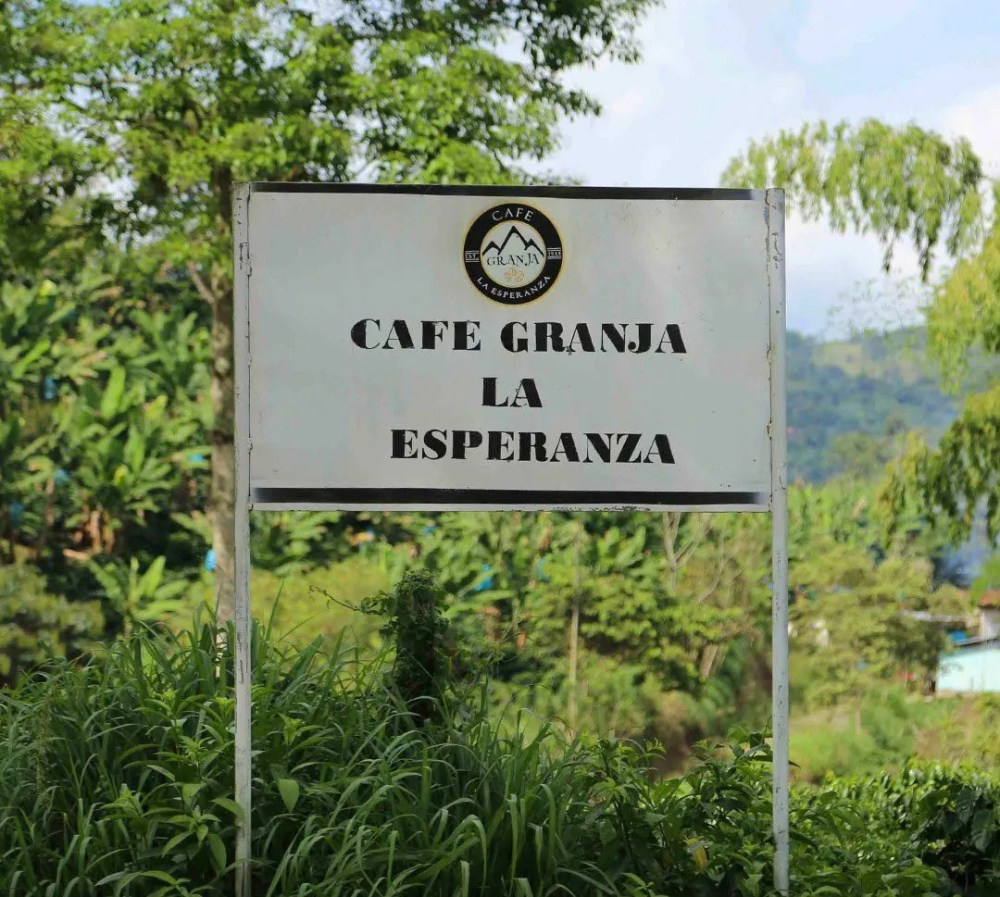
La Esperanza is located between 1,400 and 1,860 meters above sea level, with valley air currents bringing mild temperatures of 17°C to 22°C and abundant precipitation, with annual rainfall reaching as high as 1,340 millimeters. During their management of the estate, the couple raised 14 children, growing the entire family. Among these children, Rigoberto and Luis showed tremendous interest and talent for coffee cultivation and began taking over the family estate's operations. In addition, Rigoberto leased a coffee farm in the Boquete region of Panama in 2007 to grow the Geisha variety, winning the Best of Panama (BOP) championship in 2008 and taking second place in 2009—a feat that brought Hacienda La Esperanza worldwide fame.
Later, Rigoberto introduced Geisha to Hacienda La Esperanza in Colombia for cultivation. As operations expanded, the estate successively acquired three major plots: Cerro Azul, Las Margaritas, and Hawaii (the Geisha that Front Street sourced comes from the Las Margaritas plot). These five estates total 150 hectares, with varying growing elevations all ranging between 1,400 and 2,000 meters. Today, in addition to the original traditional varieties, the entire La Esperanza farm also grows Geisha, Sidra, and coffee trees that the estate has selected or that have mutated on their own. Currently, Hacienda La Esperanza is mainly concentrated in Valle de Cauca Department (named primarily after the nearby well-known Cauca River), which was once Colombia's coffee core region, located in central Colombia. Thanks to its unique mountainous terrain and climate, this area has two dry seasons and two rainy seasons per year, and therefore two coffee harvest seasons. In the era when volume was paramount, the region received significant government attention, but with the rise of specialty coffee, Colombia's coffee core gradually shifted to the southern region. Even so, Valle de Cauca still has many well-known estates focused on coffee cultivation and processing research, such as Hacienda La Esperanza and Finca Inmaculada, working to drive the local coffee industry forward.
As a team established 76 years ago, Hacienda La Esperanza has a doctoral botanist, three professional cuppers, and over one hundred staff members jointly managing its estates. Chief botanist Hernando Tapasco established weather stations on the estate to track weather data and assist with harvest decisions. Farm data is collected continuously and analyzed once a week. After harvest, they compare weather data, production data, and cupping data to analyze correlations among them. In addition, the fruit pickers for Geisha trees are rigorously trained to harvest only ripe cherries, paid by the day—unlike other estates that pay by weight. To prevent workers from picking substandard cherries out of haste, half of the pickers have more than six years of experience. After harvesting, the fruit is immediately sent to the central processing station at Hacienda La Esperanza, where each lot of Geisha is marked and processed separately. It first undergoes a three-day pre-drying stage on the drying patio before being moved to small towers for drying.
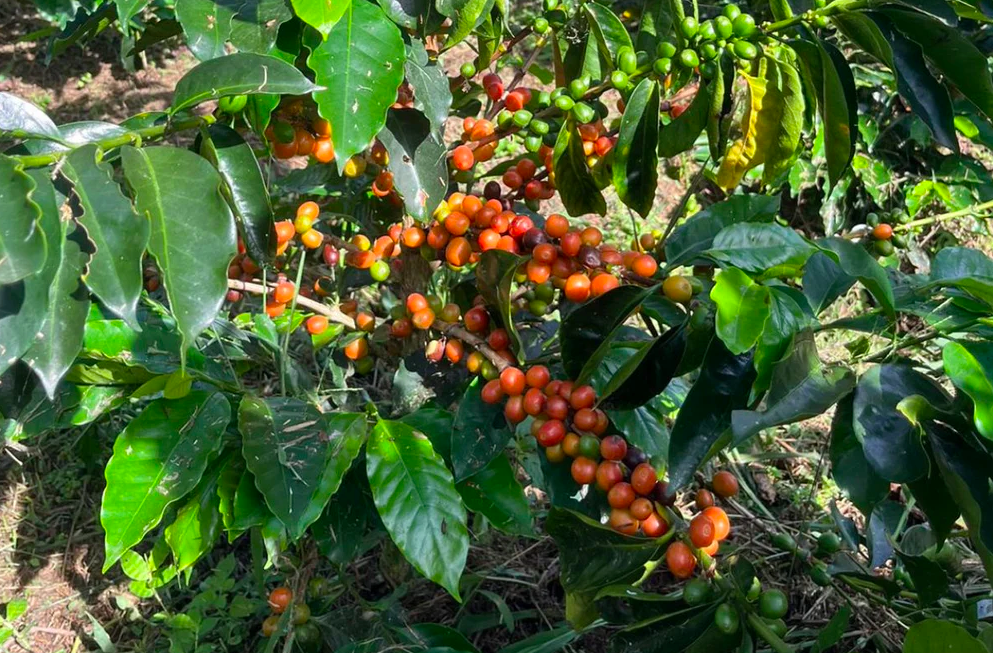
In terms of coffee variety experimentation and innovation, Hacienda La Esperanza is endlessly relentless, constantly testing novel high-quality varieties. In addition to Caturra, which originally occupied most of the area, varieties such as Geisha, Organic Geisha, Mocha, Bourbon (including Red, Yellow, and Tekizik Bourbon), Pointed Bourbon, Pacamara, San Bernardo, and Pache have all successively appeared on the estate, demonstrating the team's immense passion for the specialty coffee industry.
The above content is compiled by CoffeeHunters, a coffee news website.


