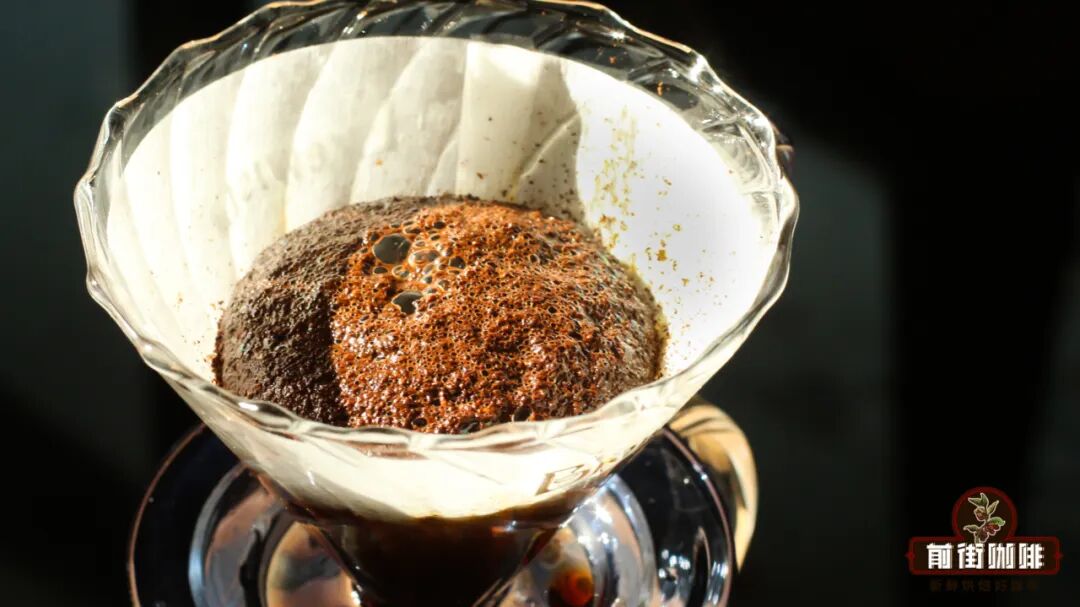
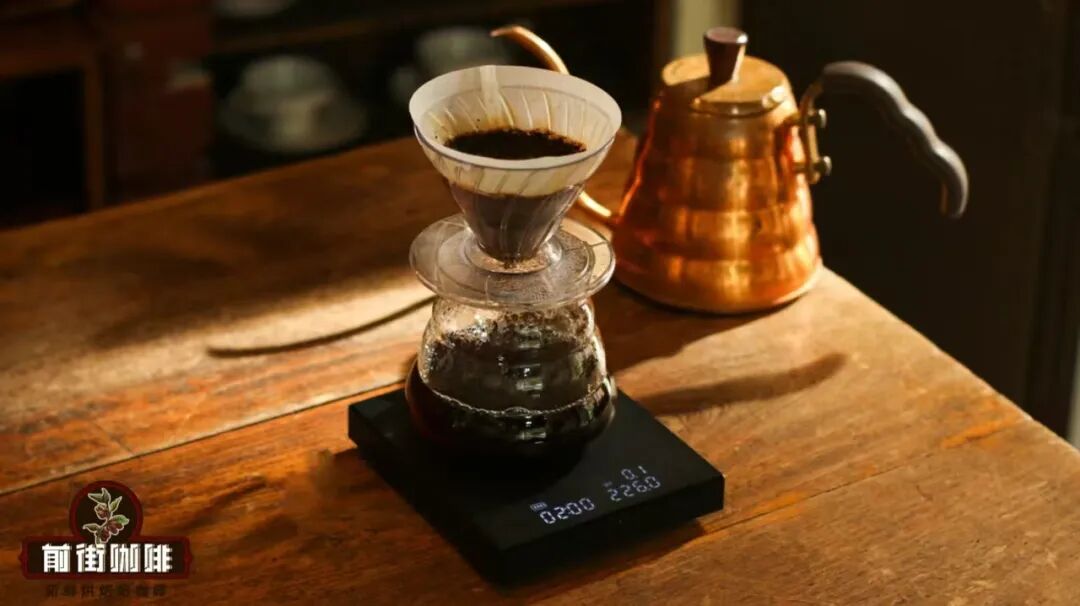
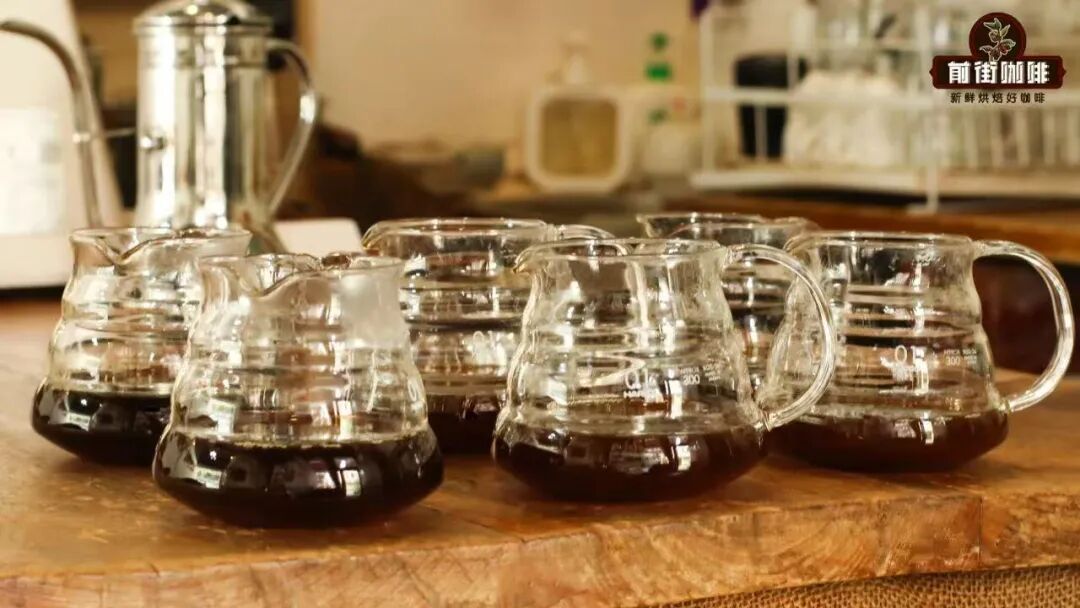
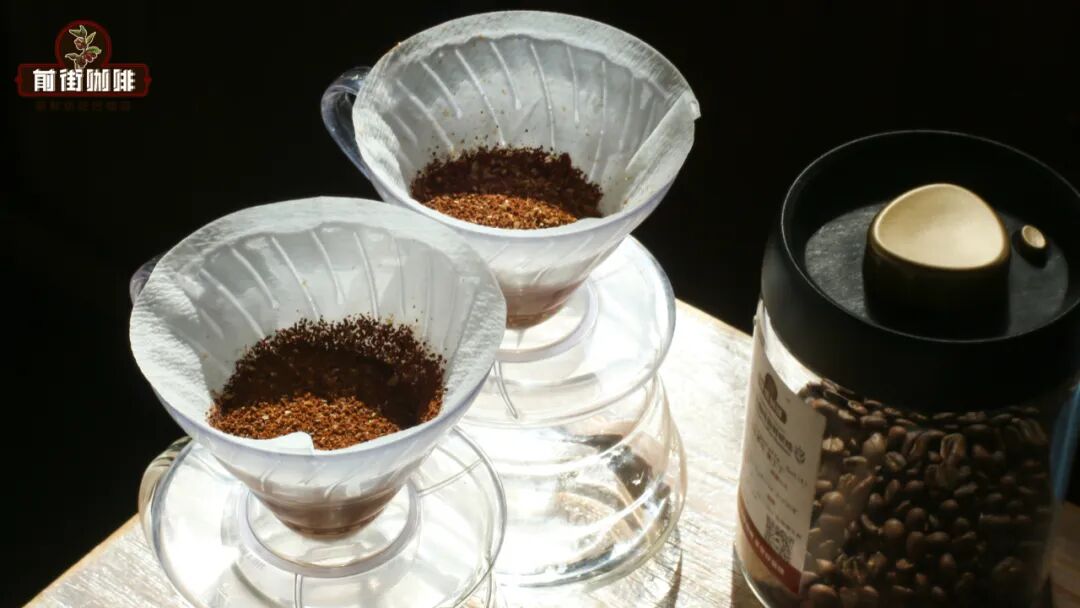
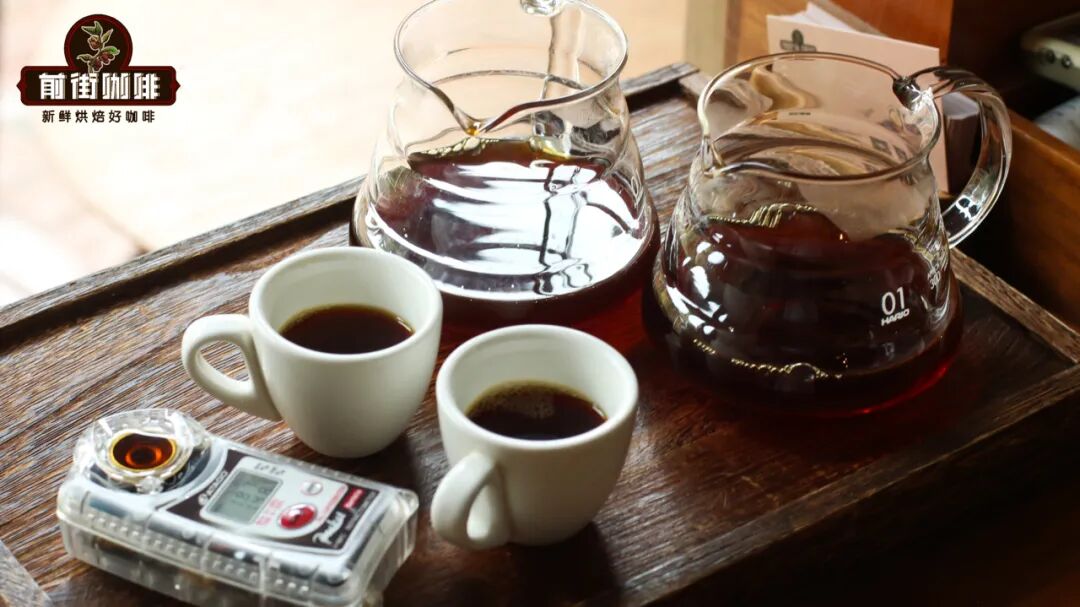
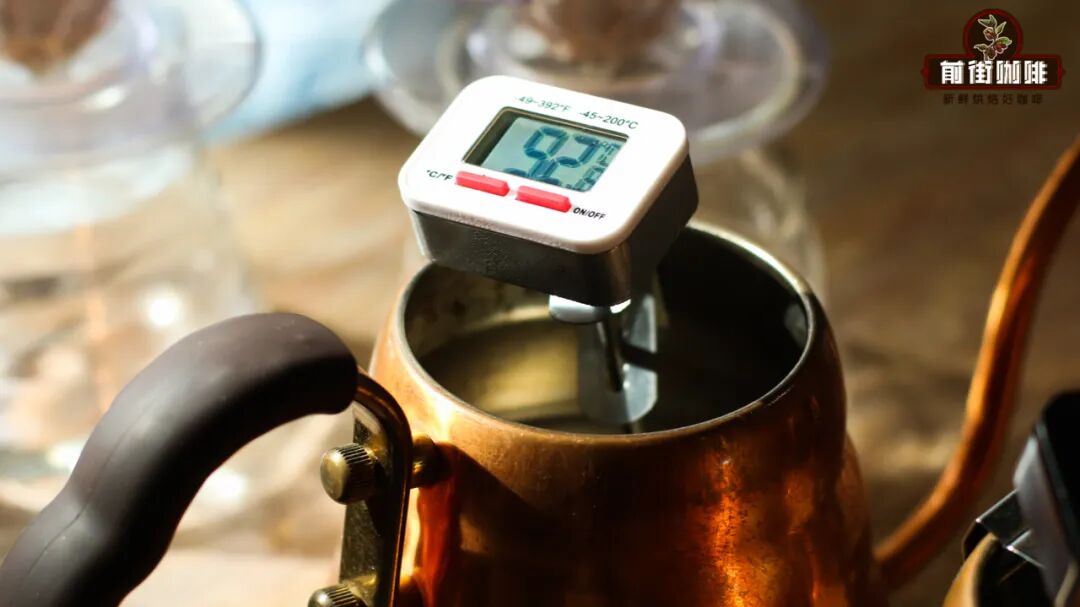
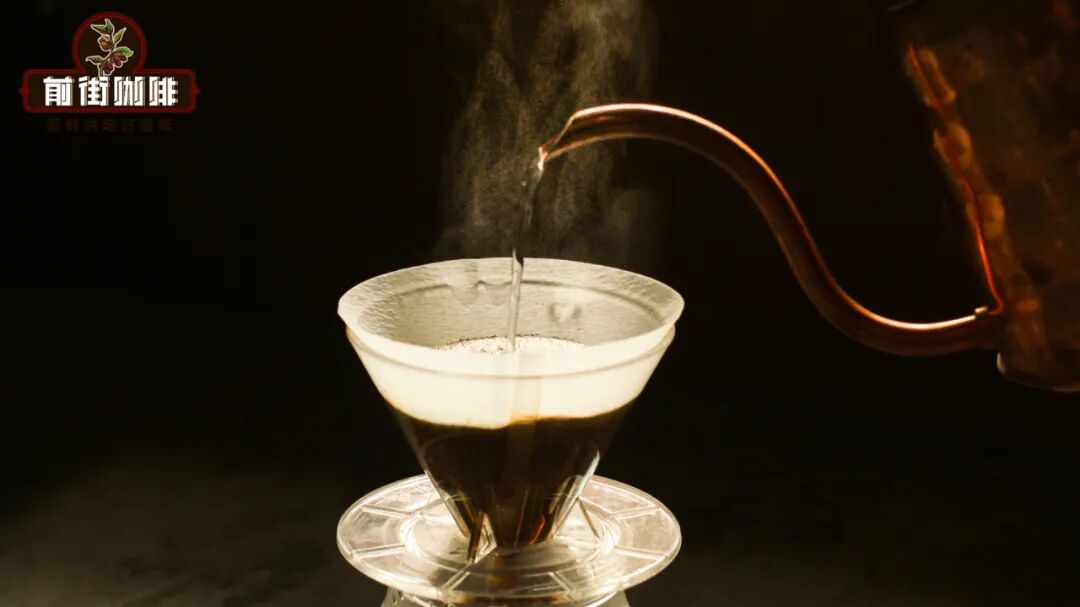
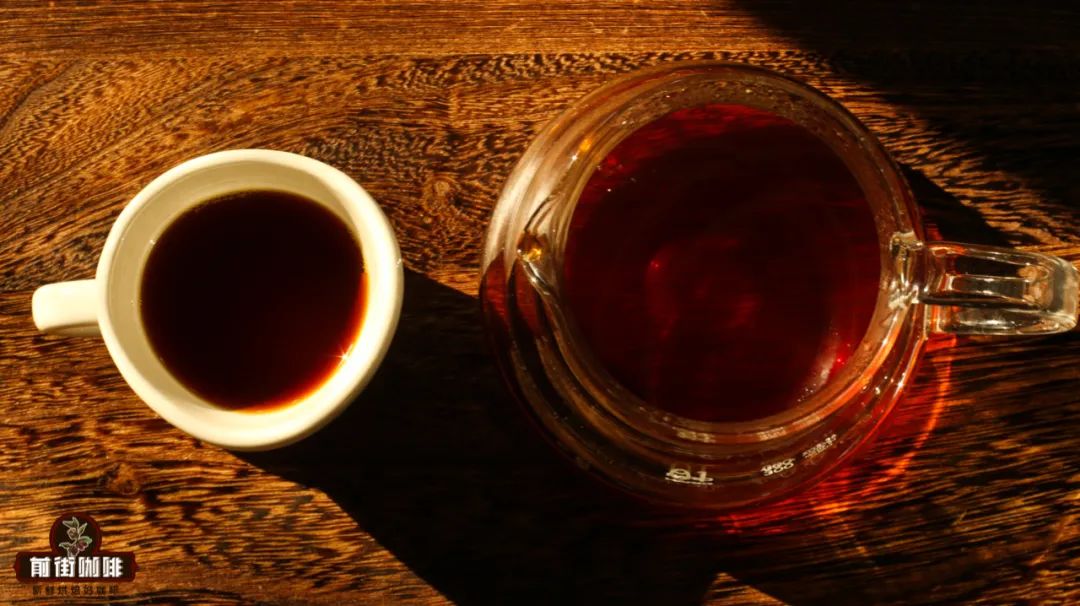
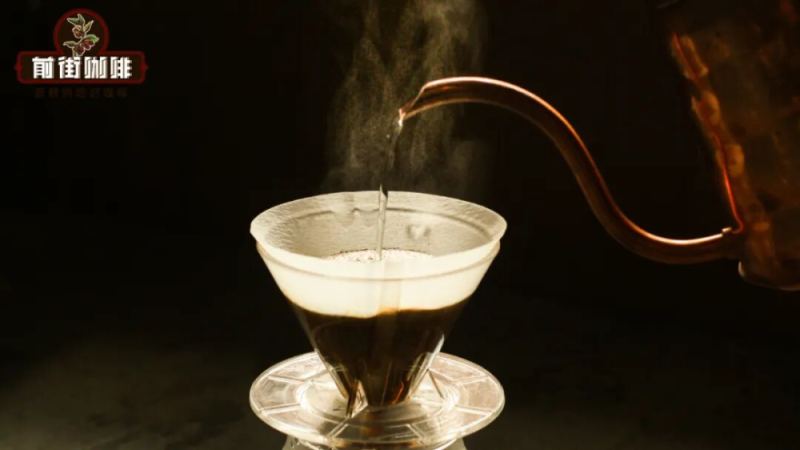
Recently, a friend came across a post online that said: "If the blooming time is too long, it's easy to brew a coffee with insufficient extraction."Obviously, this statement goes against our long-standing understanding of blooming. Because as everyone knows, the purpose of blooming is to release the carbon dioxide in the coffee grounds, allowing us to more easily dissolve the flavor substances in the coffee grounds. Simply put, it is a step that can improvethe extraction rate.Especially for coffee with higher freshness, a longer blooming time helps release more gas that hinders extraction, so logically speaking, it should further improve the extraction rate—how could it instead lead to insufficient extraction?So this friend came to the store with doubts to ask Front Street about the truth of the matter! According to this friend, among the posts, there were two explanations he found more credible: one is that too long a blooming time causes the water temperature in the server to drop, and the decrease in water temperature affects extraction efficiency, thus creating the possibility of insufficient extraction;the other explanation is that because the carbon dioxide is completely released, the water flow speed becomes much faster. The contact time between coffee and water is reduced, which in turn lowers extraction efficiency, making the coffee prone to insufficient extraction.So is this really true? Today, Front Street will verify it through a set of experiments!The content of the experiment is very simple. Front Street will use different blooming times to brew two pots of coffee separately, then measure and compare their taste and extraction rate to see whether a decrease in extraction rate really occurs.But if you often read Front Street posts, you should know that Front Street recently shared an article on the difference between a 30-second bloom and a 60-second bloom. In that article, Front Street brewed three groups of coffee for comparison. Although the beans used in the three groups differed in roast level and freshness, the result was no exception: the group with the longer blooming time had a slightly higher extraction rate than the group with the shorter blooming time.Some friends might think this is because the difference in blooming time was not large enough. Therefore, today, Front Street will further widen the gap in blooming time, using a 30-second bloom and a bloom as long as 1 minute 30 seconds for comparison(any longer would be unnecessary). Let's see whether the facts really match the rumor that too long a blooming time causes the extraction rate to decrease instead!For this experiment, the coffee beans selected by Front Street are Front Street Yirgacheffe·Gedeb from the Front Street bean list. It has been 10 days since roasting was completed, and while it is in its optimal tasting period, it still retains a certain amount of carbon dioxide, which can well demonstrate the impact of different blooming times on coffee. The extraction parameters are as follows:Grind size: 80% passing rate on a No. 20 sieveBrewing water temperature: 92°CBrewing method: three-stageThe brewing process is skipped. Apart from the time and blooming time, the other steps and parameters are all much the same. Let's look directly at the results.In terms of taste, the Gedeb bloomed for 30 seconds performed very well, with a very balanced taste, smooth mouthfeel, prominent flavors, aromas of white floral, lemon, and berry, and a long finish; while the Gedeb bloomed for 1 minute 30 seconds performed as Front Street expected, overall even better than the Gedeb bloomed for 30 seconds(just a little). Although the difference is not large, by comparison its flavors are more prominent(just a little), and the taste is fuller(just a little).By measuring the extraction rate, Front Street verified this fact. The Gedeb bloomed for 30 seconds had a concentration of 1.48% and an extraction rate of 19.46%; while the Gedeb bloomed for 1 minute 30 seconds had a concentration of 1.53% and an extraction rate of 20.13%, a little higher than the former.Then, during brewing, Front Street also measured the flow speed and water temperature. The result was that the flow speed was exactly the same, and the two subsequent pours of hot water both finished flowing in the same amount of time, with no acceleration caused by excessive degassing; the same goes for water temperature.The initial water temperature in the server was exactly the same when brewing the two pots of coffee, both 92.6°C, and by the second pour, their water temperatures were 91.4°C(30 seconds)and 90.9°C(1 minute 30 seconds). It can be seen that although the blooming time differed by one minute, the temperature differed by only 0.5°C, so it would not have much impact on extraction.
From these results, we can see that the extraction rate did not decrease as time increased; on the contrary, the extraction rate even increased slightly.So, is the conclusion that too long a blooming time will not lead to insufficient extraction?Not exactly. Under certain specific circumstances, too long a bloom does have a chance of causing the coffee to be under-extracted, but these circumstances are usually somewhat extreme.For example, if the blooming time is even longer than this 1 minute 30 seconds, the ambient temperature is even lower than now, or the heat preservation performance of the pour-over kettle is not that high, etc.... In these cases, after blooming, the water temperature will be much lower than preset, which in turn makes extraction efficiency lower, and ultimately the coffee's extraction rate will be even lower than when blooming for 30 seconds.However, this only makes the coffee's extraction rate lower than when blooming for 30 seconds, not under-extracted. From the extraction rates measured earlier by Front Street, everyone can infer that even if there is a difference, it will not be large enough to cause the coffee to be under-extracted.If under-extraction really occurs, then apart from too long a blooming time, it is most likely because the original brewing parameters themselves did not extract the coffee very fully, so with only a slightly lower water temperature, the coffee easily becomes under-extracted.In summary, we can know that too long a bloom does indeed affect the coffee's extraction rate, but whether this effect is good or bad still has to be judged according to the specific situation. The above content is compiled by CoffeeHunters, a coffee news website.