







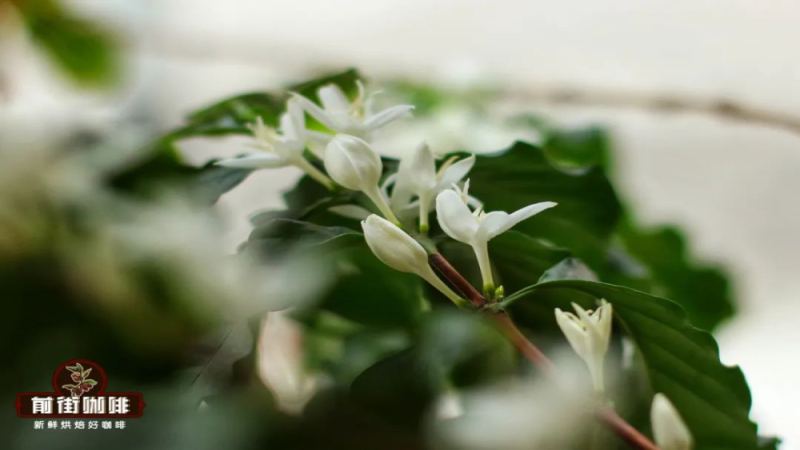
What Do Coffee Trees Look Like When They Bloom?
Coffee flowers are white and closely resemble jasmine in both appearance and scent. On a coffee tree, the bloom lasts only a short window, and roughly two to three months pass from flowering to the point where the tree bears fruit. The blossoms carry a sweet, peach-like fragrance that is delicate rather than heavy.
Botanically, the coffee tree belongs to the Rubiaceae family, the same family as gardenia but a different genus. When Coffea arabica was first named in the early seventeenth century, botanists noted flowers with Arabian jasmine fragrance and laurel-like leaves, calling it Jasminum arabicanum. That white floral character often resurfaces in the cup and shifts during roasting and brewing.
Coffee trees blooming is a sight rarely seen by many coffee lovers. The coffee tree at Front Street Coffee has bloomed once again after a year, and in about two to three months it will bear fruit. What exactly do coffee flowers look like, and what color are they? How long is the blooming period? How long does it take from the flowers withering to growing into coffee beans? This article starts from the botanical classification and aroma characteristics of coffee flowers, extends to the white floral notes in the cup, and analyzes how floral notes behave during roasting and brewing, giving you a complete understanding of this small white flower that closely resembles jasmine.
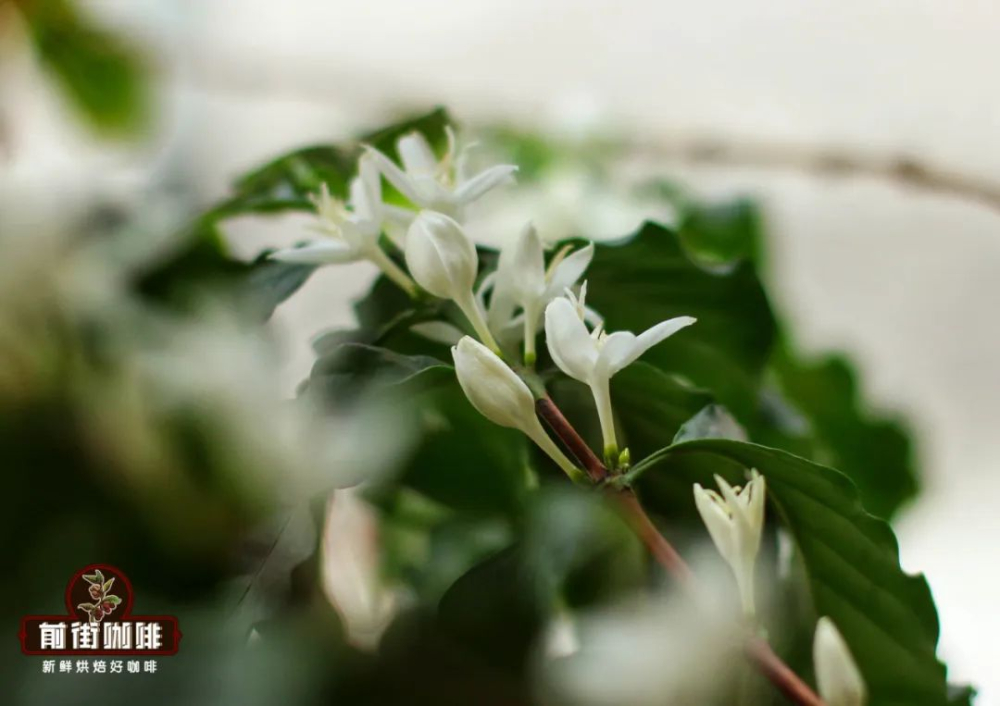
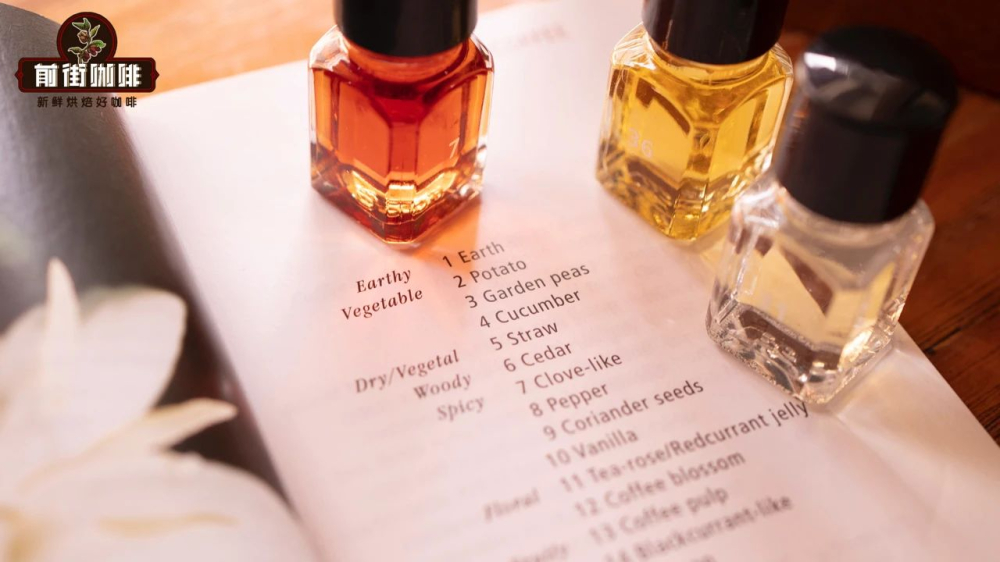
For more specialty coffee knowledge, please follow: Front Street Coffee (Frontsteet Coffee) After a full year, the coffee tree at the Front Street Coffee (FrontStreet Coffee) store has finally bloomed again. According to Front Street's estimate, in about two to three months, it will be bearing fruit. I still remember when I had not yet seen coffee flowers with my own eyes, Front Street built its understanding of the scent of coffee flowers with the help of Le Nez du Café No. 12—Coffee Blossom. From Front Street's experience, it is a sweetness resembling peach flesh, delicate yet full, as if biting into a perfectly ripe honey peach.
In the early seventeenth century, when botanists were naming Coffea arabica, they noticed that the flowers it produced "had the fragrance of Arabian jasmine and leaves like those of the laurel tree." Thus, the earliest botanical name for arabica coffee was set as "Arabian jasmine" (Jasminum arabicanum). It is clear that coffee flowers and jasmine flowers are indeed quite close in appearance and character. From the perspective of plant classification, the coffee tree belongs to the Rubiaceae family, the same family as gardenia, but not the same genus, so the two plants look somewhat similar in form. However, in terms of scent, gardenia is intense and heavy, while the aroma of coffee flowers is much lighter.
When it comes to tasting coffee flavors, it is actually difficult for us to promptly capture and identify exactly which specific flower it corresponds to. Various aromas intertwine, making it unique and hard to describe in words. When smelling or sipping, that pleasant sensation brings white flowers to mind, yet for a moment no precise word can be found to define it, so it is collectively called white floral notes. Besides coffee flowers and jasmine, white roses, white camellias, white magnolias, pear blossoms, lemon blossoms, plum blossoms, and more are all included, making this a rather large floral group.
Floral notes in coffee can be roughly divided into three types: heavy aromatics, delicate aromatics, and fresh aromatics. Among them, white floral notes are the typical representative of the fresh aromatic type and also the most frequently occurring aroma type; among the delicate aromatic type, the most classic is rose, and the naturally processed Emerald Red Label Geisha carries this kind of floral note, smelling soothing;
The heavy aromatic type, on the other hand, has a slight pungency, with a somewhat sharp scent at first, and chamomile and osmanthus are typical representatives. For example, a Colombian Sakura from Front Street carries this kind of aroma.
As a rather rare flavor in specialty coffee, floral notes have always been a key pursuit for coffee enthusiasts. The generation of floral notes depends partly on the coffee variety, growing conditions, and the degree of fermentation in post-processing, while roasting is an extremely critical link in controlling the intensity of floral notes.
The darker the roast, the more the internal substances of the coffee continue to transform, and the easier it is for floral notes to be worn away. So judging from the roasting stage alone, generally a light to medium roast is better able to preserve floral notes. Coffee with a light-medium roast has a softer flavor and a lighter body, and it is easier to detect the presence of floral notes when tasting. Generally speaking, floral notes are more likely to appear when grinding coffee grounds and during the blooming stage, and are especially obvious in the coffee liquid from medium to low temperatures. When drinking, you might compare it with the fresh flowers you have encountered and judge which tonal quality you are sensing. Unfortunately, the blooming period of coffee flowers is very short, usually only 3–5 days. Front Street observed that the petals that had just bloomed the day before had already begun to age and wither one by one. So friends who want to admire the flowers should go early.
The above content is compiled by CoffeeHunters, a coffee news website.


