







How does the Indonesian coffee grading system work?
Indonesia grades its green coffee beans from G1 to G6, and Sumatra Golden Mandheling sits at the top as a G1 lot. Golden Mandheling is the trademarked flagship of the PWN green bean trading company, sorted by one machine pass and three rounds of hand picking, with beans sized above 18 mesh.
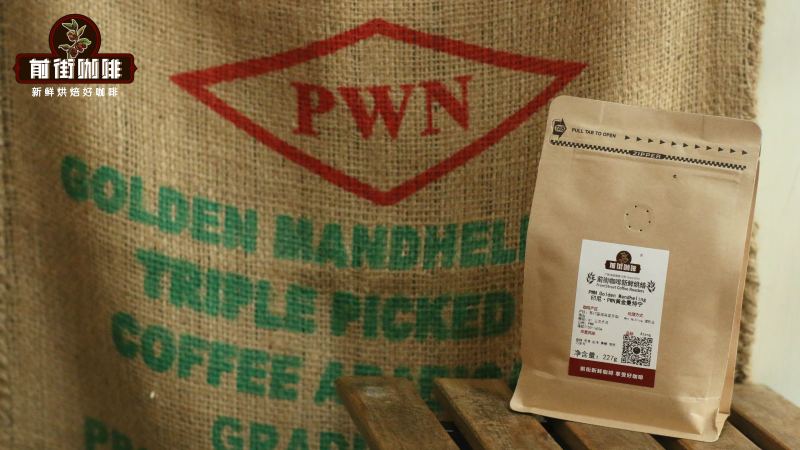
The name Mandheling covers Sumatra beans grown and processed with care, so aroma shifts with harvest location. Authentic Golden Mandheling can be identified by PWN-logo jute sacks and a PWN certificate of origin. Its cup is cleaner than ordinary Mandheling, with the herbal, earthy and woody notes largely replaced by caramel sweetness and bright fruit acidity.
Indonesia is the world's largest archipelagic nation, and Sumatra, its largest island, produces Mandheling coffee, which occupies an important place on the world coffee map. But how does Golden Mandheling, the exclusive signature product of Indonesia's PWN company, differ from ordinary Mandheling? What standards are used to classify Indonesian green beans from G1 to G6? This article will systematically sort out Indonesia's coffee grading system, the varietal origins of Mandheling, the history of the wet-hulling process, and the brewing parameters and flavor performance of Front Street Golden Mandheling, taking you through the complete story behind this coffee bean that is "the ugliest yet the best-tasting."
[Golden Mandheling 20 mesh+] What variety are Indonesian coffee beans? How much does Sumatra Golden Mandheling cost?
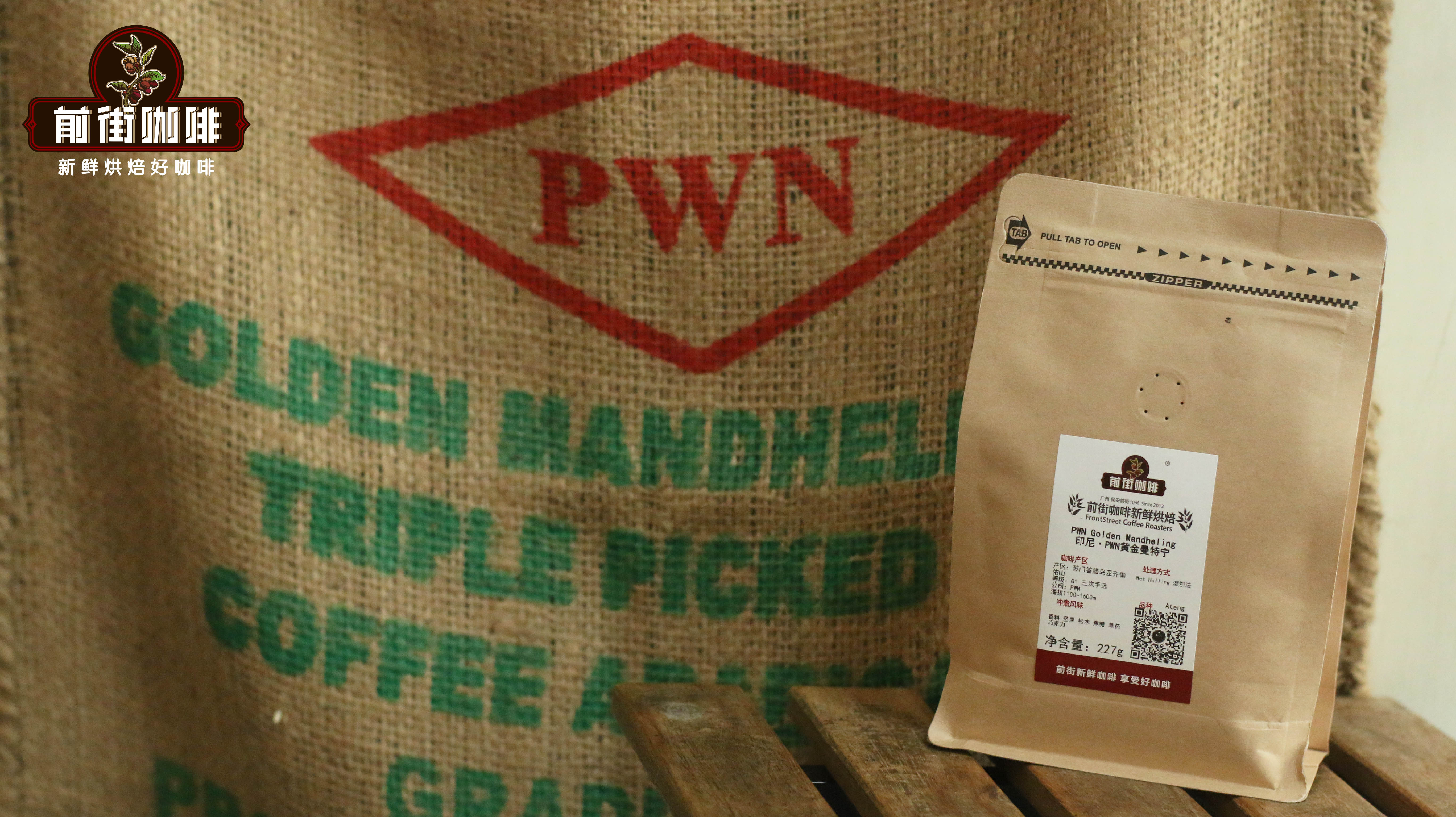
The name Mandheling broadly refers to coffee beans from the Sumatra producing region that have undergone careful cultivation and processing. Because the harvesting locations differ, the aroma performance also shows subtle variations. Golden Mandheling is the flagship product of Indonesia's Pwani green bean trading company (PWN). Various types of Mandheling currently circulate on the market, but since PWN has registered "Golden Mandheling" as an exclusive trademark, only beans produced by that company can be considered true Golden Mandheling. Authentic sources can be identified by two markers: green bean jute sacks printed with the PWN logo, and certificates of origin issued by PWN. Front Street has displayed both of these markers at its Dongshankou store for customers to examine.
Golden Mandheling must undergo one round of machine sorting and three rounds of manual picking, making its production process rigorous. Its green beans are dark green and plump, all above 18 mesh in size, and after roasting the bean color is highly consistent, allowing the extraction of coffee that is both delicate and rugged. Compared with ordinary Mandheling, Golden Mandheling has a cleaner mouthfeel; the herbal, earthy, and woody flavors commonly found in Mandheling coffee are almost gone, replaced by more prominent caramel sweetness, while the fruit acidity also appears bright and elegant. It is precisely for this reason that seasoned coffee enthusiasts are especially fond of Mandheling coffee, and particularly prefer Golden Mandheling coffee.
Golden Mandheling coffee has opened up new market demand, and merchants are optimistic about the prospects of this category, so a large number of products named Golden Mandheling have emerged on the market, with widely varying prices. Front Street Indonesia PWN Golden Mandheling black coffee beans, freshly dark-roasted, are priced at 89 yuan/227g.
Sumatra
Indonesia is the world's largest archipelagic nation, and Sumatra, the origin of Golden Mandheling, is Indonesia's largest island and ranks sixth among the world's islands. Sumatran coffee is also commonly called Mandheling coffee. North Sumatra mostly produces Gayo, with Ateng as the main variety; the Tawar Lake area at the northern tip can be called Aceh coffee or Tawar Lake coffee; the Lintong and Toba Lake areas of South Sumatra fall under the Mandheling category, and Lintong is the core producing region of Mandheling. Mandheling comes from the mountainous area around Lake Toba, a highland freshwater lake located north of Medan, the provincial capital of Sumatra, with an average elevation of about 900 meters.
Mandheling coffee varieties
At the end of the seventeenth century, the Dutch East India Company transplanted Arabica from India to Jakarta on the island of Java. The local climate and soil conditions were suitable, and Arabica soon spread to Sumatra in the northwest of Java and to Sulawesi in the northeast. However, by the 1880s, a severe outbreak of leaf rust occurred in Java, and almost all Arabica plants died. The Dutch switched to planting the more disease-resistant Robusta, stabilizing Indonesia's coffee industry. To this day, Robusta remains the mainstay of Indonesian coffee, accounting for as much as 90%, while Arabica accounts for only 10%. The elegant-flavored Arabica is mainly distributed in northern Sumatra, Sulawesi, and the high-altitude areas of Java.
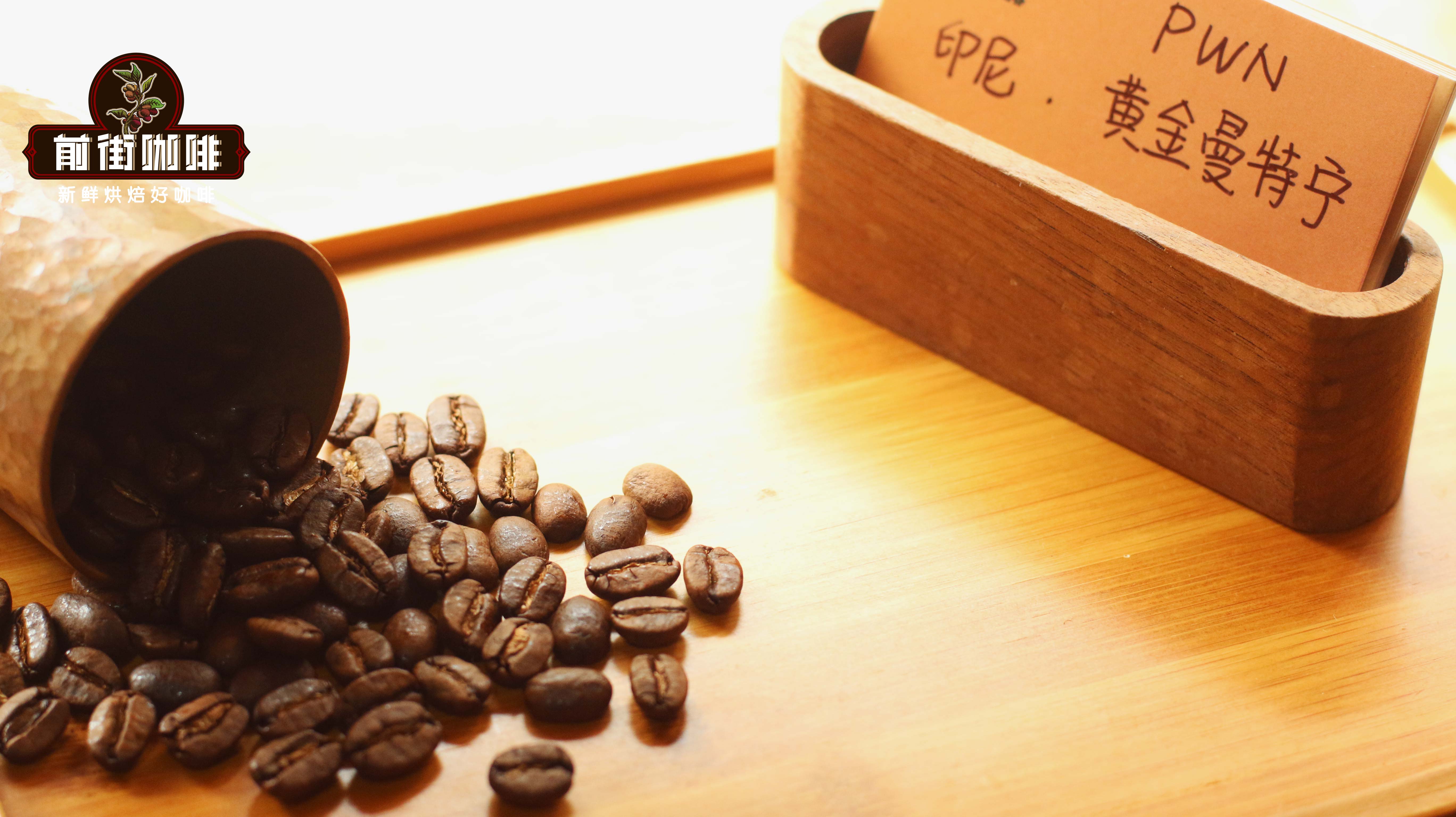
Front Street's Lintong Mandheling coffee varieties are TimTim and Ateng, while Golden Mandheling coffee is labeled as Ateng. In fact, TimTim is Timor, an Arabica variety with Robusta lineage; Ateng is Catimor, a cross between Caturra and Catimor. These names are simply local customary terms. Once any variety enters Indonesia, it is mostly localized, forming names that coffee lovers outside Indonesia find hard to understand.
Golden Mandheling grade
The grading of Indonesian green beans is determined by the number of defective beans and bean size. Indonesia's general quality requirements include: no live insects, no moldy or foul-smelling beans, maximum moisture content of 12.5%, and impurity rate below 0.5%. Graded by defect rate (based on 300g), the Grade standard is divided into 6 levels, namely G1 to G6. PWN has taken the sorting process to the extreme, strictly subjecting G1-grade Mandheling to 1 machine sorting plus 3 manual pickings to ensure defective beans are completely removed and the defect rate is greatly reduced. In addition, before packaging, PWN also sends the green beans through machines for density and color sorting, making Golden Mandheling coffee uniform and translucent.
Mandheling coffee bean processing method
Indonesia is hot and humid all year round, with insufficient sunshine hours and humidity maintained between 70% and 90% year-round, so pure sun-drying is clearly impractical. For Sumatra, with its changeable weather, even if washed processing is used, it is very difficult to wait for a continuous week of sunny weather to complete drying, and thus the wet-hulling method was born. In wet-hulling, after the washing process is completed, the coffee beans with parchment are placed in the sun to dry for 1 to 2 days, and when the moisture content drops to 30% to 50%, the parchment is removed and sun-drying continues. This method can accelerate the drying speed of coffee beans and significantly shorten the drying cycle. This is a rare processing method worldwide, and it inadvertently created Mandheling's flavor characteristics of low acidity, full body, and a stuffy aroma, and it is also hailed as the world's most full-bodied coffee.
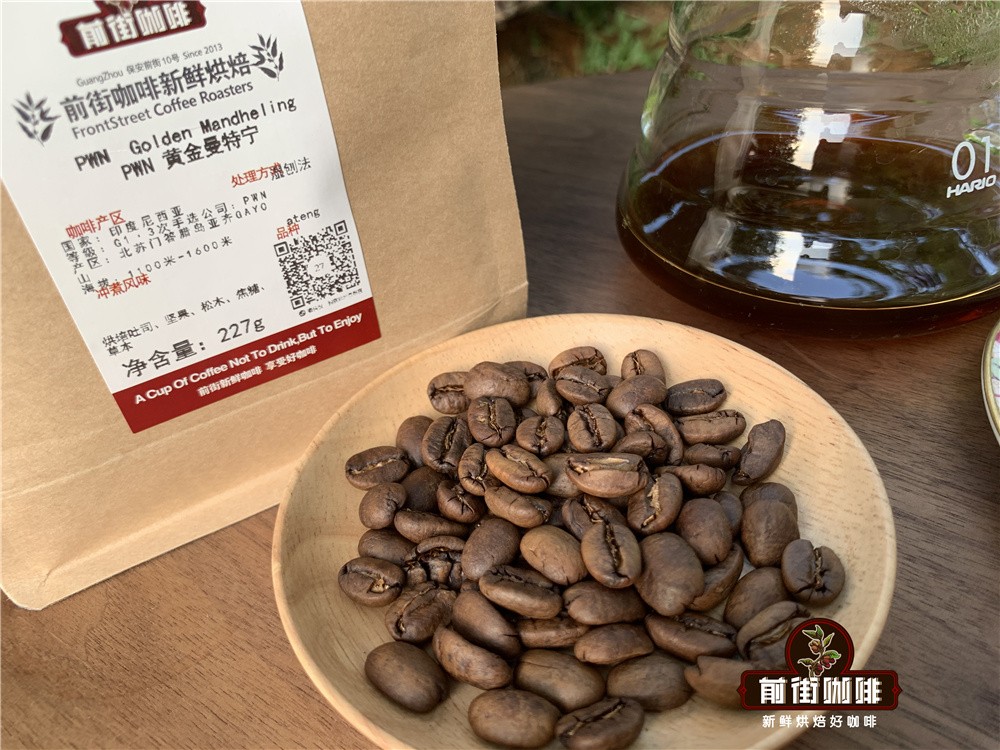
Mandheling coffee beans are relatively large and hard in texture. Because the three-stage drying method in the processing involves many variables, and the processing techniques are relatively rough, Mandheling coffee beans often appear in a sheep-hoof shape, but this is not a defective bean; it is caused by machine squeezing when removing the parchment. Therefore, some people exclaim: Mandheling coffee beans look the ugliest, but taste the best.
Front Street brewing parameters for Mandheling coffee:
To highlight Mandheling coffee's full body and nutty caramel flavors, Front Street roasters use a dark roast. Dark-roasted coffee beans are more porous and less hard than light-roasted ones, so a lower water temperature is recommended when brewing. Paired with a KONO dripper, it can achieve an even better body.
Dripper: KONO dripper
Water temperature: 88°C
Water-to-coffee ratio: 1:15
Coffee dose: 15g
Grind size (75% passing rate on China No. 20 standard sieve).
Pour-over flavor: [Front Street PWN Golden Mandheling coffee bean flavor]: The coffee as a whole has varied layers, is full-bodied and clean, with rich nutty and caramel aromas, a chocolate note, a lasting finish, and a high degree of balance.
When it comes to brewing, Front Street has always believed that the freshness of coffee beans has a major impact on flavor. All coffee beans sold by Front Street are products within 5 days after roasting. Front Street's roasting principle is "freshly roasted good coffee," ensuring that every customer who places an order receives the freshest possible coffee. The resting period for coffee is about 4 to 7 days, so when customers receive it, it is exactly at its best flavor stage.
For professional coffee knowledge exchange and more coffee bean information, please follow Coffee Workshop (WeChat public account: cafe_style)
For more specialty coffee beans, please add the private WeChat of Front Street Coffee (FrontStreet Coffee), WeChat ID: qjcoffeex
The above content is compiled by CoffeeHunters, a coffee news website.


