







What does Brazilian coffee taste like?
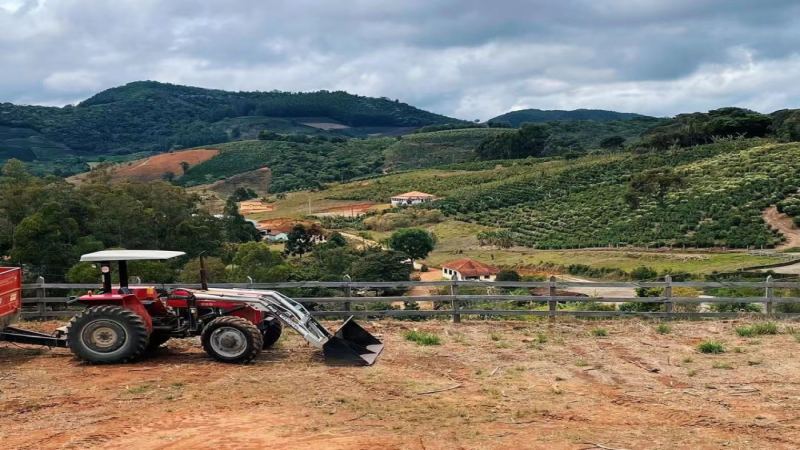
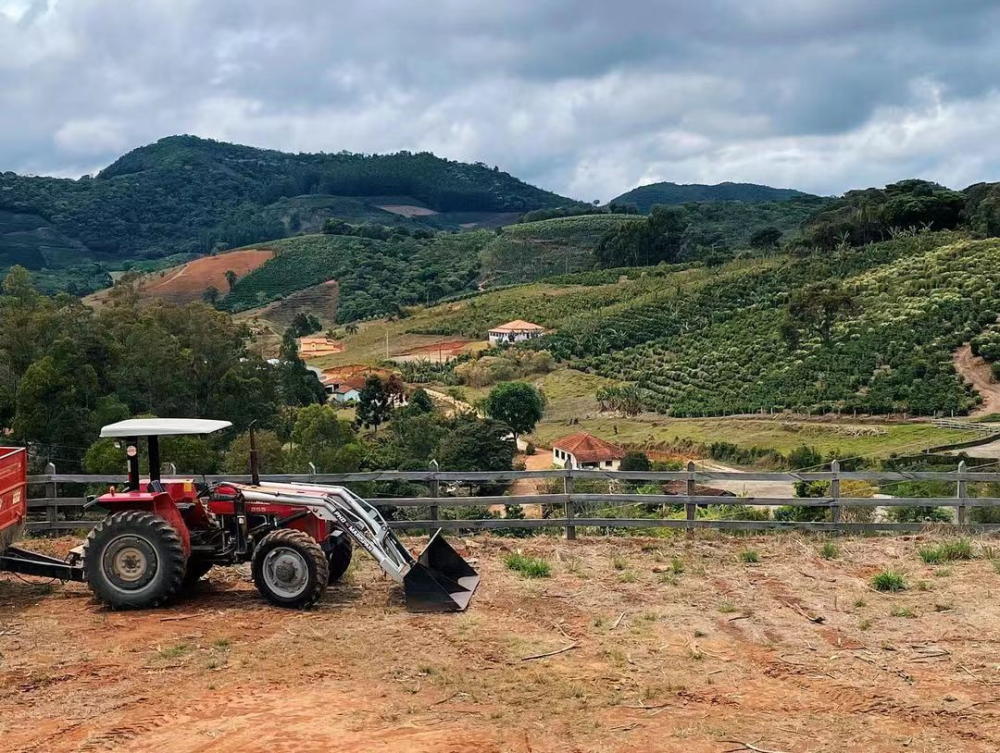
Brazilian coffee generally tastes nutty, chocolatey and low in acidity, with a sweet, heavy body. As the largest producer of Arabica coffee beans, Brazil grows most of its crop on flat plateaus around 1,000 meters, a low altitude for specialty coffee, so the cup leans mellow and consistent rather than sharply bright.
Variety still matters: Red Bourbon and Yellow Bourbon lots from estate farms can show more sweetness and layered fruit than commodity-grade beans. Brazilian output shapes international Arabica futures, and recent pressure from extreme weather, a weak dollar, high oil prices and rising domestic demand has tightened supply, which shows up in cup character and price.
Brazil is the world's largest producer of Arabica coffee beans, and fluctuations in its output directly influence international futures prices. In recent years, a combination of extreme weather, economic conditions, and energy policies has tightened Brazil's coffee supply and caused notable price volatility. This article begins with the flavor characteristics, cultivation history, and main producing regions of Brazilian coffee, sorts out the flavor differences among key varieties such as Red Bourbon and Yellow Bourbon, and combines two beans currently sold by Front Street Coffee—Queen Estate and Cerrado—to introduce their cupping performance and brewing parameters, helping coffee lovers gain a comprehensive understanding of the origin logic and drinking methods of Brazilian coffee.
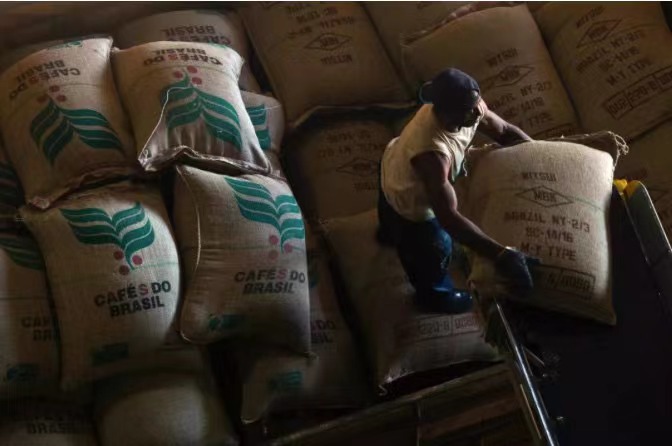
Brazil occupies a pivotal position in the global Arabica coffee bean landscape, and the success or failure of its harvest directly affects the direction of international Arabica green coffee futures. Statistics show that in Brazil's highest-production years, its Arabica coffee beans can account for more than 30% of total global output.
In recent years, however, Brazil's coffee output has not been ideal. Extreme climate driven by the greenhouse effect has sharply reduced Arabica bean production, the weak U.S. dollar has squeezed coffee farmers' profit margins, soaring oil prices have prompted many local growers to switch to corn for renewable energy production, and the COVID-19 pandemic has disrupted global supply chains and consumption. At the same time, Brazil's domestic coffee consumption has continued to rise. With multiple factors overlapping, Brazilian coffee beans have gradually fallen into a situation of supply falling short of demand.
The level of Arabica coffee futures prices depends to a large extent on the certified inventory levels of the New York Intercontinental Exchange. As the largest source of inventory supply, Brazil's increases or decreases in supply have always been a key variable influencing coffee futures prices.
Brazilian Coffee Flavor
Generally speaking, the higher the altitude at which coffee beans are grown, the more pronounced the temperature difference between day and night, and the slower the pace of fruit development, thereby giving the beans more ample time to form a denser structure, increase density, and accumulate richer flavor layers.
Compared with other producing countries in Central and South America, Brazil's coffee cultivation altitude is noticeably lower, and in addition the terrain is flat, microclimates are lacking, and coffee trees have no shade conditions during growth.
For this reason, Brazilian coffee beans have a softer texture, and their flavor performance is not as outstanding as that of other regions. Generally speaking, Brazilian beans have lower acidity; higher-quality ones present nutty and chocolate-like sweet aromas, with balanced acidity and bitterness and good body; lower-quality Brazilian beans, however, tend to carry woody and earthy notes.
Overview of Brazilian Coffee Cultivation
Coffee was introduced to Brazil from French Guiana in the 1720s. These coffee trees adapted very well to the local climate and terroir, and soon spread from the north to São Paulo in the southeast and Paraná in the south. Unfortunately, however, when coffee spread to Paraná, because of its higher latitude and the frost that also occurs in winter, coffee farmers suffered serious losses.
It was not until the 1970s to 1980s that Brazilian farmers began developing the warmer Minas province in northern São Paulo and the Bahia region, where winters are warm and frost does not occur. Today, Minas has become one of Brazil's core producing regions for specialty coffee.
Brazil's main coffee-producing regions include Minas Gerais, São Paulo, Bahia, and Espírito Santo; together these four places account for 90% of the country's exports. The Mogiana we commonly see comes from São Paulo, while Cerrado and Sul de Minas under Minas Gerais, because of their higher altitudes, mostly produce specialty-grade Brazilian coffee beans.
Introduction to Brazilian Coffee Varieties
Brazil currently mainly cultivates varieties such as Red Bourbon, Yellow Bourbon, Mundo Novo, and Catuai, among which Red Bourbon and Yellow Bourbon are the mainstays. Both are secondary varieties produced by mutation from Typica.
After the coffee tree of Red Bourbon flowers and bears fruit, the color of the fruit undergoes a series of changes: green > turning slightly yellow > turning slightly orange > turning mature red > then turning riper dark red. Therefore some people also call it the Red Bourbon variety; in fact, Red Bourbon is also what we usually call the Bourbon variety.
Bourbon coffee planted at high altitude often has more outstanding aroma, brighter acidity, and can even convey a red-wine-like note on the palate. Simply put, Bourbon is a branch under the Arabica species. Those that generally bear red fruit are called Red Bourbon; in addition there are also Yellow Bourbon, Orange Bourbon, and others. Yellow Bourbon has relatively lower yield, but its quality is often better.
Does Brazilian Coffee Taste Good?
Front Street Coffee currently sells two coffee beans from Brazilian producing regions. One comes from the Mogiana region next to Sul de Minas, from Queen Estate at an altitude of 1,400–1,950 meters. This area is home to many growing families; some operate using the traditional large-farm model, while others adopt small-scale modern operations. The combination of modern technology and mountain coffee-growing culture has produced extremely high-quality green coffee beans.
Through cupping, Front Street found that the coffee beans produced in this area carry a clear sweetness like cane sugar. After medium-dark roasting by Front Street Coffee, the flavor of the Brazilian Queen Estate coffee presents a mix of roasted nut aromas, full and smooth peanut-butter-like body, and clear yellow-sugar sweetness.
The other bean comes from the Cerrado producing region at an altitude of 1,000 meters. The Cerrado producing region begins in Mato Grosso in southwestern Brazil, runs across the central-west of Minas, and reaches westward to Bahia. The Cerrado coffee-producing region referred to by Front Street is not the entire Cerrado savanna, but only the coffee-growing areas in the central-west of Minas at altitudes above 1,000 meters, which alone can qualify as the Cerrado coffee-producing region.
This area is the essence of the Cerrado savanna. With high altitude and fertile soil, it is only here that specialty coffee beans with clear sweetness, high body, and high cleanliness can be grown. After medium-dark roasting by Front Street Coffee, the flavor of coffee from Brazil's Cerrado producing region presents nuts, peanuts, creamy smoothness, cocoa, and caramel.
How to Brew Brazilian Coffee Beans?
Front Street Coffee stores usually use the Kono dripper for brewing. The difference between this dripper and the V60 is that the ribs of the Kono dripper extend only to one-third of the dripper, with two-thirds in a smooth state. When the filter paper fits completely against the dripper, air cannot pass through the dripper, and the brewing process slows the rate at which water passes through, thereby achieving an immersion effect, and the coffee's expression becomes fuller and richer.
Because the dripper itself has the effect of improving extraction, Front Street Coffee recommends using a medium-coarse grind (70% passing through a Chinese No. 20 standard sieve), a water temperature of 88–89°C, and a coffee-to-water ratio of 1:15 for brewing.
Front Street uses three-stage extraction: start the timer, use 30 grams of water for blooming for 30 seconds, then pour in a thin stream in circles until the water reaches 125 grams and pause, then when the water level is about to expose the coffee bed continue pouring until 225 grams and stop (timing starts from the beginning of blooming); the extraction time is 2 minutes.
The above content is compiled by CoffeeHunters, a coffee news website.


