








How do the three coffee processing methods differ?
The three main coffee processing methods separate on one point: how much of the fruit stays with the seed while it dries. Natural processing dries the whole cherry to roughly 12 percent moisture before hulling. Washed processing removes skin, pulp and mucilage first, then dries the parchment bean. Honey processing removes the skin but leaves some mucilage on the bean to dry.
That difference drives flavor. Naturals tend to show heavier fruit and sweetness, washed lots read cleaner and more acidic, and honey sits between them with added body. Panama Boquete geisha coffee beans illustrate this well: geisha reached Panama in 1960 and only drew wide attention after 2004, when a farm traced a floral note in its lots.
Washed, natural, and honey processing are the three most fundamental green coffee processing methods in the specialty coffee world, each shaping the final flavor profile of the coffee in its own way. In this article, Front Street Coffee will use three Geisha coffee beans from the Boquete region of Panama as examples to break down the specific operational procedures, flavor characteristics, and visual differences between raw and roasted beans for each of these three processing methods. We will also trace the evolution of honey processing in Brazil and Central and South America, and include roasting records for three beans—Front Street Hacienda La Esmeralda Green Label Geisha, Ethiopian Natural Huakui, and Strawberry Candy Geisha Blend—for coffee enthusiasts to reference and compare.
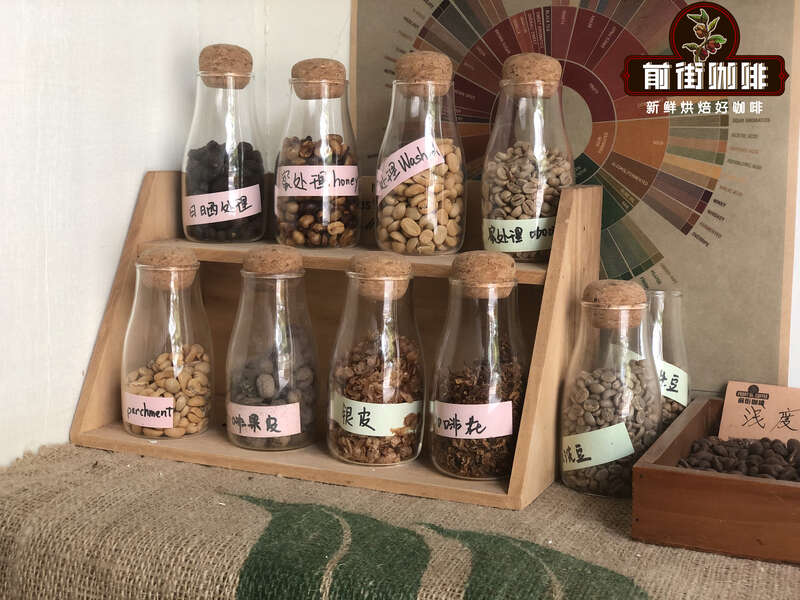
Anyone who knows a thing or two about pour-over coffee will certainly be familiar with the terms washed, natural, and honey processing. Today, Front Street Coffee has selected three Geisha coffee beans from the Boquete region of Panama to analyze one by one what makes these three traditional green coffee processing methods different from each other.
After the Geisha variety was discovered in the primitive forests of Ethiopia in 1931, it made its way through Kenya, Uganda, Tanzania, and other places before finally taking root in Panama in 1960. In the early days, because Geisha had low yields, it remained obscure in an inconspicuous corner of Panama's coffee-growing regions. It wasn't until 2004, when the owner of Hacienda La Esmeralda caught a faint trace of floral fragrance in harvested coffee beans and was struck by how stunning it was, that he traced it back to this overlooked variety, harvested it separately, and sent it to competition. Geisha skyrocketed to fame overnight and ascended to the forefront of the specialty coffee market.
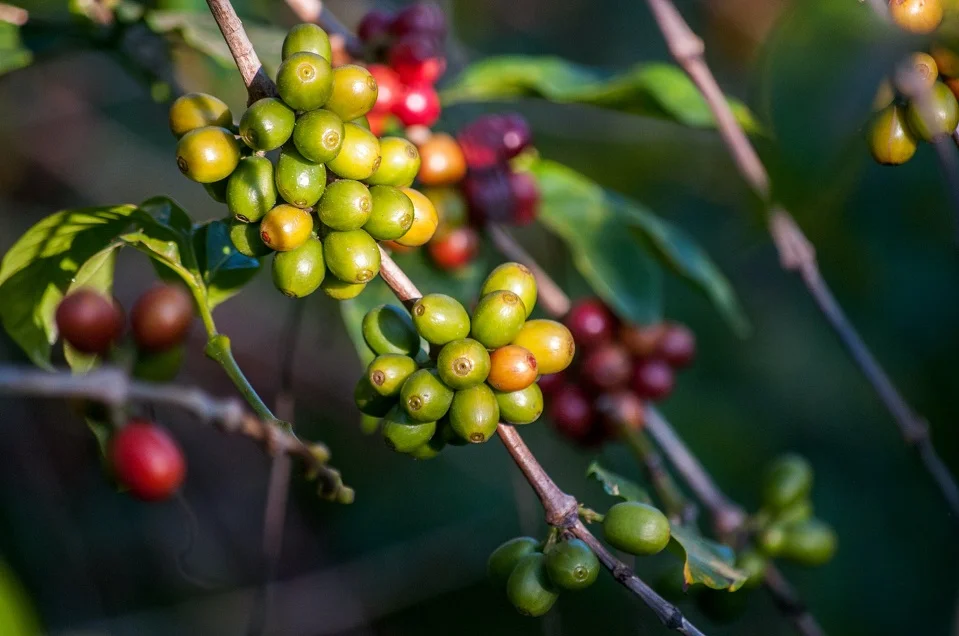
The core difference between these three processing methods can be summarized in one sentence (ignoring the time factor for now):
Natural processing: The whole coffee cherry is dried (sun-dried) directly to about 12% moisture content, then hulled to extract the beans.
Washed processing: The skin, pulp, and mucilage are removed, leaving only the parchment bean to be dried (sun-dried) to about 12% moisture content, then the parchment is removed to extract the bean.
Honey processing: The skin is removed, but some mucilage is retained for drying (sun-drying) to about 12% moisture content, then hulled to extract the beans. It is called "Honey Process" not because honey is added during processing, but because the layer of mucilage adhering to the surface of the coffee bean after the skin is removed has a sticky, smooth texture resembling honey—hence the name.
Washed Processing Method
Let's first go through the specific operational steps of these three processing methods. Front Street Coffee believes that washed coffee typically has more pronounced acidity, excellent cleanliness, moderate body, and the most consistent green bean quality. Among the three common processing methods, washed processing offers the greatest stability, and the resulting coffee tends to be on the acidic side. Washed green beans appear blue-green, and the silver skin line is visible in the center of roasted beans.
1. Cleaning/Collection/Floatation/Rinsing
After the coffee cherries are harvested, they should be sent to the processing station as soon as possible, generally within 6 to 12 hours of picking. The cherries are first weighed, then poured into water to soak, with the purpose of screening out those cherries that float to the surface due to poor quality.
2. Depulping/Pulping
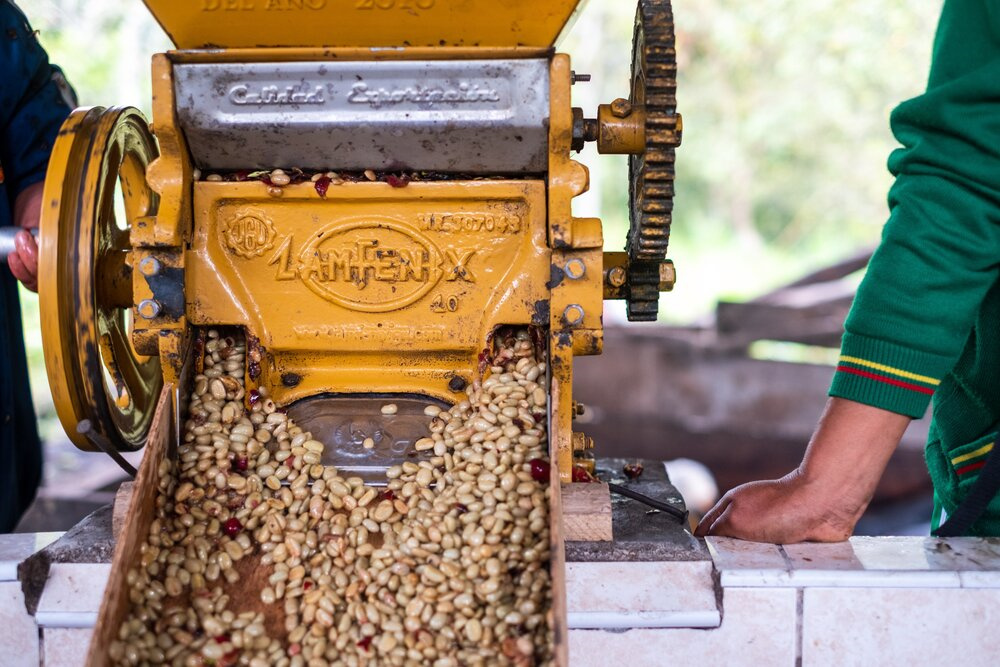
The coffee cherries are then fed into a pulping machine for depulping, a step aimed at removing the outer skin and pulp of the cherry.
3. Fermentation/Demucilaging
The coffee cherries with skin and pulp removed are transferred to fermentation tanks or barrels and left to rest for 18 to 36 hours, during which enzymes break down the mucilage and pectin on the cherries.
4. Washing
The demucilaged coffee cherries are washed in a tank with an appropriate amount of clean water, and through agitation, the residual pectin breakdown substances on the bean surface are removed. What remains after washing is the parchment layer, silver skin, and green bean.
5. Drying
The washed coffee beans undergo sorting to remove defective beans. They are then sent to drying areas (tarps, concrete patios, or raised beds, etc.) for drying. The drying duration depends on climate and environmental factors, typically ranging from 5 to 14 days. At this point, the moisture content of the coffee beans drops from 55% to 11%.
6. Storage
After drying, the coffee beans are called parchment coffee, meaning green beans still wrapped in the parchment layer. The parchment coffee is sent to warehouses for storage, and hulling is done before export.
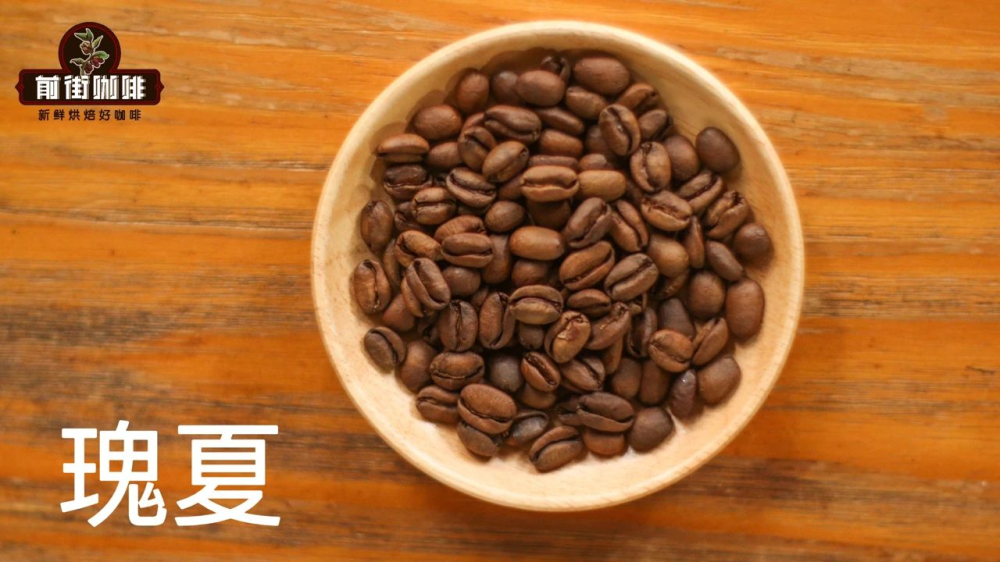
Front Street Hacienda La Esmeralda Green Label Geisha Coffee Beans Region: Boquete, Panama Estate: Hacienda La Esmeralda Altitude: 1600-1800m Variety: Geisha Brewing Flavor: Intense jasmine fragrance, high sweetness, citrus, berries, juicy, creamy, green tea, orange peel, cantaloupe; overall rich flavor layers, with a lingering floral and citrus finish.
Front Street Coffee Roasting Record Charged at 190°C, heat setting 150, damper opened to 3; turning point at 1'36", at 140°C opened damper to 4 and reduced heat to 130; at 150.8°C the bean surface turned yellow, grassy smell completely disappeared, entering the dehydration phase; when the temperature reached 166°C, adjusted heat to 110; damper unchanged; at 7'55", at 176°C adjusted heat to 90; ugly wrinkles and dark patches appeared on the bean surface, the toast aroma clearly shifted to coffee aroma, which can be defined as the prelude to first crack—at this point listen carefully for the sound of first crack; at 8'30" first crack began, opened damper to 5, at 187°C adjusted heat to 60; after first crack developed for 1'30", dropped at 193.5°C.
Natural Processing Method
Next, let's talk about natural processing. Front Street Coffee believes that compared to washed and honey processing, natural coffee has the lowest acidity, highest sweetness, and clearest body, but cleanliness is slightly inferior. In terms of flavor, it presents more berry-like notes and more complex layers. Natural green beans have a small amount of silver skin on the surface, appear yellow-green, and roasted beans have no silver skin line in the center.
1. Collection and Screening
After harvesting, the coffee cherries first undergo manual hand-sorting to remove defective cherries, including overripe, underripe, insect-damaged beans, as well as foreign matter other than cherries.
2. Drying
The screened coffee cherries are sent to drying areas. Different regions may use different drying facilities—some use tarps, some use raised beds, some use concrete patios. The average drying time is 3 to 4 weeks, until the coffee's moisture content drops to 11% before it is considered complete.
3. Hulling
After drying is complete, the coffee cherries are sent to the processing station for hulling and depulping, and sometimes polishing. The skin, pulp, and other parts are all removed at this stage.
4. Screening, Sorting, and Storage
After hulling, the green coffee beans undergo screening again to remove beans with poor appearance. This step reflects the quality of the coffee drying process: over-dried beans are more brittle and prone to breaking during hulling; under-dried beans have higher moisture content, and the moisture is too active, making them prone to bacterial growth or mold. After screening is complete, they are sent to warehouses for storage, awaiting export.
Front Street Ethiopian Natural Huakui Coffee Beans
Region: Hambela, Ethiopia
Estate: Buku Processing Station
Processing Method: Natural
Altitude: 2250-2350m
Variety: Heirloom
Brewing Flavor: Berry juice, camellia aroma, clean sweet sugarcane, orange acidity, black tea finish.
Front Street Coffee Roasting Record
Roaster Yangjia 800N semi-direct fire, batch size 300g. Preheated to 170°C, charged, adjusted heat to 120, opened damper to 3, turning point at 1'42", maintained heat; at 133°C kept heat unchanged, opened damper to 4. At 5'25" turned yellow, grassy smell disappeared, entering dehydration phase; at 166°C reduced heat to 100, damper maintained at 4. At 173°C adjusted heat to 60, damper unchanged. At 8'00" dehydration complete, wrinkles and dark patches appeared on the bean surface, toast aroma shifted to coffee aroma, prelude to first crack—at this point pay attention to listening for first crack. At 8'52" first crack began, damper fully opened to 5, heat unchanged. After first crack developed for 1'45", dropped at 193.2°C.
Honey Processing
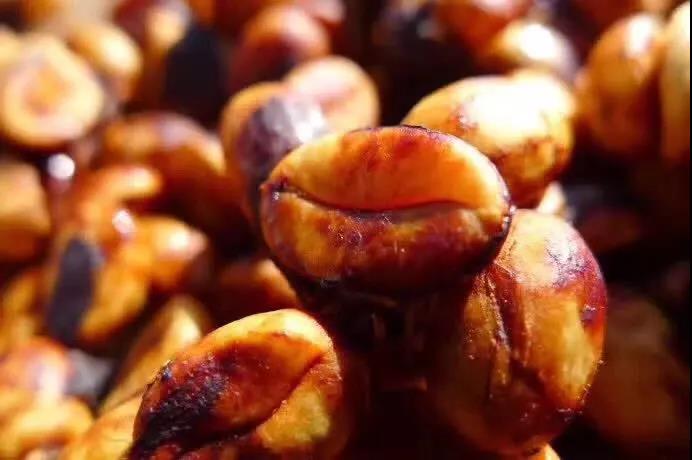
Finally, let's discuss honey processing. Honey-processed coffee beans deliver excellent flavor, with a good balance between acidity and sweetness. At the same time, because they undergo a natural drying process, the coffee beans' own aromas are amplified, and the body is fuller. Honey-processed green beans appear yellow, and roasted beans carry a distinct fermented aroma.
Honey processing was formally established in Central and South American regions such as Costa Rica and El Salvador. Its predecessor can be traced back to Brazil's pulped natural method (also called semi-washed). At the time, Brazil was limited by terrain and water resource conditions (dry climate) and generally adopted natural processing. But Brazilian farms were mostly commercial plantations, harvesting coffee mechanically and spreading the cherries on patios to dry, resulting in quality that was notably inferior to African raised-bed natural beans of the same period. To address this shortcoming, Brazilians tried removing the skin before sun-drying (Pulped Natural). This shortened the drying days on one hand, and on the other hand avoided the off-flavors from improper fermentation that Brazilian patio natural beans easily developed, greatly improving the coffee bean flavor.
The success of Brazil's pulped natural processing drew the attention of Costa Rica and other Central and South American countries that primarily used washed processing. While adopting Brazil's approach, Costa Rica took into account that its climate was not as dry as Brazil's (Costa Rica has more rainfall and shorter sunshine hours), and improved upon it based on the amount of mucilage retained and the length of drying time, ultimately evolving into the honey processing method and further subdividing it into more specific categories such as black honey, red honey, yellow honey, and white honey.
[Black Honey Processing] Almost no mucilage is removed, so drying takes the longest, requiring more than 14 days. During the process, to prevent drying too quickly, covers are used to block excessively strong sunlight, allowing sugar transformation to be more thorough.
[Red Honey Processing] 80% mucilage retained (specific practices vary by estate), sun-drying lasts about 12 days, and shade covers may also be used during the process.
[Yellow Honey Processing] 40-60% mucilage retained, exposed to maximum sunlight for drying, lasting about 8 days.
[White Honey Processing] 40-60% mucilage retained, spread thinner on drying beds during drying, with shorter drying time.
Front Street Strawberry Candy Geisha Blend Coffee Beans Region: Panama + Costa Rica Processing Method: Honey + Washed Altitude: 1600-1650m Variety: Geisha Brewing Flavor: Fermented and floral aromas on the nose; citrus and lemon acidity on entry; creamy sweetness emerges in the mid-palate; apple green tea sensation in the finish, with sugarcane and honey sweetness returning.
Front Street Coffee Strawberry Candy Roasting Record When Front Street Coffee received this Front Street Honey-Processed Strawberry Candy coffee bean, opening the packaging released a gentle floral fragrance and fresh apple aroma, so a medium-light roast was used to highlight this Front Street Honey-Processed Geisha coffee bean's captivating aroma and the sweetness brought by honey processing. Roaster Yangjia 800N semi-direct fire, batch size 300g. Preheated to 170°C, charged, adjusted heat to 120, opened damper to 3, turning point at 1'42", maintained heat; at 140°C kept heat unchanged, opened damper to 4. At 5'25" turned yellow, grassy smell disappeared, entering dehydration phase; at 166°C reduced heat to 100, damper maintained at 4. At 176°C adjusted heat to 80, damper unchanged.
At 8'00" dehydration complete, wrinkles and dark patches appeared on the bean surface, toast aroma shifted to coffee aroma, prelude to first crack—at this point pay attention to listening for first crack. At 8'37" first crack began, damper fully opened to 5, heat unchanged. After first crack developed for 1'28", dropped at 190.5°C.
The above content is compiled by CoffeeHunters, a coffee news website.


