







What shortens coffee bean freshness the most?
Light, temperature and oxygen are the three things that shorten coffee bean freshness. Roasted beans should stay in an airtight, opaque container away from heat, and they do not need refrigeration for everyday use. Green coffee bean storage is a separate matter: it is about steady humidity and temperature to prevent mold and insect damage.
One-way degassing valve bags work well for roasted coffee because carbon dioxide escapes while outside air does not get in, and vacuum-sealed canisters suit beans being used quickly. It also helps to separate peak flavor period from shelf life, since a type of coffee bean blue in label color says nothing about freshness. Twelve common pour-over beans differ widely in how fast they fade.
The freshness of coffee beans directly determines the flavor profile of a cup of pour-over coffee, and storage method is a key factor affecting freshness. This article will approach the topic from two preservation perspectives—green beans and roasted beans—analyze the three major flavor killers of light, temperature, and oxygen, introduce the respective advantages of one-way degassing valve packaging bags and vacuum-sealed canisters, and explain the difference between a coffee bean's peak flavor period and its shelf life. Finally, we compile twelve common coffee beans suitable for pour-over and their flavor characteristics, covering the Front Street Coffee daily-drinker series and more distinctive single-origin beans, to help you quickly find your preferred choice based on taste preferences.
How long is the shelf life of coffee beans? What storage method is more ideal? Do they need to be refrigerated? These questions puzzle many coffee enthusiasts.
The freshness of coffee beans directly affects the taste performance of a cup of coffee, and whether they are stored properly is an important factor affecting coffee bean freshness. What Front Street Coffee needs to emphasize is that coffee bean preservation mainly falls into two categories: one is the preservation of green coffee beans, and the other is the preservation of roasted coffee beans. Green bean preservation requires attention to storage humidity and temperature, avoiding mold and insect infestation; roasted coffee bean preservation requires attention to humidity, temperature, and oxidation, as oxidation accelerates the dissipation of flavor in roasted coffee beans.
How do you keep roasted coffee beans fresh?
First, let's understand the "killers" of coffee bean freshness
Coffee bean freshness "killer" ① Light
Coffee bean freshness "killer" ② Temperature
Coffee bean freshness "killer" ③ Oxygen
So what should be used to store coffee beans?
One-way degassing valve sealed packaging bags. Freshly roasted coffee bean packaging generally comes with a one-way degassing valve. The principle of the one-way degassing valve is that when the coffee beans inside the packaging continuously release carbon dioxide, building up a certain pressure inside the bag, the gas pushes the valve open and is expelled. Since the valve only opens when the pressure inside the packaging is higher than the pressure outside the bag, it can prevent outside air and moisture from entering while expelling gas. Using the original packaging to store coffee beans when no sealed container is available is an excellent choice, but remember to press the sealing strip firmly~
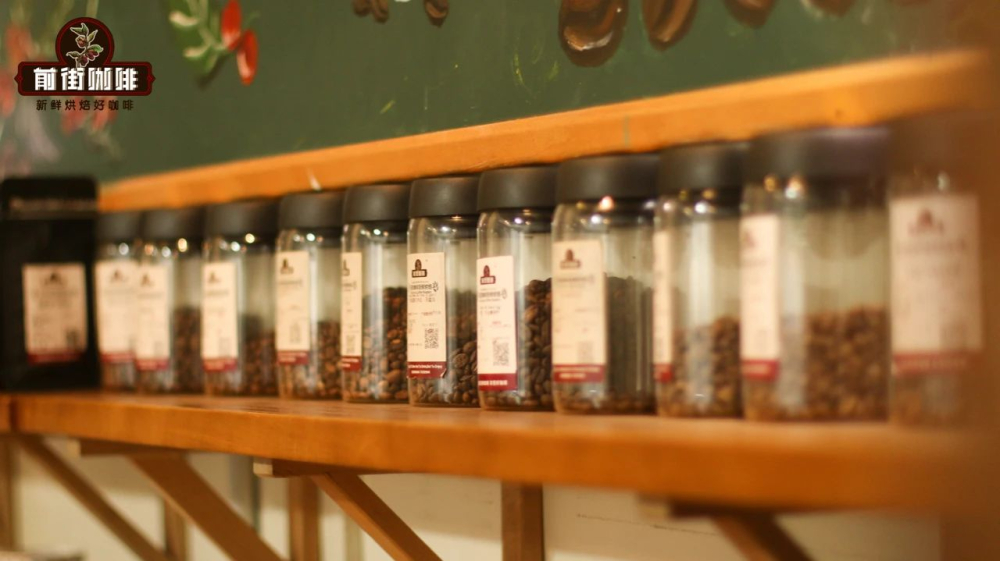
Vacuum-sealed canisters. A vacuum-sealed canister works by pressing the exhaust button after the lid is closed to expel the oxygen inside the canister and enter a sealed state. At this point, the coffee beans inside the canister will continuously release oxygen that cannot escape, and under the pressure of the vacuum environment, carbon dioxide will envelop the coffee beans, thereby slowing down the dissipation rate of coffee flavor.
How long can coffee beans be stored?
The coffee bean freshness mentioned above refers to the coffee bean's peak flavor period, which is the peak time when coffee beans present their flavor. The peak flavor period of coffee beans is within 4-30 days after the coffee beans have completed roasting. Coffee beans past their peak flavor period do not mean they can no longer be consumed; rather, even if the coffee beans are stored properly, the coffee's flavor will still dissipate. Therefore, coffee beans after 30 days may exhibit insufficient aroma, blandness, and other conditions. Setting aside flavor and aroma, the shelf life of roasted coffee beans is 365 days.
Twelve common types of pour-over coffee beans and their flavors
For entry-level pour-over coffee, the first choice is the Front Street Coffee daily-drinker coffee bean series, which can be used for daily pouring practice and also serves as a flavor-tasting teaching material.
If you like a rich, full-bodied taste with spice notes, buy Front Street Indonesia Mandheling; if you like floral notes and citric acidity, try Front Street Yirgacheffe; if you want creamy nutty aromas, buy Front Street Brazil Cerrado; if you pursue dark chocolate flavors, drink Front Street Colombia Huila; finally, there are Front Street Yunnan Small Bean and Front Street Costa Rica Tarrazu, which have soft acidity and nutty aromas.
For coffee enthusiasts, you can choose some single-origin coffees with more prominent flavors: for example, the floral Front Street Fruit Ding Ding, the creamy strawberry-flavored Front Street Huakui, the juice-packed Front Street Little Tomato, the fruit gummy-flavored Front Street Strawberry Candy, the passion fruit and grape-flavored Front Street Xizhua, and the well-balanced sweet, sour, and bitter Front Street Little Blue Mountain Paradise Bird.
The above content is compiled by CoffeeHunters, a coffee news website.


