







How are Jamaica Blue Mountain No. 1 beans graded?
Jamaica Blue Mountain No. 1 coffee beans must reach a screen size of 17/18 and stay below a 2 percent defect rate, and they are produced in small quantities. The Jamaica Coffee Board sorts coffee into three grades by growing altitude: Blue Mountain, Mountain, and Prime. The beans grow in Jamaica's Blue Mountain range, whose sea breezes, rainfall, and temperatures shape their mild, balanced profile.
The name comes from the blue glow that reflects onto the mountains when sunlight strikes the Caribbean Sea on clear days. Coffee itself originated in Ethiopia, and it later spread through Europe and the wider world before reaching the Caribbean. Clifton Mount Estate is part of this history, and a medium-dark roast pour-over is a common way to brew Blue Mountain.
Blue Mountain coffee is one of the first top-tier coffees many coffee lovers hear about, yet few truly understand its grading standards and the story of its origin. The Jamaica Coffee Board classifies coffee into three grades based on growing altitude: Blue Mountain, Mountain, and Prime. Among these, Blue Mountain No. 1 coffee beans must reach a screen size of 17/18, with a defect rate below 2%, and are produced in scarce quantities. This article will guide you through the origin of Blue Mountain coffee, its strict grading system, the history of Clifton Mount Estate, and the medium-dark roast pour-over parameters and flavor profile recommended by Front Street Coffee, helping you identify authentic Blue Mountain No. 1 coffee beans.
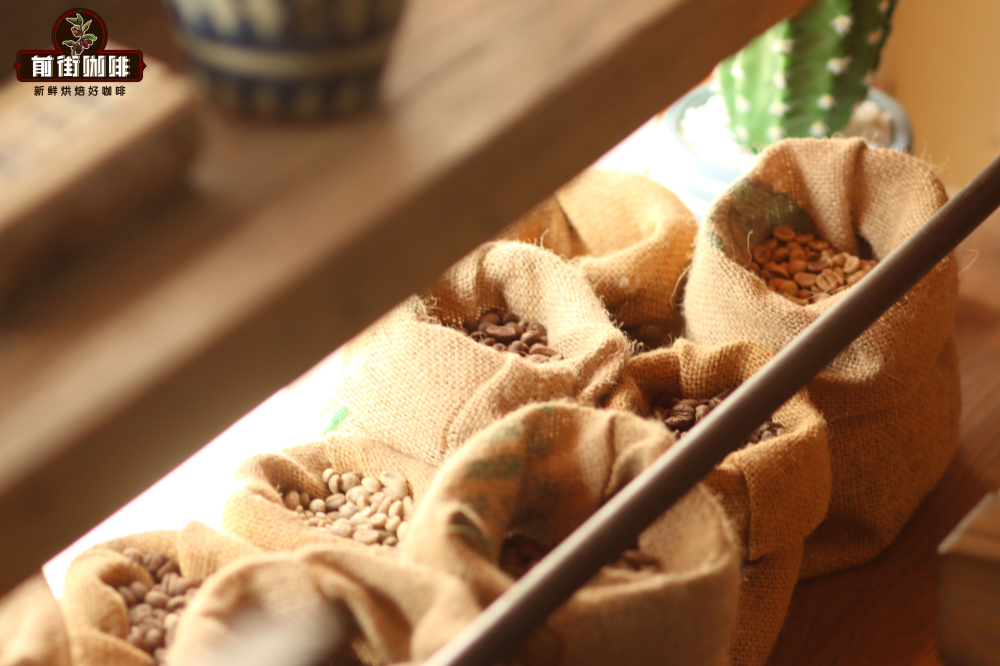
Many friends who are just getting into coffee often need to drink a few cups before they can tell the difference between Yirgacheffe and Sidamo. Yet there is one coffee that even if you haven't yet stepped into the world of specialty coffee, you've surely heard of—Blue Mountain coffee beans. Unlike those African-origin beans that win with bright fruity acidity, many seasoned coffee connoisseurs often ask baristas the same question when selecting beans at Front Street Coffee: Do you have Blue Mountain coffee beans here?
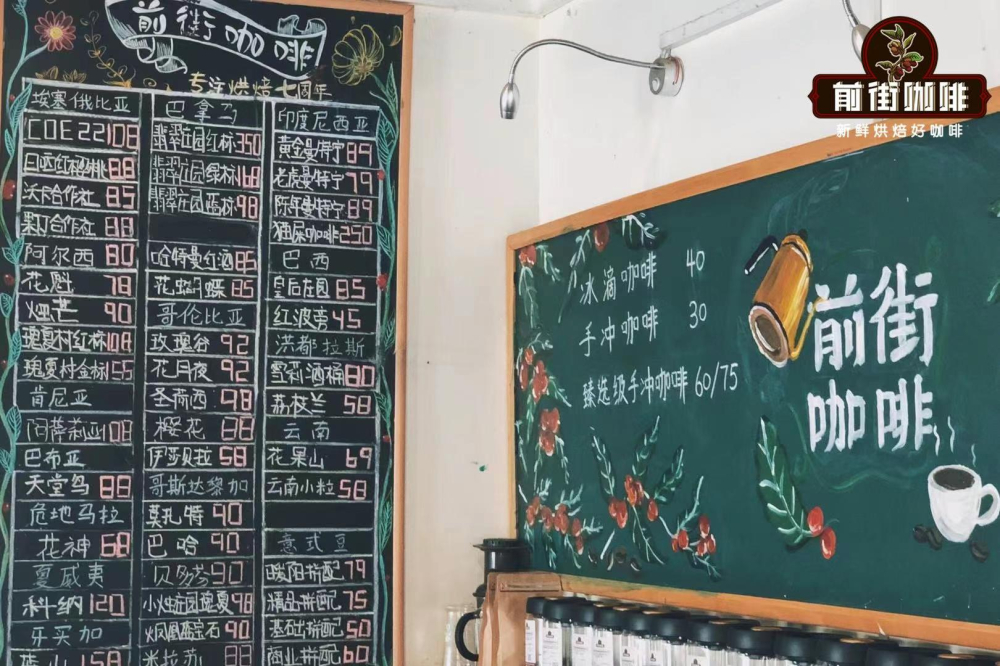
Jamaican Blue Mountain coffee beans, as one of the representatives of classic top-tier coffee, always occupy a special place on the blackboard at Front Street Coffee listing nearly fifty varieties. Some customers, after seeing the prices on the Front Street blackboard, will press further: How can you tell authentic Blue Mountain coffee beans?
Jamaica attracts tourists for many reasons: stunning beaches, azure skies, and a relaxed pace of life. When Front Street Coffee asks, "Do you know where Blue Mountain coffee beans come from?" few people's first thought is Jamaica.
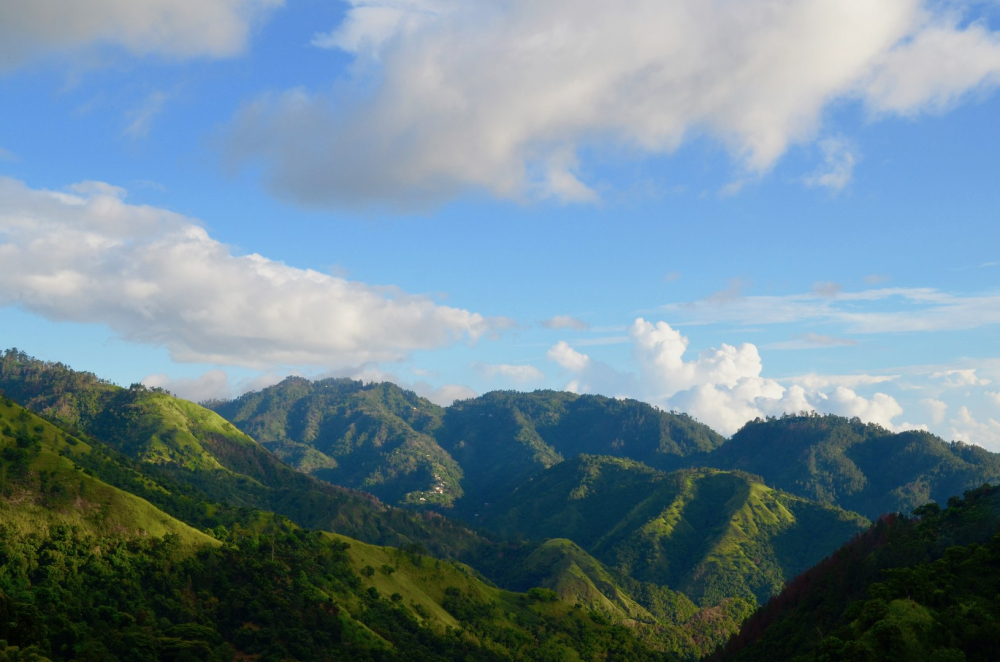
The true Blue Mountain coffee bean growing region is located in the Blue Mountain range of Jamaica. On clear days, when sunlight strikes the blue sea, the blue glow reflects onto the Blue Mountains, hence the name "Blue Mountain." The Blue Mountain range is surrounded by the Caribbean Sea, with gentle sea breezes, abundant rainfall, suitable temperatures, and vast dense forests. This favorable land has given the world top-tier coffee beans of exceptional quality.
Coffee originated in Ethiopia, Africa—this is well known. Although Jamaica possesses the natural conditions for growing coffee, the spread of local coffee cultivation was inextricably linked to European overseas colonial expansion. Around 1728, Jamaica's governor Sir Nicholas Lawes brought descendants of the European mother plant (Typica variety) from Martinique to the foothills of the St. Andrew area outside Kingston, Jamaica, after which coffee cultivation gradually spread throughout the Blue Mountain range.
The Jamaica Coffee Board places great importance on the country's coffee cultivation and has established very strict standards for the beans produced. Although Jamaica's coffee-growing area is small, meeting the standards for Jamaican Blue Mountain coffee beans is all the more difficult.
The Jamaica Coffee Board classifies coffee into three grades based on growing altitude: Jamaican Blue Mountain coffee requires a growing altitude above 1,000 meters; Jamaican Mountain coffee requires a growing altitude between 500 and 1,000 meters; Jamaican Prime coffee is typically grown below 500 meters.
Within the Jamaican Blue Mountain grade, there are further subdivisions into No. 1, No. 2, No. 3, and Peaberry. In other words, Jamaican Blue Mountain No. 1 coffee beans are the highest grade of Jamaican coffee, with a green bean screen size of 17/18 and a defect rate not exceeding 2%. For this reason, authentic Jamaican Blue Mountain No. 1 coffee beans have limited production and a relatively high price.
Some merchants, recognizing the high price of Blue Mountain coffee, take coffee beans also from the Americas, give them a dark roast, then label the packaging "Blue Mountain Flavor" or "Blue Mountain Blend," and sell them at the price of genuine Blue Mountain coffee beans. Customers often bring their beans—or even send purchase links—to Front Street Coffee baristas, asking them to help determine whether they are authentic Blue Mountain No. 1 coffee beans.
To distinguish them from coffee beans of other origins, Blue Mountain coffee beans exported from Jamaica come with special certificates, including a certificate of origin issued by the estate.
Additionally, Jamaican Blue Mountain green coffee beans are the only green coffee beans among all coffee-producing countries worldwide that are exported in wooden barrels. These certificates are also displayed in a corner of the Front Street Coffee shop.
Front Street Coffee's Jamaican Blue Mountain No. 1 green coffee beans come from Clifton Mount Estate. The estate has been producing coffee beans of exceptional quality and rich aroma since the 1790s and is one of the oldest coffee plantations. Clifton Mount Estate originally belonged to a gentleman who had lost his beloved wife. To avoid painful memories, he rented out the estate by the week to tourists hoping to experience the pristine forest scenery.
By the early twentieth century, Clifton Mount Estate had developed into one of the largest estates in Jamaica. But the ending is still poignant—the gentleman ultimately gave up managing the estate.
In 1978, the Sharp family took over Clifton Mount Estate. At the time of the takeover, the estate was bursting with life, almost indistinguishable from a primeval forest, with shrubs growing wildly and wild coffee trees scattered throughout, growing freely. In 1983, the Sharp family began building roads to the estate, but the uphill journey remained rugged and difficult. In 1984, Richard of the Sharp family resolved to become a coffee farmer, began managing the estate, and devoted himself to studying coffee.
Since 2003, Richard and his brother have traveled to major coffee-producing regions around the world to learn. Building on the traditional Jamaican fully washed processing method with slight improvements, they introduced high-end equipment to the estate and built one of Jamaica's largest coffee processing plants—BMCP.
Clifton Mount Estate is extremely strict about green bean quality control. In the Jamaican 2017/2018 harvest season evaluation alone, the estate received the annual trophy awarded by Jamaica's Ministry of Agriculture, being recognized as the estate producing the highest quality coffee beans.
Front Street Coffee has purchased multiple Blue Mountain No. 1 coffee beans from the Jamaican Blue Mountain region. After cupping comparisons, Front Street considers Clifton Mount Estate's Blue Mountain No. 1 coffee beans to be one of the most outstanding representatives in the region.
Front Street Coffee's roaster's approach to this bean is a balance of acidity, sweetness, and bitterness, with rich nutty notes and a full body, thus using a medium-dark roast. When Front Street Coffee baristas serve Blue Mountain coffee, considering the darker roast level of the beans, the brewing parameters are as follows:
Dripper: KONO
Water temperature: 88°C
Coffee dose: 15 grams
Coffee-to-water ratio: 1:15
Grind size: 75% passing through a Chinese standard No. 20 sieve
First pour 30 grams of hot water for a 30-second bloom, then from the center point, slowly pour in a thin stream in circular motions up to 125 grams. When the water level in the dripper drops to just before exposing the coffee bed, continue pouring in circular motions up to 225 grams. Total extraction time is about 2 minutes.
After Front Street Coffee brews Blue Mountain coffee beans using the above parameters, it presents rich nutty notes on entry, balanced acidity, sweetness, and bitterness, with a full body.
For more coffee bean information, please follow Coffee Workshop (WeChat public account: cafe_style)
For professional coffee knowledge exchange, please add WeChat ID: kaixinguoguo0925
The above content is compiled by CoffeeHunters, a coffee news website.


