







Is Pointed Bourbon Arabica, and Why Does It Cost So Much?
Pointed Bourbon is an Arabica variety, a mutation of Typica first grown on Réunion, then called Bourbon Island. Its beans are slender and pointed at both ends, and the tree yields very little, which is the main reason for its high price. The cup shows floral and fruity aromas with citrus and cream on the finish, and its caffeine content is low.
Bourbon coffee is usually grown at 3,500 to 6,500 feet. The ripe cherry turns bright red, while Yellow Bourbon comes from crossing Bourbon with other varieties. Compared with Geisha, Pointed Bourbon trades some of that variety's sharp jasmine lift for a mellower body, closer to aged tea, and it stays smooth rather than drying on the finish.
Pointed Bourbon is a coffee variety with a unique appearance and scarce yield. Its beans are slender and pointed at both ends, and it was once hailed as "the best coffee in the world." This article will analyze Pointed Bourbon's species classification, the reasons for its high price, and its flavor comparison with Geisha. At the same time, it will sort out the origin, spread, and characteristics of varieties such as Yellow Bourbon within the Bourbon species, and introduce product information such as Front Street Coffee Brazil Red Bourbon, helping coffee lovers fully understand the value and positioning of this legendary bean variety.
Produced on Réunion, the famous French volcanic island, Front Street Laurenna Pointed Bourbon coffee beans are slender in shape and pointed at both ends, hence the name "Bourbon Pointu." This bean variety has obvious floral and fruity aromas, with a finish blending citrus and cream flavors. The body is mellow, the caffeine content is low, and it is smooth and gentle to drink, like enjoying aged tea—not greasy or drying. It was once praised by Louis XV of the Bourbon dynasty as "the best coffee in the world," which made it widely famous.
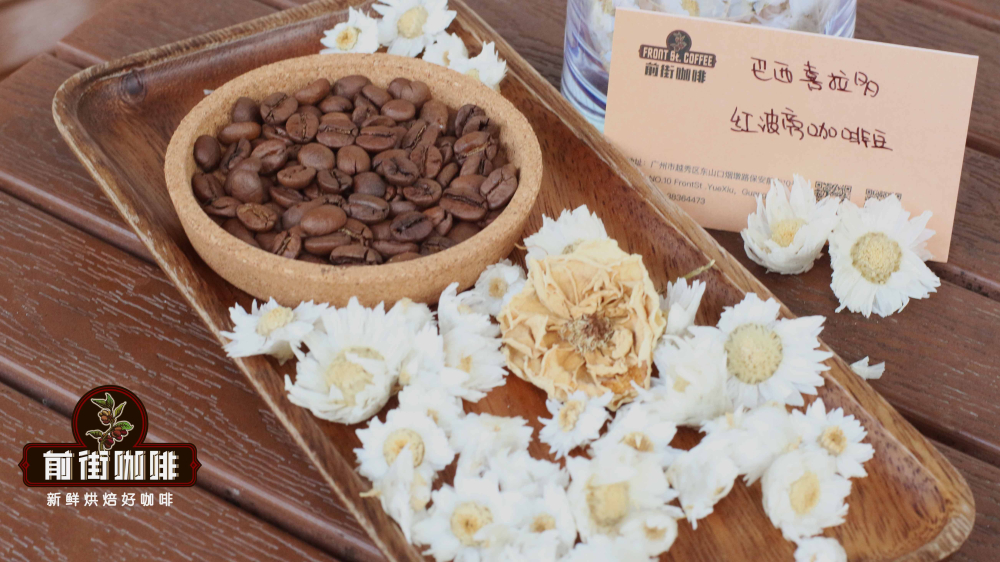
Bourbon (BOURBON, French: BOURBON) refers to coffee produced by coffee trees of the Bourbon cultivar of Arabica coffee. When buying Bourbon coffee beans, Front Street Brazil Red Bourbon is the first choice. It uses a medium-dark roast and presents obvious cream, nut, peanut, and caramel flavors. The mouthfeel is smooth and rich, suitable for pour-over, French press, moka pot, home coffee machines, and many other brewing methods.
Bourbon coffee was first planted on Réunion, which was also called Bourbon Island (LE BOURBON) before 1789.
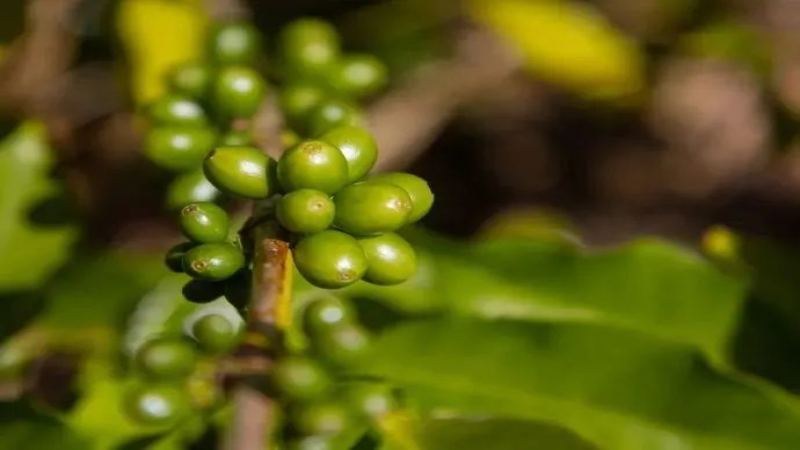
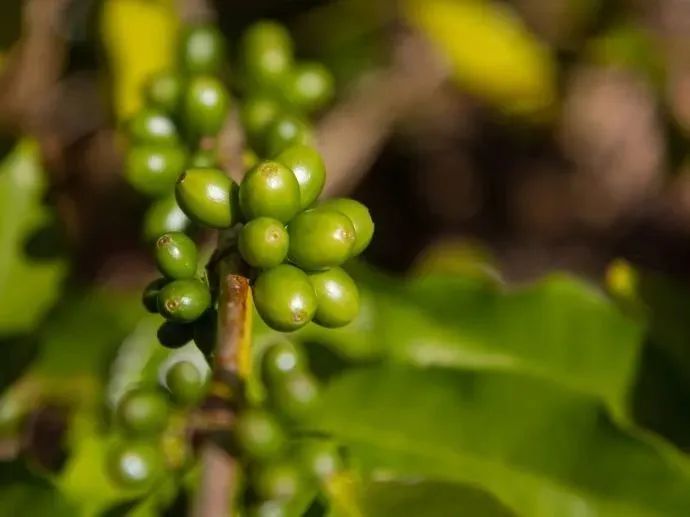
Afterward, the island was occupied by France and connected with the African continent and Latin America. Today, Réunion is still one of the most widespread Arabica coffee producing regions in the world. Bourbon coffee is usually grown at elevations of 3,500 to 6,500 feet (1,062–1,972 meters). The Bourbon variety originated on Bourbon Island in the Indian Ocean (now called Réunion Island). It is a secondary species produced by a mutation of Typica, and together with Typica it is among the oldest existing coffee varieties. The green fruit turns bright red when ripe, while Yellow Bourbon is produced by crossing the Bourbon variety with other varieties.
Because of its lower yield and relatively poor resistance to wind and rain, the Bourbon variety has not been widely planted. However, when grown at high elevations, it can perform exceptionally well in flavor, and in recent years it has become more common.
In the 18th century on Réunion Island (Bourbon Island), there appeared a variant coffee bean called "Bourbon Pointu" because of its narrow, elongated bean shape and pointed ends. Although its yield was extremely scarce, its captivating aroma and elegant sweetness quickly spread among French royalty and nobility. It is said that Louis XV was also one of the fans captivated by it, and the literary giant Balzac kept coffee close at hand while writing.
However, with the passage of time, climate change, and pest and disease damage, Bourbon Pointu, whose yield was already small to begin with, had no official record of production from Réunion Island after 1942. Having disappeared for more than half a century, Bourbon Pointu became a legend circulating in the coffee world and was even once considered by coffee fans to be an extinct legendary treasure. It was not until 1999 that a UCC team from Japan set foot on this land.
With the assistance of France's National Research Institute for Agriculture, Food and Environment, UCC established an expert team for international coffee investigation and research called the "Agricultural Survey Office," began gradually verifying the existence of Bourbon Pointu, and after a long period of field investigation, finally found the dream coffee trees suitable for cultivating seedlings, then immediately launched a series of restoration-related work.
In order to find the most suitable growing environment, UCC demarcated 107 plots across 87 farms for trial planting. Bourbon Pointu coffee beans, which are sensitive to soil texture, are very difficult to keep alive. They not only require careful attention at all times, but also take three to five years from planting seedlings to harvest, making restoration far more difficult than initially imagined. In 2006, they finally harvested the first batch of coffee beans that had been "extinct for many years," officially marking a record of successful restoration in history.
As soon as this bean variety, which had disappeared for many years, was produced, it astonished the entire coffee world. The osmanthus fragrance and citrus acidity at first sip, together with a delicate sweetness like toffee, spread through the mouth at the same time. The clear and translucent mouthfeel creates multiple layers of flavor and a lingering finish. In addition, its caffeine content is far lower than that of other varieties (only about 0.6%), so it can be called a natural low-caffeine tree species. As soon as Bourbon Pointu returned, it became the first choice for health-conscious coffee lovers.
Among the many coffee varieties in Brazil, Yellow Bourbon is one of the variants with quite outstanding quality. Ordinary Bourbon turns from green to yellow and then red, but Yellow Bourbon remains yellow in appearance. Grown at high elevations and washed, Yellow Bourbon has an excellent flavor. The aroma has a faint citrus note, balanced and gentle acidity, and contains rich fruity charm and hazelnut flavors. This coffee bean is extremely cost-effective, and its unique sweetness and body are better than those of the coffee beans commonly used in general Brazil coffees.
The Bourbon variety originated on Bourbon Island in the Indian Ocean (now called Réunion Island). It is a secondary species produced by a mutation of Typica, and together with Typica it is among the oldest existing coffee varieties. The green fruit turns bright red when ripe, while Yellow Bourbon is produced by crossing the Bourbon variety with other varieties. Because of its lower yield and relatively poor resistance to wind and rain, it has not been widely planted. However, when grown at high elevations, it can perform exceptionally well in flavor.
The above content is compiled by CoffeeHunters, a coffee news website.


