







Does Americano Coffee Really Help You Lose Fat?
Americano coffee does not directly burn fat. Plain black coffee is very low in calories, and the Americano, made from espresso diluted with hot or cold water and served without milk or sugar, has virtually none. Its diuretic effect may reduce water retention and swelling, but real fat loss still depends on exercise and a sensible diet.
The drink dates to World War II, when American soldiers diluted espresso with hot water to get more caffeine per serving. Its flavor sits between pour-over coffee and straight espresso. Adding coconut milk, mocha syrup or other extras is what pushes calories up to roughly the level of a bowl of white rice.
Among the many coffee drinks, plain black coffee is favored for its extremely low calorie content, while flavored coffees with added ingredients like coconut milk or mocha can send calories soaring. Front Street's most popular Americano, with no milk or sugar, is refreshing and invigorating, and is often mistaken for a shortcut to weight loss. In reality, it can only help with water retention and swelling; true fat loss still requires exercise and a sensible diet. This article begins with the origins of Americano, compares hot and iced Americanos in appearance, taste, and mouthfeel, explains the fact that both have virtually zero calories, and details Front Street Coffee's extraction parameters and espresso-to-water ratios for making Americano, finishing with several Front Street blend recommendations to help coffee lovers fully understand this seemingly simple drink.
Today, drinking a cup of coffee every day has become a daily habit for many people. Plain black coffee is extremely low in calories, and drinking it in moderation won't burden the body—it may even help boost metabolism. However, a large number of flavored coffees have emerged on the market, such as coconut milk lattes and mochas, which taste sweet and rich but contain nearly as many calories as a bowl of white rice. In other words, what sends calories out of control is not black coffee itself, but the extra ingredients added to it.
Take Front Street's most popular Americano as an example: it tastes refreshing, contains no milk or sugar, and has a moderate caffeine content, so it gives a quick energy boost after drinking. However, many consumers see it as a weight-loss weapon, assuming they'll get slim just by drinking it. In fact, Americano does have a diuretic effect that reduces swelling, but it is ultimately just a black coffee drink and cannot directly achieve fat loss. If you truly want to lose weight, you still need to combine it with exercise and a healthy diet.
Americano is a type of coffee whose flavor is less layered than pour-over coffee and less intense than espresso—it sits right between the two. Some also classify Americano as drip black coffee, and that description holds true as well.
Americano got its name during World War II, when American soldiers mixed espresso with hot water to take in more caffeine, thereby drinking the equivalent of two shots of espresso at once. "Americano" (English: Americano, Italian: Caffè Americano) is one of the most common types of coffee, and it can be made as black coffee with a drip coffee maker or by adding a large amount of water to espresso. However, when we talk about Americano in daily life, we usually mean the latter.
Front Street has always recommended drinking coffee from hot to cold so you can fully experience the flavor changes in the cup, because coffee tastes completely different at different temperatures. But as people's pursuit of coffee grows more diverse, various brewing methods keep emerging. Sometimes you just want a cold cup of coffee that satisfies both the need for refreshment and a caffeine boost—especially on a scorching summer day, when a cup of iced coffee goes down and feels incredibly satisfying. In the iced coffee family, besides iced Americano, recent years have seen the rise of cold brew, ice drip, and nitro cold brew, among other iced black coffees. So which is better, iced Americano or hot Americano?
Below we compare the taste differences between hot Americano and iced Americano:
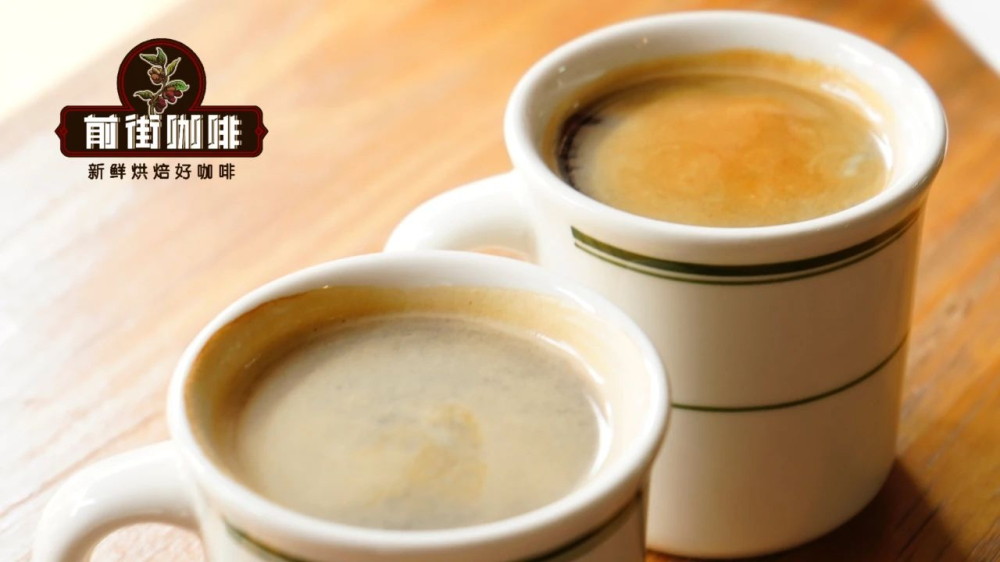
Hot water plus espresso is called a hot Americano, while adding ice cubes and cold water makes an iced Americano.
Hot Americano
Hot Americano can be made as black coffee with a drip coffee maker, or by adding a large amount of hot water to espresso. When making it, speed, convenience, and efficiency are the goals; the brewing method is fairly casual, and the taste is light, sweet, and refreshing.
Iced Americano
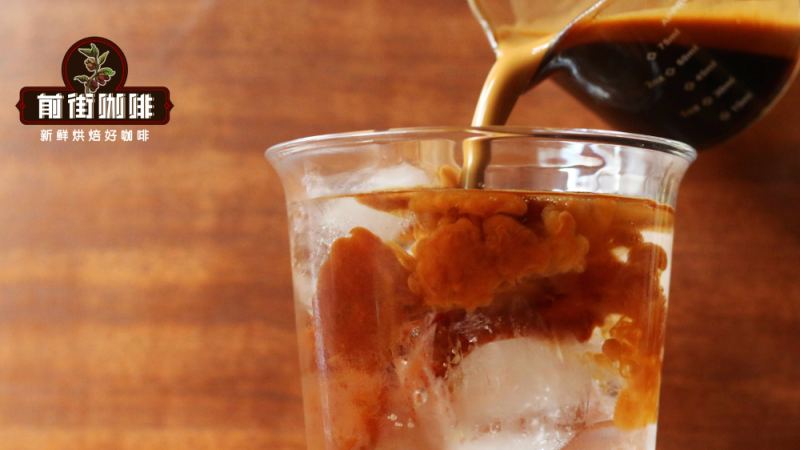
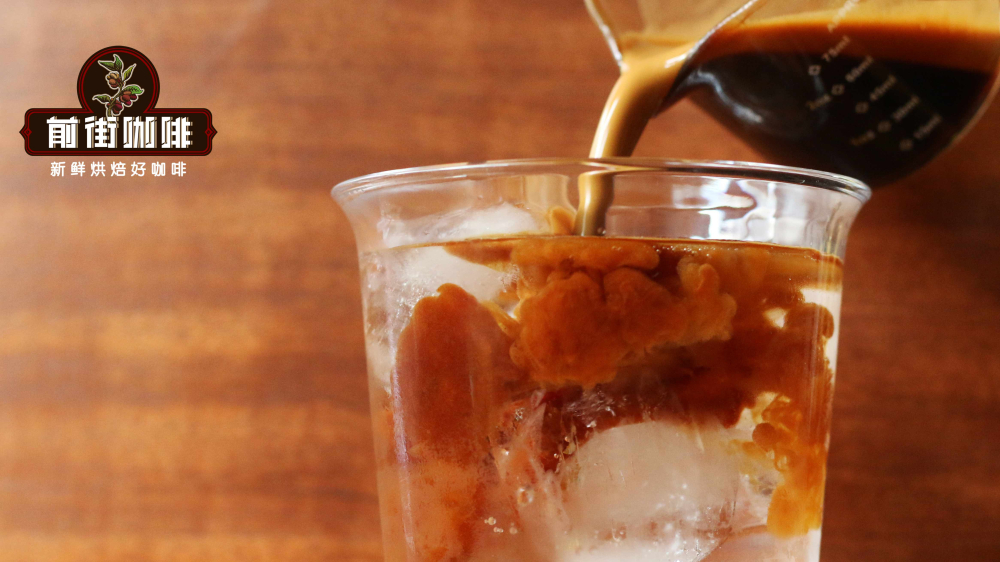
The most common iced coffee is undoubtedly the Iced Americano. It is made by extracting espresso at standard high temperature with an espresso machine, then pouring it over ice cubes and cold water; the ratio of ice to cold water can be adjusted to personal preference. The higher the proportion of water, the lighter the coffee taste.
Overall, the two differ in the following ways:
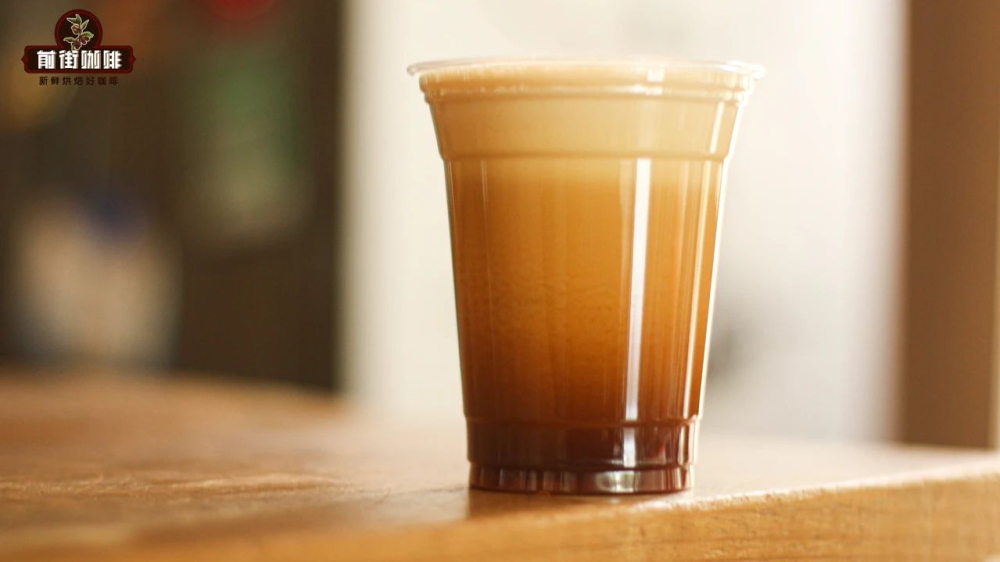
1. Appearance: Iced Americano has a lighter color, while hot Americano is almost transparent—you can even see the brown coffee at the bottom of the cup.
2. Taste: Iced Americano has a less intense coffee flavor, a stronger roasted, smoky note, and mild acidity. Hot Americano releases tannic acid during roasting, which combines with caramel to produce a slightly bitter sweetness.
3. Mouthfeel: Iced Americano has a mellow, astringent mouthfeel, while hot Americano typically offers a rich mix of bitter, sour, sweet, aromatic, and astringent notes.
There is no difference in calories between the two, because both consist of espresso plus water—one uses cold water and the other hot water. Espresso is extremely low in calories, almost negligible, so it doesn't matter how much hot or cold water is added; water itself has no calories, so Americano has virtually zero calories. The temperature of food has no bearing on its calories, just as ice cream and melted, heated ice cream liquid differ only in temperature while both remain high in calories.
How Front Street Coffee Makes Americano
Making Americano is actually very simple, mainly divided into two steps: the first is extracting the espresso, and the second is mixing the coffee liquid with water.
Although making Americano is simple, it greatly tests a barista's extraction skills. A delicious cup of Americano cannot do without its foundation—espresso, which is the first main step and the entire basis of a cup of Americano.
Using different coffee beans will result in a different final Americano flavor. So which Americano beans are worth recommending?
"Front Street Specialty Blend Coffee Beans" 75 yuan/454g: Colombian washed coffee beans plus Brazilian semi-washed coffee beans, presenting notes of nuts, dark chocolate, and caramel.
"Front Street Classic Blend Coffee Beans" 33 yuan/100g: Brazilian semi-washed coffee beans plus Indonesian Mandheling coffee beans plus Vietnamese coffee beans, with rich coffee crema and a full-bodied mouthfeel.
"Front Street Strawberry Candy Espresso" 43 yuan/100g: Costa Rican coffee beans plus Panamanian coffee beans plus Ethiopian coffee beans, with aromas of rose, strawberry candy, and glucose, prominent fruity sweet-and-sour notes, and a pleasant taste.
The part that makes the base is closely related to factors such as the grind size and dose of the coffee grounds, the machine's extraction pressure, water temperature, and the coffee-to-liquid ratio. If the coffee grounds are ground too coarse, it is easy to underextract, resulting in a sharp sourness; if too fine, it is easy to overextract and become bitter.
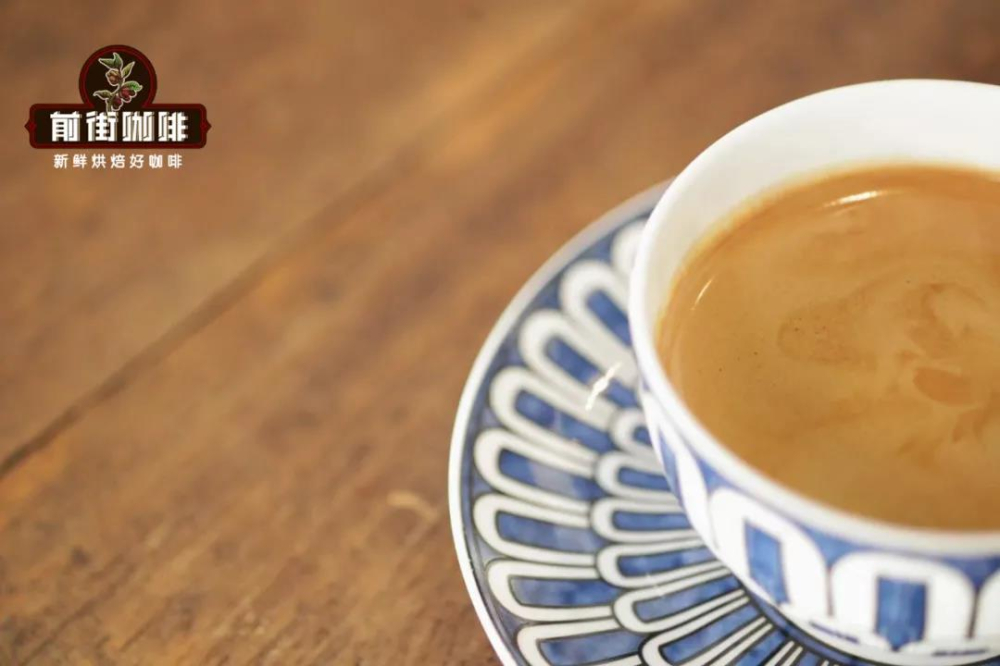
When extracting espresso, Front Street can fit 20 grams of coffee grounds according to the capacity of the portafilter basket used in the store. Front Street's espresso machine extracts at a pressure of about 9 bar and a water temperature of 93°C, yielding 40 grams of coffee liquid.
Front Street uses a Faema E98 espresso machine, with the following extraction parameters:
Pressure: 9 bar±2
Temperature: 90.5~96°C
Time: 20~30 sec
Coffee-to-water ratio: 1:1.7~1:2
Dose: 12g (single espresso) 20g (double espresso)
Extracted espresso yield: 20ml (single) 40ml (double)
After making the espresso base, only the final step of adding water remains. So what is the ratio for Americano?
In traditional Americano, the ratio of espresso to water is 1:8, but this ratio is not suitable for all coffee beans. Front Street Coffee once conducted a comparative test with 1:8 and 1:6, and found that the espresso made with this blend, when diluted with water at a 1:8 ratio, produced an Americano that was too light in flavor, with too short a finish and even a watery mouthfeel. At a 1:6 ratio, however, it highlighted the taste and characteristics of the Americano made with Front Street's Sunflower Warm Sun blend: whiskey notes and a dark chocolate finish, along with a good full-bodied feel.
The hot Americano's whiskey aroma is very lively, with unobvious acidity—it shows more hazelnut and caramel notes, and the coffee has high body.
The room-temperature Americano's aroma is less pronounced than the hot version, with soft acidity and a smooth mouthfeel. Because the espresso's crema layer has not been dispersed, it shows more of a vanilla-cream smoothness along with a nutty, caramel finish.
The iced Americano has the least aroma of the three, but the most pronounced acidity. On the palate there are whiskey notes, berry-like sweet-and-sour flavors, and a hazelnut-chocolate finish, with a refreshing, smooth mouthfeel.
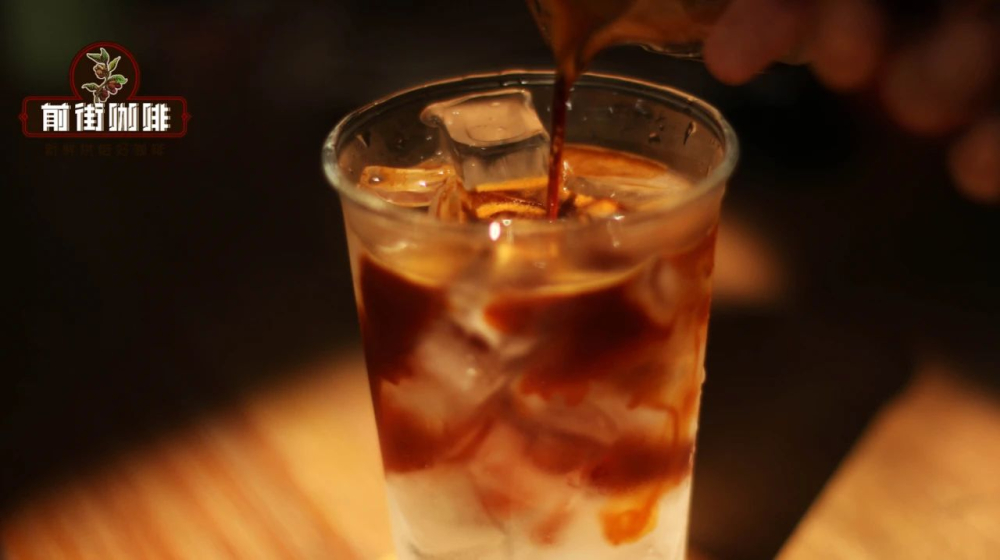
Human senses perceive taste differently at different temperatures, so the advantage of hot coffee is that you can perceive the taste changes from high to low temperature. At low temperatures, the tongue's perception of bitterness and sweetness decreases, while it becomes more sensitive to acidity. At the same time, quinic acid in coffee degrades into quinic acid lactone, so cooled coffee tastes more sour. If you want to taste the coffee's aroma and finish, Front Street recommends choosing a hot Americano; if you're after something cool and refreshing, iced Americano is a good choice.
Whether coffee tastes good, or which brewing method tastes better, mainly depends on personal taste—after all, everyone's preferences differ. Front Street has nearly a hundred single-origin and blended coffee beans from different regions, such as Front Street Ethiopian Huakui with floral and fruity notes, Front Street Brazilian Red Bourbon with peanut and nutty caramel notes, and Front Street Panamanian Geisha with citrus flavors, fully satisfying everyone's love for and exploration of coffee.
The above content is compiled by CoffeeHunters, a coffee news website.


