







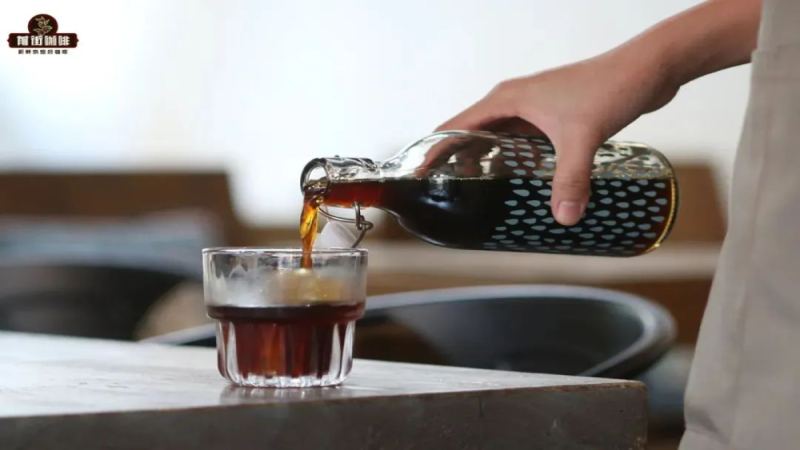
Why Does My Coffee Look Oily After Cold Brewing?
An oily film on cold brew is normal and does not mean the coffee has spoiled or the container was dirty. It forms because coffee oils that dissolve at high temperature condense when the brew sits in a low-temperature environment. This is a different mechanism from the crema on espresso, where insoluble oils trap carbon dioxide under heat and pressure.
Cold brew has a low barrier to entry: a sealable container, a cool place and several hours of soaking are enough. Because oils in coffee can pass through coarse filters, the surface sheen is more visible. Grinding coarser and adding a secondary paper filtration step after the initial strain clears the liquid and keeps the cup clean.
Cold brew coffee, with its advantages of simple operation and low cost, has become the preferred way for many coffee enthusiasts to make iced drinks at home. However, many people have found in practice that a layer of oil floats on the surface of a freshly made pot of cold brew, and they can't help worrying that the coffee has gone bad or the container wasn't washed clean. Where exactly does this oily sheen come from? In fact, its cause is completely different from that of the Crema on the surface of espresso. This article will focus on the low-temperature extraction principle of cold brew, explain the phenomenon of oil condensation, and share the complete operational details from filter selection to secondary filtration, helping you make a cup of cold brew coffee with a clear taste and full flavor.

Among home coffee-making methods, cold brew can be said to be the one with the lowest threshold. You only need to prepare a sealable container, then provide it with a sufficiently low-temperature environment, and after soaking for several hours, you can obtain a cup of rich and full-flavored coffee. The entire process does not involve complicated techniques or skills, and the cost is quite low. Even a complete beginner with zero experience can easily make a delicious iced coffee drink at home. Precisely for this reason, cold brew is both the daily first choice for lazy people and everyone's go-to remedy for beating the heat in midsummer.
Among the many questions everyone has reported, one friend mentioned that the cold brew they made looked not very clean, with a layer of oily sheen always floating on the surface of the liquid, and suspected that the coffee had already spoiled, or that it was caused by the equipment not having been thoroughly washed.
When it comes to "oil," many people first think of the layer of Crema on the surface of espresso. The formation of that layer of "oil" is because, under conditions of high temperature and high pressure, the insoluble oils in coffee wrap around carbon dioxide. The oil floating on the surface of cold brew, however, has a completely different cause—it is the state presented after coffee oils condense in a low-temperature environment.
As everyone knows, cold brew is almost indiscriminate about the soaking container. You can use a dedicated cold brew pot, or you can use an empty mineral water bottle, and a teacup with a lid works just as well—even a French press can do the job. In short, as long as the container is dry, clean, and sealable, any bottle or jar can be used as a "cold brew pot."
There are also many options for tools to filter out coffee grounds, such as the built-in filter of a cold brew pot, metal filters, filter paper, and flannel filter cloth. Different materials have different filter pore sizes, so naturally there are also differences in the coarseness of the particles they can intercept.
Taking the Japanese asvel brand cold brew pot used by "Front Street" as an example, its filter mesh aperture is 245 mesh, and the fineness is already relatively high, but fine powder and extremely fine powder will still pass through the filter. If a second filtration is not performed, a layer of flocculent oily sheen will float on the surface of the liquid. In terms of flavor, the difference from the filtered version is not very great when drinking, but when swallowing, the rough sensation left on the tongue surface is more obvious, and after finishing, some visible powder residue will also settle at the bottom of the cup.

In order to take the drinking experience to an even higher level, "Front Street" chooses to filter it again with denser filter paper. Filter paper of moderate thickness can not only effectively intercept fine coffee powder, but also block more than 80% of coffee oils. Only a small amount of oil that "successfully makes it through" will form an extremely thin oil film that is almost imperceptible to the naked eye.
The cold brew coffee liquid that has undergone secondary filtration is then put back into the refrigerator, sealed and refrigerated for 3–4 hours, allowing the flavor substances to further settle and mature. In this way, the cold brew has a very full flavor when it enters the mouth, a clearer mouthfeel, and a more transparent expression of acidity.
Of course, if you want to drink delicious cold brew, a bag of high-quality coffee beans is indispensable. If you prefer a refreshing taste, you can buy Front Street. Washed Giddingding Coffee or Front Street. Kenya Little Tomato; used for cold brew, they let you taste elegant white floral notes and berry tones. If you pursue a prominent fruity aroma, then Front Street Strawberry Candy and Front Street. Colombia Sidra are recommended; the cold brew they make is like fruit wine, mellow and sweet.
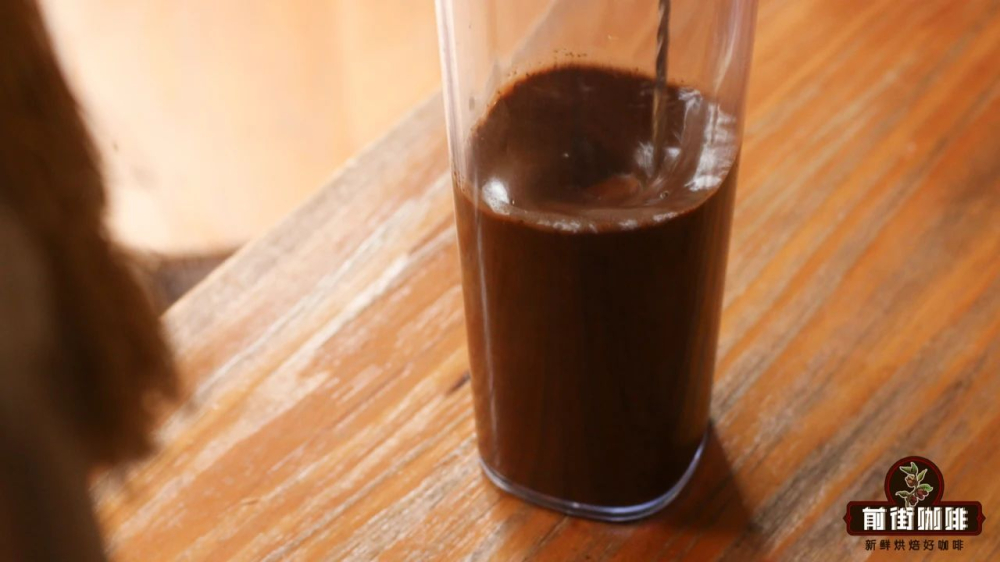
Finally, "Front Street" would like to remind everyone once more that after making cold brew each time, the cleaning of the equipment cannot be done carelessly. Many friends are used to taking the easy way out, giving it a casual rinse under the faucet after use and feeling that this counts as clean. But in fact, the condensed coffee oils often adhere to the built-in filter mesh of the cold brew pot. If it is used for a long time without being cleaned and wiped dry, a "rancid oil smell" will develop inside the pot, which in turn affects the cleanliness of the coffee. Therefore, when it is used frequently, it should still be carefully and thoroughly cleaned on a regular basis.
The above content is compiled by CoffeeHunters, a coffee news website.


