







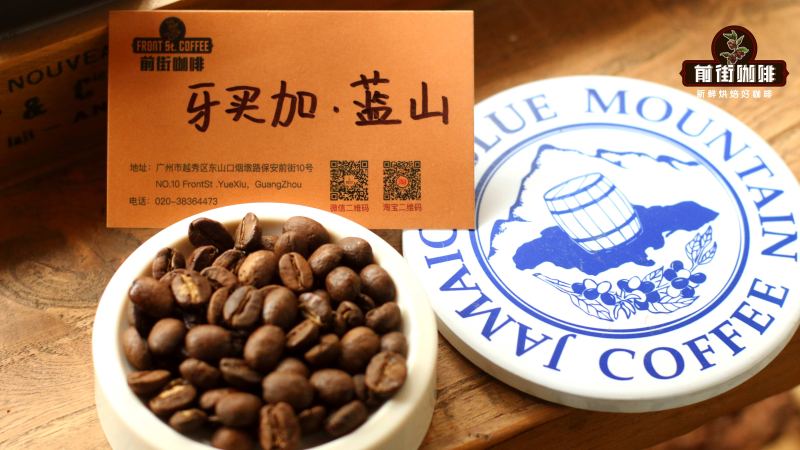
How Do You Tell Genuine Blue Mountain Coffee Apart?
Genuine Blue Mountain coffee comes only from four eastern Jamaican parishes at 1,000 to 1,700 meters, and it carries a CIB certificate. Front Street Jamaica Blue Mountain Clifton Estate No. 1 is a washed Typica from Clifton Estate at 1,310 meters, graded No. 1, with nutty, chocolate, toffee, cream and caramel notes. Anything labeled Blue Mountain flavor may contain no Blue Mountain bean at all.
Jamaican coffee is not automatically Blue Mountain coffee, and Blue Mountain coffee is not automatically No. 1. Beans grown in the four parishes between 500 and 1,000 meters are downgraded to Jamaica High Mountain, and below 500 meters to Jamaica Prime. The CIB system tracks estate, altitude and grade, which is what separates authentic Jamaica Blue Mountain No. 1 from aroma-style imitations.
The name Blue Mountain coffee is known to everyone in the coffee world, but not every coffee marketed under the "Blue Mountain" banner truly lives up to the name. This article starts from the product information of Front Street Jamaica Blue Mountain Clifton Estate No.1, systematically sorts out the origin definition, grade classification, and historical evolution of Blue Mountain coffee, and provides an in-depth interpretation of the special position of Wallenford Estate in the Blue Mountain industry. You will learn the essential differences between "Blue Mountain flavor," "Jamaica coffee," and "Jamaica Blue Mountain No.1," the altitude standards of the legally defined Blue Mountain production area, and how the CIB certification system safeguards the authentic quality of Blue Mountain coffee. Whether you want to understand how to tell genuine Blue Mountain coffee from imitations, or you are looking for a reliable pour-over Blue Mountain bean, this article is worth reading.
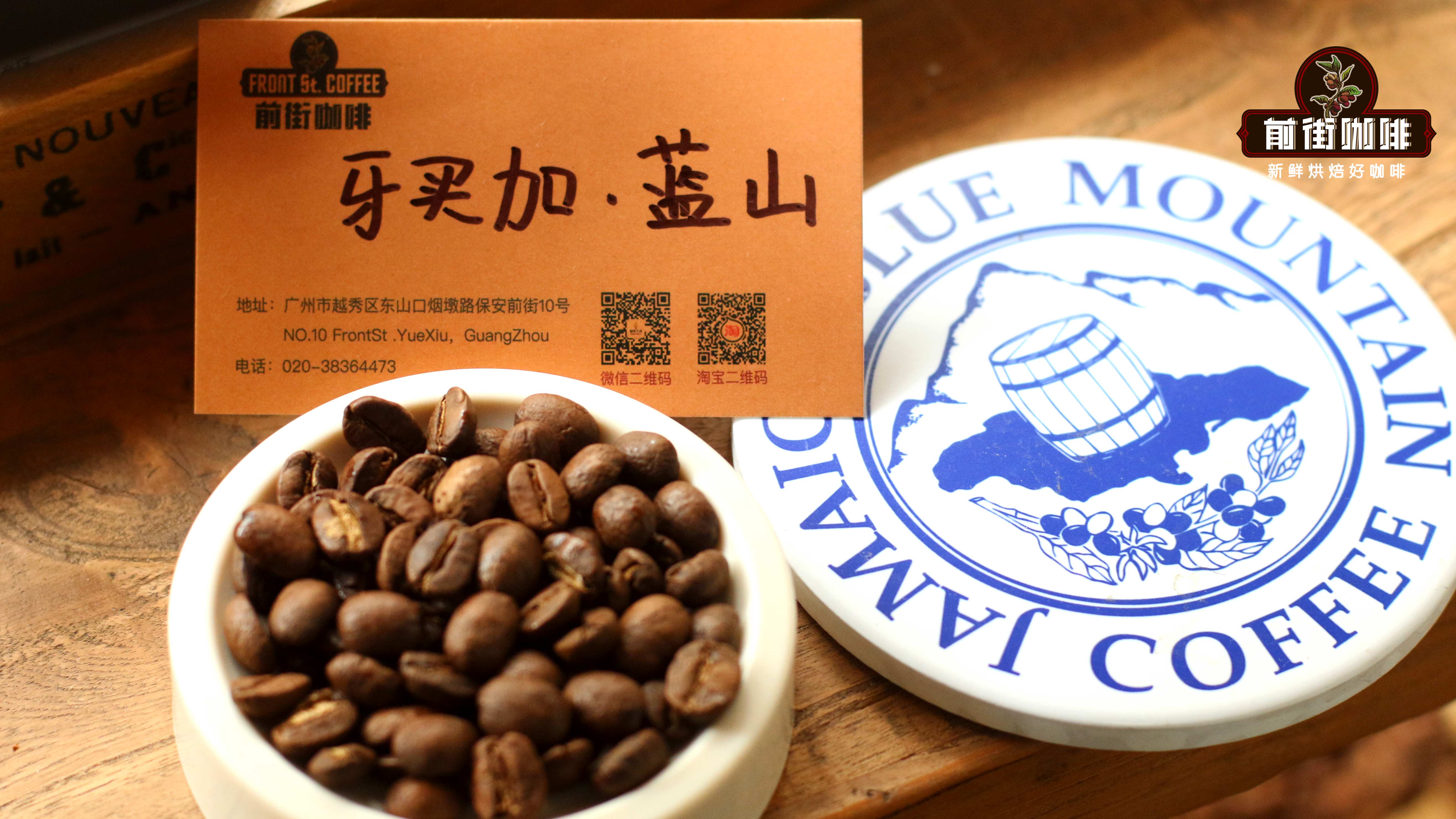
Single-origin pour-over coffee recommendation — Front Street specialty coffee beans — Front Street Jamaica Blue Mountain NO.1
Product name: Jamaica Blue Mountain Clifton Estate No.1 Blue Mountain Clifton No.1
Roast level: Medium-dark roast ●●○○○
Processing method: Washed
Origin: Jamaica
Region: Blue Mountain
Estate: Clifton Estate
Altitude: 1,310 meters
Variety: Typica
Grade: No.1
Flavor notes: Nuts, chocolate, toffee, cream, caramel
Introduction:
Front Street Blue Mountain Coffee —
Anyone who has come into contact with coffee has most likely heard of the famous Blue Mountain coffee and knows that the Blue Mountain produced in Jamaica is coffee of extremely high quality. But the question is: is the Blue Mountain in our cup really authentic Blue Mountain?
"Blue Mountain flavor": This name merely means the coffee's taste is close to Blue Mountain (in reality it may not even be similar), and some products may not contain a single genuine Blue Mountain bean.
"Jamaica coffee": Blue Mountain coffee is indeed produced in Jamaica, but conversely, not all Jamaican coffee is Blue Mountain coffee.
"Jamaica Blue Mountain coffee": Only this counts as genuine Jamaican Blue Mountain coffee. However, to bear the name Jamaica Blue Mountain No.1, several conditions must still be met.
Where does the name Blue Mountain coffee come from
The Blue Mountain range sits in the eastern part of the island of Jamaica, surrounded by the Caribbean Sea. On clear days, sunlight strikes the azure sea, and the peaks reflect the dazzling blue glow of the seawater, hence the name "Blue Mountain." This mountain range has fertile volcanic soil, crisp air, abundant humidity, and is shrouded year-round in mist and rain. It is precisely these natural conditions that have given rise to the world-renowned Jamaica Blue Mountain coffee and made it one of the most expensive coffees in the world.
Coffee produced in the Blue Mountain range is divided into three grades by altitude: Jamaica Blue Mountain, Jamaica High Mountain, and Jamaica Low Mountain or Jamaica Supreme. Coffee grown below 1,500 feet is called Jamaica coffee, that grown between 1,500 and 3,000 feet is called High Mountain coffee, and only coffee grown at 3,000 to 5,000 feet can be named Blue Mountain coffee. In terms of price, Blue Mountain coffee is several times more expensive than High Mountain coffee. Blue Mountain coffee itself is further subdivided into No.2 and No.1, of which No.1 is the highest grade.
At present, only a few estates produce top-grade Jamaica Blue Mountain No.1, including Wallenford, Mavis Bank, Old Tavern, and RSW Estate, among which Wallenford is the only special Jamaican state-owned processing plant. The legally defined production area for Blue Mountain coffee is 3,000 to 5,000 feet. Wallenford Estate selects only Blue Mountain coffee beans grown above 4,000 feet for processing. Moreover, the Blue Mountain coffee produced by Wallenford Estate is hailed as "Superior Quality." In the assessments of coffee connoisseurs worldwide, Wallenford Estate ranks among the best in quality management, consistency, reputation, and flavor.
What does Wallenford Blue Mountain No.1 taste like? The common descriptions are nothing more than acidity, sweetness, and rich aroma without bitterness, outstanding quality, and an impression that lingers long after drinking.
Jamaica Blue Mountain Wallenford Estate No.1 (Wallenford estate jamaica blue mountain coffee)
Front Street Jamaica Blue Mountain has a subtle, fragrant, and sweet character, with a body as rich as wine, and has long been a favorite of Japanese coffee connoisseurs. Its output is scarce, it is a representative of specialty coffee, and it is also one of the most expensive coffees in the world. But not all coffee produced in Jamaica can bear the Blue Mountain mark; it must be certified by the Jamaica Coffee Industry Board, produced in a specific Blue Mountain administrative region, and reach a certain altitude in order to obtain Blue Mountain certification. This product comes from the long-established Wallenford washed processing plant and carries the typical elegant, fragrant, and sweet Blue Mountain flavor. (Barrel-packed Blue Mountain, medium-light roast, displays perfect balance and flawless character, revealing a crisp mouthfeel and a long finish.)
In 1728, coffee was first introduced to Jamaica for cultivation. Thanks to Jamaica's suitable soil, climate, and sunlight conditions, the coffee quality was outstanding, and the cultivation area gradually expanded from St. Andrew to other regions.
In 1737, Jamaica's annual coffee production reached 83,000 pounds.
Over the following 40 years, a large number of private estate owners emerged, and by 1800 Jamaica had 686 coffee-growing estates.
The abolition of the slave trade caused labor costs to soar, and estate owners could not bear the cost pressure. By 1850, the number of coffee-growing estates had shrunk to 186.
In 1900, the Jamaican government formulated its first coffee quality standard, but it was resisted by many private estate owners and ultimately failed to be implemented.
Afterward, due to the lack of binding quality standards, the export quality of Blue Mountain coffee varied greatly, seriously damaging its international reputation. By 1943, Canada, then a major importer of Blue Mountain coffee, refused to import it.
In 1944, the Jamaican government recognized the urgency of regulating the Blue Mountain coffee industry and formulated three regulatory recommendations:
1. Centralize the processing of Blue Mountain coffee beans,
2. Establish quality standards for Blue Mountain coffee,
3. Establish the CIB, specifically responsible for market organization, management, and export supervision.
In 1948, the world-renowned Jamaica Coffee Industry Board (CIB) was officially established, and at the same time the Jamaican government passed legislation for the Jamaica Blue Mountain Coffee Industry Management Act. The core responsibility of the CIB is to improve the quality of Blue Mountain coffee through management and supervision and to rebuild its global reputation.
At this time, the legislation had already laid down strict provisions for the definition of Blue Mountain coffee:
1. Granting four legally designated coffee estates, including Wallenford, the right to centrally process Blue Mountain coffee beans in order to ensure Blue Mountain coffee quality
2. Grown in the 3,000–5,000 ft Blue Mountain region
3. Blue Mountain coffee exports are graded: No.1/No.2/No.3/Peaberry
Starting in 1960, some management functions were assigned to the oldest and only state-owned Blue Mountain coffee estate — Wallenford Estate. Wallenford Estate became synonymous with the CIB, shouldering the mission of improving Blue Mountain coffee quality, formulating management rules, and reforming coffee industry management, and its estate managers were also appointed by government departments. All Blue Mountain coffee exported from Jamaica was also named: Wallenford Estate Jamaica Blue Mountain Coffee, that is, the highest-grade Blue Mountain coffee.
Since 1827, in the eyes of coffee connoisseurs around the world, Wallenford Estate has had a history of nearly 300 years and is Jamaica's oldest Blue Mountain coffee estate. The first place in Jamaica where Blue Mountain coffee was planted was Wallenford Estate. It has been given the national-treasure title Wallenford Blue Mountain Coffee, that is, the highest-grade Blue Mountain coffee. Its output is limited, it is usually selected by royalty and nobility, and its price is high. Today, Wallenford is Jamaica's most stable and most trusted Blue Mountain coffee processing estate, world-famous for its extremely high-quality Blue Mountain coffee.
Jamaica is world-renowned for producing Blue Mountain coffee, and at the same time, located by the Caribbean Sea, it is frequently hit by hurricanes. The hurricanes of the 1940s and 1950s dealt devastating blows to the vast majority of Jamaica's Blue Mountain estates, with losses to coffee trees, estate facilities, roads, and more far exceeding what estate owners could bear. In order to revive the production capacity of Blue Mountain coffee, the government made the decision to support and sell Blue Mountain estates, and coffee investors from Japan, the United Kingdom, and other countries fortunately obtained the operating rights to most of Jamaica's Blue Mountain estates. Even so, the Jamaican government did not completely give up its reserved authority over Blue Mountain coffee (a Jamaican national treasure). While selling and privatizing most estates, WALLENFORD ESTATE was the only estate retained and directly managed and operated by the Jamaican government, with the strictest quality control process. It did not excessively pursue commercial operations, but took it as its duty to protect the reputation of Jamaican Blue Mountain coffee.
1. The Jamaica Coffee Industry Board's officially registered logo, used for certification and inspection of exported Jamaican Blue Mountain coffee;
2. The Jamaica Coffee Industry Board (CIB) officially registered BLUE MOUNTAIN COFFEE? trademark, marking the outer packaging of authentic Jamaican Blue Mountain coffee;
3. The WALLENFORD COFFEE COMPANY registered trademark, marking the outer packaging of WALLENFORD Blue Mountain coffee.
With the globalization of Jamaican Blue Mountain coffee's reputation and the global introduction of Jamaican Blue Mountain coffee cultivation, many counterfeit Blue Mountain flavor coffees appeared on the market, seriously affecting the outstanding reputation of authentic Blue Mountain coffee. In recent years, the Jamaican government has strongly advocated that Blue Mountain coffee be roasted locally in Jamaica and exported in original packaging rather than exported as green beans, in order to avoid the impact of counterfeit Blue Mountain flavor coffees. The importance of this measure lies in enabling the Jamaica Coffee Industry Board to monitor every stage of Blue Mountain coffee exports and ensure the authenticity and high quality of Blue Mountain coffee.
As the only special Jamaican state-owned estate, WALLENFORD has been entrusted by the Jamaican government with even more missions, including:
1. Jointly undertaking with the CIB (Coffee Industry Board) the management and regulation of Jamaican Blue Mountain coffee quality
2. Guiding all Jamaican Blue Mountain coffee estates in advancing management reform.
In fact, part of the CIB's function of supervising Blue Mountain coffee quality is located at WALLENFORD. For example, there is a consensus within the coffee industry that obtaining a WALLENFORD import quota for Blue Mountain No.1 is equivalent to the CIB quota indicator for that country or company.
Wallenford Estate selects only the best Blue Mountain coffee cherries for processing, and its quality process control is especially strict. In the evaluations by coffee connoisseurs worldwide of all Jamaican Blue Mountain estates, Wallenford performs best in quality management, consistency, reputation, and flavor.
In the Blue Mountain region, the legally defined production area for Blue Mountain coffee is 3,000–5,000 feet, and Wallenford selects only Blue Mountain coffee cherries grown above 4,000 feet for processing. Moreover, among Jamaica's four legally designated Blue Mountain coffee processing plants, Wallenford, together with Mavis Bank, Silver Hill, and Moy Hall, accounts for 90% of Jamaica's Blue Mountain coffee export volume, and the Blue Mountain coffee produced by Wallenford and Moy Hall is hailed as "Superior Quality" (absolute quality).
The above content is compiled by CoffeeHunters, a coffee news website.


