







How does a moka pot brew coffee, step by step?
A moka pot brews by heating water in the lower chamber until steam pressure pushes it up through the coffee bed and into the upper chamber, at roughly 1 to 2 bar, similar to a small espresso machine. Bialetti launched the first one in 1933, and the device is now a fixture in Italian homes because it is simple and quick.
Fill the lower chamber to the valve with hot water, add medium-fine grounds level in the filter basket without tamping, and set the pot on medium heat with the lid open. Brewing usually finishes in about four to five minutes, and pulling the pot off the heat as the flow turns pale and sputtering prevents the burnt, bitter notes that come from over-extraction.
Since the moka pot was invented by Bialetti in 1933, it has become an essential coffee device in Italian households thanks to its 1-2 bar extraction pressure and convenient operation. This article will systematically explain how to use a moka pot to make a rich, full-bodied espresso, covering its structure and principles, usage precautions, coffee bean selection, and specific brewing steps. It also combines Front Street Coffee's blend and single-origin bean recommendations to help enthusiasts avoid common pitfalls and master the entire process from distributing the grounds to cooling, making moka pot results more stable and better tasting.
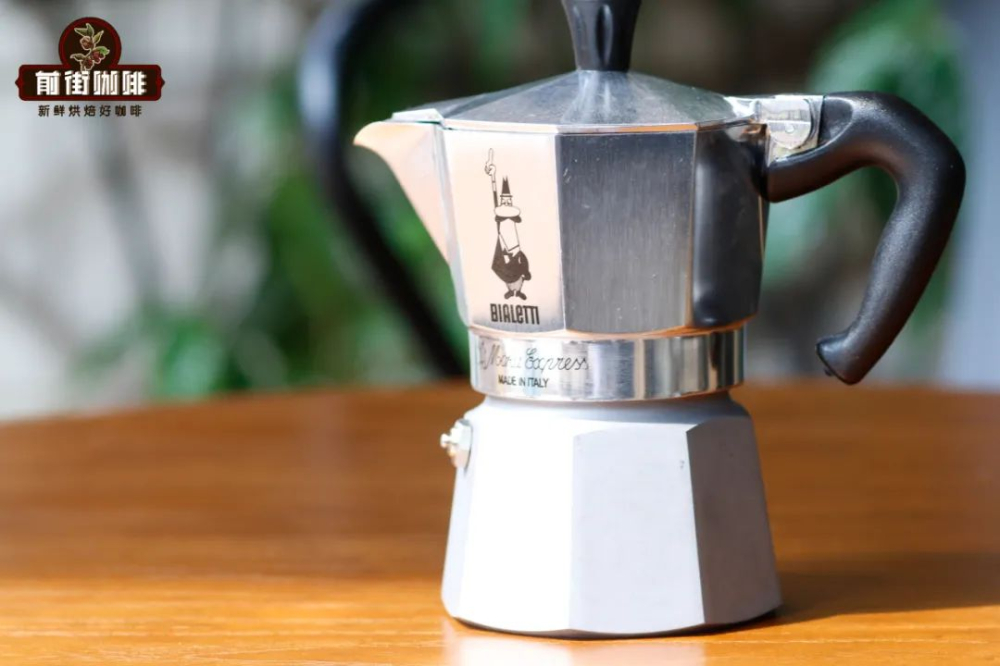
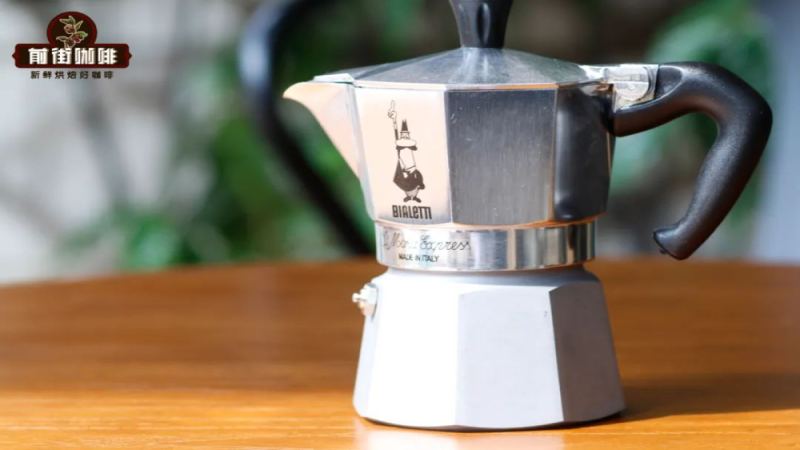
In 1933, Bialetti launched the world's first moka pot. This device generates pressure through heating to quickly extract the flavor compounds from coffee, with pressure at around 1-2 bar, equivalent to a small espresso machine. Because it is easy to operate, it has become virtually standard in every Italian household.
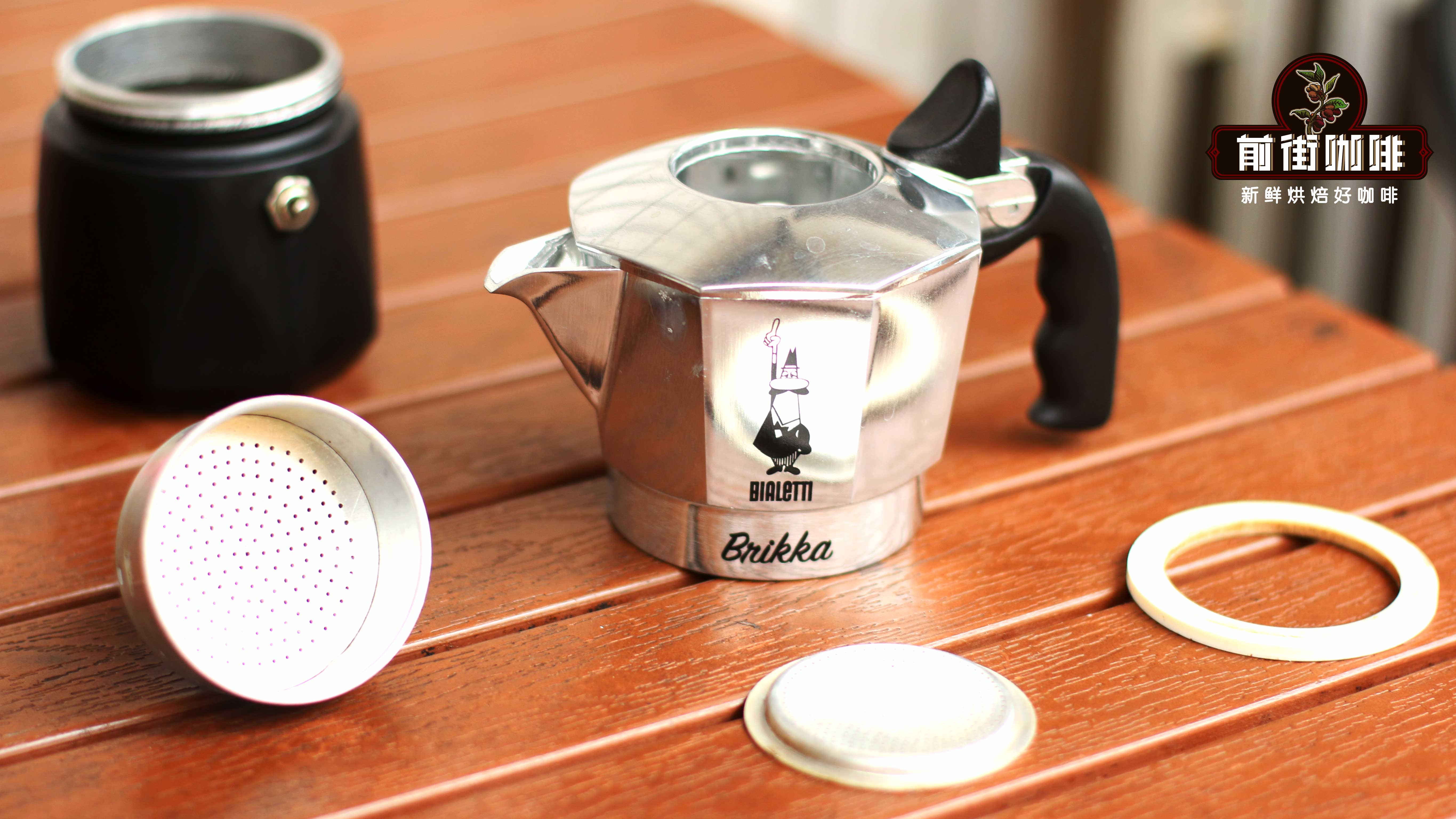
From left to right: lower chamber, filter basket, upper chamber, gasket, rubber ring
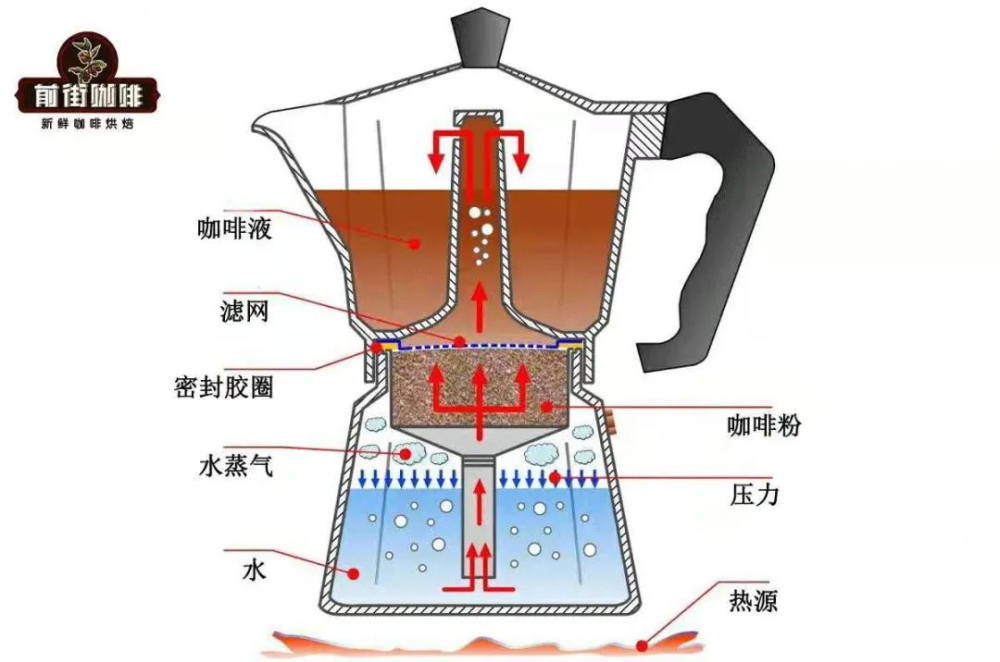
A moka pot consists of the upper body, the middle filter basket, and the lower base, and comes in different capacity specifications. By structure and function, it can also be divided into single-valve and double-valve types. Front Street uses a Bialetti three-cup single-valve moka pot. The lower chamber holds water, the filter basket holds coffee grounds, and the upper chamber collects the brewed coffee. During operation, the water in the lower chamber is heated, generating steam pressure, and the extraction direction is from bottom to top. When the pressure is sufficient, hot water is pushed upward through the layer of coffee grounds in the filter basket. The coffee bed creates resistance to the water flow, and ultimately the hot water breaks through this resistance and surges into the upper chamber as rich coffee liquid.
The design principle of the moka pot is to use a heat source to heat the cold water and air in the lower base so they expand from the heat and are gradually pushed into the upper chamber. As the hot water rises, it first passes through the funnel-shaped filter basket filled with coffee grounds, thereby achieving extraction.
At the same time, a filter screen blocks coffee grounds to keep the liquid clear, while the outlet of the upper chamber uses a height difference to prevent the liquid from flowing back down. Therefore, when using a moka pot, the factors we can control are mainly the amount of coffee grounds, the grind size, and the amount of water in the lower chamber.
Components of a moka coffee pot
A moka pot consists of three parts: the bottom water chamber (lower chamber), the middle coffee grounds basket (filter basket), and the top coffee liquid chamber (upper chamber).
The lower chamber is responsible for holding water, heating, and pressure release; in the middle there is a filter basket for coffee grounds, and a metal channel connects the upper, middle, and lower parts. The upper chamber is responsible for holding the extracted coffee liquid, and when turned over you can see it is composed of an outer shell, a white rubber ring, and a metal gasket.
After assembling and tightening the three parts, by heating the bottom of the pot, the pressure at the bottom increases, causing the hot water inside to flow upward through the metal tube connected to the middle filter basket, through the coffee grounds layer, and finally out through the guide tube of the upper chamber into the top coffee liquid chamber. This is the entire process of moka pot espresso extraction.
Although the moka pot looks simple in composition, you need to pay attention when using it!
1. When filling with water, the water level must not cover the safety valve of the lower pot (the device that looks like a nut) . The safety valve prevents the coffee pot from exploding due to a blocked extraction channel caused by coffee ground too fine. If the safety valve is covered by water and the extraction channel is also blocked, the consequences of a high-temperature coffee pot exploding are unimaginable.
2. The coffee grind should not be too fine. If the coffee grounds are too fine, it can easily lead to failure to extract coffee liquid, or extraction that is too slow and causes over-extraction. It is recommended that the ground coffee be about the same as fine granulated sugar.
3. After adding coffee, you need to distribute the grounds, but Front Street does not recommend tamping them flat . Many friends are used to using a tamper to flatten the coffee puck after distributing the grounds evenly. For a moka pot, it is recommended not to tamp the coffee grounds flat; instead, it will make the coffee bed too tight and create more uncontrollable pressure, causing "channeling" and uneven extraction. Water flow will have difficulty passing through the coffee bed and will tend to extract unevenly.
4. After the coffee is extracted, wait for the moka pot to cool naturally, then unscrew it clockwise , remove the coffee grounds, and rinse each part with clean water; do not use detergent, and do not boil or soak it . Aluminum moka pots cannot be washed in a dishwasher, while stainless steel moka pots are suitable for it . In addition, regardless of the material of the moka pot, do not use steel wool or abrasive cleaning products , to prevent scratching the surface of the moka pot.
5. To prevent blockage or flavor transfer, Front Street recommends that you also remove the rubber ring and gasket during cleaning and rinse them briefly with clean water . Problems such as aging and shrinking of the sealing rubber ring will cause splashing and leaking during coffee extraction, so it needs to be properly cleaned and maintained after each use. It should be noted that when removing these two parts, use a sharp tool to reach into the inner side and pry open the circular ring, then take out the gasket used to filter coffee grounds.
Moka pot coffee bean recommendations
When making coffee with a moka pot, the most important thing is to use freshly roasted coffee beans. All coffee beans sold by Front Street are shipped within 5 days after roasting is completed, 100% freshly roasted, with 24-hour shipping support.
Coffee made with a moka pot is relatively strong, so it is not recommended to choose light-roast coffee beans. This is because the acidity in them may show obvious sharp sourness under high-pressure extraction and high concentration. At the same time, because the roasting time is short, more full-bodied substances are not produced, and the extracted coffee will also be relatively thin.
The coffee extracted from a moka pot is characterized by being rich, solid, and full-bodied, so Front Street recommends using espresso blend coffee beans / medium-dark roast coffee beans. If light-roast coffee beans are used, the extracted coffee will show sharp sourness and bitterness because the temperature is too high and the concentration is high, so medium-dark roast beans are the most suitable.
If you are a beginner trying a moka pot for the first time, buy Front Street. Front Street Classic Blend. To pay tribute to the once-popular "Mamba Coffee," Front Street launched this espresso bean that combines Indonesian Mandheling beans and Brazilian beans. It has the wild aroma of Mandheling and the smooth mouthfeel of Brazilian beans, playing a complementary and harmonizing role in flavor. Front Street Classic Espresso Blend adds Robusta to the Mamba recipe, fully enhancing the coffee's crema and making the body of the espresso stronger. It is suitable for home preparation and for latte art.
If you want to drink single-origin coffee beans, Front Street Coffee recommends "Brazil Queen's Estate Coffee Beans." This coffee bean comes from the Queen's Estate in Mogiana, São Paulo, a well-known specialty coffee producing region in Brazil, at an altitude of 1,400-1,950 m, and the variety is Yellow Bourbon. When made with a moka pot, the coffee has high body while not being too bitter, with nutty aromas, smooth peanut butter, and the sweetness of yellow sugar.
How do you brew a delicious cup of coffee with a moka pot?
1. (Front Street Coffee uses a 3-4 cup moka pot) First, grind 20 g of coffee beans into powder (fine grind, not too coarse, and not so fine that it can pass through the holes of the filter basket).
2. Next, separate the upper and lower chambers of the moka pot, pour water into the lower chamber, and make sure the water level does not exceed the pressure release valve of the lower chamber. When adding water, be careful not to exceed the lower line of the safety valve and check whether the sealing ring of the moka pot is intact and shows no signs of aging.
Tip: To speed up the process, you can also add hot water directly to the lower chamber. This allows the water to boil quickly, reduces the time the coffee grounds are exposed to heat, and extracts the coffee in a short time, avoiding bitterness caused by too long an extraction.
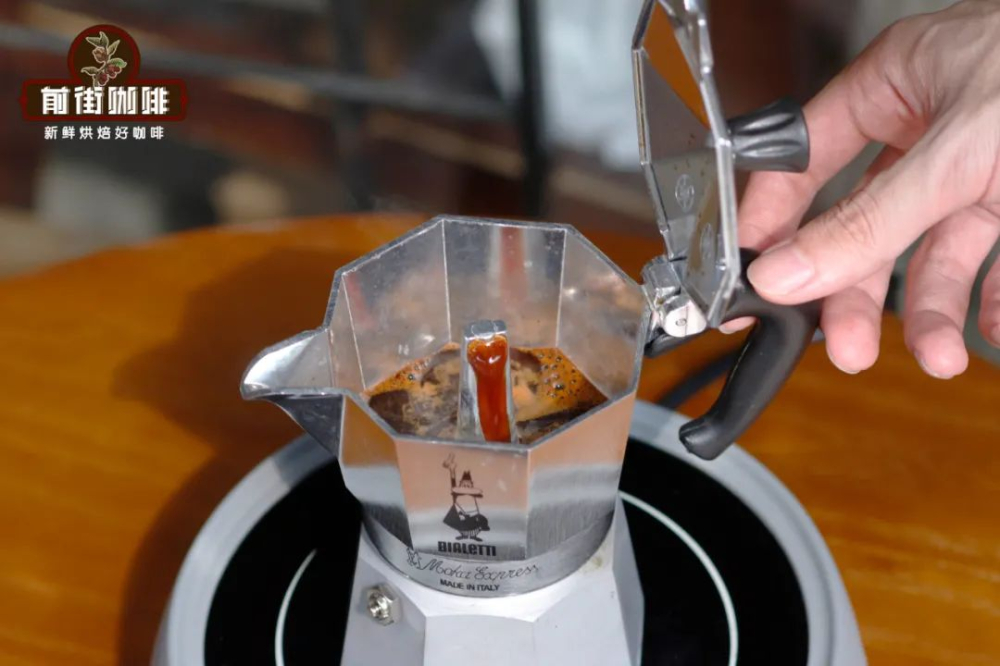
3. After tightening the upper and lower chambers, you can start heating. When heating, generally keep the lid open, and do not let the flame exceed the bottom of the moka pot, to avoid burning the handle. When coffee liquid appears in the upper chamber, you can turn the heat down. When the coffee liquid begins to boil, remove the moka pot from the heat source.
Prepare a wet towel in advance. When the moka pot is removed from the heat source, wrap the lower chamber with the wet towel to cool it quickly. This can avoid the bitter taste produced by continued extraction under high temperature and high pressure.
Tip: When extracting coffee, you may encounter the "tragic scene" of coffee liquid splashing out from the extraction outlet. We can first increase the heat to high, and after the coffee liquid flows out from the extraction channel, adjust it to low heat to ensure that the coffee liquid flows out in a "steady trickle."
4. Wait until the coffee liquid has been fully extracted. To avoid over-steeping, pour the coffee into a cup as soon as possible, and then begin tasting.
The above content is compiled by CoffeeHunters, a coffee news website.


