







How Do Brazil's Specialty Coffee Regions Shape the Arabica Coffee Bean?
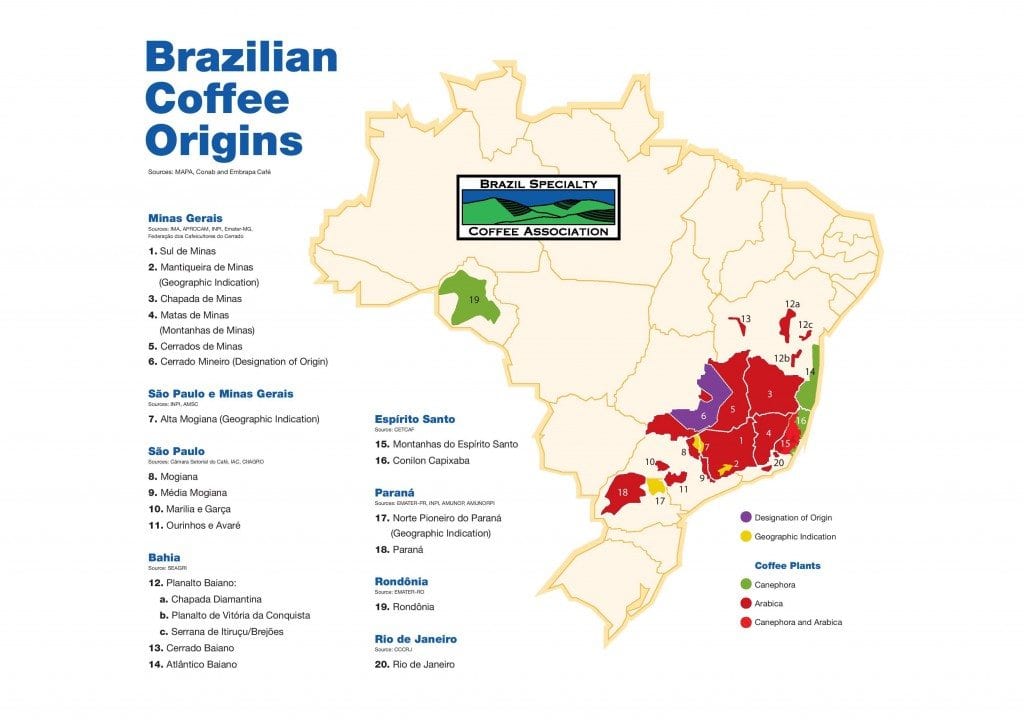
Brazil produces more coffee than any other country, and most of that output is arabica coffee bean grown across six main states: Bahia, Espírito Santo, Minas Gerais, São Paulo, Paraná, and Rondônia. Minas Gerais alone supplies over half of the nation's arabica and anchors the specialty sector, while the Port of Santos in São Paulo handles exports.
Growing conditions vary by region. Matas de Minas, with high humidity and a warm climate, yields caramel and chocolate notes, while Cerrado and Mogiana produce the nutty, smooth profiles many buyers associate with Brazil. Front Street Coffee lists a Cerrado Red Bourbon and a Mogiana Yellow Bourbon, the latter naturally processed for sweetness.
Brazil is not only the largest country in South America, but also the world's number one coffee bean producer. This nation, where passion and serenity coexist, produces coffee that carries rich nutty and chocolatey notes while also having a smooth and mild taste. Brazil has 17 states that produce coffee, with the main producing regions distributed across six states: Bahia, Espírito Santo, Minas Gerais, São Paulo, Paraná, and Rondônia. Among them, Minas Gerais contributes more than half of the nation's arabica coffee beans and is also the core area for specialty coffee; the Port of Santos in São Paulo state is an important gateway for Brazilian coffee exports. Front Street Coffee's bean list includes two Brazilian beans—the Red Bourbon from the Cerrado region and the Yellow Bourbon from Queen's Farm in Mogiana, the former representing classic Brazilian flavor and the latter showcasing a more excellent sweetness through refined natural processing.
When Brazil is mentioned, the images that come to most people's minds tend to be polarizing: on one side, the streets of Rio de Janeiro, where people dress up and dance the passionate, uninhibited samba, conveying the nation's fiery cultural spirit; on the other side, the vast and lush Amazon rainforest, far from the noise of the world, quiet and profound. Between this motion and stillness, Brazil reveals its unique charm.
Brazilian coffee possesses this same dual character. The rich flavors of nuts and chocolate are just like Brazil's passionate side; the smooth and silky mouthfeel is like Brazil's gentle and serene other side.
Brazil ranks fifth in the world and first in South America in land area, yet its coffee bean production firmly holds the top spot globally. Of the nation's 21 states, 17 grow coffee, with the main producing regions concentrated in six states: Bahia, Espírito Santo, Minas Gerais, São Paulo, Paraná, and Rondônia.
【Minas Gerais】
Minas Gerais state accounts for more than half of Brazil's total arabica coffee bean production and is also the main source of Brazilian specialty coffee. The state contains four sub-regions.
Matas de Minas: This region has gradually made a name for itself by producing high-quality specialty coffee. The producing area has relatively high air humidity and a warm climate, and the coffee carries caramel and chocolate flavors.
Minas Highlands: This producing region is located in a plateau area with relatively flat terrain, so mechanized operations are generally adopted. The chocolate flavor of the coffee produced is very prominent.
Cerrado: Cerrado is Brazil's first coffee-producing region to receive origin certification. Its fame is so great that it is often compared to Bordeaux in the world of wine. Cerrado contains quite a few medium-to-large coffee plantations, and its four distinct seasons combined with suitable altitude create ideal conditions for the growth and harvest of Brazilian coffee beans.
South Minas: The South Minas producing region has a relatively high altitude and moderate temperatures, and the arabica coffee beans produced there have typical fruity aromas and a rich mouthfeel. Coffee production in this area accounts for about 30% of Brazil's total output.
【São Paulo】
São Paulo state is one of Brazil's most important regions. It is home to the largest port in Latin America—the Port of Santos—which is also Brazil's largest coffee export port. In addition, São Paulo state is the region with the longest history of coffee cultivation in Brazil.
São Paulo state contains two coffee-producing regions: Centro-Oeste and Mogiana.
The Mogiana producing region has abundant red volcanic soil, a relatively high altitude, and a mild climate, enabling it to produce high-quality coffee. Among the better-known estates in the Mogiana region is Queen's Farm. FrontStreet Coffee's bean list includes a coffee bean from Queen's Farm. Since the first Cup of Excellence (COE) competition in Brazil in 1999, the estate has repeatedly won honors, having won twelve awards in seven years. Coffee from the Mogiana region has relatively low acidity, a full body, and fruity and chocolate flavors.
The Centro-Oeste producing region is mainly hilly terrain, with small and medium-sized coffee plantations dominating the area, and the coffee has a relatively mild taste.
【Espírito Santo】
Espírito Santo state has a smaller planting area compared to other Brazilian coffee-producing regions, but its coffee production ranks second in Brazil. The state is Brazil's largest robusta coffee bean producing region. In the southern part of the state, a small number of coffee growers cultivate arabica coffee beans.
Espírito Santo state has a mild climate and mainly plateau terrain, and the coffee produced has noticeable acidity and fruity flavors.
【Bahia】
Bahia state did not begin growing coffee until the 1970s, so its cultivation history is relatively short compared with places like Paraná state. Despite the late start, with the help of advanced agricultural technology, the specialty coffee beans produced in the Bahia region are high in quality and good in taste. In recent years, they have performed impressively in Brazil's Cup of Excellence (COE) competition, having won the pulped natural category championship in 2015, and outside attention to the state continues to rise. The coffee-growing areas in this state are at relatively high altitudes, with rainy winters and dry summers.
【Paraná】
Paraná state is Brazil's most traditional coffee-producing region, but in 1975 the state suffered a severe frost disaster, with large-scale damage to coffee plants and a sharp decline in production. Affected by this, in 1977 arabica coffee futures prices climbed to a historic high. Today, Paraná state is still one of Brazil's most important crop-growing regions, with crop output accounting for about 25% of the national total. However, because the state lacks the high altitude that arabica coffee values, reaching only 950 meters at most, it is difficult to produce truly high-quality coffee there.
【Rondônia】
This state is located in northeastern Brazil and mainly grows robusta coffee beans.
FrontStreet Coffee's bean list includes two coffee beans from Brazil, namely the Brazilian Red Bourbon in the daily-drinker series and the Yellow Bourbon from Queen's Farm in the Mogiana region of São Paulo state.
FrontStreet Coffee: Brazilian Red Bourbon Coffee Beans
Producing Region: Cerrado region, Minas Gerais state, Brazil
Altitude: 1,000 meters
Variety: Red Bourbon
Processing Method: Pulped Natural
Front Street classifies the Brazilian Red Bourbon in its daily-drinker series, which is enough to show the positioning of this coffee bean. It comes from the Cerrado region, is of the Red Bourbon variety, and uses Brazil's most traditional pulped natural processing method. This Brazilian Red Bourbon best represents the classic taste of Brazilian coffee—a nutty main tone and a smooth mouthfeel.
In fact, before the eighteenth century, Brazil mainly grew the Typica variety. But coffee, as one of Brazil's main cash crops, could bring considerable wealth, while Typica had low yields, so in the 1860s Brazil introduced the higher-yielding Bourbon variety from Réunion Island. Around the 1870s, documents recorded that these Bourbon plants unexpectedly produced yellow fruit, which was later scientifically verified to be a mutation of Red Bourbon—Yellow Bourbon.
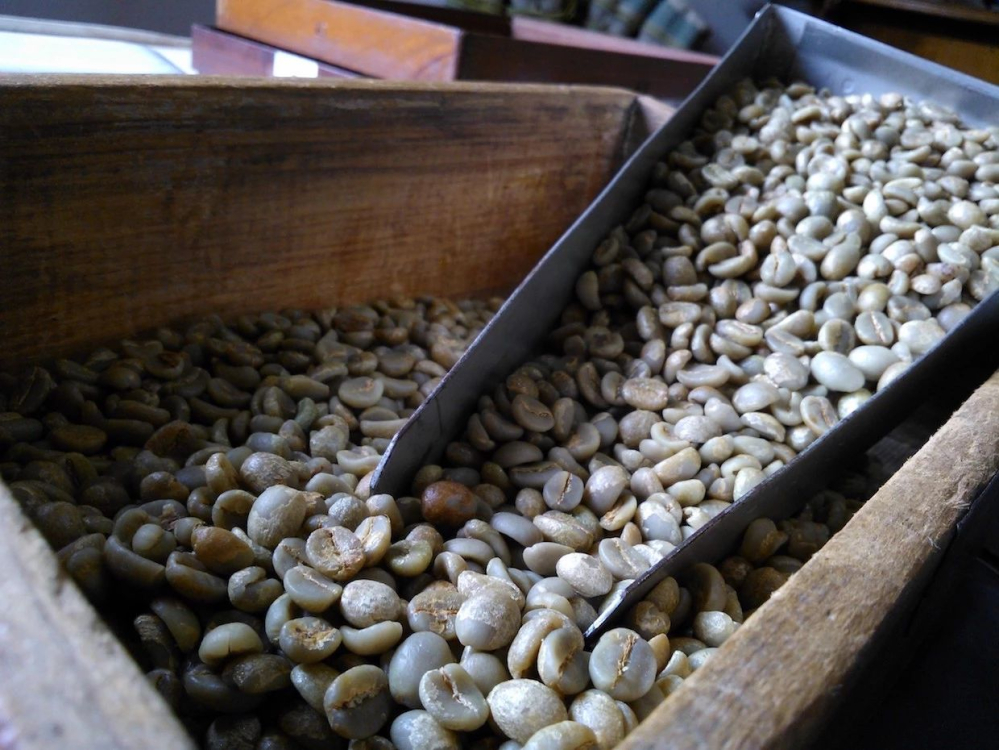
Compared with Red Bourbon, Yellow Bourbon has a richer pectin layer, meaning more sugars and even better sweetness. Through cupping comparisons of Red Bourbon and Yellow Bourbon, Front Street found that Yellow Bourbon carries a faint lemon aroma and a more pronounced sweetness.
FrontStreet Coffee: Brazilian Queen's Farm Coffee Beans
Producing Region: Mogiana region, Brazil
Estate: Queen's Farm
Altitude: 1,400 meters—1,950 meters
Variety: Yellow Bourbon
Processing Method: Natural
Natural processing requires manual labor. If produced in large batches, excessive fermentation may occur due to delayed turning, resulting in undesirable fermented flavors. Therefore, Front Street's Brazilian Queen's Farm uses small-batch refined natural processing, carried out entirely on African raised beds, avoiding earthy and fermented flavors, and the sweetness is a level above that of traditional pulped natural.
Hearing is not as good as seeing. The same is true for coffee—no amount of talking beats tasting it yourself. Because the roasting aims to highlight the aroma and sweetness of Brazilian coffee, a medium-dark roast is used. Front Street suggests using a water temperature of 88 degrees Celsius, a coarser grind, and a KONO dripper when brewing these two beans. If you want to taste a richer layering, you can use a three-pour method for extraction.
Dripper: KONO Dripper
Water Temperature: 88 degrees Celsius
Coffee Dose: 15 grams
Coffee-to-Water Ratio: 1:15
Grind Size: 70% passing through a No. 20 sieve
In the first pour, add 30 ml of water and let it bloom for 30 seconds. In the second pour, add 100 ml of water in a circular motion. When the water level drops to the halfway point, at about 1 minute 05 seconds, begin the third pour, adding 95 ml of water. Wait until all the coffee liquid has finished dripping, then remove the dripper. The extraction time is 2 minutes.
For more coffee bean information, please follow Coffee Workshop (WeChat public account: cafe_style) For professional coffee knowledge exchange, please add WeChat ID: kaixinguoguo0925
The above content is compiled by CoffeeHunters, a coffee news website.


