








What Causes Burnt, Bitter Coffee From a Moka Pot?
Over-extraction causes the burnt, bitter taste in moka pot coffee, and it usually traces back to three factors: channeling, prolonged heating, and too fine a grind paired with too much water. Pressure-based extraction is fast and efficient, which also makes it easy to push past the point where pleasant flavors turn harsh.
Channeling happens when hot water follows the path of least resistance through a low-density spot in the puck, over-extracting that area while leaving the rest under-extracted. Fixes include leveling and distributing the grounds evenly, starting with hot water, lowering the heat once liquid appears, and adjusting grind size to the water amount.
The moka pot, as a pressure-based extraction device, is highly efficient but also very prone to over-extraction. Many coffee lovers have experienced the frustration of burnt, bitter coffee with heavy off-flavors. After sharing moka pot content multiple times, Front Street Coffee has found that channeling, prolonged heating, and overly fine grinding with too much water are the three core causes of over-extracted moka pot coffee. This article will analyze the root causes one by one from the perspectives of distribution evenness, initial water temperature and heat level, heat adjustment after liquid starts flowing, and the ratio of grind size to water amount, and provide practical improvement solutions to help everyone consistently brew rich and delicious moka pot coffee.

Front Street Coffee has noticed that many friends often encounter the problem of over-extraction when operating a moka pot. Every time Front Street Coffee publishes an article related to the moka pot, similar questions always appear in the comments: "How can I prevent over-extraction with a moka pot?" "Why is the coffee so bitter?" and so on.
The moka pot and espresso machine both use pressure-based extraction. The greatest advantage of this extraction method is its extremely high efficiency—coffee can be extracted in a short time. But precisely because of this high efficiency, coffee is also more prone to over-extraction. Over-extracted coffee often has a prominent burnt bitterness or various off-flavors, and even with sugar and milk added, it still tastes unpleasant.
1. Channeling
In pressure-based extraction, one of the reasons over-extraction occurs frequently is "channeling." Channeling refers to hot water concentrating through a certain area, causing over-extraction in that spot while other areas are under-extracted, ultimately making the coffee both bitter and sour with a very poor balance.
Channeling occurs because water has inertia and always preferentially flows along the path of least resistance. To rapidly dissolve flavor compounds from coffee grounds in a short time, pressure-based extraction typically uses a very fine grind, giving the puck enough resistance to build pressure.
However, if a certain spot has fewer coffee grounds and lower density than its surroundings, hot water will concentrate through that spot, and channeling occurs. Therefore, to improve the over-extraction problem in moka pot coffee, the first priority is to prevent channeling. So, what factors cause channeling?
① Uneven distribution: Just like with espresso, uneven distribution directly leads to channeling. If the coffee grounds are unevenly distributed in the basket and tamped without adjustment, density differences will appear in the puck, and channeling follows.
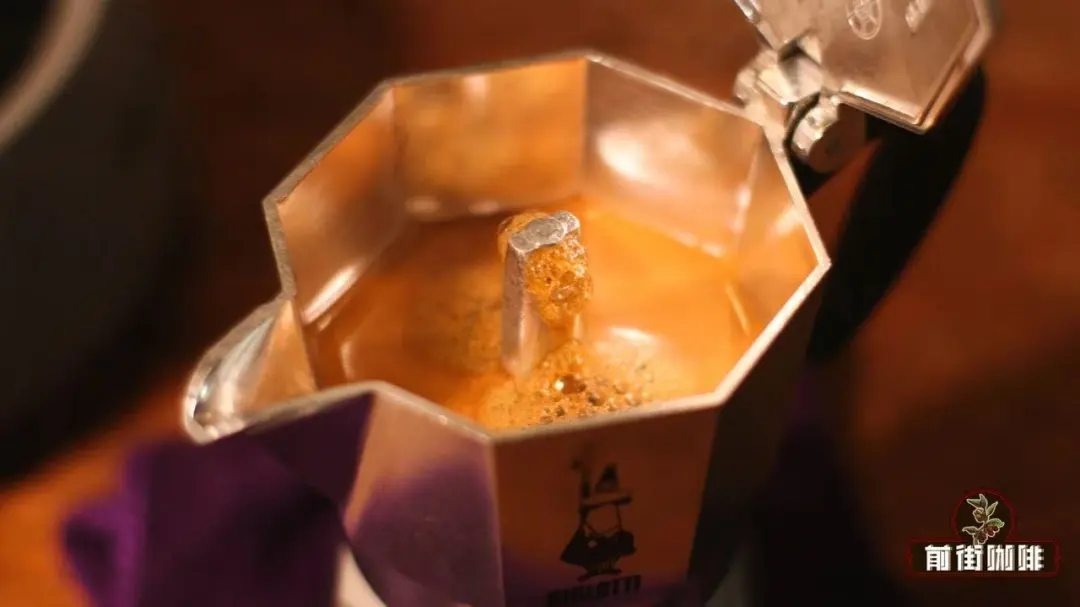
This situation is actually easy to solve. After loading coffee grounds into the basket, first observe whether the amount of grounds is roughly the same everywhere. If so, you can tamp and extract directly.
If the distribution is uneven, gently stir the coffee grounds with your finger to even them out, then lightly tap the basket to help the grounds settle more tightly together, and finally tamp and extract.
Through such adjustments, the puck density becomes uniform, making channeling harder to occur.
②③ Heat too low, using cold water: Both the initial water temperature and heat level affect moka pot extraction, mainly by influencing the duration from the start of heating to when coffee begins to flow. The longer the heating time, the more likely channeling is to form during extraction.
As we all know, the moka pot needs to be heated to generate enough steam to build pressure, which pushes hot water through the coffee grounds for extraction. During heating, steam is continuously generated, and the steam in the water chamber rises upward, pre-wetting the coffee grounds at the bottom of the puck.
The areas pre-wetted by steam have reduced density, and during the extraction phase, these areas are easier for water to pass through than other areas. The longer the heating time, the larger the area of the puck that gets wetted, the lower the density, and the easier it is for hot water to concentrate through.
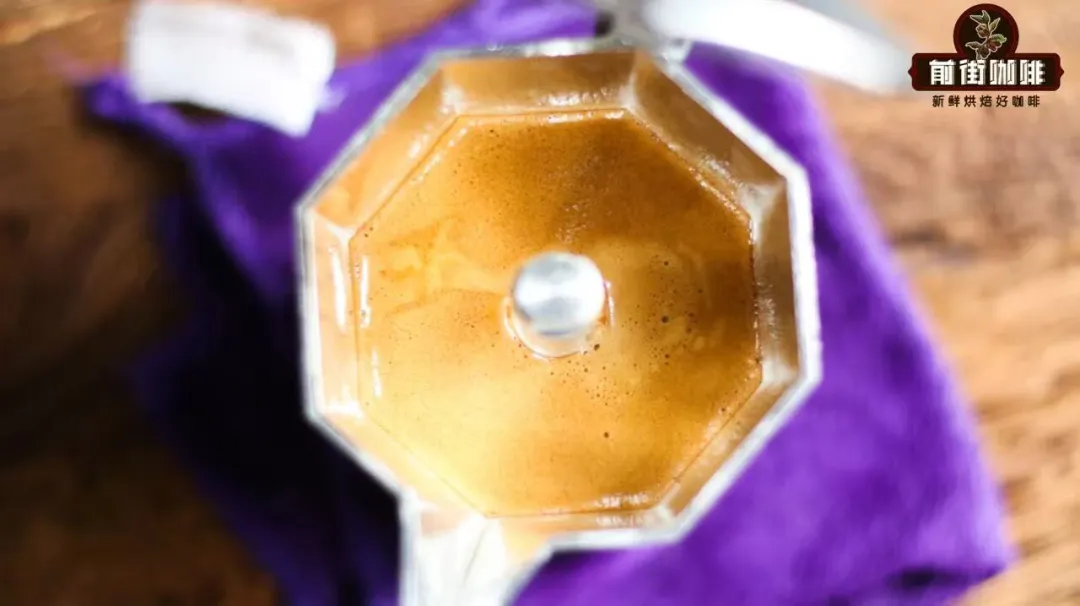
The moka pot uses pressure-enhanced extraction and is best at showcasing the richness and intensity of coffee. If using light-roast coffee beans, since light-roasted beans are harder in texture, a finer grind is usually needed to increase extraction yield. However, fine grinding under high temperature and pressure not only easily makes coffee sour and harsh but also impedes the flow of hot water, making it difficult for the coffee liquid to be released.
To make the moka pot perform more consistently, it is recommended to prioritize darker-roasted espresso blend beans. You can purchase the rich, buttery and chocolatey Front Street Coffee. Front Street Classic Blend, as well as the mixed nuts and sugarcane-sweet Front Street Coffee. Brazil Queen's Estate.
Therefore, when conditions allow, Front Street Coffee recommends using medium to high heat to cook the moka pot before liquid starts flowing, and the higher the initial water temperature, the better. This can greatly reduce the occurrence of channeling and increase the probability of making delicious coffee.
2. Heat too high after liquid starts flowing
It should be noted that after coffee starts flowing, it is best to turn the heat to the lowest setting or even turn it off, using residual heat to generate steam and complete the extraction.
If the original heat level is maintained after liquid starts flowing, excessive steam will cause too much pressure, and hot water will rapidly pass through the puck in a short time, greatly shortening the extraction time. Besides causing under-extraction, continuous high heat also triggers channeling, making the coffee both bitter and sour.
3. Grinding too fine and using too much water
Moka pots usually come with an instruction manual that lists operating methods and official recommended parameters in detail, such as how much coffee and 120ml of water for a 2-cup size, and how much coffee and 180ml of water for a 4-cup size. Many friends follow the manual's parameters when they first start using one.
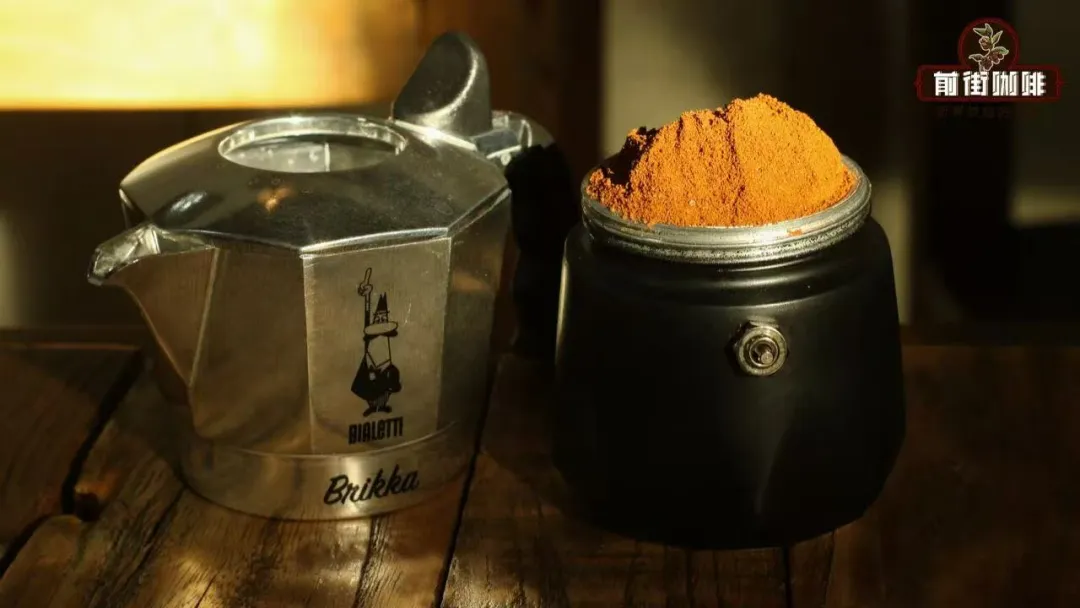
There is nothing wrong with doing so itself, but if your grind is relatively fine—close to the flour-like particles of an espresso machine—you need to pay attention to the water amount.
This is because finely ground coffee releases flavor compounds more easily, and the more water there is, the more flavor compounds are dissolved. If you use a flour-like grind and pair it with a lot of water, it is very easy to brew a cup of moka pot coffee that is burnt, bitter, and full of off-flavors.
Many friends use pre-ground coffee and cannot freely adjust the grind size. In this case, you need to control the extraction yield by adjusting the water amount and the heat after liquid starts flowing. However, the latter is relatively difficult to adjust, so Front Street Coffee more strongly recommends adjusting by reducing the water amount.
The above are the three main reasons Front Street Coffee has summarized for over-extracted moka pot coffee. If you have other findings, feel free to add them in the comments~
The above content is compiled by CoffeeHunters, a coffee news website.


