







Does a Lighter Roast Always Mean Sour Coffee?
Light roast coffee is not automatically sour. Acidity begins in the coffee green bean, which already contains malic, citric, tartaric, chlorogenic, and phosphoric acids. Roasting both creates and destroys acids, and the peak acidity often falls at medium-light roast levels rather than the lightest ones, where the cup can taste softly sweet-tart.
During roasting, sugars and organic acids degrade under heat, forming new acids such as formic, acetic, and lactic acid, especially in the development stage after first crack. Those compounds then break down or volatilize as the roast deepens. Roast level alone does not determine perceived sourness; origin, processing, and brewing matter too.
Many people think that the lighter the roast, the more sour the coffee—but the truth is not that simple. The acidity in coffee comes from substances originally present in green beans, such as malic acid and citric acid, and these are continuously generated and degraded during roasting. The truly most acidic stage often occurs at medium-light roasts, while very light roasts may instead present a soft, sweet-tart profile. This article starts with the principles of acidity changes, combines them with a comparative cupping of a Front Street Coffee Papua New Guinea washed Typica, explains the relationship between roast level and perceived acidity, and recommends five coffees with fruity and floral notes of their own, including Front Street Coffee Fruit Ding Ding, Kenya Little Tomato, Strawberry Candy, Colombia Big Belly Button, and Flower Butterfly, to help acidity lovers find their ideal flavor.
After working behind the bar for a long time, you inevitably meet all kinds of customers. Quite a few of them do not like coffee that is on the sour side, and beans with prominent acidity tend to be lighter roasts; indeed, some light-roasted coffees have a sourness that is not easy for people to accept. As a result, customers form the fixed impression that “the lighter the roast, the more sour the coffee.”
So, is this claim actually accurate? To answer this question, we first need to understand where the acidity in coffee comes from and what changes it undergoes during roasting.
●Coffee green beans themselves contain various acidic substances such as malic acid, citric acid, tartaric acid, chlorogenic acid, and phosphoric acid.
Once roasting begins, the sugars and organic acids in the beans degrade under heat, or decompose to produce new acids such as formic acid, acetic acid, lactic acid, fumaric acid, and crenic acid; however, as the roast degree continues to deepen, these acids further decompose or volatilize.
During the entire roasting process, the interval with the most dramatic changes in acidity and acid concentration is precisely the development stage after first crack begins. From this, it can be seen that the acidity of coffee reaches a peak at some point after first crack, and then gradually declines due to thermal decomposition and volatilization.
In fact, as soon as first crack begins, organic acids such as formic acid and acetic acid form in large quantities, reaching their highest value near the end of first crack, after which they begin to decline. By contrast, organic acids that were already present, such as citric acid and malic acid, slowly decompose as first crack progresses. The acidity brought by citric acid and malic acid is relatively bright and pleasant; acetic acid and formic acid are highly volatile, taste very sour, and smell pungent, even irritating at high concentrations.
In addition, after first crack begins, the sucrose in coffee is also gradually consumed in reactions. Therefore, the stage that truly tastes the most sour is actually medium-light roasting; at very light and light roasts, because more sucrose is retained and the total amount of organic acids is not as high, what enters the mouth is instead a soft acidity with natural sweetness. Some green beans are naturally high in sugar, and if roasted to this degree, they can even taste strongly sweet.
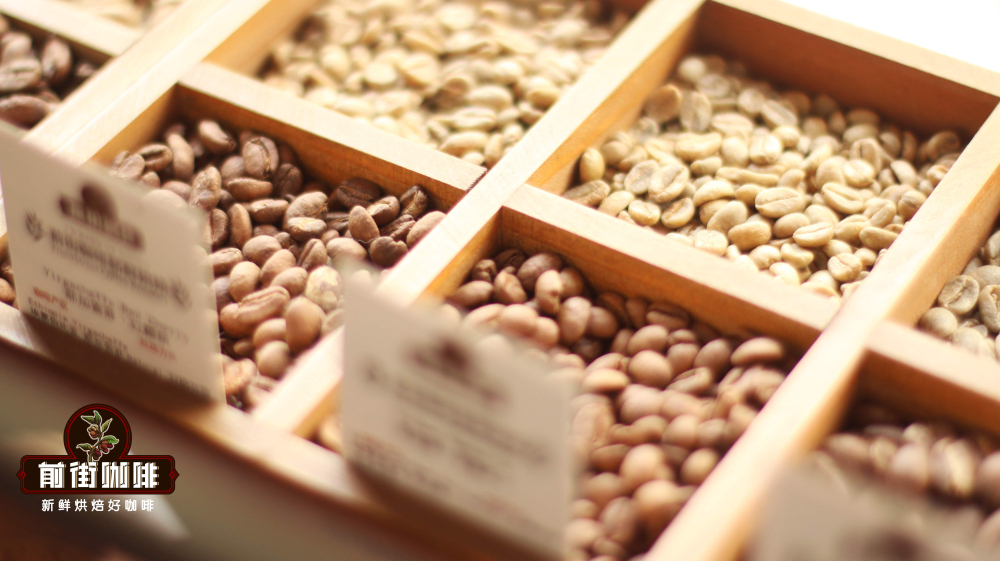
●We roasted a Front Street Coffee Papua New Guinea washed Typica in two batches, trying as much as possible to keep the yellowing point before first crack and the first crack point consistent, adjusting only the development time after first crack.
First batch: dropped 1 minute 20 seconds after first crack at 190.5°C (mid-stage of dense first crack)
Second batch: dropped 1 minute 40 seconds after first crack at 191.8°C (late first crack)
The cupping results are as follows:
First batch: soft acidity on entry, with sweetness quickly following. However, the aroma was relatively simple, with a slight odor reminiscent of ginseng.
Second batch: brighter acidity on entry, higher acidity, sweetness appearing later, and greater aroma complexity, presenting fruity aromas.
It can be seen that it is not necessarily true that the lighter the roast, the more sour the coffee; behind this is the complex transformation and combination of various flavor substances during roasting. But one thing is certain: roasting too light will give coffee beans a raw, green, and astringent taste.
●Recommended brands of coffee beans with pronounced acidity
Fruit acidity and floral aroma are signature flavors of medium-light roasted coffee beans and have many fans. Previously, a friend who loves fruity-acid coffee asked Front Street Coffee for recommendations, hoping for beans with natural fruity and floral notes. That being the case, we may as well go through one by one which fruity single-origin coffees are worth trying.
1. Bright citrus acidity + white floral notes—Front Street Coffee Fruit Ding Ding coffee beans
The Fruit Ding Ding cooperative has 300 smallholder partners and is known for producing some of the best coffee in Ethiopia. It follows the most traditional washed method and is called “the last pure land of Yirgacheffe.” Among the guests drinking coffee at Front Street, if they want to try a washed fruit-toned coffee, the baristas at Front Street Coffee usually first recommend the Fruit Ding Ding cooperative coffee on the bean shelf. This washed bean does not have the heavy bitterness of traditional black coffee; its fresh, bright citrus and lemon acidity, plus jasmine-like fragrance, makes many coffee lovers fall in love at first sip.
2. Rich berry aroma + cherry tomato acidity—Front Street Coffee Kenya Little Tomato coffee beans
For friends who are naturally fond of acidity, Front Street has always recommended this bean first; in terms of fruit acidity alone, no other coffee is a match for it. The varieties of this Kenyan coffee are SL28 and SL34, both of which were developed through multiple rounds of cultivation and selection: SL28 belongs to the Bourbon genetic group and carries the bright profile and rich acidity of original Bourbon; SL34 is closer in lineage to Typica, with gentler acidity. Second, it uses the locally distinctive K72 washed processing method, and multiple soaking and washing create a clean yet solid fruit acidity. When Front Street Little Tomato is made into iced coffee, dark berry flavors can be felt on entry, accompanied by full cherry tomato aromas. Drinking it chilled is very refreshing, which is why it is also many people’s first choice for cold brew.
3. Raisin + fruit gummy—Front Street Coffee Strawberry Candy
Compared with other fruity coffees, this bean has a somewhat special “background”: it combines two well-known producing regions in Central and South America—one part is honey-processed coffee from Costa Rica, and the other is Panama washed Geisha. To highlight its essence as much as possible, Front Street uses a medium roast, so that when brewed it has both orange-blossom honey charm and rounded sweetness. It is suitable for cold brew, pour-over, espresso, and many other extraction methods, and is refreshing on entry.
4. Passion fruit acidity + blueberry-like sweetness—Front Street Coffee Colombia Big Belly Button
In the 2023 WBC finals, Australian competitor Jack Simpson used a coffee called Big Belly Button and showcased its rich juiciness through three different drinks, bringing this somewhat strange variety into the spotlight. Front Street Big Belly Button coffee comes from Colombia’s famous Huila region, produced by Finca La Divisa, and uses a double anaerobic natural process, allowing the coffee fruit to successfully release alluring fruity and floral aromas. Each brew always brings rich flavors of grape, orange, blueberry, and more.
5. Citrus acidity + honey pomelo tea—Front Street Coffee Flower Butterfly
Flower Butterfly is composed of three varieties: Geisha, Caturra, and Catuai, all produced in Panama’s well-known Boquete region, where the famous Hacienda La Esmeralda and Elida Estate are also located. According to information reviewed by Front Street, in earlier years, in pursuit of yield, local growers planted Geisha mixed with Caturra and Catuai; later, in order to highlight the characteristics of Geisha, they began to collect the three varieties separately, use refined washed processing, and then blend and package them at export. Because high-quality Geisha accounts for 70%, the coffee naturally has obvious grapefruit and citrus notes and light floral aromas, and the washed processing also gives the coffee a transparent tea-like quality.
The above content is compiled by CoffeeHunters, a coffee news website.


