







Coffee Beans Process: What Is Wet-Hulling and How Does It Shape Mandheling Flavor?
Wet-hulling, called Giling Basah locally, is a semi-washed coffee beans process unique to Indonesia. Instead of drying beans in parchment as the washed method does, producers ferment and wash, partially dry, remove the parchment by machine while the beans are still moist, then finish drying, leaving the green beans bare and giving them their goat-hoof look.
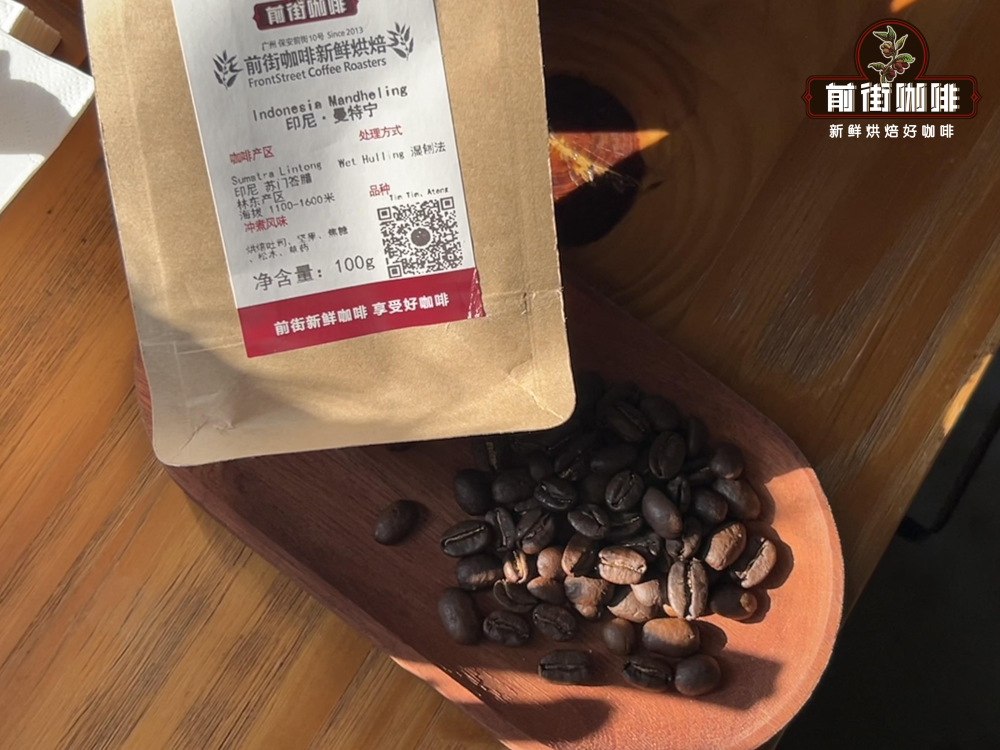
The method fits Indonesia's wet, humid climate, where slow sun-drying in parchment is unreliable. It contributes to Mandheling's low acidity, thick body, and herbal spice notes. Front Street PWN Golden Mandheling is typically roasted medium-dark and brewed in a KONO dripper to bring out those characteristics.
Many coffee lovers, after tasting Front Street Golden Mandheling, wonder why Indonesian coffee beans generally use the wet-hulling process rather than washed or natural. Wet-hulling, also known as wet shelling and called Giling Basah locally, is a semi-washed technique unique to Indonesia. From Front Street's perspective, this article systematically explains the definition of wet-hulling, its differences from the washed method, the climate and resource reasons why Indonesia chose it, the complete seven-step process, as well as the "goat hoof" appearance of the green beans and the flavor profile of low acidity, thick body, and prominent herbal spice notes. At the end, the roasting curve and KONO dripper brewing parameters for Front Street PWN Golden Mandheling are included for enthusiasts to reference and practice.
What is the difference between wet-hulling and washed processing?
Many friends, after drinking Front Street Golden Mandheling, have this question pop up: why do most Indonesian coffee beans go the wet-hulling route instead of washed or natural? Below, Front Street will discuss what wet-hulling is all about.
What is wet-hulling?
Wet-hulling is also called wet shelling, written in English as Wet Hulling, and locally known in Indonesia as Giling Basah. It is a processing method unique to Indonesian producing regions and is sometimes classified under semi-washed processing. If you want to experience the taste of wet-hulled coffee, Front Street Indonesia Mandheling G1 coffee beans are a good starting point. They undergo a medium-dark roast, allowing you to clearly capture the herbal and spice notes imparted by the region and processing method.
The difference between wet-hulling and washed processing is: the washed method retains the mucilage for fermentation first, then rinses off the remaining mucilage with clean water, followed by direct sun-drying, with the coffee beans stored together with the parchment; the wet-hulling method first completes fermentation through washing, then does partial drying, then removes the parchment by machine, and only after that carries out final drying, so the coffee beans enter the storage stage "bare."
Why does Indonesia use the wet-hulling method to process green beans?
The choice of processing method usually depends on local climate and resource conditions. The natural method mostly appears in dry, high-temperature, water-scarce areas; the washed method is common in places with abundant water. Indonesia is humid and rainy, making long sun-drying difficult to achieve, so wet-hulling became a pragmatic choice. Front Street believes that wet-hulling makes Indonesian coffee beans' flavor richer and more full-bodied, with herbal and spice notes more prominent.
Detailed explanation of the wet-hulling process
1. Depulping/pulping
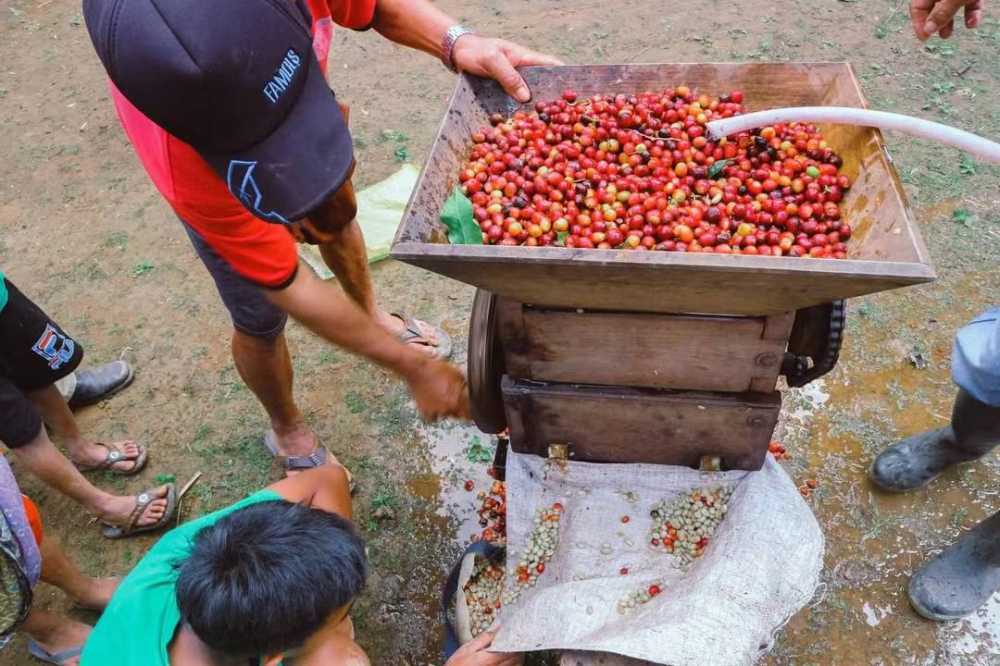
As with washed processing, harvested coffee cherries must be processed as soon as possible. In Indonesia, cherries are usually depulped by smallholders at home, and this step removes the skin and part of the pulp.
2. Washing
The depulped beans are soaked in water for 1 to 2 hours while rubbing against each other to remove part of the mucilage.
3. Drying
After soaking, the coffee beans are dried for the first time by the farmers themselves, and at this point the moisture content drops to between 20% and 35%.
4. Collection
After the first drying, the beans are taken to market for sale. At this stage the mucilage layer has not yet set and feels sticky to the touch. These beans are purchased and sent in batches to processing plants for further processing.
5. Drying
After arriving at the processing plant, the beans first undergo a second drying, and the moisture content drops to about 18%.
6. Hulling/wet hulling
After the second drying, the beans are sent to a huller for wet hulling, a step that removes the mucilage and parchment layer. What differs from other processing methods is that wet-hulling removes the parchment layer before final drying, whereas washed processing and others dry with the parchment layer until just before export shipment.
7. Drying & storage
Finally, the beans are sent again to the drying yard for final drying, and the moisture content drops to 11%. Once dried, the coffee beans are bagged and stored in the warehouse, waiting to be shipped for export.
Appearance characteristics of green beans processed by wet-hulling
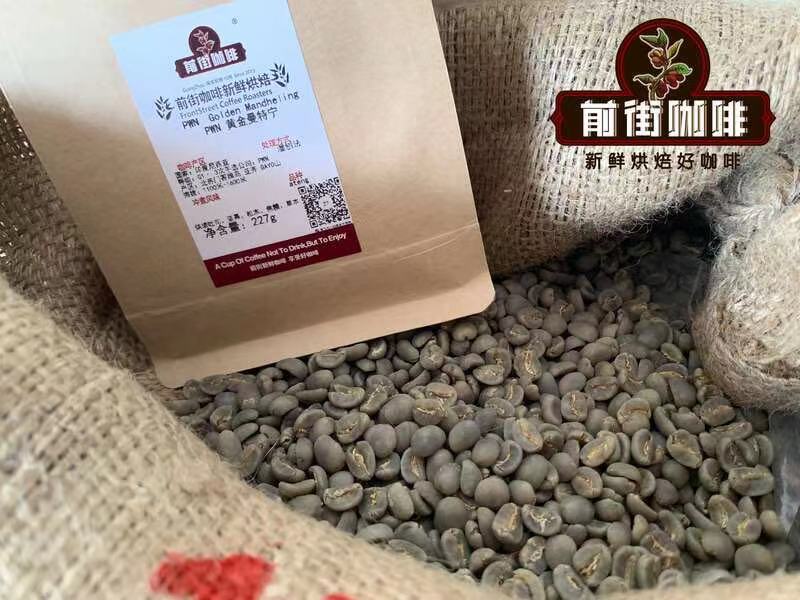
After Front Street received several lots of wet-hulled Mandheling green beans, it found that they share one common feature—"goat hoof shape." This is because the half-hard, half-soft moist green beans are easily compressed and damaged when the machine hulls away the mucilage and parchment layer, and the beans split in a shape resembling a goat's hoof, commonly called goat hoof beans. The goat hoof shape is a very conspicuous marker of Mandheling and is not considered a defective bean.
Flavor characteristics of Front Street Indonesia Mandheling coffee beans processed by wet-hulling
Teacher Han Huaizong once described the flavor of wet-hulled coffee beans in a book: "This is also a rare processing method in the world, accidentally creating Mandheling's special low-acidity, thick, and subdued aroma flavor."
Through cupping, Front Street Mandheling processed by wet-hulling has lower acidity, a thick mouthfeel, and unique flavors such as herbal spices, but its drawback is that quality is not stable enough. Of course, quality fluctuation cannot be entirely blamed on wet-hulling; in most cases it may be related to the quality of some green beans themselves not being ideal enough.
Having said so much, how exactly should wet-hulled coffee beans be roasted and brewed? Below we use the high-grade Front Street PWN Golden Mandheling coffee beans as an example to demonstrate roasting and brewing.
Front Street PWN Golden Mandheling coffee beans Region: Gayo Mountain, Aceh, Sumatra Altitude: 1100-1600 meters Variety: Ateng Grade: G1, 3 times hand-sorted Processing method: wet-hulling
How to roast wet-hulled Front Street Golden Mandheling coffee beans?
Golden Mandheling is a green bean with relatively high moisture, and it differs greatly from natural beans in water content, so the dehydration stage requires special attention. For green beans with high moisture content, you can close the damper immediately after charging, soak for 30 seconds, then open it to 3. When the green bean color turns light green or white, open the damper to 4, and after first crack open it to 5 (maximum). FrontStreet Coffee suggests keeping good data records before roasting, including the coffee beans' moisture content, density, origin, processing method, as well as the roastery's ambient temperature and humidity, and planning the roasting curve in advance. Recording relevant chemical and physical changes during roasting helps better understand the final roasting result and also makes it easier to improve the curve.
Raise the drum temperature to 200°C and charge; set the damper to 3, and after 1 minute adjust the heat to 160°C with the damper unchanged; roast until 5 minutes 40 seconds at 148°C, when the bean surface turns yellow, the grassy smell fully dissipates, and dehydration is complete; adjust the heat to 140°C and change the damper to 4; at 9 minutes 40 seconds, ugly wrinkles and dark streaks appear on the bean surface, and the toasted bread smell clearly turns into coffee aroma, which can be regarded as the prelude to first crack; at this time listen carefully for the sound of the first crack point; at 9 minutes 54 seconds first crack begins; reduce the heat to 60°C and fully open the damper (be very careful when adjusting heat, it must not be so low that there is no crack sound), and drop at 204.5°C.
How does Front Street brew medium-dark roasted Golden Mandheling coffee beans?
When brewing medium-dark roasted coffee beans, Front Street generally uses the KONO Meimon dripper. The only exhaust part of this dripper is that one-quarter of the ribs. When the water level rises above the ribs, the amount of water in the dripper keeps increasing, and the weight of the water brings pressure, while the outlet is relatively small, which can extend the contact time between coffee particles and water. As the water flow drives it, soluble substances can be extracted more effectively, usually achieving the high body effect guests expect.
Water temperature: 88°C Dose: 15g Water-to-coffee ratio: 1:15 Grind size: 65% passing rate through a 0.85mm aperture sieve
Front Street first uses twice the coffee dose in water, that is, 30g of water, for blooming, with a bloom time of 30 seconds. Then pour in a small stream in circles until 125 grams for a stage, wait until the water level drops and is about to expose the coffee bed, continue pouring until 225 grams and stop, then wait until the water level drops and is about to expose the coffee bed, remove the dripper, (timing from the start of blooming) with an extraction time of 2'00".
Brewing flavor of Front Street PWN Golden Mandheling coffee beans: nuts, spices, herbs, licorice, chocolate, caramel, with a clean and soft flavor.
The above content is compiled by CoffeeHunters, a coffee news website.


