







What is liberica coffee and how do Typica and Bourbon fit in?
Arabica, Robusta, and Liberica are the three main commercial coffee species, and Typica and Bourbon sit inside Arabica as the genetic cornerstones of modern cultivation. More than 60 percent of global production is Arabica, grown at high altitude with steady rainfall and shade. Liberica is harder to obtain, while Typica and Bourbon trace from Ethiopia to Yemen before spreading worldwide.
Typica and Bourbon differ in plant shape, yield, and cup profile, and each family has produced well-known derivatives and hybrids. The overview compares these traits to show how c. arabica lines branch over time. For drinkers, the practical takeaway is that variety lineage shapes flavor as much as origin, roasting, and brewing method do.
In the world of coffee, Arabica, Robusta, and Liberica are the three major commercial bean species, while Typica and Bourbon under Arabica are the genetic cornerstones of modern coffee cultivation. This article will start with a brief overview of the characteristics of the three major species, then trace the historical journey of Typica and Bourbon from Ethiopia to Yemen and their subsequent spread around the globe, compare their plant morphology, yield performance, and cup flavors, and further introduce representative members of the Typica family, the Bourbon family, and their hybrids. The article also retains Front Street Coffee's brewing examples and product recommendations, making it suitable for enthusiasts who wish to systematically understand the lineage of coffee varieties.
For more specialty coffee information, welcome to follow our WeChat public account: Front Street Coffee (FrontStreet Coffee).
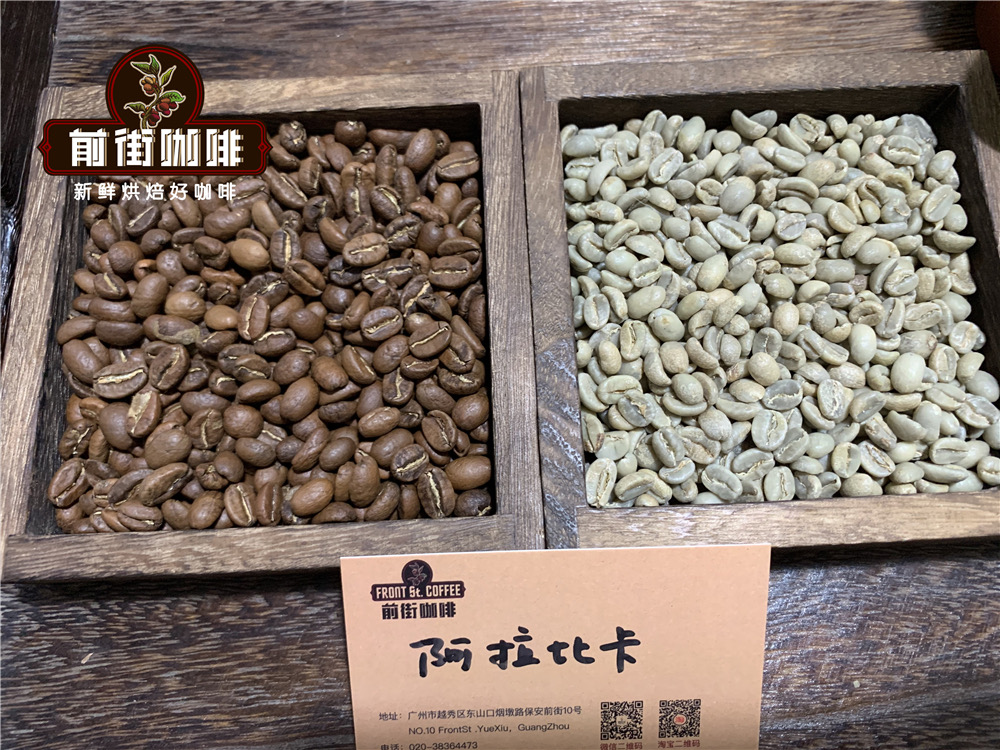
How often do you usually drink coffee? Have you ever wondered how many kinds of coffee beans exist in the world? And where do they each originate from? Today Front Street will discuss knowledge related to coffee bean species. Friends familiar with Front Street Coffee (FrontStreet Coffee) know that the three most important coffee bean species in global commercial circulation are: Arabica, Robusta, and Liberica.
Arabica Among the many coffee bean types, Arabica is the most favored and best-known, and is generally regarded as the superior-quality choice. In fact, more than 60% of global coffee production is Arabica. This type of coffee tree is suited to growing at high altitudes and requires stable rainfall and shade. Arabica beans are oval in shape, slender and flat, with a relatively balanced acidity and bitterness and a gentle aroma.
Robusta Robusta ranks second in global production. This coffee tree is cold-resistant and also has strong resistance to many diseases. It is best suited to growing in hot climates with irregular rainfall, and its adaptability to altitude is also quite broad.
Compared with Arabica, the coffee beans produced by the Robusta plant have about twice the caffeine content, so its stimulating effect is very pronounced. Robusta beans are oval but relatively short and small, with a heavier bitterness, and their aroma is less delicate than that of Arabica.
Liberica Liberica coffee beans are one of the most difficult types to obtain. Their beans are larger than those of other varieties, and they are also the only irregularly shaped coffee beans in the world. Liberica's aroma is likewise distinctive; some believe it combines smoky notes, fruity notes, and floral notes.
After briefly reviewing the three major coffee bean species, today's focus is on the subspecies under Arabica—Typica and Bourbon. Bourbon and Typica form the world's most culturally significant and genetically valuable C. arabica coffee group. Historical records show that coffee seeds were first brought from the coffee forests of southwestern Ethiopia to Yemen, where they were cultivated as a crop.
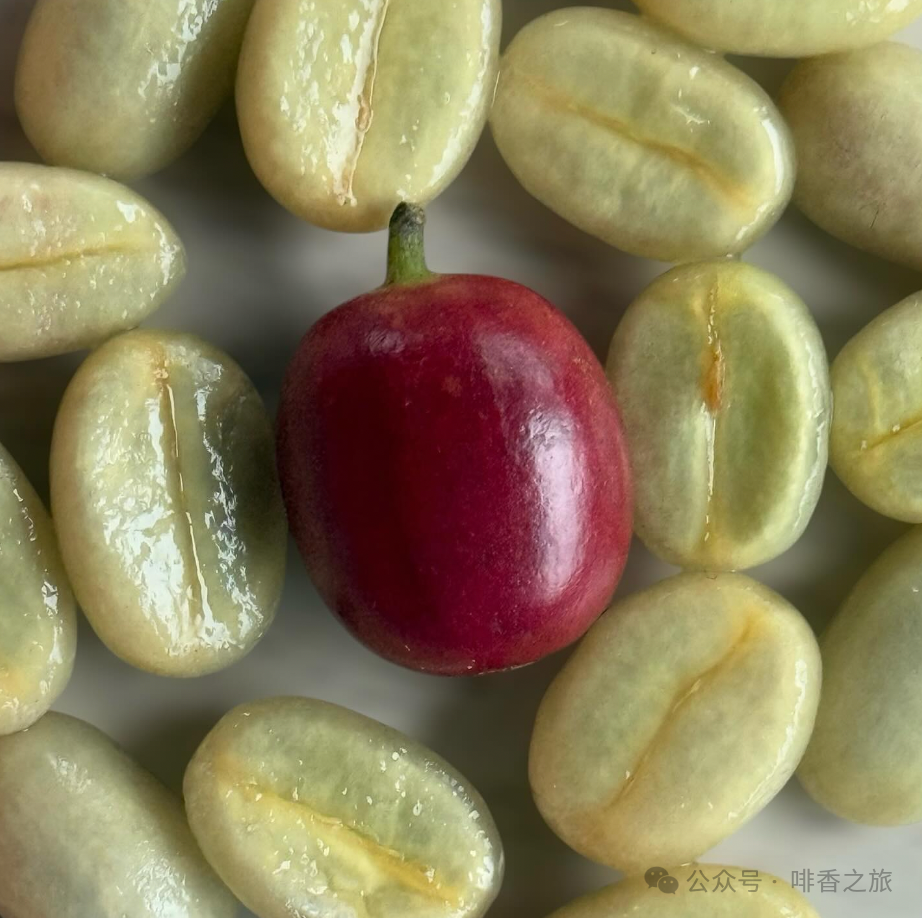
In recent years, genetic testing has confirmed that Bourbon and Typica were precisely the main seeds transported from Ethiopia to Yemen. Their descendants spread from Yemen to all parts of the world, laying the foundation for modern Arabica coffee cultivation.
The history of Typica coffee and Bourbon coffee: Like all Arabica coffee, the Typica group should have originated in southwestern Ethiopia. At some point in the 15th or 16th century, it was brought to Yemen. By 1700, seeds from Yemen were already being grown in India. In 1696 and 1699, coffee seeds were sent from India's Malabar Coast to the island of Batavia (present-day Java), and these few seeds ultimately gave rise to the distinctive Typica variety we know today.
Records about Bourbon coffee beans show that the French attempted three times, in 1708, 1715, and 1718, to introduce this coffee from Yemen to the island of Bourbon (now Réunion); the latest genetic research has also confirmed this. Only a small number of plants from the second introduction and some from the third introduction survived successfully. It was not until the mid-19th century that Bourbon coffee left the island, spread to Africa by French missionaries known as the Spiritans.
Appearance and cultivation characteristics of Typica coffee trees and Bourbon coffee trees Typica is a tall plant that can reach 3.5-4 meters. The Typica coffee tree is conical in shape, with the main vertical trunk and secondary vertical trunks slightly inclined. The lateral branches form a 50-70 degree angle with the vertical stem. Typica coffee has a very low yield, but its cup quality is extremely outstanding. Typica varieties Representative coffee: Front Street 2013 Sun-Dried Typica.

The yield of Bourbon coffee plants is 20-30% higher than that of Typica, but the harvest is still lower than that of most coffee varieties. The conical shape of the Bourbon coffee tree is less pronounced than that of Typica, but it has more secondary branches.
The angle between the secondary branches and the main stem is smaller, and the spacing between branching points on the main stem is also closer. The leaves are broad with wavy edges. The fruit is relatively small and firm. The cherries ripen quickly and are prone to falling off in strong winds or rain. Bourbon coffee performs best between 3,500-6,500 feet. Cup quality is excellent, similar to Typica. Representative Bourbon variety coffee: Front Street Brazil Cerrado coffee beans.

Flavor differences between Typica and Bourbon Overall, Typica coffee beans have floral and fruity notes, and the style is very elegant. For example, Front Street's Clifton Estate Blue Mountain coffee is a very classic Typica variety. The baristas at Front Street Coffee (FrontStreet Coffee) use a Kono dripper to brew this Blue Mountain coffee, with a water temperature of 88 degrees Celsius and a medium-coarse grind. In the first stage, pour 30 grams of water for blooming, with a blooming time of 30 seconds; in the second stage, pour to about 125 grams of water, then wait for the coffee liquid to drop; when it has dropped halfway, pour the final stage of water up to 225 grams, that is, 15 grams of coffee powder with 225 grams of water, for a ratio of 1:15.
The mouthfeel is smooth and rich, with excellent balance. Overall, it shows a slight citrus acidity, a smooth mouthfeel, nutty notes in the middle, and a dark chocolate sensation at the finish.
Front Street Coffee (FrontStreet Coffee) believes that, as Brazil was the first stop for the Bourbon variety in South America, Brazil's Bourbon coffee may be more representative. The Red Bourbon from South Minas uses a semi-washed processing method. The baristas at Front Street Coffee (FrontStreet Coffee) use the same brewing parameters as for the Blue Mountain coffee. The flavor is balanced, with a typical Brazilian coffee style. Nutty and chocolate flavors are prominent, the acidity is relatively low, it is smooth, and it carries a faint tropical fruit aroma.
After comparing Typica and Bourbon coffee beans, I believe everyone will also be curious about which coffee varieties exist under the Typica group and the Bourbon group respectively. Front Street has selected a few relatively famous varieties to introduce to you. There are some famous coffee varieties in the Typica family: Maragogype: Because its beans are unusually large and the plant is also very tall, Maragogype is sometimes called "Elephant Bean." It usually exhibits the flavor characteristics of the soil in which it is grown.
Pache Comum: This is a smaller coffee plant that can be planted more densely to achieve higher yields. Pache Comum can be described as having a smooth or flat character.
SL34: This plant was selected in the late 1930s at Kenya's Scott Agricultural Laboratories. SL34 has complex citric acidity, a rich mouthfeel, and a clean, sweet aftertaste. Representative coffee: Front Street Little Tomato coffee beans.
The Bourbon family has a series of natural mutations: Caturra: First discovered in Brazil, it has now become one of the most economically important coffees in Central America and is often used as a standard for comparison with other cultivars. Its clarity and sweetness are not as good as Bourbon's, but its acidity is bright and its body is medium-light. Representative coffee: Front Street Colombia Huila coffee.
Villa Sarchi: This is a variant of Caturra, and Caturra is a more direct descendant of Bourbon. It was first discovered in Costa Rica in the 1950s. It has elegant acidity, rich fruity notes, and excellent sweetness.
Gesha: Originating from Gesha Village in Ethiopia, it is a richly flavored coffee that can produce aromas with floral notes and the sweetness of melons and fruits. It is one of the most expensive coffees in the world, with auction prices reaching as high as $600 per pound, and it is often used in barista competitions. Representative coffee: Front Street Emerald Red Label Geisha coffee beans.
There are also some famous Typica-Bourbon hybrid varieties: Mundo Novo: A natural hybrid between Typica and Bourbon, first discovered in Brazil in 1943 and later spread to Peru, Guatemala, and Malawi. A high-quality cup of Mundo Novo can have rich sweetness and lower acidity.
Pacamara: This is a cross of Maragogipe and Pacas developed in El Salvador. It is characterized by a medium to thick body, a silky texture, and flavors ranging from chocolate or butterscotch to sweet citrus notes.
Catuai: A high-acidity hybrid between Mundo Novo and Caturra. This is a high-yield plant, and the cherries are not easy to fall from the branches, which is an advantageous trait in areas with strong winds or heavy rain.
The above content is compiled by CoffeeHunters, a coffee news website.


