








How Do Arabica Beans and Ratios Shape Latte Art?
Latte art depends on the ingredient ratio, espresso extraction and milk foam condition more than on equipment alone. A workable reference is 20 grams of coffee grounds extracted into 40 grams of double espresso within 30 seconds, then combined with 220 milliliters of steamed hot milk. That balance keeps coffee and milk from overwhelming each other.
Milk choice matters as much as the numbers. A whole fresh milk that pairs well with the coffee works better than the richest option available, since milk that is too heavy masks the coffee's flavors. Espresso blend beans, often built on arabica beans with some robusta for crema, give the dense, fluid foam that patterns need, along with steady pitcher handling.
To create a beautiful and delicious latte art, having good equipment alone is not enough. The choice of ingredients, espresso extraction ratio, milk foam condition, and pitcher-holding technique all directly affect the final result. Based on Front Street's hands-on experience, this article provides detailed answers on the ratio of espresso to milk when making a latte, recommends espresso blend beans suitable for latte art, and breaks down the principles of incorporation and pattern formation in latte art. It also addresses common pitcher-holding posture issues for beginners and offers two practical grip suggestions to help you develop stable muscle memory through repeated practice, gradually improving your latte art success rate and pattern precision.

The charm of a latte lies not only in its flavor but also in whether the latte art is beautiful. So how exactly can you make a latte that is both delicious and visually appealing? Today Front Street will talk with you about several key points you must master when making a latte.
Recommended Coffee Beans for Latte Art
In Front Street's view, for a latte to taste good, besides meeting equipment standards, ingredient selection, ratio control, and one indispensable condition—abundant crema—are all crucial.
Let's start with milk. There are over a dozen common whole fresh milk options on the market alone. Some are rich and full-bodied, while others are thin and watery. Choosing milk isn't about picking the richest one—it's about finding one that pairs well with coffee. Milk that's too rich will overpower the coffee's own flavors, while milk that's too thin will make the latte bland.
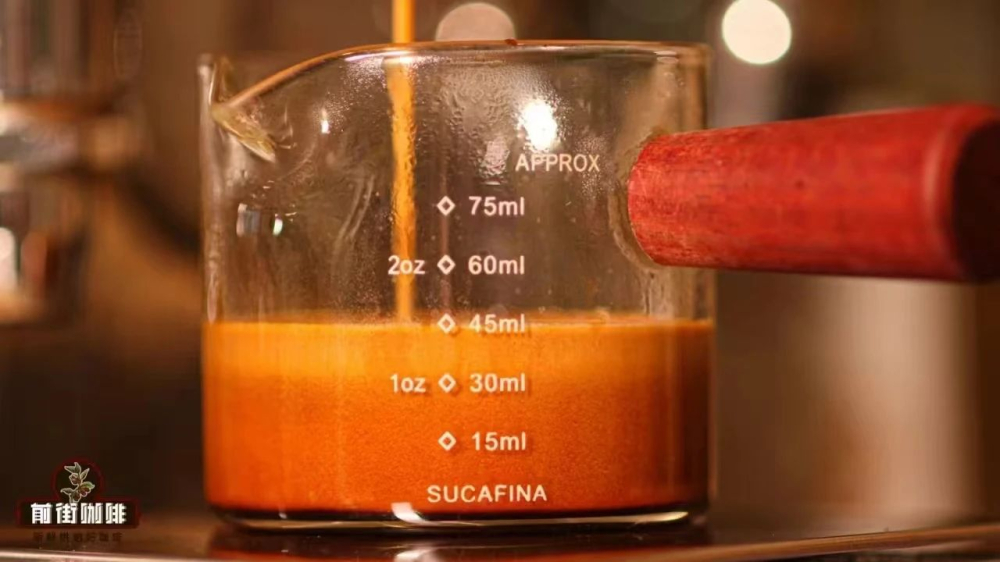
To achieve ideal integration and balance between coffee and milk, Front Street uses a commercial espresso blend paired with fresh milk: 20 grams of coffee grounds extracted into 40 grams of double espresso within 30 seconds, then adding 220 milliliters of steamed hot milk. This ratio is for your reference—it's not an absolute golden ratio for lattes, but rather parameters that Front Street arrived at through repeated adjustments based on the materials used and real tasting feedback.
To achieve a dense and fluid crema, Front Street believes a pressurized espresso machine is essential, and the quality of the coffee beans is equally important. Front Street specially blended a bean for customers who favor crema and mouthfeel, named "Front Street Commercial Blend Coffee Beans," composed of Arabica beans from Brazil and Colombia plus 10% Robusta beans.
This blend has a rich, creamy mouthfeel and caramel sweetness on the palate, along with nutty, cocoa, and dark chocolate-like roasted aromas—rich yet balanced, with a slight bittersweet note and a long finish. The addition of a small amount of Robusta beans enhances the richness and golden color of the crema. Because the proportion is low, the overall flavor is not noticeably altered. Front Street named it "Front Street Commercial Blend Coffee Beans" precisely because it performs excellently whether made as an Americano or a milk coffee. Combined with its affordable price, it's very suitable for daily use in cafés and can be purchased at Front Street's Taobao store or Front Street Tmall flagship store.
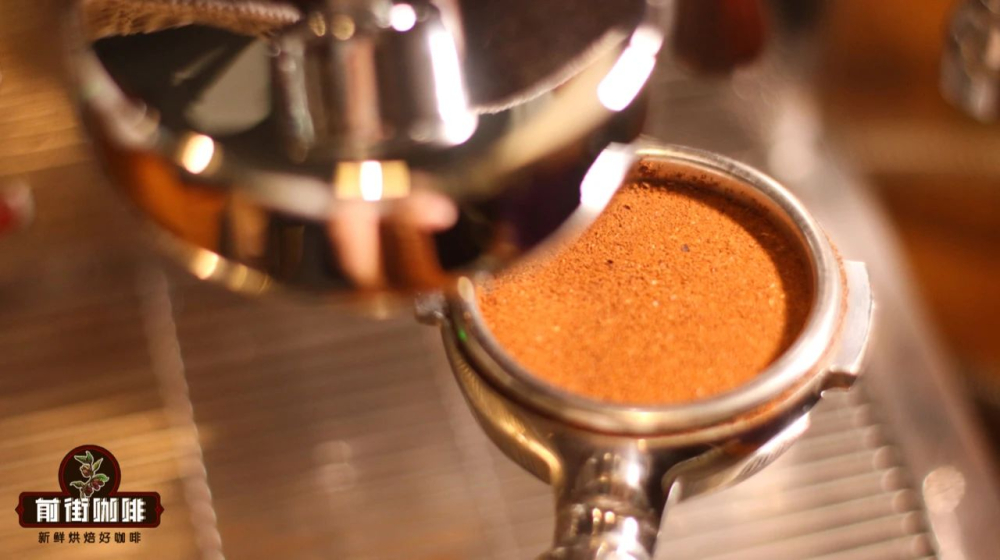
Espresso remains the base of a latte, and when making a hot latte, people often pull a latte art pattern along the way. Fine, rich crema makes latte art easier to achieve. Espresso with crema can combine more fully with milk foam and remain stable, greatly affecting the precision and formation of latte art. If the espresso lacks crema, you can still pour latte art, but the pattern will appear stiff and the appearance relatively rough.

What is the principle behind latte art? Why does shaking produce patterns?
The crema on the surface of espresso and the milk foam produced when steaming milk have lower density, so they float on the surface of the liquid. When the two mix, the milk and coffee liquid sink downward while the crema and milk foam remain on top, creating a sharp contrast between the two colors—and that's how beautiful patterns are formed.
Latte art mainly consists of two stages: incorporation and pattern formation. With the same pitcher of milk foam, during the incorporation stage you need to raise the pitcher appropriately so the milk is pushed into the coffee when poured, so no white appears on the surface. During the pattern formation stage, you lower the pitcher spout so the milk foam gently lands on the surface. Combined with different pouring techniques, various white patterns can be formed.
Beginners are best off sticking to one posture and practicing repeatedly until muscle memory is formed~
I believe many people learn latte art by following online videos, and the pitcher-holding methods in those videos vary, causing people to constantly switch postures halfway through learning. In the end, they find that no matter how they practice, the pattern in each cup is inconsistent, and their wrist gets especially sore.
Actually, regardless of which pitcher-holding method you use, the core purpose is the same: hold the pitcher steadily while keeping your wrist flexible. Note it's holding steadily, not gripping tightly—if you grip too tightly, your wrist simply can't move flexibly! A latte art pitcher weighs about 180 to 280 grams empty, and after adding milk the weight multiplies several times. If you don't find a comfortable posture and practice long-term, no matter how hard you try later, the pattern won't stabilize.
When you stick to one posture and practice for over 20 days, it becomes a habit. Once it becomes a habit, you'll find your wrist can flexibly control the pitcher's direction and the milk foam flow rate, and your hand won't shake from muscle soreness, significantly improving pattern stability.
How do you hold the latte art pitcher steadily? What grip methods are there?
Everyone has different wrist strength, and often you need to rely on finger placement to assist. Choosing a comfortable pitcher-holding posture is important! Don't force yourself to practice a posture that feels awkward~
First grip method: Fist grip (suitable for people with less wrist strength)
Suitable for making basic patterns like hearts, tulips, and leaves

The fist grip means gripping the milk pitcher handle with all fingers, giving you plenty of hand strength~But note it's not gripping tightly! Nor is it casually resting your fingers so the handle wobbles freely between them! The former is excessive force, which affects wrist flexibility;
(Gripping too tightly)
The latter is holding too loosely—the pitcher won't release milk foam in rhythm with your wrist movements, and the pitcher may even swing around "on its own," often resulting in a shapeless blob of a pattern……
(Gripping too loosely)
Second grip method: Thumb-and-index-finger pinch grip (suitable for people with greater wrist strength)
Suitable for making patterns with pronounced lines and combination patterns
This grip is similar to the first, with the difference being that you pinch the top sides of the handle with your thumb and index finger, concentrating strength in these two fingers, while the middle, ring, and little fingers assist in steadying the rest of the handle. This grip allows better control of the milk foam flow rate, and many baristas use it when practicing rippled or combination patterns~
Why is it that even when the milk foam is well-steamed and the pitcher-holding posture is correct, you often still can't produce a pattern?

First of all, whether a latte has art isn't the main point! Incorporation is the key~Poor incorporation not only affects pattern creation but also affects the coffee's flavor and mouthfeel.
To incorporate evenly, keep the pitcher 5 to 8 centimeters from the coffee surface, then tilt the cup and incorporate with a slow flow rate. During incorporation, rotate only the pitcher or the coffee cup—not both at the same time—otherwise the milk foam and coffee will "fight" and create bubbles. Once you've incorporated to about 70-80% full, you can start making the pattern~
After incorporation is complete, you can pause briefly (no more than 3 seconds, otherwise the milk foam begins to separate and the mixed foam loses its fluidity). The pause is to stabilize the still-swirling liquid flow and prevent the subsequent pattern from drifting. When forming the pattern, straighten the cup at the same time so the milk foam flows into the cup as the angle changes~
The above content is compiled by CoffeeHunters, a coffee news website.


