







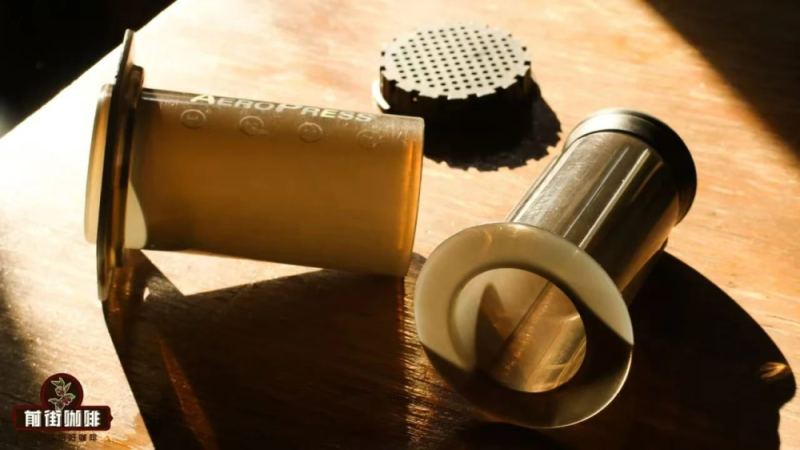
Is Granulated Sugar for Coffee Part of an AeroPress Light Roast Latte?
Yes, an AeroPress can brew light roast beans, but the result works better as a concentrated base for milk drinks than as a straight cup. The tested plan uses 20g of coffee at a 1:3 coffee-to-water ratio, 94C water, and the inverted method for one minute. That yields a strong shot that holds up when 300ml of whole milk and ice are added.
Bean choice matters more than technique here. Medium-dark or dark roasts are recommended to keep the latte from tasting sharp or thin, while fruit-forward lots suit drinkers who dislike bitterness. Granulated sugar is an optional ingredient in the setup, along with a shaker, a narrow-spout kettle, a scale, and a grinder. The finished drink is assembled by shaking the coffee base with milk and ice.
As a flexible and portable brewing device, can the AeroPress handle light-roast coffee beans? How should the coffee-to-water ratio be set? Starting from Front Street's hands-on experience, this article first answers the question of the AeroPress's compatibility with light-roast beans, then provides a complete demonstration of using the AeroPress to make a high-concentration coffee base and then prepare a milk coffee. The article gives specific bean selection suggestions, extraction parameters (20g coffee, 1:3 coffee-to-water ratio, 94°C water temperature, inverted method for one minute), and a latte ratio plan, and honestly records the flavor performance of the finished product. Whether you are a beginner wanting to try the AeroPress or an expert hoping to expand your equipment's possibilities, you can gain reusable reference from it.
Today we are trying to use the AeroPress to make a cup of milk coffee and test the final taste performance~
The materials that need to be prepared in advance are as follows:
1. Ice cubes 2. 300ml whole milk 3. Granulated sugar 4. 17g fresh coffee beans 5. AeroPress 6. Thick-walled glass for extraction and drinking 7. Shaker (can also be replaced with other similar utensils) 8. Pour-over kettle (a narrow-spout model is better) 9. Electronic scale 10. Coffee grinder
What type of coffee beans is more suitable with the AeroPress?
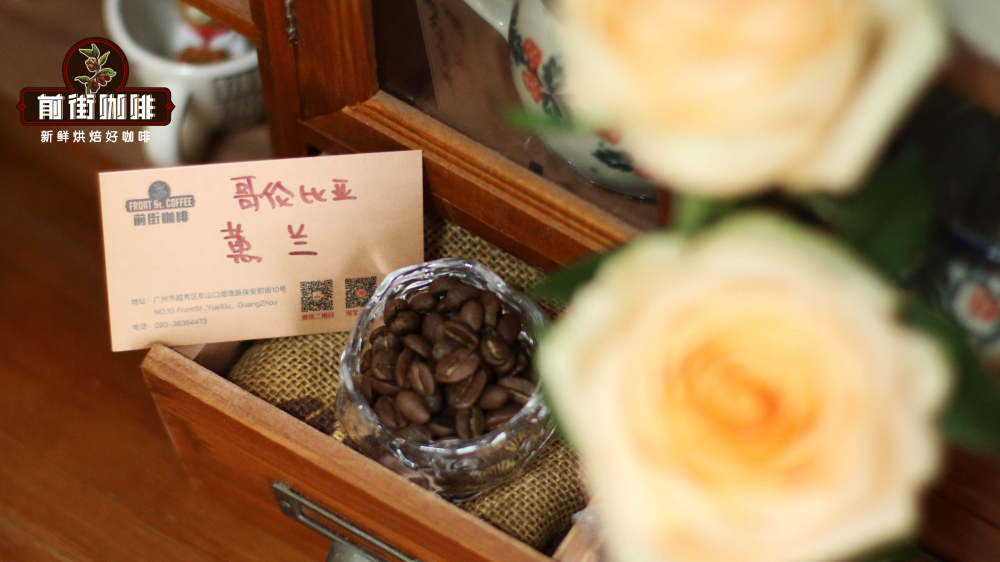
To avoid the finished latte having a sharp acidity or a thin taste, it is recommended to prioritize beans labeled as medium-dark or dark roast, such as Front Street Paradise Bird, Front Street Queen's Estate, Front Street Golden Mandheling, and Front Street Huila, etc.; however, if you are more sensitive to bitterness, then drip bags with fermented fruity acidity characteristics will suit your taste better, such as Front Street Sidra, Front Street Strawberry Candy, Front Street Sunflower Warm Sun Blend, and other coffees. Because they simultaneously have candied fruit, fermented wine aroma, and a certain degree of caramelized flavor, their integration with milk will be higher.
The specific operating steps for AeroPress latte
Without further ado, next Front Street will demonstrate how to use the AeroPress to obtain a cup of coffee liquid with sufficiently high concentration. The extraction parameters are set as follows:
Beans selected: Front Street Colombia Huila Dose: 20g Coffee-to-water ratio: 1:3 (the coffee grounds will absorb some water; after repeated testing, Front Street confirmed that 1:3 is the ideal coffee-to-water ratio) Grind size: espresso grind (close to flour texture) Extraction water temperature: 94°C Extraction method: inverted method Extraction time: one minute
Step one, assemble the AeroPress "syringe" properly, then turn it upside down.
Next, add the coffee grounds and hot water in order.
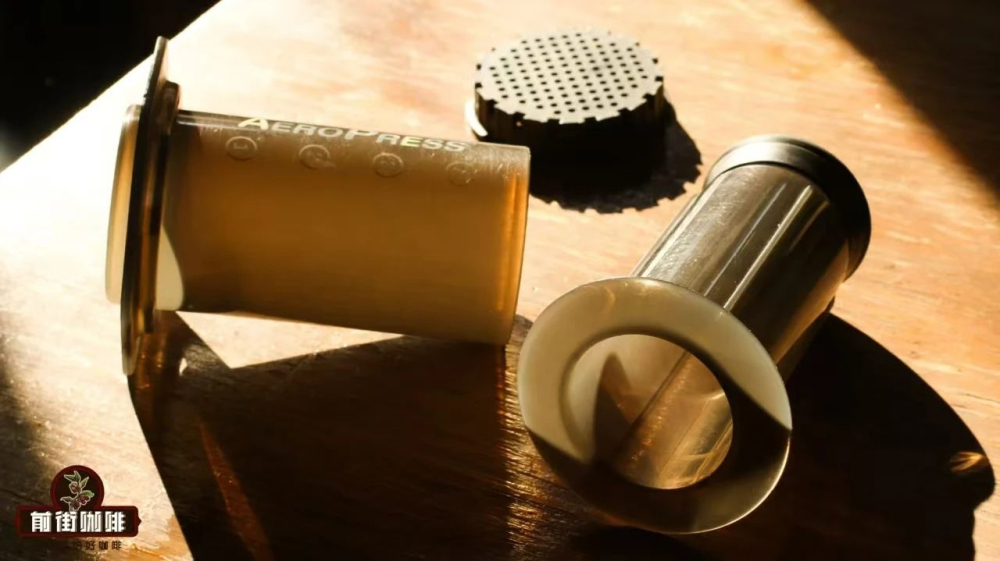
Stir ten circles with a stirrer, then let it sit for one minute.
When the time is up, put on the filter cap, take a prepared cup and invert it onto the cap. Then hold the AeroPress and the cup tightly and flip the whole thing over.
Finally, push the plunger downward with even force and slowly.
After the plunger is pushed all the way to the bottom, extraction is complete. You can see that although this cup of coffee does not have much liquid, its color is extremely dark, indicating that the concentration is quite high. Take a small sip, hey, it feels right!
Next, what everyone is most concerned about is probably what effect using this espresso concentrate to make a latte will have. Front Street immediately steamed a portion of milk foam to test, with the following ratio: AeroPress espresso: 40ml Milk foam: 200ml
Thus a cup of milk coffee with a good appearance was obtained.
However, after tasting it, Front Street found that the overall taste was slightly on the weak side, but it still had obvious chocolate, cream, and nut aromas. Although the flavor intensity cannot compare with that produced by a coffee machine, there was no unpleasant aftertaste at all, and coffee aroma and milk aroma coexisted throughout. We all agreed that it is worth trying.
The above content is compiled by CoffeeHunters, a coffee news website.


