







What Makes Golden Mandheling Different From Other Sumatra Coffee?
Golden Mandheling is a trademarked lot from the Indonesian exporter PWN, not a general name for any Sumatra coffee. True Mandheling grows in the highlands of Aceh and North Sumatra, mainly around Lake Toba's Lintong region and Lake Tawar in the north. Only beans that pass PWN's five-stage sorting can carry the Golden Mandheling label, which is why counterfeits are common.
The two producing areas, Aceh and Lintong, sit on fertile volcanic soil with ample rainfall, and the cherry season runs from September to April. Beyond coffee, the same land yields spices, timber, and palm oil. That terroir shapes the cup: Mandheling is grown as Arabica, and the Ateng variety appears in the PWN lots, giving the coffee its heavy body and low acidity.
Golden Mandheling is a name that many coffee enthusiasts delight in talking about, but the market is full of both real and fake versions, and getting an authentic one is not easy. This article starts from the origins of Mandheling, sorts out the terroir and variety changes of Sumatra's two core producing regions—Aceh and Lintong—then delves into the ins and outs of the Golden Mandheling trademark, explaining why only the Indonesian company PWN produces the authentic version. It also introduces PWN's rigorous five-stage sorting standards, the background of the Ateng variety, and Front Street Coffee's roasting curve and three-stage brewing parameters, helping readers build a comprehensive knowledge framework for identifying and tasting authentic Golden Mandheling, from certificates and burlap bags to the flavors in the cup.
For many coffee enthusiasts, Golden Mandheling is both a familiar name and one shrouded in a bit of mystery. It's familiar because praise for it never seems to be absent from coffee circle conversations; it's unfamiliar because there are simply too many counterfeit Golden Mandhelings on the market, and getting a truly authentic cup is no easy task. So what exactly is Golden Mandheling? Where does the real Golden Mandheling come from? And how can ordinary consumers see through the fakes? Front Street Coffee is here to help sort it all out one by one.
Where exactly does Mandheling come from?
Sumatra is the homeland of Mandheling, with producing regions mainly distributed across the higher-altitude provinces of Aceh and North Sumatra, where Arabica is the primary crop and which are also among Indonesia's few sources of specialty lots. In the traditional sense, Mandheling comes from the Lintong region around Lake Toba; after Aceh province returned to peace in 2005, the area around Lake Tawar in the far north also continued to grow Mandheling, and this lot is also known as Aceh coffee. Together, the two are called the "Two Lakes, Twin Mandhelings," and they constitute the main source of Mandheling coffee on the market today.
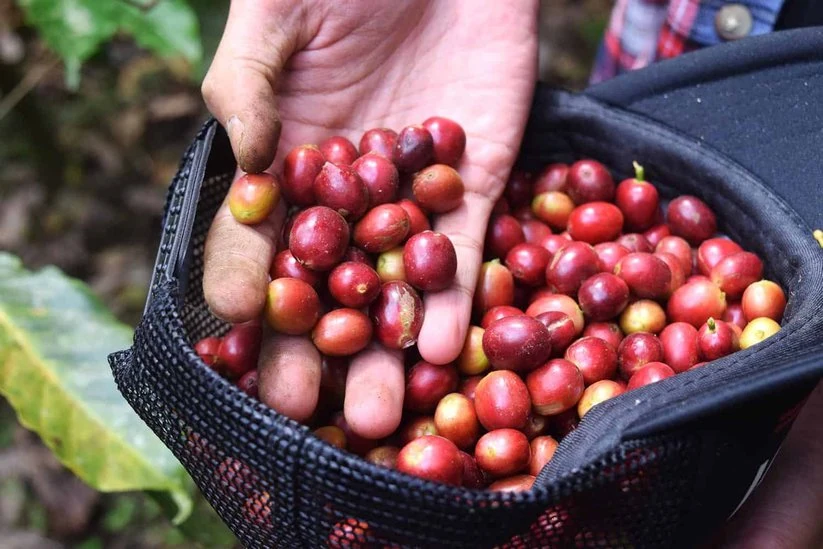
The two major producing regions of Aceh and Lintong have fertile volcanic soil and ample rainfall. Besides coffee, they are also rich in spices, timber, palm oil, and other agricultural products. From September each year to April of the following year is the coffee cherry ripening season, and busy farmers can be seen picking everywhere in the mountains. Lintong Mandheling is traditionally grown by the Mandailing and Batak peoples, while the "rising star" Lake Tawar Mandheling is cultivated by the Gayo people.
The coffee varieties grown in Indonesia are quite diverse. The first to take root locally was the widely recognized excellent-flavored Typica, introduced by the Dutch in the late seventeenth century and also known in Indonesia as Bergendal, Sidikalang, and other names. By 1877, leaf rust had swept through nearly all coffee trees across Indonesia, and large swaths of Typica withered as a result.
To cope with this crisis, the Indonesian government introduced the more disease-resistant Robusta from Africa and elsewhere, and to this day Robusta remains Indonesia's main variety. Afterward, to increase yields, Indonesia continuously introduced various disease-resistant varieties from abroad, including Caturra, Catimor, Timor, Typica, S288, S795, Sidikalang, and others. Among them, the Robusta-Arabica hybrid varieties Tim Tim and Bor Bor, as well as the Catimor series Ateng, because of their excellent disease resistance and ability to adapt to Sumatra's terroir, present the region's unique cedar-like aroma.
What are Golden Mandheling coffee beans?
If you think that simply being large, uniform, and low in defects qualifies a bean to be called Golden Mandheling, then you've misunderstood. There is a history behind this bean: originally, a group of Japanese merchants planned to purchase top-quality Mandheling to take back home and open up the market. Facing an unfamiliar Indonesian producing region, they chose to cooperate with the locals. It was precisely under this model of cooperation that the name Golden Mandheling gradually gained fame and came to be regarded as the representative of high-quality Mandheling.
Later, due to internal changes, the "local" company responsible for working the North Sumatra producing region—pawani—beat them to registering the "Golden Mandheling" trademark. The Japanese side had no choice but to strike out on its own and launch "Ding Shang Mandheling."
Therefore, authentic Golden Mandheling comes from the Indonesian green bean company PWN!
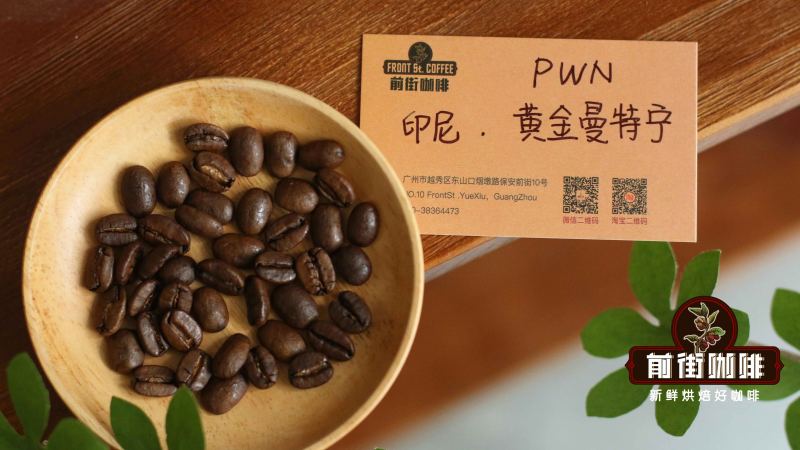
PWN is the abbreviation of the well-known Indonesian green bean merchant Pawani Coffee Company, and the "Golden Mandheling" trademark was long ago registered by PWN, making these words PWN's exclusive property from then on. In the past, Golden Mandheling sold on the market rarely mentioned PWN (pawani); most simply used large bean size and few defects as selling points, and basically none were labeled "Front Street PWN Golden Mandheling"—they merely referenced PWN's sorting system. Strictly speaking, such beans amount to no more than "Mandheling G1 18 mesh."
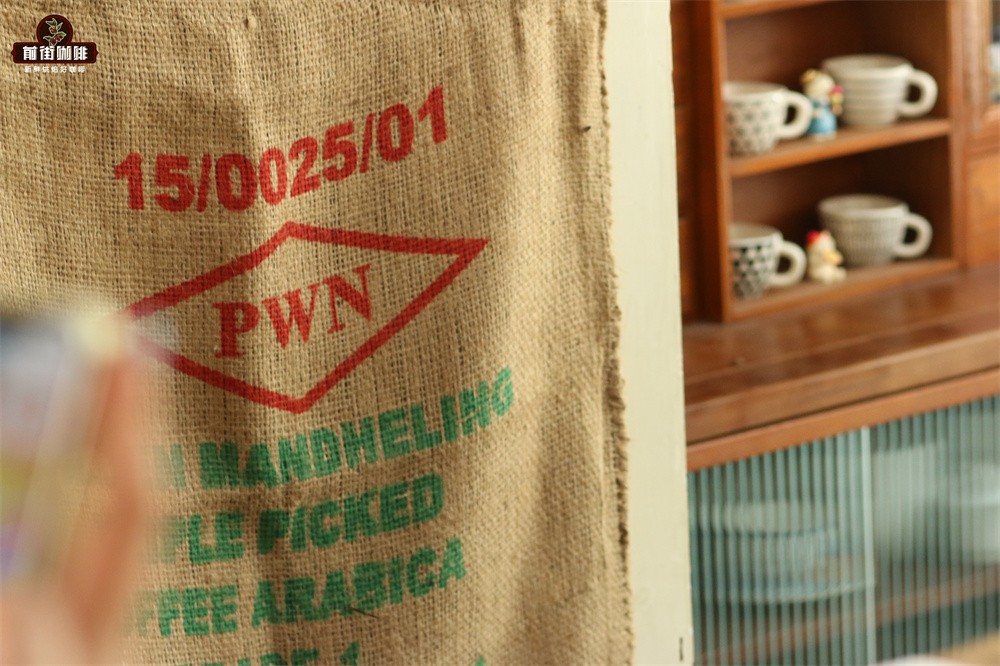
The Golden Mandheling sold by Front Street Coffee all comes from PWN Coffee Company. Verifying whether what you bought is genuine is actually not hard: every bag of Golden Mandheling has a burlap sack with its own专属 number and corresponding certificate of authentication. As long as the seller can present these proofs, it can basically be confirmed as genuine. (Golden Mandheling's burlap sack comes in only one specification, namely 30kg packaging.)
How does the PWN green bean company sort Golden Mandheling?
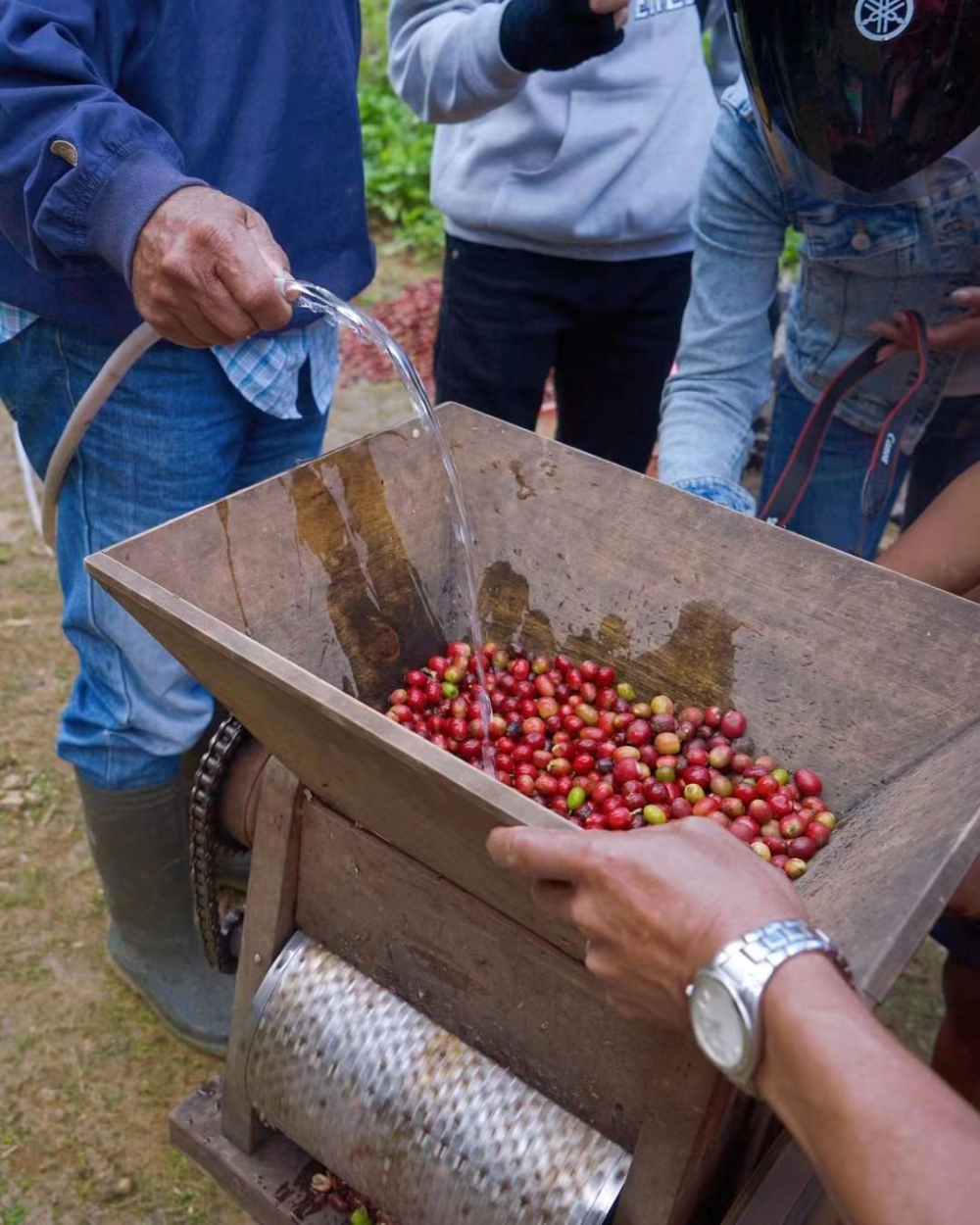
As is well known, Indonesian green coffee beans use the wet-hulled process. The half-hard, half-soft moist green beans are easily crushed when the mucilage and parchment layer are removed, splitting open into a shape like a goat's hoof, commonly known as goat hoof beans. These goat hoof beans are not considered defective beans, but in PWN's view they look insufficiently neat, so they are removed to present a perfectly uniform appearance.
You might think that 18 mesh and above, no more than 3 defects in 300g of green beans, and additionally removing goat hoof beans is already strict enough. But PWN can go even further: after four rounds of hand sorting, the beans are then uniformly sent to machines for density and color sorting, ultimately yielding Mandheling with uniform color and uniform bean shape. In other words, to ensure the outstanding quality of its Golden Mandheling, PWN performs a total of 5 rounds of sorting.
What about the Golden Mandheling on the market that is not produced by PWN?
Many Golden Mandhelings on the market are actually green bean merchants, in order to sell at a high price, selecting beans of 18 mesh and above from Mandheling of the same G1 grade for sale; some even sort three times to make the appearance as close as possible to Front Street PWN Golden Mandheling. The appearance can indeed pass for the real thing, but what about the taste? Front Street once acquired several lots of beans also called Golden Mandheling for blind testing, and the baristas participating in the cupping could all identify Front Street PWN Golden Mandheling, because that cleanliness is something imitations cannot learn.
How can you tell whether the Golden Mandheling you bought comes from PWN?
The key lies in two things: the factory certificate issued by PWN Company, and the clear PWN logo on the burlap sack of Front Street PWN Golden Mandheling green beans. If you are unsure whether what you bought is authentic PWN Mandheling, you might as well ask the seller to show the certificate or the coffee burlap sack. For the Front Street PWN Golden Mandheling sold by Front Street, both the burlap sack and the certificate can be seen at Front Street Coffee stores.
What variety is Front Street Coffee's Front Street PWN Golden Mandheling?
Front Street PWN Golden Mandheling uses the Ateng variety, which is what we commonly call Catimor.
In 1959, the Portuguese brought the Brazilian Bourbon mutant Caturra to East Timor, where it was crossed with Timor, which carries Robusta lineage, giving rise to Catimor. It has extremely strong disease resistance, with productivity three times that of Typica. During the leaf rust crisis, the Indonesian government not only introduced Robusta, whose flavor is far removed from Arabica, but also brought Timor into East Timor, hoping to replace Typica. Later, expert investigations found that a batch of Timor seeds introduced by the Indonesian government in 1980 had been mixed with some Catimor seeds. This batch of seeds was planted in Aceh in northern Sumatra, and the earliest area in Indonesia where Catimor was detected was precisely Central Aceh, so the locals also called Catimor Ateng, taken from Aceh Tengah (Central Aceh).
How does Front Street Coffee roast PWN Golden Mandheling?
Using a Yangjia 800N, with a charge weight of 480g. Raise the drum temperature to 200°C and charge; set the damper to 3, and after 1 minute adjust the heat to 160°C with the damper unchanged; when roasting reaches 5'40'' at a temperature of 148°C, the bean surface turns yellow, the grassy smell completely disappears, and dehydration is complete; adjust the heat to 140°C and change the damper to 4; by 9'40'', ugly wrinkles and dark streaks appear on the bean surface, and the toasted bread aroma clearly shifts to coffee aroma, which can be regarded as the prelude to first crack. At this point, listen carefully for the sound of first crack; first crack begins at 9'54''. Reduce the heat to 60°C, open the damper to 5, and drop the beans at 204.5°C.
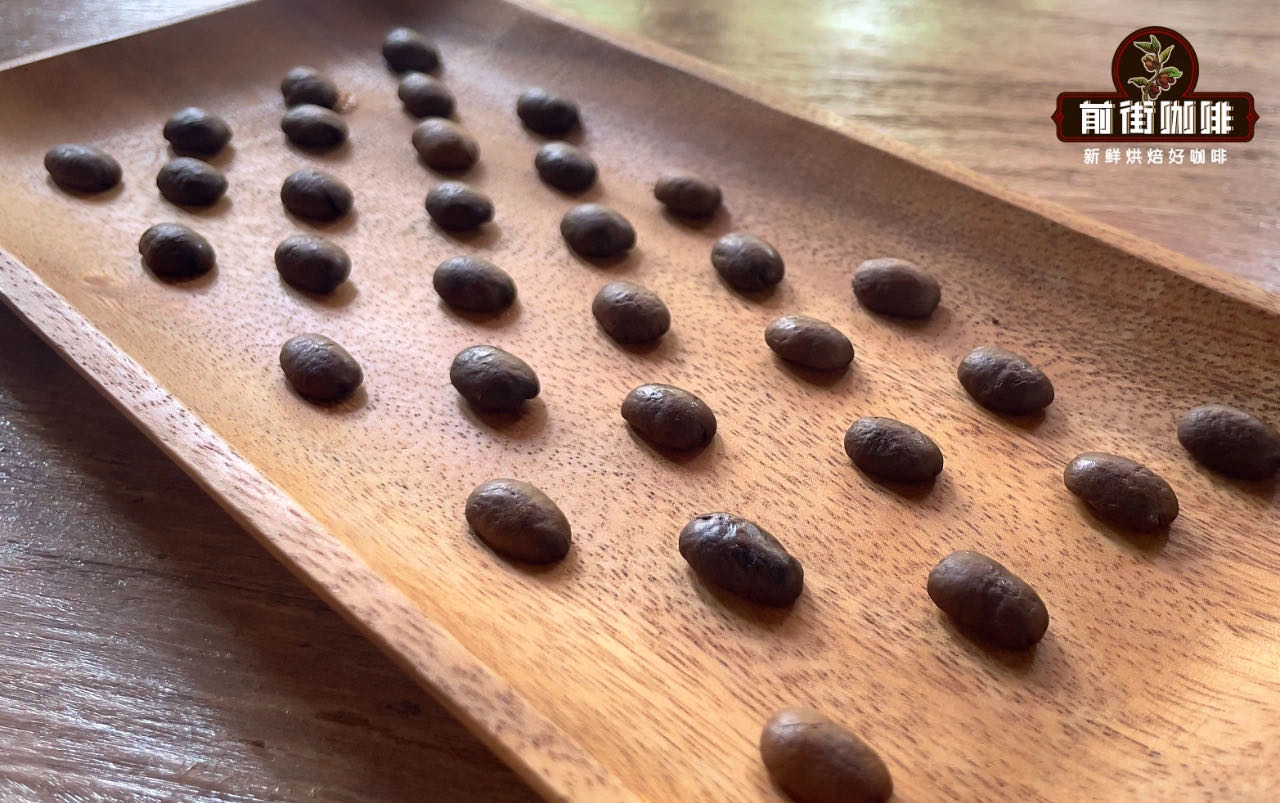
How do you brew Front Street Coffee's Front Street PWN Golden Mandheling so it tastes good?
Front Street's understanding of brewing Mandheling is to present a full-bodied yet clean mouthfeel, highlighting caramel, chocolate, and the signature herbal aroma, while avoiding unpleasant bitterness. Below, Front Street explains starting from equipment selection and each key parameter, and demonstrates with Golden Mandheling.
Front Street recommends brewing with freshly roasted coffee beans, as only then can you experience the rich flavors to the fullest. The coffee beans shipped by Front Street Coffee are all within 5 days of roasting, because Front Street knows well that freshness has an enormous impact on flavor. Front Street's roasting philosophy is "Freshly Roasted Good Coffee," so that every customer who places an order receives the freshest coffee upon delivery. The coffee resting period is about 4-7 days, so by the time the customer receives it, it is at its peak flavor.
For the dripper, Front Street chooses the Kono Meimon dripper. Its greatest feature is that the ribs extend from the bottom to the middle, while the upper part is a smooth dripper wall; after the filter paper fits closely, water cannot "secretly" bypass the coffee grounds, thereby enhancing the fullness of the mouthfeel.
The dose Front Street uses is still 15g. More dose is not necessarily better, nor is less necessarily better; it depends on the dripper's specification. Front Street uses a 1-2 cup dripper, and 15-20g is a reasonable brewing dose; going beyond this range makes brewing difficult.
For the coffee-to-water ratio, Front Street recommends 1:15. Although some suggest 1:13 or an even smaller ratio, Front Street has explained in previous articles that concentration and body are not necessarily related, and that too strong a brew makes people uncomfortable. Therefore, 1:15 can equally express Mandheling's full-bodied mouthfeel well.
For grind size, Front Street uses a No. 20 sieve with a 70% passing rate. The grind for brewing Golden Mandheling should be coarser than for light-roast beans, because Golden Mandheling is dark-roasted and has a looser structure, making it easier to absorb water and release substances; if ground to the fineness of light-roast beans, it easily brews out burnt bitterness; if ground coarser, the coffee becomes thin and tasteless, with a mouthfeel as thin as water.
For water temperature, Front Street recommends 87-88°C. By the same logic as grind size, too high a temperature easily produces burnt bitterness, while too low a temperature makes it seem flat and also produces an unpleasant stale acidity.
The brewing method uses three-stage pouring; dividing into three stages better expresses Golden Mandheling's full-bodied mouthfeel and caramel sweetness. The specific water distribution is: the first stage, bloom pour of 30ml, which fully wets the coffee grounds for degassing and prepares for better extraction of flavor substances afterward; the second stage pours 100ml; the final stage pours 95ml to enhance sweetness, overall presenting a substantial full-bodied mouthfeel, along with caramel sweetness and chocolate, nutty flavors.
Front Street Coffee's Front Street PWN Golden Mandheling characteristics, mouthfeel, and flavor description:
Sweet herbs, cinnamon-like spices, orange and pomelo peel notes, full-bodied and rich sweetness, creamy walnut chocolate. The fruit acidity is restrained and soft, and the aroma carries a strong melon sweetness; as the temperature drops, the herbal aroma emerges, with faint spices, and the herbal note is full-bodied with a rich sweetness.
The above content is compiled by CoffeeHunters, a coffee news website.


