







Is Arabica Coffee the Same as Black Coffee?
Arabica is a coffee species, not a drink, and about 75% of the world's coffee comes from it. Grinding Arabica beans and pouring hot water over them produces black coffee. So Arabica coffee qualifies as black coffee whenever it is brewed without milk, sugar, or other additions, which covers most home pour-over, French press, and cold brew.
Arabica grows on sloped, high-altitude land, largely above 1,200 meters, and is picked by hand. It carries elegant aroma, mild flavor, evenly distributed oils, and less caffeine than Robusta. Pour-over, French press, and cold brew each produce black coffee from the same arabica coffee bean; the differences come from grind size, water temperature, and coffee-to-water ratio rather than from the bean itself.
You often see "pure Arabica coffee beans" on packaging, but what exactly counts as Arabica? Does it belong to black coffee? In fact, Arabica is just one major category among coffee varieties, and about 75% of the world's coffee comes from it. The green coffee beans we buy daily and the coffee served in coffee shops are almost all Arabica. Grinding it and pouring hot water over it produces coffee liquid—that is black coffee. This article starts with the varietal characteristics of Arabica, then introduces three ways to make black coffee one by one: pour-over, French press, and cold brew, including equipment pairings, water temperature, coffee-to-water ratio, and other practical parameters, to help you consistently make a delicious cup of black coffee at home.
In TV commercials, in coffee shops, or on convenience store shelves, you often see promotional phrases like "pure Arabica coffee beans." Many people wonder: what exactly are Arabica coffee beans?
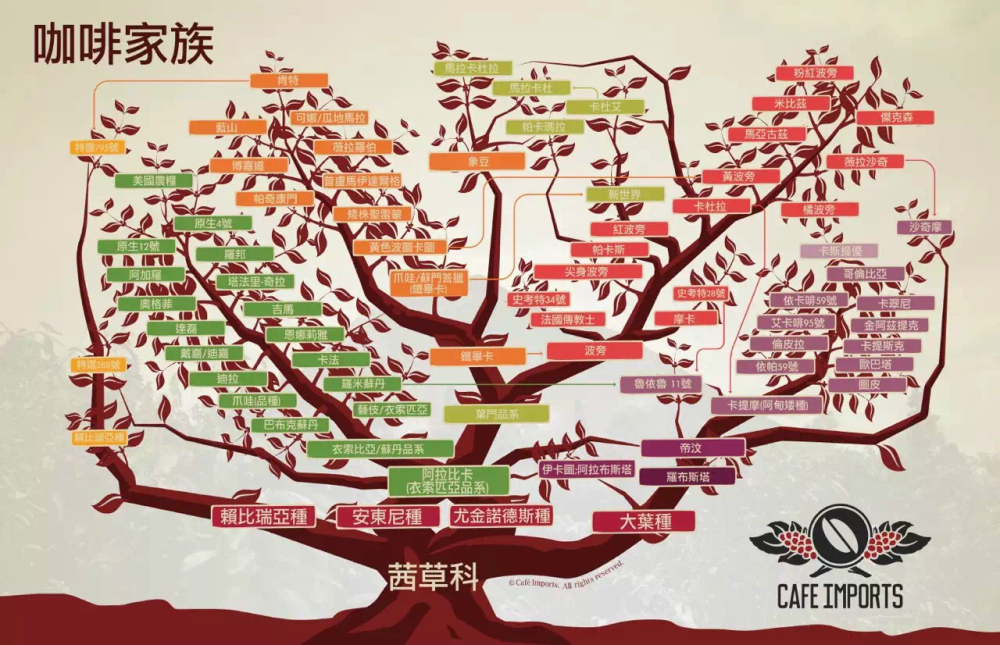
Coffee beans worldwide can be broadly divided into three major categories, but only two are truly commercially valuable and cultivated on a large scale: Arabica (ARABICA) and Robusta (ROBUSTA). Arabica is not a single variety but a vast species with more than one hundred sub-varieties. Each variety has different characteristics, and when planted in different regions, local terroir and climate conditions further cultivate unique flavors and mouthfeels that represent that region.
Arabica coffee accounts for about 75% of global production. It needs to be grown on sloped, high-altitude land, and harvesting can only be done by hand as workers climb up and down the slopes, making cultivation relatively difficult. However, Arabica beans have elegant aroma, mild flavor, evenly distributed oils, and lower caffeine content, so even though they are difficult to grow and obtain, people's fondness for them remains undiminished.
The green coffee beans currently sold on the market, as well as the coffee served in coffee shops, all use Arabica coffee beans. The single-origin coffee beans currently sold by Front Street Coffee are also 100% Arabica varieties. These beans, after being ground and brewed with hot water, produce coffee liquid—that is black coffee.
Generally, Arabica coffee beans grown above 1,200 meters in altitude, with proper roasting and brewing, can present a pleasant flavor, making them very suitable for drinking as black coffee.
What are the ways to make black coffee?
1. Pour-over coffee
Pour-over coffee is a common brewing method in everyday cafes, completed with tools such as a dripper and a pouring kettle. One of its features is using a dripper with filter paper or other filtering media to filter out coffee grounds.
The dripper and filter paper intercept coffee grounds while also absorbing oils from the coffee, making the mouthfeel cleaner. Front Street Coffee stores daily use two drippers, v60 and kono; v60 is mainly used for lighter-roasted beans, while kono corresponds to darker-roasted beans.
A digital scale is used to weigh coffee beans and water, turning all parameters into data so they can be replicated and ensure consistent output. The same logic applies to a thermometer: before each pour, confirm the water temperature is in the appropriate range. When using v60 to brew lighter-roasted beans, choose a water temperature of 90 to 92°C; for darker-roasted beans, use 88 to 89°C.
A digital scale is used to weigh coffee beans and water, turning all parameters into data so they can be replicated and ensure consistent output. The same logic applies to a thermometer: before each pour, confirm the water temperature is in the appropriate range. When using v60 to brew lighter-roasted beans, choose a water temperature of 90 to 92°C; for darker-roasted beans, use 88 to 89°C.
2. French press
If you are not yet skilled at brewing coffee, or do not have much energy to devote to it, a French press can help you easily make a cup of coffee.
To brew a pot of French press coffee, the parameters and steps you need to master are not complicated. The grind size can directly follow cupping grind size, meaning a No. 20 sieve pass rate of 70% to 75%. The water temperature is 94°C. The cupping coffee-to-water ratio is 1:18.18, but Front Street recommends using a 1:16 ratio for French press, because cupping is a 40-minute process; to discern more flavors, the coffee-to-water ratio is widened, but no one wants to wait 40 minutes for coffee.
The cupping steep time is 4 minutes, and the French press also uses 4 minutes. After 4 minutes, the cupping process is to break the crust and skim the grounds; the French press operation is different: push the plunger down, taking care not to be too hasty—press slowly, only halfway—then steep for another 1 minute, then slowly pour the coffee from the press into a cup, and a delicious cup of coffee is ready.
3. Cold brew coffee / cold extraction coffee
If you find pour-over and French press still troublesome, then a clean sealed bottle plus a filtering tool, or simply buying a cold brew pitcher, is enough to make this coffee!
When Front Street Coffee baristas make cold brew coffee, they take 50 grams of coffee grounds, add 400 milliliters of filtered water and 100 grams of ice, stir well, seal the bottle, and place it in the refrigerator's chilled compartment. Extract at low temperature for 24 to 36 hours. Once the time is up, take it out and filter the coffee liquid with filter paper; cold brew coffee is ready. It is simple to make, has a low technical threshold, and is highly forgiving, making it easy to produce a delicious cup of iced coffee.
The above content is compiled by CoffeeHunters, a coffee news website.


