








Where Are Jura Coffee Machines Made and What Milk Temperature Suits a Hot Latte?
Steam milk for a hot latte to roughly 55C to 68C. Testing milk at 40C, 60C and 75C showed that the middle range gives the sweetest, silkiest foam, while cooler milk tastes flat and milk above about 70C loses sweetness and turns thin. Texture, not just heat, decides how the drink comes across.
The temperature can be judged by feel alone, without a thermometer, since the pitcher becomes uncomfortable to hold at the upper end of the range. Making a hot latte is a common barista test because it checks espresso extraction and milk steaming at once. Milk choice shapes the result too, whether the drink is a plain latte or a flavored one such as a plum latte, and the same attention to machine design shows in where are jura coffee machines made.
When interviewing baristas at a café, making a hot latte is often the most common practical test, because it simultaneously examines two core skills: espresso extraction and milk steaming. And in this latte, besides the fineness of the milk foam, the temperature control of the milk is also a key scoring point. Many enthusiasts believe that as long as the milk is hot enough, it's fine, but that's not the case—different temperatures bring completely different textures and sweetness. Front Street compared three cups of milk at 40°C, 60°C, and 75°C, along with their corresponding lattes, and found that 55°C~68°C is the ideal range. This article will also share a method for judging steaming temperature by feel alone, without relying on a thermometer, and will retain the recommendation information for the Front Street espresso bean series.

I wonder if you've noticed that no matter which café you walk into, when interviewing a barista, almost always a live practical assessment is arranged—making a hot latte.
The reason is that espresso extraction and milk steaming are the two basic skills a barista must master, and a hot latte happens to test both abilities at once. Therefore, most cafés use "producing a hot latte" as the test question, using the finished cup the interviewee hands over to judge their familiarity with the job process.
When making latte coffee, it is recommended to use the Front Street espresso bean series, including the crema blockbuster Front Street Classic Blend, the nutty Front Street Specialty Blend, the shop-essential Front Street Commercial Blend, and the value-for-money king Front Street Dark Cocoa Blend. Each has a different style, corresponding to different usage scenarios.
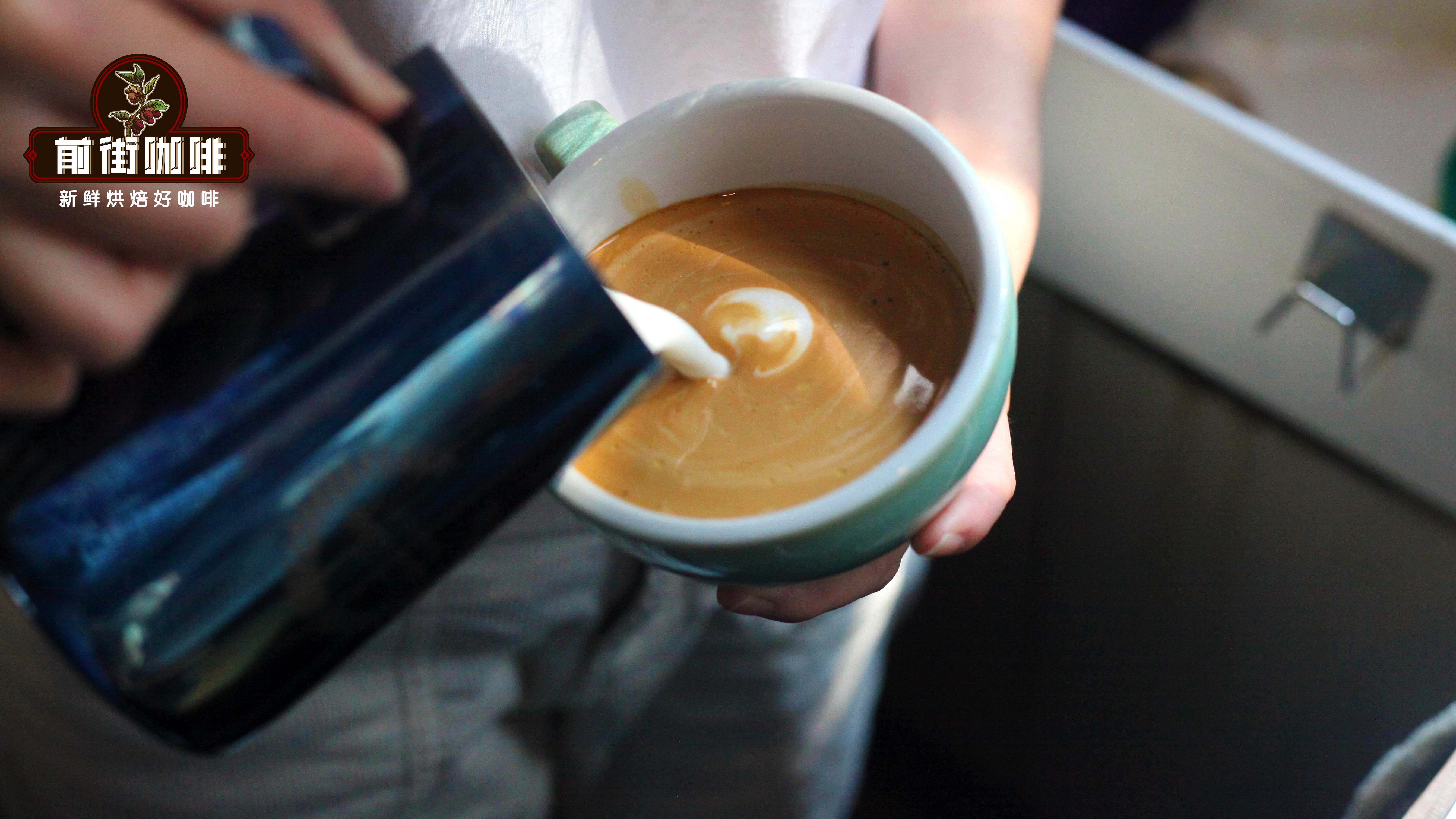
If you're looking for a tasty but affordable daily bean, you can choose the Front Street Dark Cocoa Blend recommended by many baristas. It is suitable for all kinds of coffee shops, bakeries, beverage shops, and home espresso machines. This bean is a combination of Yunnan washed small-bean coffee and Brazilian semi-dry-process coffee, with a nutty tone and ripe plum acidity. After grinding, you can smell cream chocolate and cocoa cookie aromas. The taste is balanced, and the crema has a golden glossy surface. Whether for opening a shop or home use, it's worth buying.
In this latte, "the fineness of the milk foam" and "the temperature control of the milk" are the main scoring points, followed by latte art, integration, and taste. Regarding the making of milk foam, Front Street has shared before, so this time Front Street will talk about a requirement many people don't quite understand—milk temperature control.
Many friends think that as long as the coffee base is good enough and the milk foam is steamed fine enough, the milk just needs to be hot, and temperature won't make much difference. But the actual situation is the opposite. Besides espresso, milk temperature is another key factor that can determine whether a latte tastes good.
Milk at different temperatures has different textures and sweetness, and milk is one of the main components of a latte, so its changes will naturally affect the experience of the whole cup. Therefore, for a hot milk coffee, temperature control is crucial. So a new question arises: what temperature of milk is most suitable for making a hot latte?

What temperature of milk is most suitable for making a hot latte?
Although latte did not have clear milk temperature requirements when it was first created, the industry usually controls milk temperature within the range of 55°C~68°C. Why? Let Front Street reveal the answer through an experimental comparison.
First, let's look at the difference between milks at different temperatures when drunk directly. Front Street heated three cups of milk, at temperatures of 40°C, 60°C, and 75°C respectively.
The 40°C milk is relatively smooth on entry, with moderate sweetness; the 60°C milk is also smooth, but sweeter; the 75°C milk is not very smooth, and its sweetness is also on the low side. However, this difference is easy to notice only when there is a comparison. If drunk alone, it is hard to detect the differences between them. Next, let's make them into lattes separately and try again.
The milk temperatures used to make the lattes are likewise 40°C, 60°C, and 75°C, and the milk foam steaming standard is uniformly fine, dense, thin microfoam. As said earlier, an experienced barista can freely control milk temperature, so today Front Street will also briefly share how to accurately steam milk foam at 40°C, 60°C, and 75°C without relying on a thermometer.

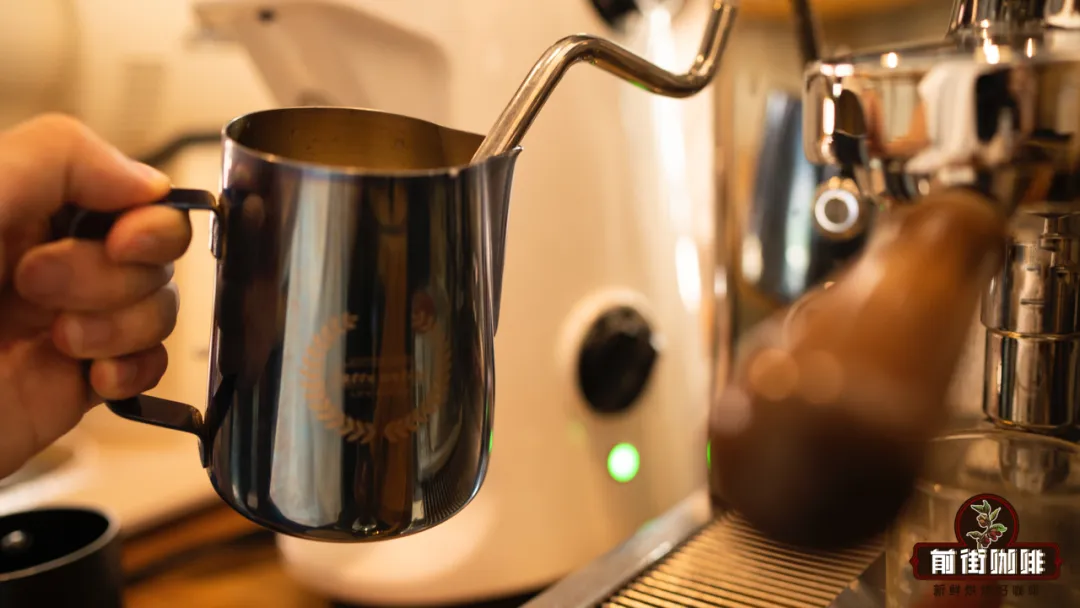
The steaming method for the milk foam is exactly the same; the only difference is when to stop heating. When steaming until the pitcher is slightly warm and the palm holding the pitcher feels a trace of warmth, the milk temperature is about 40°C; when the pitcher's temperature rises to the point where the palm cannot bear it and it feels hot, it means the milk has reached 60°C; if you continue steaming, after the milk temperature passes 70°C, even if you do not perform any aeration action, the amount of foam will continue to increase. As the foam increases, the milk temperature rises faster. So about 3 seconds after it begins to expand, you can stop steaming. At this point the milk temperature is about 75°C±2°C, very, very hot to the touch.
The coffee liquid also uses the Sunflower Warm Sun Blend. Today's extraction parameters are 20.1g dose, 29 seconds, 38ml coffee liquid. Integration and latte art are done in one go, and after completion you can move on to the tasting stage.
Honestly, drinking the milk alone isn't obvious enough, but after making it into coffee, the gap can be described as worlds apart. For ease of understanding, below, a latte made with milk at whatever temperature will simply be called a whatever-degree latte.
40°C latte: It tastes slightly warm, the overall aroma is moderate, and the sweetness is fairly obvious. But its biggest drawback is that the milk foam is not fine enough and is rather coarse. Within just a few minutes, the milk foam has already collapsed and fallen apart. This is because during the steaming process, the integration time was not sufficient, so the milk foam could not take on the ideal fine form.
60°C latte: This cup performs very well. The temperature is just right, warm but not burning to the mouth. In this range, the lactose in the milk is exactly activated, greatly enhancing its sweetness, so the sweetness of the whole cup is the highest of the three. At the same time, this temperature range just allows the milk foam to be fully textured, so the milk foam is fine and dense, and it drinks very smoothly, with a high degree of integration.
75°C latte: If any friends try an experimental comparison at home, please be sure to be careful when drinking this latte, because its temperature is relatively high and the coffee liquid will burn your mouth. In addition, the milk foam and the coffee below are in a separated state, and the degree of integration when drinking is extremely low. In terms of texture and taste, the coffee overall is very thin, and the sweetness is not high.
Even if it is left to cool to around 60°C, the taste is still far inferior to a latte directly steamed to 60°C. The texture remains thin, and the sweetness is poor. This is mainly because the lactose and proteins in the milk have been decomposed and damaged by the higher temperature, forming an irreversible negative effect. So even if the temperature drops, the texture and sweetness still cannot compare with the other two cups.
From this, we can conclude: when making a hot latte, the reason the milk temperature should be controlled at 55°C~68°C is that this can both activate the lactose in the milk and allow the milk foam enough time to be fully textured, so that the final coffee is more delicious.
The above content is compiled by CoffeeHunters, a coffee news website.


