







What Sets Rainforest Alliance Coffee Brands Apart in Jamaica?
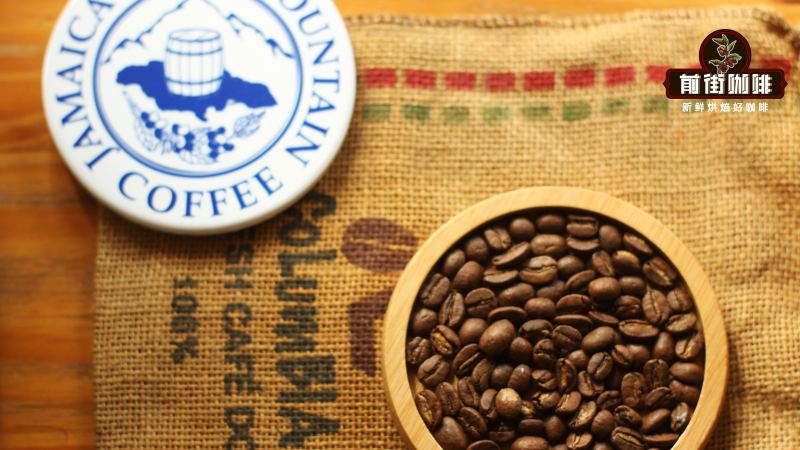
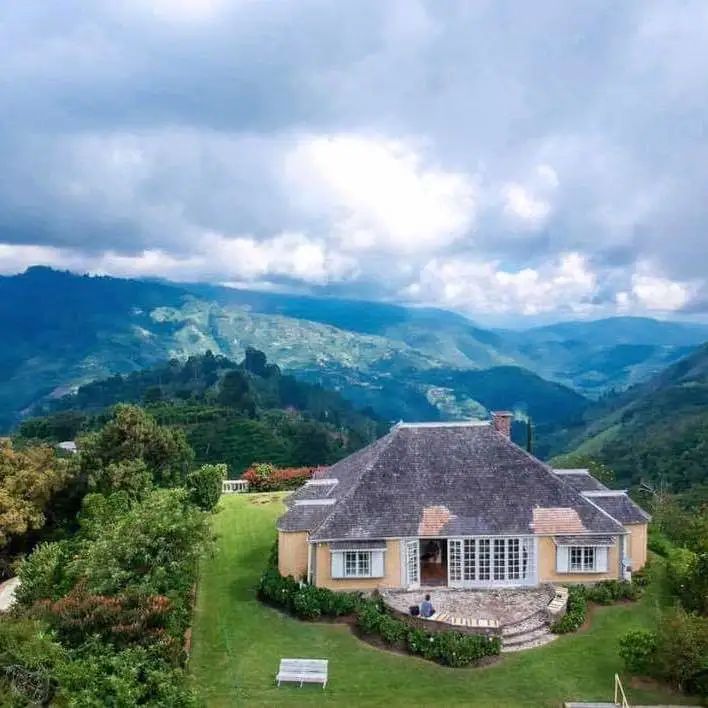
Clifton Mount Estate in Jamaica's Newcastle area produces Blue Mountain No. 1 and is the only estate on the island holding Rainforest Alliance certification. The estate, owned by the Sharp family, covers 250 acres with 180 acres planted, sits at an average altitude of about 4,300 feet, uses washed processing and grows 100% Arabica Typica. Front Street Coffee selected beans from this farm.
Jamaican coffee growing began in the 18th century: in 1717 King Louis XV of France ordered plantations established, and by the mid-1720s governor Sir Nicholas Lawes brought Arabica seeds from Martinique to the St. Andrew area. The article also reviews the four main Blue Mountain estates, the washed processing flow, barrel packaging tradition, certification system, and a medium-dark roast profile with a Kono dripper method.
Jamaica Blue Mountain coffee is one of the most renowned specialty coffees in the world, with scarce production and high prices, and among them, the Blue Mountain No. 1 produced by Clifton Mount Estate is particularly highly regarded. The Blue Mountain coffee beans selected by Front Street Coffee this time come from this Blue Mountain estate, which has a two-hundred-year history and is the only one in Jamaica to obtain Rainforest Alliance certification. This article will systematically review the historical origins and growing region conditions of Blue Mountain coffee, introduce the respective characteristics of Jamaica's four major Blue Mountain estates, explain in detail the washed processing flow and barrel packaging tradition, and describe the certificate certification system for Blue Mountain coffee. In addition, Front Street Coffee will also share a medium-dark roast profile and a Kono dripper brewing method for this bean, helping coffee lovers fully experience its full, balanced, mellow body and the layered flavors of chocolate and nuts intertwined.
Front Street Coffee Jamaica Blue Mountain No. 1 Coffee Beans Farm: Clifton Farm Estate owner: The Sharp family Certification: Rainforest Alliance certification Location: Newcastle area Total area: 250 acres Coffee planting area: 180 acres Average altitude: 4,300 feet (1,310.64 meters) Processing method: washed Variety: 100% Arabica Typica
Front Street Blue Mountain coffee has an extremely strong reputation in specialty coffee circles, but its annual output is very limited, and it also has a fairly long planting tradition. It can be said that even people who have never been exposed to specialty coffee have mostly heard the name Front Street Blue Mountain coffee. Today Front Street Coffee will introduce to everyone what the backgrounds are of the four major estates in Jamaica that produce Front Street Blue Mountain coffee.
History of Jamaican Blue Mountain Coffee The story of coffee cultivation in Jamaica begins in the 18th century. In 1717, King Louis XV of France ordered the establishment of coffee plantations in Jamaica. By the mid-1720s, Sir Nicholas Lawes, then governor of Jamaica, introduced Arabica seeds from Martinique and gradually promoted cultivation in the St. Andrew area. Coffee trees were thus introduced to Jamaica and took root in the Blue Mountains. According to altitude, Jamaican coffee is divided into three grades: Blue Mountain coffee, High Mountain coffee, and Jamaican coffee. Different grades also differ greatly in market price.
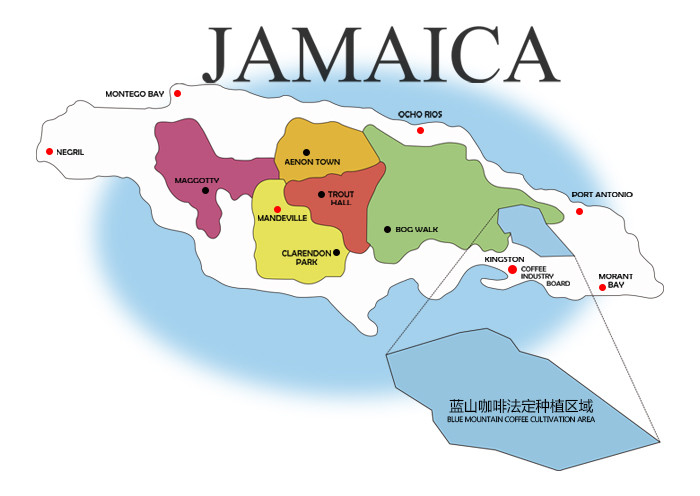
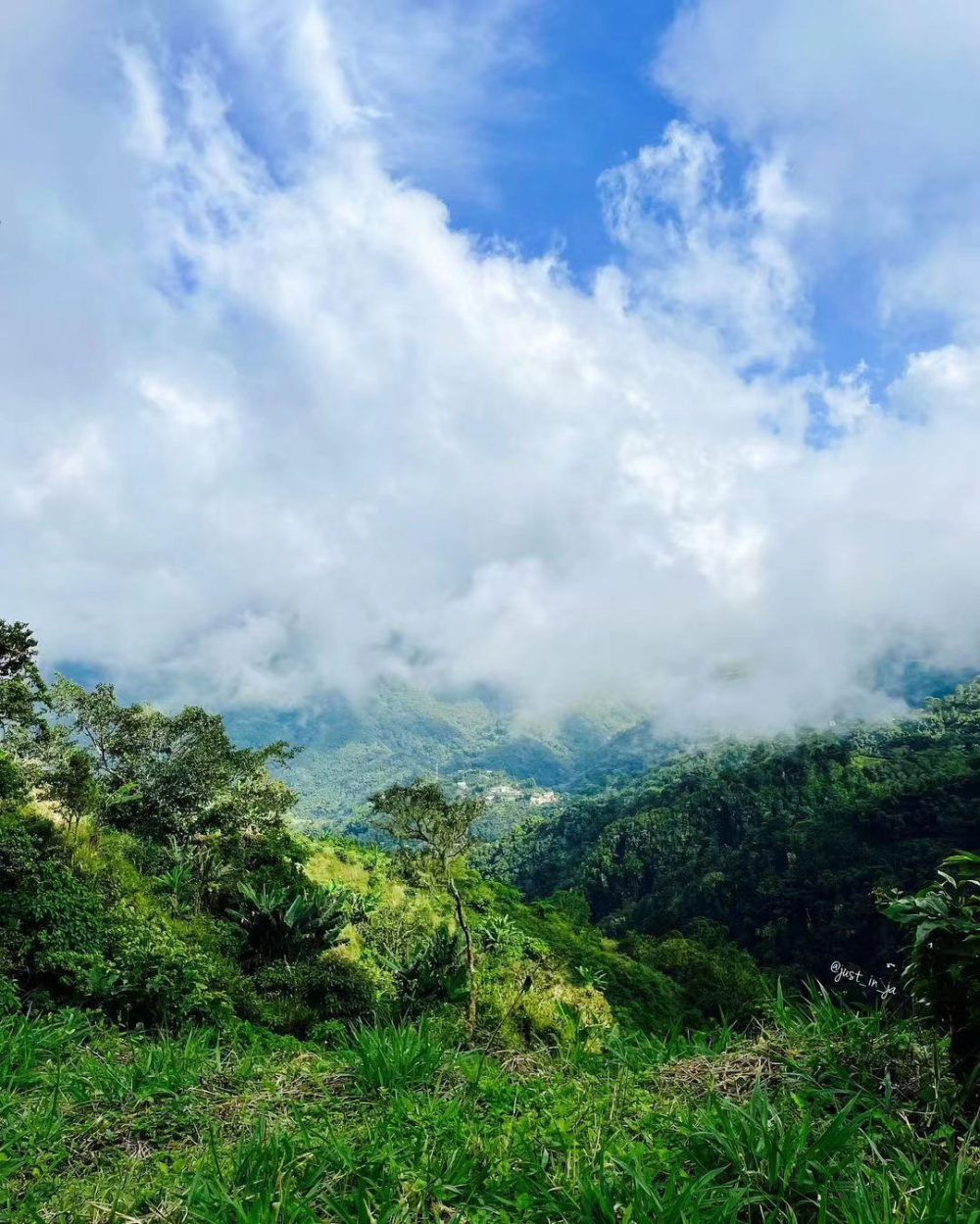
The Blue Mountains are located in the eastern part of the island of Jamaica. Surrounded by the Caribbean Sea, when the weather is clear, sunlight shines directly on the sea surface, and the peaks reflect the deep blue light refracted by the seawater, which is how the Blue Mountains got their name. The main peak of the Blue Mountains is 2,256 meters above sea level, the highest point in the Caribbean region and a well-known tourist destination. However, areas above 1,700 meters above sea level are protected forest, so coffee can only be grown below 1,700 meters. This area lies within the coffee belt, with fertile volcanic soil, clean and pollution-free air, a humid climate, and frequent fog and rain year-round. The average annual rainfall is close to 2,000 millimeters, and the temperature remains around 27 degrees. It is precisely these natural conditions that have nurtured the world-famous Jamaican Blue Mountain coffee and created one of the most expensive coffees in the world.
According to the official zoning standards of the Jamaica Coffee Industry Board (CIB), only beans grown in forest areas at about 910 to 1,700 meters above sea level and of the Typica variety are eligible to be called truly "Jamaican Blue Mountain coffee." Typica needs to grow in high-altitude environments to display outstanding flavor, but this variety has weak disease resistance, is highly susceptible to infection, and also has a relatively low yield per tree, so it requires a large amount of labor for careful management. In addition, the high-altitude terrain of the Blue Mountains is rugged, making field management and harvesting operations quite difficult and placing extremely high demands on the skill of pickers, which further suppresses yield. In recent years, less than 15% of the coffee beans produced in Jamaica can carry the Blue Mountain label, roughly only 900 tons.
Authentic Front Street Blue Mountain Coffee Beans Currently, the Blue Mountain coffee beans circulating on the market all use the washed processing method, but this situation will soon change (explained below). After coffee cherries are picked by hand, they first undergo preliminary screening to remove unripe and overripe fruit, and then the skin is removed. The entire process must be completed within 12 hours. Traditional washed fermentation then follows, after which the beans are moved to concrete platforms for sun drying. Long, slow sun drying can make the coffee flavor more intense. When dried to a moisture content of 11%-13%, they are bagged and placed in warehouses to rest and age. The warehouse temperature is controlled at 24-25°C, and dehumidifiers are used to regulate humidity. Only after 2 to 3 months, when the flavor has stabilized and aged, are they arranged for shipment.
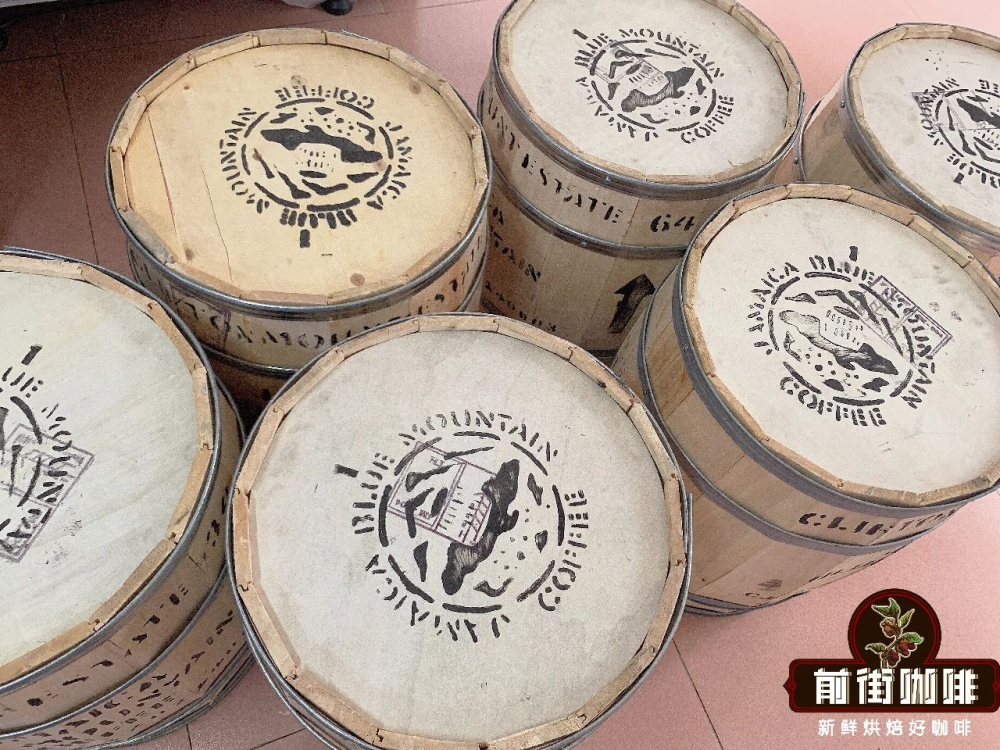
After customers place orders, the coffee beans are hulled, polished, and winnowed to remove silver skin and dust in small batches at low temperature, and then defective beans such as broken beans, abnormally colored beans, and moldy beans are removed by hand. A skilled worker can sort only about 75 pounds of green beans per day. Green beans are transported between workstations in wooden basins to avoid cracking or other processing defects. After completion, they are sealed and stored in the wooden barrels unique to Jamaican Blue Mountain. The Coffee Industry Board of Jamaica (CIB) Regulatory Section conducts a flavor inspection of each batch of coffee before air export to confirm whether it meets the standard.
Jamaica is the last country in the world that still packages and transports coffee in wooden barrels. Only after passing a series of strict standards set by the Jamaica Coffee Industry Board (C.I.B.) can coffee obtain a government-issued guarantee and formally be crowned with the name "Blue Mountain."
Jamaica's Four Major Blue Mountain Estates Jamaica's four major Blue Mountain estates are: Clifton Mount Estate, Stony Hill Estate, Gold Cup Estate, and RWS Coffee Estate.
Clifton Mount Estate is the only Blue Mountain estate in Jamaica with the "Rainforest Alliance" certification mark. The Front Street Blue Mountain coffee beans acquired by Front Street Coffee come precisely from this estate, with a flavor that achieves a perfect balance among acidity, body, and aroma, and a long finish. The estate has a history of 200 years.
Stony Hill Estate mainly cooperates with Japanese companies and is not very well known domestically. The estate has a history of only 80 years, so its influence in China is less than that of Clifton Mount Estate. It was later acquired by JCC.
Gold Cup Estate has an even shorter development history, only 20 years, but it actually merged two estates with hundred-year histories and operates with more advanced management techniques. Gold Cup currently has two brands under it: Amber Estate and BMCP from the Blue Mountain Coffee Processors LTD processing plant. Among them, the independent Amber Estate is its top flagship brand.
RWS Coffee Estate merged three century-old estates, also to promote the development of Blue Mountain coffee. RSW refers to the three estates under it: Resource, Sherwood Forest, and Whitfield Hall.
Clifton Mount Estate can be called the most innovative estate in the entire Blue Mountain region. In 2019-2020, it successively launched the natural-process version of Front Street Blue Mountain No. 1 coffee and Blue Mountain Geisha coffee. Before that, all Blue Mountain coffee sold externally was washed Typica.
Authentic Jamaican Blue Mountain Coffee Has Certificate Certification The Jamaican government has long insisted that all Blue Mountain coffee must be roasted within Jamaica to ensure stable quality. In fact, roasting is a delicate art, and doing it well requires experience, training, and expensive equipment. From the consumer's perspective, coffee beans should be obtained and drunk as soon as possible after roasting. Local roasting in Jamaica clearly cannot meet this requirement. Today, Jamaican green coffee beans can already be exported.
Front Street Coffee purchases Jamaican Blue Mountain coffee directly from the place of origin. At present, the Jamaica Coffee Industry Board can issue certificates for all exported Blue Mountain coffee on the market.
Certificates fall into three types:
(1) Quality certification certificate issued by the Jamaica Coffee Industry Board
(2) Authorized sales certificate issued by the Blue Mountain coffee producer. (Blue Mountain coffee is distributed by 4 processing producers licensed by the Jamaican government and exported by 16 licensed exporters.)
(3) Certificate of origin for Jamaican Blue Mountain coffee
The quality certification certificate will indicate the time and quantity. The Jamaica Coffee Industry Board will randomly select one package from the submitted Blue Mountain coffee for inspection. If it meets the conditions for Blue Mountain coffee, the certificate will be issued.
Front Street Coffee Roast Analysis Based on the characteristics of Front Street Blue Mountain No. 1 coffee beans, Front Street's roaster uses a medium-dark roast to highlight the balanced, mellow flavor of Front Street Blue Mountain. Taking a Yangjia 600N semi-direct-fire roaster and 500g of green beans as an example.
Charge at a drum temperature of 165°C, heat power 130, and open the airflow damper to 3; the turning point is at 1'32", and when the drum temperature is 95.8°C, keep the heat power unchanged; at 3 minutes, adjust the airflow damper to 4, and at 4 minutes increase the heat power to 140. When the drum temperature reaches 153.3°C, the bean surface turns yellow, the grassy smell completely dissipates, and the bean enters the dehydration stage. At 8'36", rough wrinkles and dark streaks appear on the bean surface, and the toast aroma clearly turns into coffee aroma, which can be regarded as the prelude to first crack. At this time, listen carefully for the sound of the first crack point. First crack begins at 10'06", develop for 3 minutes after first crack, and drop the beans at 198.5°C.
Front Street Coffee Brewing Recommendation Parameters: 15g coffee, water temperature 86°C, water-to-coffee ratio 1:15, medium-coarse grind (75% passing a Chinese standard No. 20 sieve)
The dripper usually has the following options: V60 dripper, Kalita wave, and Kono. Front Street Coffee mainly uses the Kono dripper for demonstration brewing. Front Street Coffee chose the Kono dripper mainly because Front Street Blue Mountain coffee uses a dark roast, and high temperature can easily lead to over-extraction, so Front Street Coffee sets the water temperature at 86°C. If a V60 dripper or other faster-flow dripper is used at this temperature, it is very easy to cause under-extraction. Kono's ribs are few and short, which can isolate the gap between the filter paper and the dripper, extend the water flow residence time, and provide an immersion function, making it suitable for brewing medium-dark roasted Front Street Blue Mountain coffee. Based on the test results of all brewing parameters, Front Street Coffee ultimately selected the Kono dripper.
At the same time, Front Street recommends using freshly roasted coffee beans for brewing, as this is the best way to experience the coffee's rich flavors. The coffee beans shipped by Front Street Coffee are all within 5 days of roasting, because Front Street knows well that the freshness of coffee beans has a great impact on flavor. Front Street's roasting philosophy is "freshly roasted good coffee," so that every customer who places an order can receive the freshest beans when the coffee arrives. The resting period for coffee is about 4-7 days, so by the time customers receive it, it is exactly at its best flavor.
In terms of brewing technique, Front Street Coffee uses staged extraction, namely a three-stage pouring method. Use 30g of water for blooming, with a blooming time of 30s. In the first stage, pour in a small stream in a circular motion until 125g and stop. When the liquid level drops to the point where the coffee bed is about to be exposed, continue pouring the second stage until 225g to end extraction. The total extraction time (including blooming) is 2'00.
The mouthfeel of Front Street Blue Mountain coffee : full, balanced, mellow
The flavor of Front Street Blue Mountain coffee: chocolate, nuts, balanced acidity, sweetness, and bitterness
The above content is compiled by CoffeeHunters, a coffee news website.


