







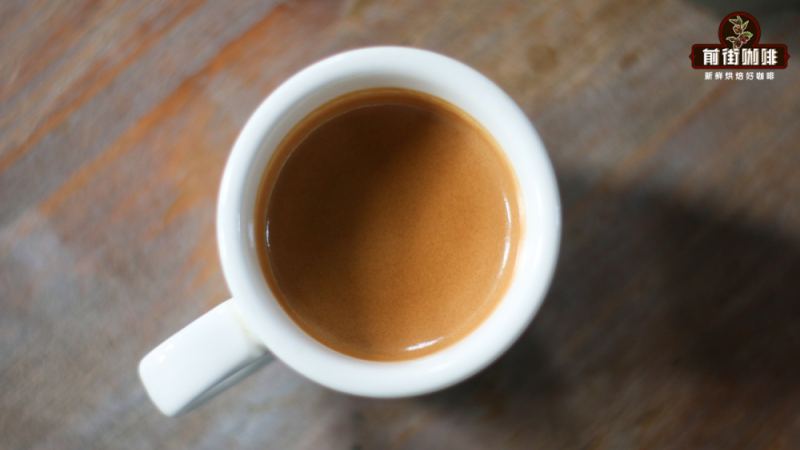
Why are blended coffee beans used for espresso extraction?
A qualified espresso is the base for drinks such as Americano, latte, and cappuccino, and blended coffee beans are generally the more suitable choice for it. Extraction is controlled through four core variables: dose, time, yield, and grind size. High-pressure water is forced through a fine metal filter and a compacted puck, so even very fine grounds keep a workable flow and a balanced result.
Because grinding multiplies the surface area, extremely fine coffee extracts quickly, and pressure pushes water inside the particles to release oils and aromatics. Coffee beans hold roughly 30 percent water-soluble compounds, but only about 20 percent are the aromatic small molecules tied to positive flavor, and those come out first. Weighing, distributing, tamping, then pulling the shot in sequence keeps results repeatable.
A qualified espresso is the soul base of popular coffee drinks like Americano, latte, and cappuccino. Although few people drink it directly, mastering its extraction method is a required course for every coffee lover. This article starts from the pressure extraction principle of espresso machines, explains in detail the adjustment logic of the four core variables—dose, time, yield, and grind size—and explains why blended beans are more suitable for making espresso. At the same time, taking "Front Street Sunflower Warm Sun Blend" as an example, the article fully demonstrates the standard operating steps from weighing the grounds, distributing, tamping, to extraction, and provides parameter adjustment suggestions for common problems such as burnt bitterness and weakness, helping you consistently produce a balanced espresso with sourness, sweetness, and bitterness at home.
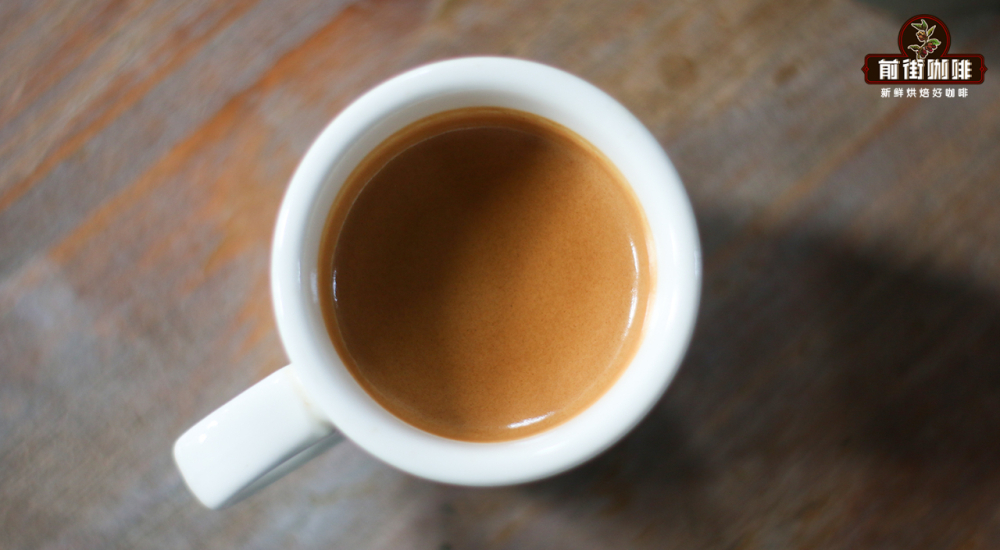
Although we rarely drink espresso on its own in daily life, making a delicious Americano, latte, or cappuccino all requires a qualified espresso as the foundation. Today Front Street will talk with everyone about how to extract an ideal espresso.
What is unique about espresso machines when making espresso?
Espresso completes extraction through percolation with a fine metal filter screen. Its biggest difference from pour-over drip coffee is that it introduces a pressure mechanism. The machine's high-pressure water flow forcibly passes through the coffee puck, so that even if the coffee is ground extremely fine, it can still maintain an appropriate permeation speed and balanced extraction effect. The finer the grind, the more exponentially the surface area expands. Therefore, one major benefit of extremely fine grinding is that extraction is very fast, and the quality is even better. High pressure can push water into the internal structure of coffee particles, prompting rich oils and aromatic substances to be released.
No matter which brewing method is chosen, the core goal is to use water to dissolve the pleasant flavor components in coffee, thereby obtaining a delicious cup of coffee. Coffee beans contain many compounds, about 30% of which are soluble in water, including fruit acids, caffeine, oils, and carbohydrates. Among these soluble substances, only about 20% are aromatic small molecules that present positive flavors, and they are extracted first; the remaining large molecules with woody and bitter notes need longer to enter the cup. Therefore, what baristas need to do is adjust various parameters to extract as much high-quality flavor as possible.
Espresso represents a coffee form with rich flavor layers and high concentration. It is difficult for any other brewing method to replicate its rich, full-bodied texture. To obtain a delicious cup of coffee, excellent extraction is indispensable, and the aromatic compounds and taste compounds in the cup need to reach a balanced state. Simply put, the three tastes of acidity, sweetness, and bitterness should all feel comfortable. Therefore, we need to judge the current state of the espresso through tasting, and then decide how to adjust it to make a qualified espresso.
In actual operation, from a coffee bean to a cup of espresso, there are many variables that affect flavor, covering details such as grind size, boiler pressure, water temperature, distribution and tamping force, dose, extraction time, and extraction yield. Generally speaking, the coffee machine's pressure and water temperature are not frequently changed after they are set, while the force of distribution and tamping varies according to the barista's personal habits. When adjusting extraction daily, mainly focus on four factors: dose, time, yield, and grind size. As the saying goes, "One cannot make bricks without straw." To cook a good dish, the quality of the ingredients must be excellent, so the choice of coffee beans is equally crucial.
What coffee beans should be chosen for espresso?
Because espresso is extracted under conditions of fine grinding, high water temperature, and high pressure, the espresso concentrate gathers multiple tastes, and various flavor compounds stimulate the taste buds exponentially. For this reason, if light-roasted single-origin beans are chosen to make espresso, the taste may be too intense and instead mask the coffee's own aroma. Coffee is an agricultural product and changes with climate and soil conditions. Even in the same producing region, beans from different batches will have different flavors. Blended coffee beans can precisely make up for each other's shortcomings, ensuring that every batch of output presents balanced and stable aroma and taste.
Front Street here recommends its own roasted "Sunflower Warm Sun Blend Coffee Beans." It is blended from Ethiopian natural Red Cherry coffee beans (30%) and Honduran Sherry Barrel coffee beans (70%). After being made into espresso, the entrance brings flavors of sherry, vanilla, and cream, layered with the tropical fruit notes and fermented quality of Red Cherry, making the whole cup rich and soft. After swallowing, the aroma in the aftertaste lingers for a long time. Whether it is an Americano diluted with water or a latte with milk added, it can show full aroma and taste.
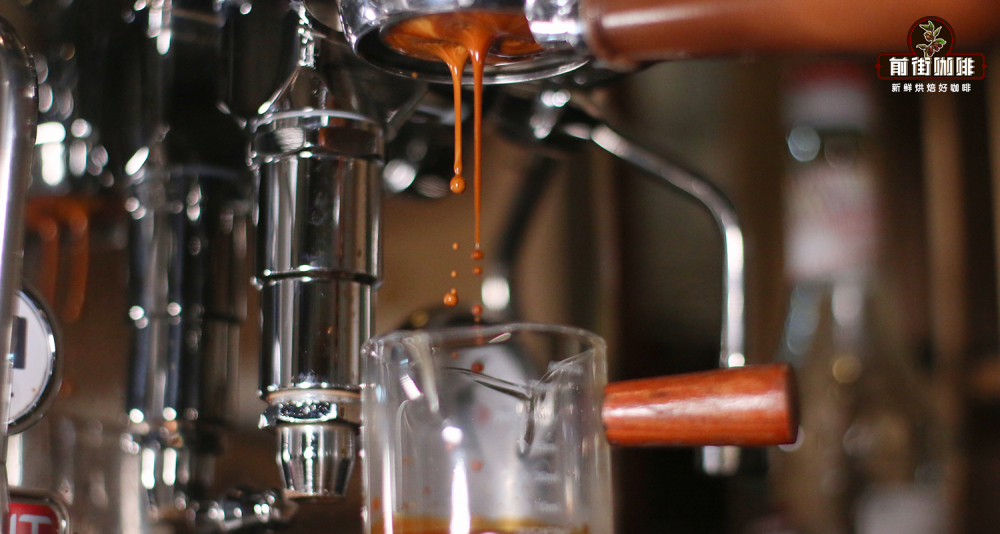
A freshly made espresso will have a thick, dense golden-brown foam on the surface. This is crema. It is the bubbling phenomenon formed by carbon dioxide released under high pressure from freshly roasted coffee beans. In order for every customer to taste the fullest aroma of the coffee and enjoy the most complete peak flavor period, Front Street only sends out fresh coffee beans within 5 days after roasting.
Steps for making espresso
The espresso drinks produced daily at Front Street stores all use "Sunflower Warm Sun Blend." The baristas at Front Street Coffee (FrontStreet Coffee) debug the espresso extraction parameters before opening the store every day, and only then formally begin production.
Front Street uses the capacity of a double basket, with the dose roughly between 18 and 20 grams. In actual production, 20 grams of coffee grounds are used. The extraction ratio is set at 1:2, that is, using 20 grams of grounds to extract 40 grams of coffee liquid. Time is closely related to the flow rate of the coffee grounds. A single extraction duration is generally controlled at 20–35 seconds, because in less than 20 seconds the taste tends to be thin, while over 35 seconds it may be over-extracted and develop burnt bitterness. Front Street's espresso mostly falls within the range of 28–30 seconds.
Before extraction, first wipe the basket clean, start the grinder to grind the amount for a double shot, and place it on an electronic scale to add or remove until it is exactly 20 grams. Then use a distribution tool to level the surface of the grounds, and then use a tamper to apply force vertically downward to compact and press the coffee puck tightly, ensuring a more stable extraction process.
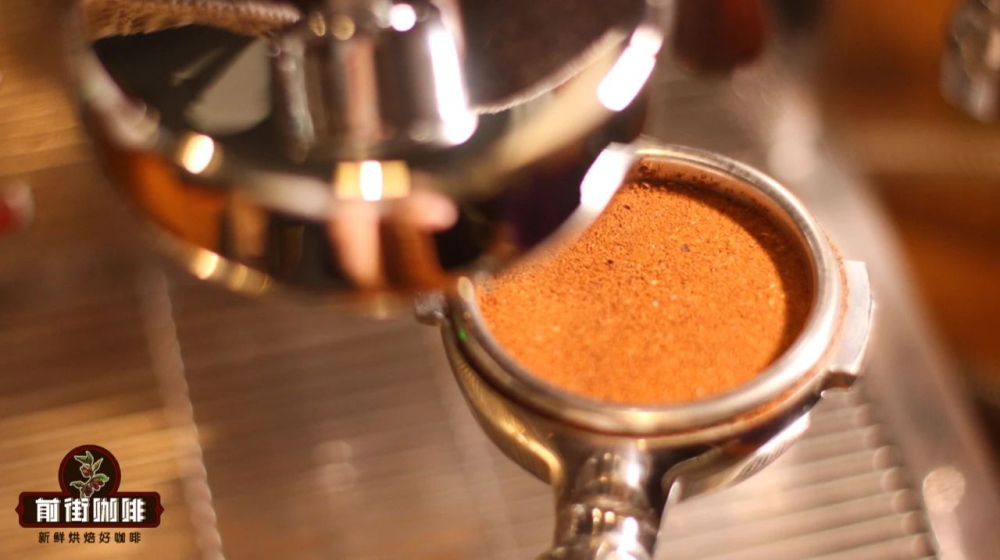
Next, turn on the extraction switch and let water run for 1–2 seconds, which both wets the group head and rinses away any residual coffee grounds on it. Place an electronic scale under the cup that will receive the Espresso, tare the weight to zero, and during extraction place it together with the cup under the group head.
Gently lock the portafilter onto the group head and flip down the extraction switch. Pay attention to changes in the extracted liquid. When the electronic scale shows the coffee liquid has reached 40 grams and the time is about 30 seconds, pull the switch down to stop extraction. Brewing parameters will change slightly with daily air humidity and the condition of the coffee beans, so the dose, grind setting, and extraction yield need to be adjusted up or down accordingly.
The extracted Espresso can be drunk directly. Paired with a cup of water to rinse the mouth, it allows you to better feel the dense oily foam and the rich, full-bodied texture of the coffee liquid below. If the bitterness feels too strong and hard to accept, you can also add water or milk according to personal preference to dilute it and make the taste softer.
Suggestions for adjusting espresso-making parameters
In daily brewing, adjustments to coffee extraction need to be judged in combination with practical experience. Especially when making coffee at home, the output is small, and any tiny change may noticeably affect the final taste of the espresso. Front Street suggests everyone record various parameters more often, making it easier to summarize and adjust in the future. For example, Front Street stores debug before opening every day. As long as all parameters are within the preset range, there is no need to make major changes. Instead, directly judge the extraction state by tasting the flavor of the espresso, and then make slight adjustments to the above parameters.
If, under the same extraction ratio, the espresso shows negative tastes such as burnt bitterness, but the strength is still fairly moderate, then it is very likely that the extraction time is too long and has also brought out burnt bitter substances. The usual solution is to make the grind coarser. Conversely, when the espresso tastes weak and the strength is low, it may be that the flow rate is too fast or the dose is insufficient, resulting in incomplete extraction. This can be improved by increasing the dose or making the grind finer to increase extraction strength. The above parameters will continuously change in linkage with the extraction state. We need to pay more attention to the direction of adjustment brought by extraction variables in order to better grasp the high-quality flavor in the cup.
The above content is compiled by CoffeeHunters, a coffee news website.


