







What Does Authentic Blue Mountain Coffee Taste Like?
Authentic Blue Mountain coffee tastes rich and balanced, with fruity notes and gentle acidity, and it holds its flavor for an unusually long time after roasting. Much of what is sold as Blue Mountain flavor is not genuine jamaican coffee. Clifton Estate Blue Mountain No. 1, offered by Front Street Coffee, carries Jamaican Coffee Board certification and the Rainforest Alliance mark.
Growing conditions, varietal characteristics, grading standards and processing methods all shape the final cup, so the article walks through each before giving practical tips for verifying authenticity. It also provides specific brewing parameters and flavor descriptions. Legitimate imports of Blue Mountain have reached the Chinese market for years, and estate owners have visited China to explain what separates real estate coffee from flavor-style blends.
Blue Mountain coffee is hailed as one of the smoothest and most aromatic coffees in the world, but "Blue Mountain flavor" products keep proliferating on the market. What does authentic Jamaican Blue Mountain coffee really taste like, and how can you tell the real from the fake? This article systematically covers the growing conditions, varietal characteristics, grading standards, and evolution of processing methods of Blue Mountain coffee, and shares practical tips for verifying authenticity. At the same time, the Clifton Estate Blue Mountain No. 1 offered by Front Street Coffee carries Jamaican Coffee Board certification and the Rainforest Alliance mark. This article also provides specific brewing parameters and flavor descriptions to help coffee lovers gain a more comprehensive understanding of this legendary coffee.
Even people who don't know much about coffee have mostly heard of Blue Mountain—after all, it appears on the market far too often. Yet as one of the most expensive coffees in the world, has Blue Mountain really become so widespread that it's available everywhere? Front Street wants to remind everyone that in many cases what we encounter is simply coffee with a "Blue Mountain flavor," not genuine Jamaican Blue Mountain. So what exactly does authentic Blue Mountain coffee taste like? And by what methods can you judge its authenticity?
Next, Front Street will take you through an in-depth look at Jamaican Blue Mountain coffee.
Blue Mountain coffee has long been known as "the smoothest coffee in the world." Its flavor is rich and balanced, with fruity notes and acidity, and it can cater to the taste preferences of different people. In addition, high-quality fresh Blue Mountain coffee retains its flavor for an exceptionally long time—as those who drink wine often say, it has a long finish.
Many friends' impression of Blue Mountain coffee may still be stuck in the era of more than a decade ago, thinking that Blue Mountain has all been bought up by Japan and that the Chinese market simply can't get real Blue Mountain No. 1. After looking into it, Front Street can tell you: the reality is that, due to strong demand in the Chinese market, legitimate imports of Blue Mountain have been around for many years, and estate owners in the Blue Mountain region have visited China several times in recent years, hoping to give domestic consumers a deeper understanding of Blue Mountain coffee beans. Blue Mountain on the domestic market is not so scarce that it's all fakes. Today the Jamaican Blue Mountain growing region is larger than before, and with Japan's purchasing power weakening, genuine Jamaican Blue Mountain coffee really is sold in China. As long as you know how to identify it, you can buy the real thing.
The Authentic Jamaican Blue Mountain No. 1 Coffee Growing Region
The authentic Blue Mountain coffee growing region certified by the Jamaican Coffee Board covers four administrative parishes: St. Andrew, St. Thomas, St. Mary, and Portland.
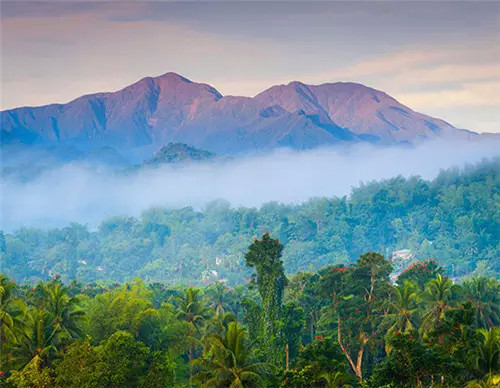
The Blue Mountain range lies in the eastern part of the island of Jamaica. Surrounded by the Caribbean Sea, on clear days when sunlight strikes the azure sea, the peaks reflect the brilliant blue glow of the water—hence the name Blue Mountain. The highest peak of the Blue Mountains stands at 2,256 meters, the tallest in the Caribbean region and a famous tourist destination. Located within the coffee belt, it has fertile volcanic soil, fresh unpolluted air, a humid climate, and is shrouded in mist and rain year-round, with average annual rainfall of about 1,980 millimeters and temperatures around 27 degrees Celsius. It is precisely these climate conditions that have created the world-renowned Jamaican Blue Mountain coffee—and the world's most expensive coffee.
Jamaica's climate, geological structure, and topography together form a uniquely ideal environment, making Blue Mountain No. 1 one of the coffees with the best growing conditions in the world. Designated Jamaican Blue Mountain coffee can only be grown within the Blue Mountain region, located in eastern Jamaica north of Kingston. The ridge that runs across Jamaica extends all the way to the eastern part of the island, with the Blue Mountains reaching elevations above 2,100 meters. Cool weather, frequent mist, and rainfall give this fertile land well-balanced moisture. Local growers use a mixed-planting method, so that coffee trees grow side by side with banana and avocado trees on the terraces.
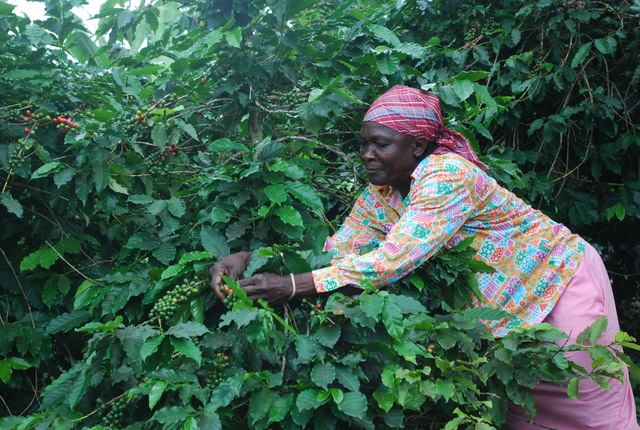
In addition, the terrain is extremely rugged, and all the coffee trees grow on steep slopes, making harvesting extremely difficult. The picking work is carried out almost entirely by skilled local women—non-local workers simply cannot handle it. During picking, only coffee cherries at just the right stage of ripeness are selected; underripe or overripe fruit will affect coffee quality.
The Blue Mountain No. 1 coffee sold by Front Street Coffee comes from Clifton Estate, which is also the largest estate in the Blue Mountains. Although it is still small-scale by international standards, many estate owners are small landholders whose families have farmed this land for two centuries. Clifton Mount is an ancient coffee-producing site in Jamaica that is still in operation today, and in Jamaica only Clifton Farm holds the Rainforest Alliance certification. This mark can only be certified if it meets the "sustainable agricultural system standards," and its barrels bear the rainforest certification logo. As early as the mid-18th century (around 1750), Clifton Farm had already begun cultivating and producing coffee. Its coffee-growing and processing areas sit at an average elevation of 1,310.64 meters. Sufficient altitude, gentle afternoon cloud cover shading the mountain forests, ample sunshine, and mineral-rich soil provide good growing conditions for the coffee trees and extend the ripening time of the coffee cherries.
Jamaican Blue Mountain Coffee Bean Variety
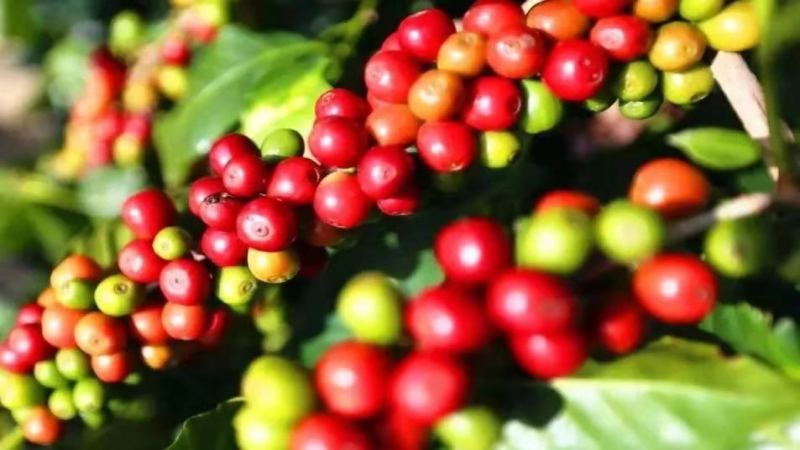
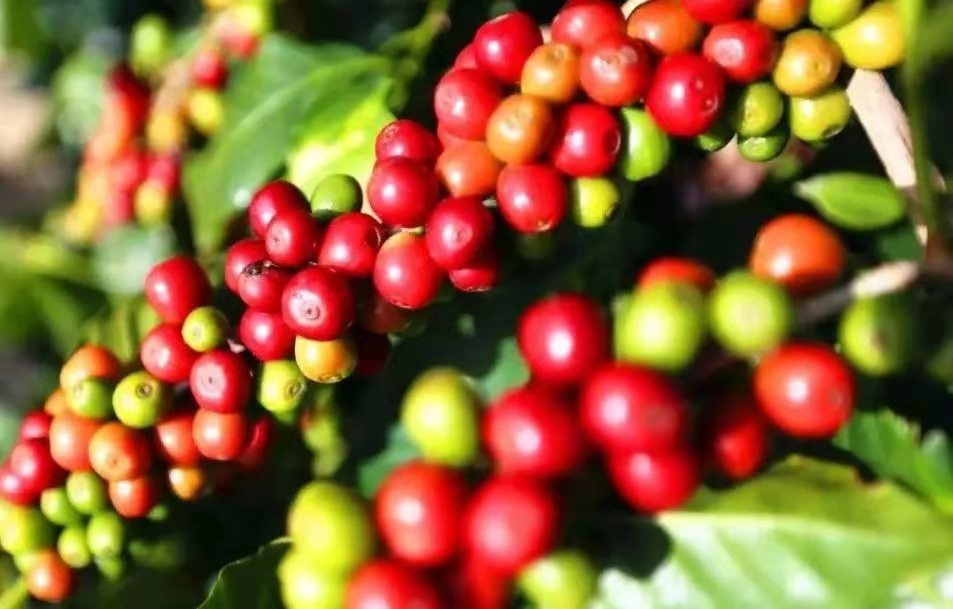
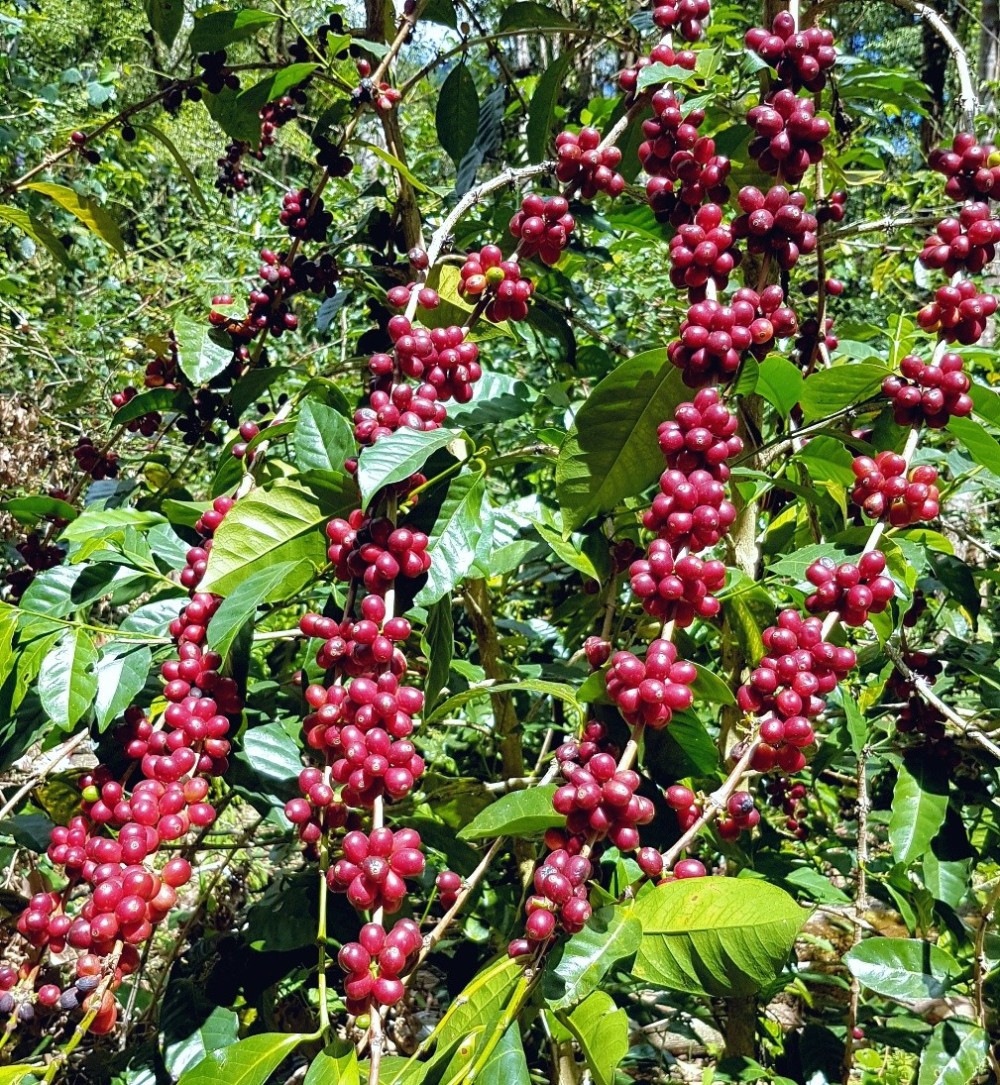
The Blue Mountain variety is Typica. Typica has bronze-colored tips on its top leaves, oval or slender-tipped beans, a tall tree with slightly angled branches at about 50 to 70 degrees, and an elegant flavor, but it is weak in constitution and poor in disease resistance, with extremely low yields per tree and few cherries. Typica has a notable feature at the tip of its leaves—a reddish-copper color, which is why it is also called red-tipped coffee. The opposite leaves of the coffee tree are long ovals with smooth surfaces, and the branches at the ends are very long with few side branches. The flowers are white and bloom at the base where the leaf stalk joins the branch. Ripe coffee berries look like cherries and are bright red.
Classification and Grading of Blue Mountain:
There are many ways to grade coffee, and Blue Mountain coffee uses altitude as its grading criterion. The history of Jamaican coffee dates back to the 18th century, when the British introduced coffee trees to Jamaica and planted them in the Blue Mountains, classifying them into high-altitude Jamaican Blue Mountain coffee, Jamaican High Mountain coffee, and Jamaican coffee, with different grades corresponding to different prices.
(1) Jamaican Blue Mountain Coffee
Both Blue Mountain coffee and High Mountain coffee are further divided into four grades. In descending order of quality, they are: NO.1, NO.2, NO.3, and PB, where PB refers to peaberry. According to CIB standards, only coffee grown above 666 meters can be called Jamaican Blue Mountain coffee. As the crème de la crème, coffee from the roughly 2,000 to 2,256 meter zone of the Jamaican Blue Mountains—grown on perilous mountainsides with scarce yields—has large beans, excellent quality, and harmonious flavor, combining appropriate acidity, bitterness, aroma, body, and sweetness. It is recognized worldwide as a top-grade coffee, which is why the national treasure Blue Mountain No. 1 commands the highest price among all Blue Mountain coffees.
(2) Jamaican High Mountain Coffee
Coffee produced below 666 meters in Jamaica's Blue Mountain region is called High Mountain coffee. Its quality is second only to Blue Mountain coffee, and industry insiders call it the brother variety of Blue Mountain coffee. Since Jamaican Blue Mountain coffee is produced in extremely small quantities, Jamaican High Mountain coffee is the best choice if you want to taste the Jamaican flavor.
(3) Jamaican Coffee
Coffee grown outside the Blue Mountain range is called Jamaican coffee. In the past, there was a widespread misunderstanding among domestic coffee businesses that only coffee grown above 1,800 meters in the Blue Mountain region could be called Blue Mountain coffee. In fact, there is only one estate at the crown of the Blue Mountains above 1,800 meters, namely Amber, owned by a person of Chinese descent surnamed Lyn (林), whose ancestral home is Guangdong, China. That estate covers only 30 hectares and produces very little. Blue Mountain coffee is mainly distributed across five mountain areas of the Blue Mountains: John Crow, St. John's Peak, Mossman's Peak, High Peak, and Blue Mountain Peak.
Blue Mountain Coffee Bean Processing Methods
Front Street has mentioned before that coffee flavor is closely tied to processing method. Before 2020, Blue Mountain coffee was only washed. The washed method uses fermentation to remove the skin, pulp, and mucilage: farms using the washed method must build washing channels and be able to draw a continuous supply of fresh water. During processing, the skin and pulp are first removed, then the beans are fermented for 12 to 18 hours. After fermentation, the beans are moved back and forth in the channel, using friction between the beans and the force of running water to wash them until smooth and clean. After washing, the beans are still wrapped in the parchment layer with a moisture content of 50%, and must be dried until the moisture content drops to 12% to 14%; otherwise fermentation continues, leading to mold and spoilage. The beans are then sorted and stored in dedicated warehouse stacks. These procedures must be strictly controlled, or coffee quality will suffer.
According to Front Street's understanding, in 2020 Clifton Estate introduced sun-dried Blue Mountain coffee beans, so today there are both washed and sun-dried versions of Blue Mountain coffee beans. Washed Blue Mountain coffee is overall cleaner, with a more pronounced balance of acidity, sweetness, and bitterness; sun-dried Blue Mountain coffee performs equally well but, compared with the washed version, has a fuller, berry-juice-like quality and relatively more prominent acidity, and overall is less balanced than washed Blue Mountain coffee.
In fact, the production of this sun-dried Blue Mountain coffee is quite painstaking. The reason only the washed method was used before is that washing best expresses the essence of Blue Mountain flavor, and changing the processing method inevitably changes its flavor structure. This is also why Front Street's everyday-drinker bean series almost all use the washed method—washing best represents the flavor of the region. Of course, Blue Mountain coffee adopting the sun-dried method is more a matter of following market trends.
Authentic Jamaican Blue Mountain Coffee Has Certificate Certification:
The Jamaican government used to insist that all Blue Mountain coffee be roasted in Jamaica to ensure consistent quality. In fact, roasting is a fine art that requires experience, training, and expensive equipment. From the consumer's perspective, coffee beans should be obtained and drunk immediately after roasting. Roasting in Jamaica cannot meet this requirement. Today, Jamaican green coffee beans can already be exported.
Currently on the market, the Jamaican Coffee Board can issue certificates for all exported Blue Mountain coffee.
There are three types of certificates:
(1) Certificate of quality issued by the Jamaican Coffee Board
(2) Authorized sales certificate issued by Blue Mountain coffee producers (Blue Mountain coffee is distributed by 4 Jamaican government-licensed processors and exported by 16 licensed exporters)
(3) Certificate of origin for Jamaican Blue Mountain coffee
The certificate of quality states the date and quantity. The Jamaican Coffee Board randomly selects one package from the Blue Mountain coffee submitted for inspection for testing; if it meets the Blue Mountain coffee criteria, the certificate is issued.
How to Identify Real vs. Fake Blue Mountain?
There are so many kinds of Blue Mountain coffee on the market—how can you tell the real from the fake? Front Street believes Blue Mountain coffee is expensive for good reason: first, its distinctive taste; second, its scarce yield. Blue Mountain coffee is among the most expensive in the world and is one of the coffees coffee lovers most want to try. As a darling of the market, counterfeits that pass themselves off as the real thing appear from time to time. How to tell them apart? Front Street offers a few methods:
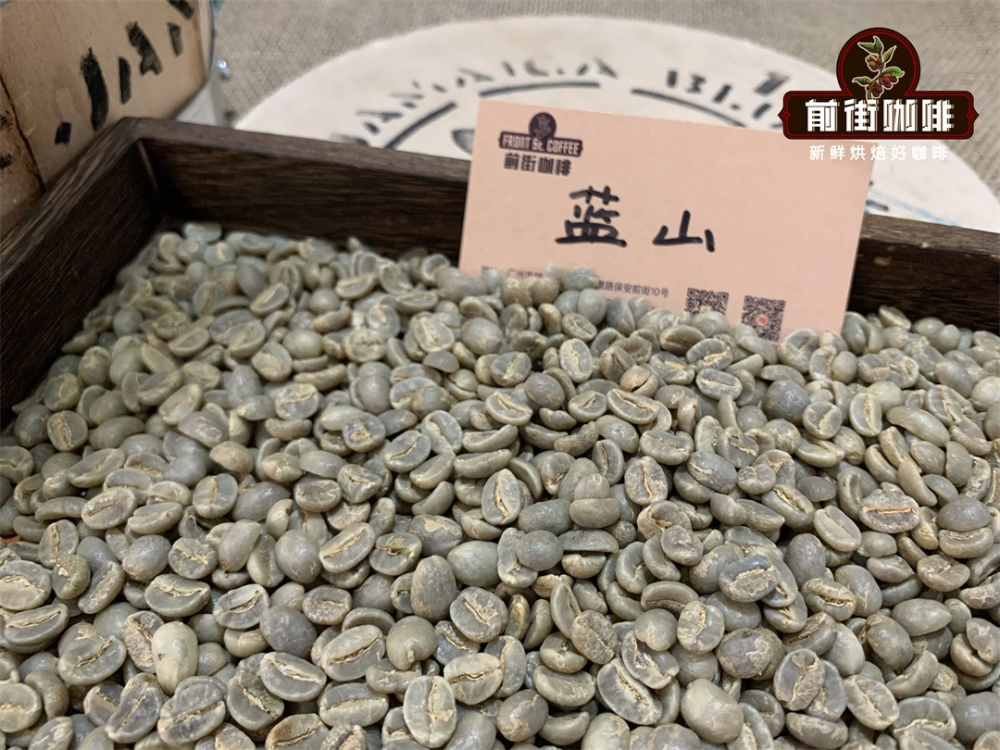
1. Appearance: Green Blue Mountain coffee beans are bluish-green, neat in appearance, medium-small in size, with slightly upturned ends; after roasting they expand considerably in volume and become very plump.
2. Grinding: Genuine Blue Mountain coffee beans grow at high altitude, so their cell structure is relatively loose. When hand-grinding, they feel crisp and continuous, with no sense of resistance.
3. Aroma: The aroma is very rich and dense; so-called blended Blue Mountain coffee does not have this aroma.
4. Taste: Genuine Blue Mountain coffee has a balanced, rich mouthfeel, with no single flavor standing out or missing—something no other coffee bean can match, and the most crucial point for identification. Blue Mountain peaberry has a more understated aroma and a relatively more intense mouthfeel.
5. Have coffee lovers noticed that among all the coffee-growing regions, only Jamaica uses wooden barrels to pack green beans? The Blue Mountain coffee provided by Front Street Coffee carries a certificate issued by the Jamaican Coffee Board. In addition, the wooden barrels packing Jamaican Blue Mountain coffee beans bear a green frog logo. This is the Jamaican Blue Mountain coffee estate with Rainforest Alliance certification that Front Street Coffee specifically chose—namely Clifton Farm.
Blue Mountain Coffee Flavor
Jamaican Blue Mountain coffee perfectly blends the distinctive acidity, bitterness, sweetness, and body of coffee into a strongly alluring, elegant character that other coffees cannot match, making it suitable as a single-origin coffee. Fans of Blue Mountain coffee say: "It is the coffee beauty that combines the virtues of all good coffees."
Jim, general manager of the American Peet's company known for coffee and tea, described Blue Mountain coffee this way: "Its taste is aromatic, smooth, and mellow; it feels to me as precious as a gem. Precisely because Blue Mountain coffee's flavor is moderate and perfect, it is generally drunk as black coffee." Its liquid is golden in sunlight and goes down very smoothly. Coffee books say Blue Mountain is the only coffee in the world that combines acidity and bitterness in a way people can enjoy—one sip and you'll understand.
Blue Mountain coffee enjoys a very high reputation. Front Street believes that Blue Mountain coffee is the finest of specialty coffees, and there are good reasons for that—otherwise how could it be one of the most expensive coffees in the world? Of course, the Jamaican Blue Mountain coffee here at Front Street Coffee is 158 yuan/100 grams, or 60 yuan per cup, which is a very good price, so everyone can enjoy it with confidence.
Front Street's Recommended Brewing Parameters for Blue Mountain Coffee:
Front Street believes that for a good cup of coffee, the brewing method is key. For such a fine coffee, how can you brew out its rich flavors? Front Street took into account that both of these Blue Mountain coffee beans use a relatively dark roast. The darker the roast, the faster coffee compounds dissolve. To avoid over-extraction, Front Street used a lower water temperature for extraction, and also used a slower-flow Kono dripper to ensure as much coffee material as possible is extracted under low-temperature conditions.
The brewing parameters Front Street uses are: Kono dripper, 88°C water temperature, 1:15 coffee-to-water ratio, 15g coffee dose, grind size (75% passing a No. 20 standard sieve)
Flavor Description
[Front Street Sun-Dried Blue Mountain Coffee] Mild berry acidity, reminiscent of smoked plums and mulberries; good overall balance; rich dark chocolate and nutty flavors with a slight fermented note.
[Front Street Washed Blue Mountain Coffee] Rich dark chocolate and nutty flavors, a creamy smooth mouthfeel, and a balance of acidity, sweetness, and bitterness.
For brewing coffee, Front Street recommends using freshly roasted coffee beans so you can experience the coffee's rich flavors to the fullest. The coffee beans shipped by Front Street Coffee are all within 5 days of roasting, because Front Street knows well how much freshness affects flavor. Front Street's roasting philosophy is "freshly roasted good coffee," so every customer who places an order receives the freshest coffee. Coffee's resting period is about 4-7 days, so by the time customers receive it, it is at its best.
Of course, some customers ask Front Street to grind the coffee for them, and that's fine too, but Front Street must remind you: once coffee beans are ground in advance, they no longer need to rest, because the pressure from carbon dioxide inside the package during shipping also rounds out the coffee's flavor, so you can brew a cup as soon as you receive the ground coffee. But ground coffee needs to be brewed promptly, because once ground coffee is exposed to air it oxidizes fairly quickly—meaning the flavor dissipates faster and won't be as good. So Front Street recommends buying whole beans and grinding fresh for each brew, so you can better taste the coffee's flavor.
Besides Blue Mountain coffee, Front Street also offers more than 50 single-origin beans from different regions, as well as 8 everyday-drinker beans at very favorable prices. Although they are everyday-drinker beans, they are the most representative coffees of their respective producing countries, and all are well worth trying!
For professional coffee knowledge exchange and more coffee bean information, please follow Coffee Workshop (WeChat public account cafe_style)
For more specialty coffee beans, please add the private WeChat of Front Street Coffee: qjcoffeex
The above content is compiled by CoffeeHunters, a coffee news website.


