








Why does Huila coffee taste the way it does?
Colombia grows arabica and ranks behind only Brazil in output. Coffee arrived around the early eighteenth century with Spanish Jesuit missionaries; José Gumilla recorded plantations along the Orinoco River in 1730. After the Thousand Days' War the industry moved toward smallholder farming, and the FNC was founded to support growers.
Huila is one of the country's key regions, and its terroir shapes a cup that many drinkers associate with dark chocolate rather than today's fruit-forward styles. The article traces that history and then looks at the Sidra variety on the Front Street list, covering its origin and brewing performance, with full cold brew steps included.
As a major global producer of Arabica coffee, Colombia's coffee industry has undergone a unique journey from its introduction by missionaries to a transformation toward a smallholder model. This article traces the historical thread, sorting out the origins of coffee cultivation in Colombia, the industry changes after the Thousand Days' War, and the background behind the founding of the FNC, while also analyzing in depth the terroir characteristics and flavor expression of the Huila region. At the same time, it introduces the Sidra variety on Front Street Coffee's bean list, detailing its varietal origin and brewing performance, and includes complete cold brew production steps, offering coffee enthusiasts a panoramic view from historical understanding to hands-on brewing.

For more specialty coffee knowledge, please follow the WeChat official account: Front Street Coffee (FrontStreet Coffee)
Coffee has become part of daily life for many people. When people pick up that morning cup interweaving acidity, sweetness, bitterness, and astringency, more and more coffee enthusiasts are beginning to realize that coffees from different origins differ significantly in flavor. Brazilian coffee is known for its smooth balance, Ethiopian coffee for its bright acidity, and Indonesian coffee for its low acidity and full body. Front Street Coffee (FrontStreet Coffee) has met many veteran coffee drinkers who, compared with today's popular fruit-bomb style flavors, prefer classic Colombian coffee with dark chocolate notes.
History of Colombian Coffee
Although Colombia is not a large country in terms of land area, it is one of the world's leading coffee-producing countries, and its Arabica coffee bean output is second only to neighboring Brazil. However, similar to most coffee-producing countries in the Americas, before the arrival of European colonists, this cash crop native to Ethiopia did not exist on Colombian soil.
According to records, Colombia's earliest coffee cultivation can be traced back to around the early eighteenth century, when coffee seeds or seedlings arrived on this land along with the fleet of Spanish Jesuit missionaries. A Spanish missionary named José Gumilla recorded in his writings the conditions along the Orinoco River, which flows through Venezuela and Colombia, and clearly mentioned that he personally saw coffee plantations by the riverbank in 1730. This indirectly indicates that coffee cultivation had already begun in Colombia at least before 1730.
As coffee cultivation gradually expanded in Colombia, by the end of the nineteenth century coffee had become one of the country's main foreign exchange export commodities. However, the "Thousand Days' War" that broke out at the end of the nineteenth century lasted four years and caused severe losses to Colombia—the population declined sharply, land fell into disuse, and economic development almost came to a standstill. A large number of large coffee plantations found it difficult to continue operating and even became unmanaged wasteland for a time. In order to revive the coffee industry, the Colombian government consolidated these wastelands and divided them into small planting units, selling them to landless farmers at extremely low prices. Farmers could grow coffee and other crops simultaneously on these lands.
Colombian Coffee Growers Federation
Colombia's industrial structure, dominated by small coffee farms, was regarded as a new and flexible industrial model. Under the influence of fluctuations in international coffee prices, Colombian coffee showed considerable growth potential. But at the time, Colombian coffee did not occupy an important position in the global market.
In order to reverse this situation, Colombian coffee growers formed an organization called the "Coffee Producers Institution" in 1904 to manage the domestic market. By 1920, a coffee grower took the lead in promoting the establishment of the Colombian Coffee Federation to protect the interests of numerous small coffee farms. The organization then continued to grow and in 1927 formally established a more authoritative and larger-scale organization—the FNC.
The founding purpose of the FNC was to protect the rights and interests of coffee growers. In the following years, with the FNC's promotion, Colombia as a coffee-producing country rose to become the world's third-largest coffee exporter.
As one of the classic coffee-producing countries, Colombia occupies a unique position on Front Street Coffee's (FrontStreet Coffee) bean list of nearly one hundred coffees, and has even been included in Front Street Coffee's (FrontStreet Coffee) everyday bean series. In order to let coffee enthusiasts taste Colombian flavor, Front Street selected washed high-altitude Huila coffee as the representative of this producing region, using a medium-dark roast, suitable for pour-over, drip bags, moka pots, espresso machines, drip coffee makers, and many other extraction methods.
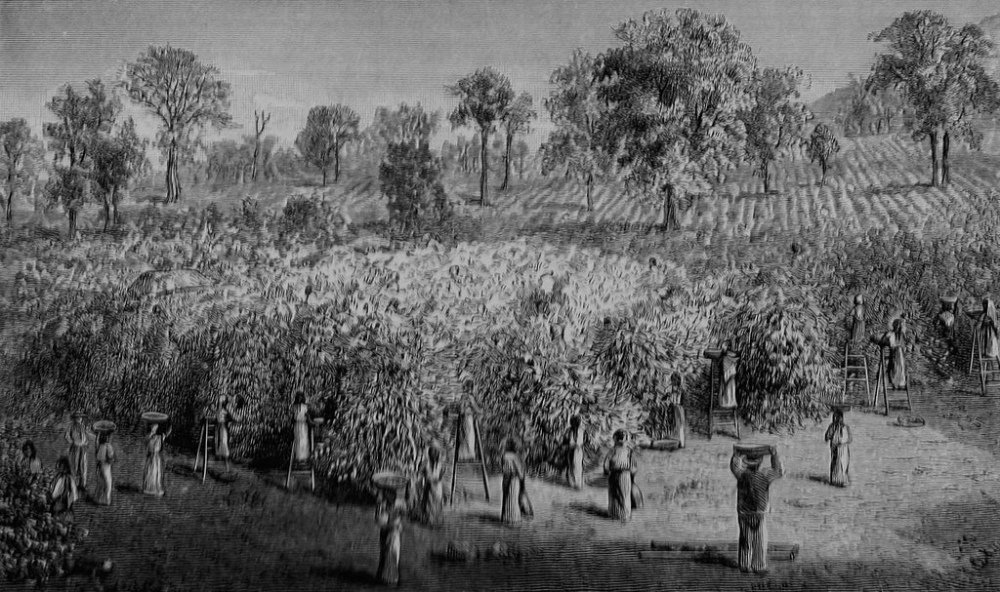
Huila Coffee Producing Region
Huila Province is located in the southern section of Colombia's Central Cordillera, in the mountainous area of the country's southwest, and is Colombia's most renowned specialty coffee producing region. This area is surrounded by mountains, and within the producing region there is an active volcano that erupted in 2008; mineral-rich volcanic ash covered large areas of Colombian soil. Coffee is planted at altitudes above 1,500 meters, and Colombia's most important rivers converge here, bringing abundant water resources and moisture. Unlike the general impression of Colombian coffee as balanced and smooth, many specialty Colombian coffees produced in smallholder micro-lots actually have distinct regional flavor characteristics.
In recent years, as the international market has placed greater importance on coffee quality and demand for specialty coffee has risen, the previous method of grading by bean size has gradually been abandoned in favor of micro-regional selections provided by smallholder coffee producers. Dozens of smallholders pool their individual harvests into a single micro-lot for sale, making it more possible, through lot-by-lot cupping, to directly select many specific smallholder coffees of excellent quality.
The Huila producing region is also the area richest in volcanic ash. Whether coffee can present more refined flavors depends not only on variety and altitude, but also on nutrients in the soil. Therefore, coffee beans produced in the Huila region carry refined fruit acidity, nutty flavors, and a caramel-like aftertaste, which is also a flavor characteristic unique to coffee from southern Colombia.
On Front Street's bean list, there are also two single-origin coffees that likewise come from the famous Huila producing region, namely Finca La Divisa's Ombligon and Sidra. Sidra's fame came thanks to the 2019 World Barista Championship (WBC), becoming widely known because a competitor used it to win the championship.
Sidra, transliterated from Sidra, is also called Sydra or Bourbon Sidra by coffee farmers, and in Spanish means "apple juice" or "cider." It is currently generally believed that the Sidra variety is a hybrid descendant of Typica and Red Bourbon, and in cupping it is often described as combining Bourbon's sweetness with Typica's clean and serene character. The Sidra obtained by Front Street uses a double anaerobic natural process, showing rich fruity aromas and a sweet-tart sensation when brewed as pour-over, making it pleasant to drink. We have also tried extracting Front Street Colombia Sidra by cold brew, iced pour-over, and hot pour-over, and found that it can always express a rich, highly sweet fruit flavor, accompanied by aromas with a botanical base, round on the palate, with a weak bitterness.
How to Make Sidra Cold Brew Iced Coffee?
Dose used: 50g
Grind setting: Ek43 setting 9 (85% passing rate on a No. 20 sieve, caster sugar grind) Coffee-to-water ratio: 1:10 Steeping time: 12 hours Remember to prepare a sealable container! After we grind the coffee beans into powder, the first thing to do is pour the coffee grounds into the container!
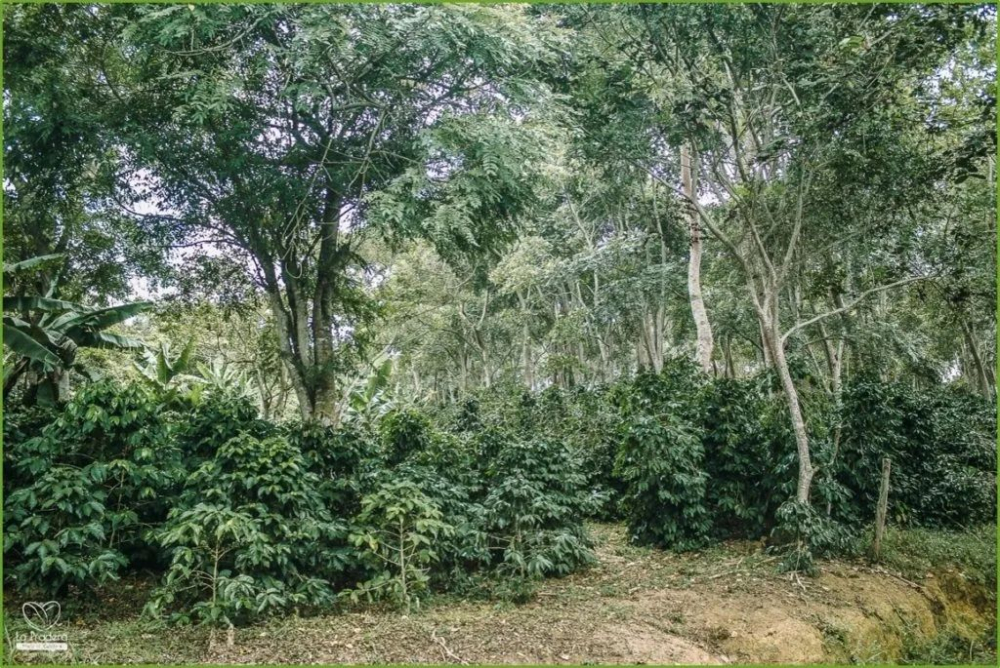
Then pour in the target amount of water! Because Front Street uses 50g of coffee grounds, 500ml of room-temperature water will be poured in. After pouring the water, stir it a little to speed up the wetting of the coffee grounds!
After that, seal the bottle and put it in the refrigerator to chill.
When the steeping time is reached, we can take the coffee out, filter out the coffee grounds with filter paper, and enjoy the delicious cold brew coffee!
The above content is compiled by CoffeeHunters, a coffee news website.


