







C Arabica Caturra: Roasting and Brewing Parameters
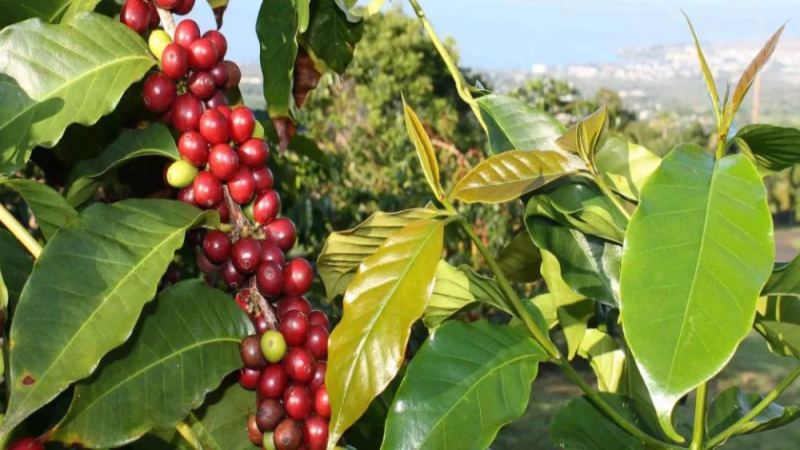
Caturra is a Bourbon-derived variety within the C arabica family, first found in Brazil's Minas Gerais between 1915 and 1918. Its dwarf, compact shape allows dense planting, and it grows without shade from 700 to 1,700 meters, though higher sites cup better with lower yield. Medium-dark roasting and a controlled three-pour method bring out its bright acidity and full body.
For washed red Caturra from Colombia's Huila region, Front Street Coffee uses a set recipe covering dripper, water temperature, dose, coffee-to-water ratio, grind size, and three pours. Red, yellow, and purple-fruited Caturra differ mainly in fruit color and cup profile. The name itself reflects the arabica meaning: a Guarani word for small, also called Nanico, describing the plant's compact form.
Caturra is a highly representative derivative variety within the Bourbon family, widely planted across Central and South America thanks to its high yield and impressive flavor performance. This article begins with Caturra's discovery history, botanical characteristics, cultivation adaptability, and disease weaknesses, then sorts out the differences among red, yellow, and purple-fruited Caturra, and provides specific brewing recipes for medium-dark roasted Caturra. The article also draws on Front Street Coffee's Colombia Huila everyday beans to illustrate the flavor direction of washed red Caturra, cupping control approaches, and complete parameters including dripper, water temperature, dose, coffee-to-water ratio, grind size, and three-pour extraction method, for coffee enthusiasts' reference.
For more specialty coffee knowledge, please follow: Front Street Coffee (Frontsteet Coffee)
Caturra belongs to a variety under the Arabica branch and is a derivative descendant of the old Bourbon variety. It has high yield and quite good flavor performance, so it is currently widely planted in Central and South America. On Front Street Coffee's bean list, Guatemala La Flor, Honduras Lychee Orchid, Colombia Rose Valley, Panama Butterfly, and others all contain traces of the Caturra variety.
Caturra was first discovered between 1915 and 1918. In a plantation in Minas Gerais, Brazil, a Bourbon plant underwent a genetic mutation, and the tree became more dwarfed in shape (similar to dwarfism). This new coffee variety, appearing in a new morphological form, was called "Caturra" by locals in the Guarani language, meaning "small," and is sometimes also called "Nanico."
Because Caturra can be planted compactly and densely, growers find it quite convenient to manage and harvest. Unlike delicate Arabica varieties, Caturra does not require shade trees and can grow normally even when exposed to sunlight for long periods, so it is also called "Sun Coffee." It has strong adaptability and can be planted within an altitude range of 700 to 1,700 meters; the higher the altitude, the better the flavor performance, but the yield decreases accordingly. When Caturra is planted at altitudes of 1,200 to 2,000 meters with annual rainfall of 2,500 to 3,500 milliliters, both quality and yield can be relatively well ensured. In terms of flavor, Caturra has bright acidity, and the cup is full of fruity notes. After medium-dark roasting, it presents the sweet aroma of chocolate and nuts, and it is a frequent champion in many coffee competitions.
Caturra also has shortcomings. Under high-density planting conditions, plants with excessively high yield are easily overwhelmed, and to ensure they can bear coffee cherries, growers need to invest more fertilizer and management costs. In addition, Caturra has relatively weak disease resistance and low resistance to nematodes, coffee leaf rust, and other diseases, so it is also prone to infection and withering.
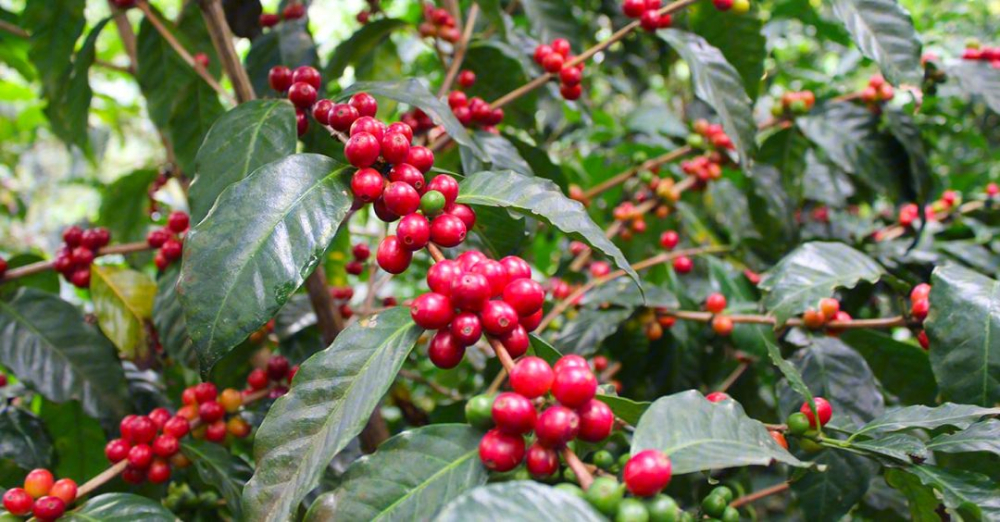
According to fruit color, Caturra can be divided into three types: red, yellow, and purple. Red Caturra (Caturra Velmelho) is the most common, and its flavor varies greatly depending on origin, processing method, and roasting degree. Yellow Caturra (Caturra Amarello) and Purple Caturra (Purple Caturra) are relatively rare and arise from recessive gene mutations.
If you want to understand this variety's flavor characteristics, Front Street recommends Colombia Huila everyday beans, which use naturally washed red Caturra. The washed Huila everyday beans have both soft acidity and suitable body and sweetness. Front Street hopes to present the classic Colombian nutty profile while retaining some acidity, so it chose a medium-dark roast. Before launching any coffee bean, Front Street conducts at least one cupping evaluation, as cupping allows us to more objectively reflect the coffee's strengths and weaknesses.
Considering that Huila everyday beans use a medium-dark roast, with a flavor leaning toward rich, full-bodied nutty and chocolate notes, the darker roast makes the coffee beans more porous and the coffee grounds more absorbent, so a medium grind size is chosen. To avoid extracting too many off-flavors, Front Street lowers the water temperature slightly, using a medium 90°C water temperature together with a KONO dripper for extraction.
Front Street Coffee (FrontStreet Coffee) Brewing Recommendation
Dripper: KONO#01 Water temperature: 86-88°C Dose: 15g Coffee-to-water ratio: 1:15 Grind size: EK43s#10.5 (75% passing rate on China standard No. 20 sieve)
Brewing method: three-pour extraction. Use 30 grams of water for a 30-second bloom, then pour in a slow circular stream until 125 grams for the first stage; when the water level is about to expose the coffee bed, continue pouring until 225 grams and stop; when the water level is about to expose the coffee bed again, remove the dripper. (Start timing from the beginning of the bloom.) Extraction time is 2'00".
Flavor description: after grinding into powder, there is a raisin aroma, and during brewing, white floral notes can be smelled. On the palate, there is a distinct passion fruit aroma, grape-like acidity, and a finish like honey.
The above content is compiled by CoffeeHunters, a coffee news website.


