







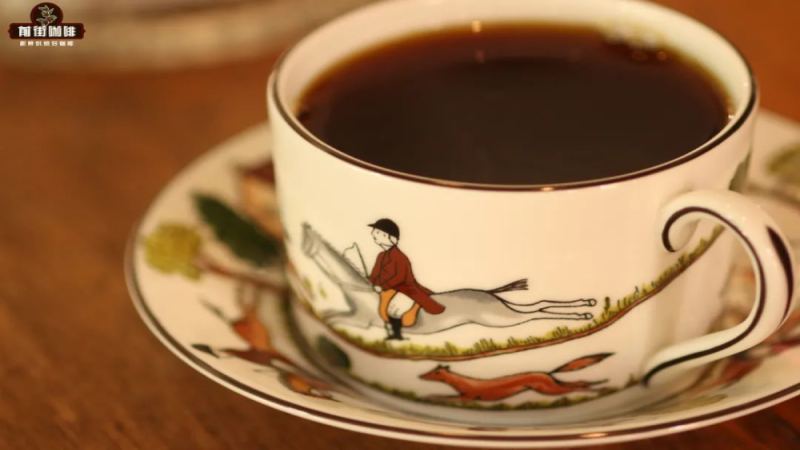
How should golden mandheling be brewed to avoid bitterness?
Golden Mandheling is the PWN signature Mandheling from Lake Tawar in Aceh, while Lintong Mandheling comes from the mountains around Lake Toba in North Sumatra. Both are known for low acidity and full body, but poor brewing quickly turns them into a bitter, over-extracted cup, so parameters have to be adjusted rather than copied from brighter beans.
Water temperature, coffee-to-water ratio, grind size, dripper choice, and the three-pour technique each affect how much of Mandheling's herbal aroma and sweetness reaches the cup. Sumatran beans in the traditional wet-hulled style tend to be softer and more soluble, so slightly cooler water and a coarser grind usually keep the bitter edge in check.
Mandheling coffee is known for its low acidity and full body, but if brewed poorly, it can easily become an over-extracted cup of bitter "herbal tea." This article starts with two Indonesian Mandhelings on Front Street Coffee's bean list—Lintong Mandheling and PWN Golden Mandheling—comparing their respective flavor profiles and, with a focus on pour-over practice, breaking down key parameters in detail, including water temperature, coffee-to-water ratio, grind size, dripper choice, and the three-pour technique. Whether you are a beginner just getting into dark-roasted beans or a seasoned brewer hoping to draw more layers out of Mandheling, you will find reusable brewing ideas here to help Mandheling's aroma and sweetness express themselves more fully.
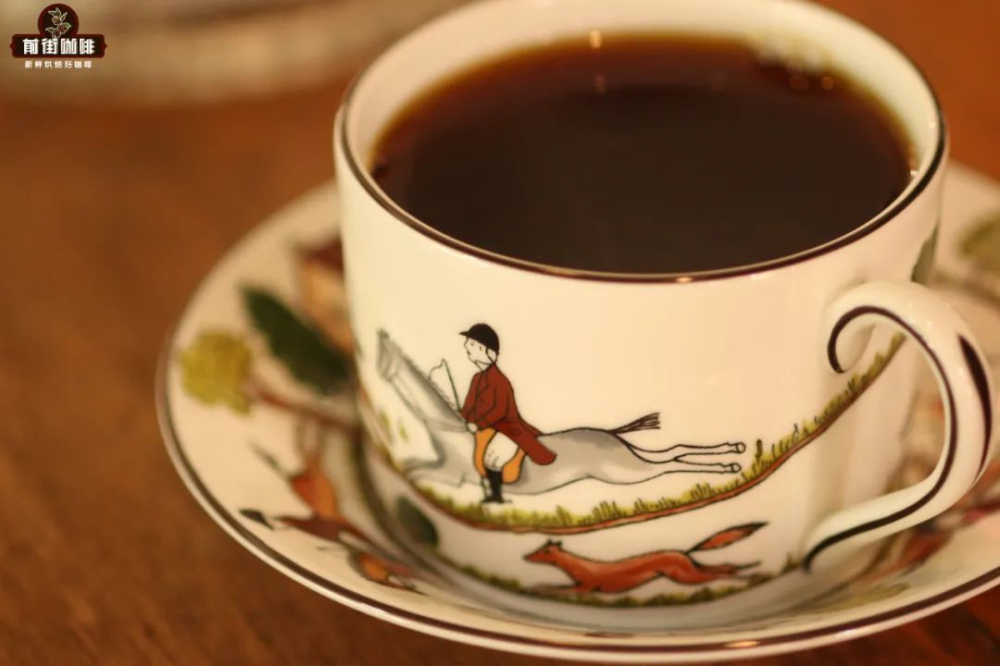
Mandheling coffee is known for its low acidity, thick body, and prominent bitterness. If the brewing parameters are not handled properly, it is easy to fall into over-extraction, leaving nothing but bitterness in every sip, as if drinking a bowl of Cantonese herbal tea. Drawing on everyday brewing experience, Front Street has put together several key points to help everyone bring out more of Mandheling's aromatic layers and mouthfeel.
"The Two Lakes, the Two Mandhelings"
Front Street's current bean list keeps two Mandheling coffees from Indonesia. One is Lintong Mandheling from the Lake Toba region in North Sumatra, and the other is Golden Mandheling from Lake Tawar in Aceh. On the island of Sumatra, the Mandhelings from these two lake regions are the most famous, and locals are used to calling them "the Two Lakes, the Two Mandhelings."
Lintong Mandheling refers to Arabica coffee from the mountainous areas around Lake Toba in North Sumatra. Lake Toba is located north of Medan, the provincial capital of Sumatra, and is a high-altitude freshwater lake at an average elevation of about 900 meters. Lintong Mandheling can be understood as Mandheling in the traditional sense, a regular version that, after wet-hulling, carries Mandheling's signature brooding herbal aroma. Front Street therefore includes Lintong Mandheling in its everyday drinking-bean lineup, so that friends who want to try something new can also experience the unique aroma of Indonesian coffee.
Golden Mandheling coffee is PWN's exclusive signature product. Because PWN registered the trademark "Golden Mandheling" early on, only Mandheling produced by this company can bear the name "Golden Mandheling." The hallmark of this bean is that the green beans undergo layer after layer of sorting, giving the overall quality great consistency. All the Mandheling green beans PWN purchases are 18 screen or above, with fewer than 3 defective beans in a 300-gram sample, reaching G1 grade, the highest standard for Indonesian green beans. Afterward, one machine sorting and three rounds of hand sorting are carried out according to protocol to ensure that the Mandheling coffee beans are consistent in color, shape, and size. As a result, Front Street's PWN Golden Mandheling tastes cleaner and more transparent, with fuller body and more prominent sweetness.
What Mandheling Tastes Like
Both Mandhelings follow a low-acid, full-bodied path. Front Street's roasters use a medium-dark roast to present the typical Mandheling flavor while retaining more herbal spice notes. Before releasing any coffee bean, Front Street conducts at least one cupping evaluation. Under the same standard, cupping allows us to judge a coffee's strengths and weaknesses more objectively. Front Street cupped Lintong Mandheling and Golden Mandheling side by side for comparison.
Lintong Mandheling shows dense notes of chocolate, dark brown sugar, and nuts, with a herbal note in the aftertaste. Golden Mandheling offers pine wood, nuts, spices, and herbs in the dry aroma; after hot water is poured in, notes of licorice and caramel emerge; on the palate there are flavors of dark chocolate, nuts, and spices, with an overall clean cup, obvious sweetness returning, and a full body.
Given Mandheling's complex flavors and mouthfeel, Front Street believes it is best enjoyed as black coffee, and pour-over is Front Street's favorite extraction method. Below, taking Front Street's most popular PWN Golden Mandheling coffee as an example, let's talk through the specific parameters.
Pour-Over Parameters for Mandheling Coffee
Brewing water temperature: 87–88°C
Coffee grounds: 15 g
Coffee-to-water ratio: 1:15
Dripper: KONO dripper
Grind size: medium-coarse (70% passing a Chinese standard No. 20 sieve)
Brewing technique: three-pour method
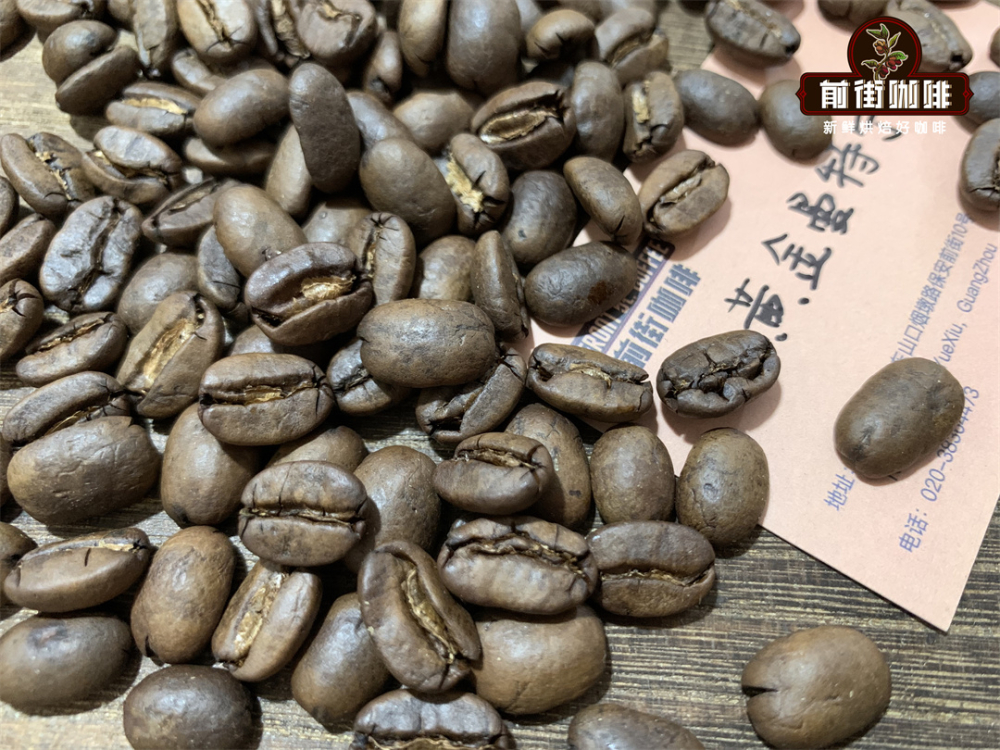
A dark roast makes the interior texture of the coffee bean loose; it crumbles with a light pinch of the fingers, showing that the bean structure has clearly changed, and once ground, it absorbs water more readily. To avoid over-extraction after the coffee grounds absorb water and the release of a large amount of bitter compounds, Front Street uses a coarser grind than for light-roasted beans. Here we use a medium-coarse grind (70% passing a Chinese standard No. 20 sieve), which is setting 11 on the shop's EK43s.
For choosing grind size, Front Street uses an auxiliary tool: the Chinese standard No. 20 sieve. It is mainly used to judge grind size. The grind size suitable for pour-over differs from bean to bean. Through repeated testing, Front Street Coffee has determined that 80% passing a Chinese standard No. 20 sieve is the pour-over grind size, while for dark-roasted coffee beans it is 70%.
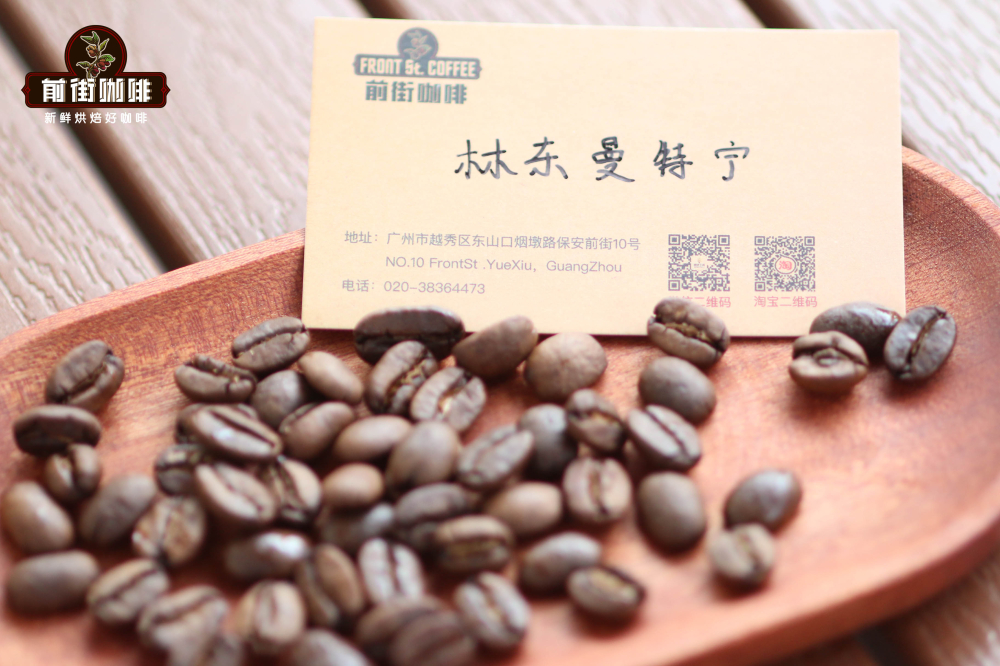
Roasting drives caramelization and the Maillard reaction in coffee beans. As the roast level deepens, monosaccharides and amino acids interact and break down under heat, causing more non-enzymatic browning, so it becomes easier to release large-molecule bitter and roasty compounds. To avoid extracting too many off-flavors, Front Street lowers the water temperature appropriately. For light-roasted coffee, the brewing water temperature is 91–93°C; for dark-roasted coffee beans, Front Street recommends 87–88°C.
For coffees with a full-bodied mouthfeel such as Indonesian Mandheling, Brazil Queen's Estate coffee, and Jamaica Blue Mountain coffee, Front Street Coffee's baristas give priority to the KONO dripper. Compared with the V60, the KONO dripper has a smoother curve, a design meant to ensure the paper filter hugs the dripper wall after it is wet. At the same time, the guide ribs, which rise only a quarter of the dripper's height, restrict airflow upward, so water can only flow from the bottom into the server. This lengthens the time the coffee particles absorb water, and the coffee bed and hot water form an immersion-style extraction, making the coffee taste rounder and fuller.
Front Street Coffee's baristas have always used the three-pour method. Pouring in three stages better expresses Golden Mandheling's full body and caramel sweetness, while also giving greater control over time and water volume.
First, rinse the KONO dripper to make the paper filter fit more snugly against the dripper. After pouring out the water in the server, add 15 g of ground coffee and bloom with 30 g of water for 30 seconds. This pour should wet all the coffee grounds and let them degas so that flavor compounds can be extracted better afterward.
Some friends extend the bloom time to 45 or 50 seconds when extracting light-roasted coffee beans, in order to enhance the coffee's early-stage aroma. But if dark-roasted Mandheling coffee is bloomed too long, it easily releases too much woody and off-flavor character, so Front Street chooses a 30-second bloom.
For the second pour, start from the center and circle outward, slowly pouring hot water in a small stream until you reach 125 g and begin the next stage. The stream should be poured steadily throughout; stirring too forcefully can easily break apart the coffee bed wall and cause uneven extraction.
When the coffee bed has dropped to half the height of the dripper and the bed is exposed, pour the second stage in the same manner until 225 g. Once all the dripping is complete, you can remove the dripper. The extraction time is two minutes, with a margin of plus or minus 10 seconds.
Finally, swirl the coffee in the server to even it out, and you can begin tasting the pour-over Golden Mandheling black coffee. The brewed Mandheling coffee offers aromas of spices, dark chocolate, nuts, caramel, and pine wood on the palate, with a full yet clean mouthfeel, obvious sweetness returning, and a lingering aftertaste.
For professional coffee knowledge exchange and more coffee bean information, please follow Coffee Workshop (WeChat public account: cafe_style).
For more specialty coffee beans, please add the private WeChat of Front Street Coffee: qjcoffeex.
The above content is compiled by CoffeeHunters, a coffee news website.


